
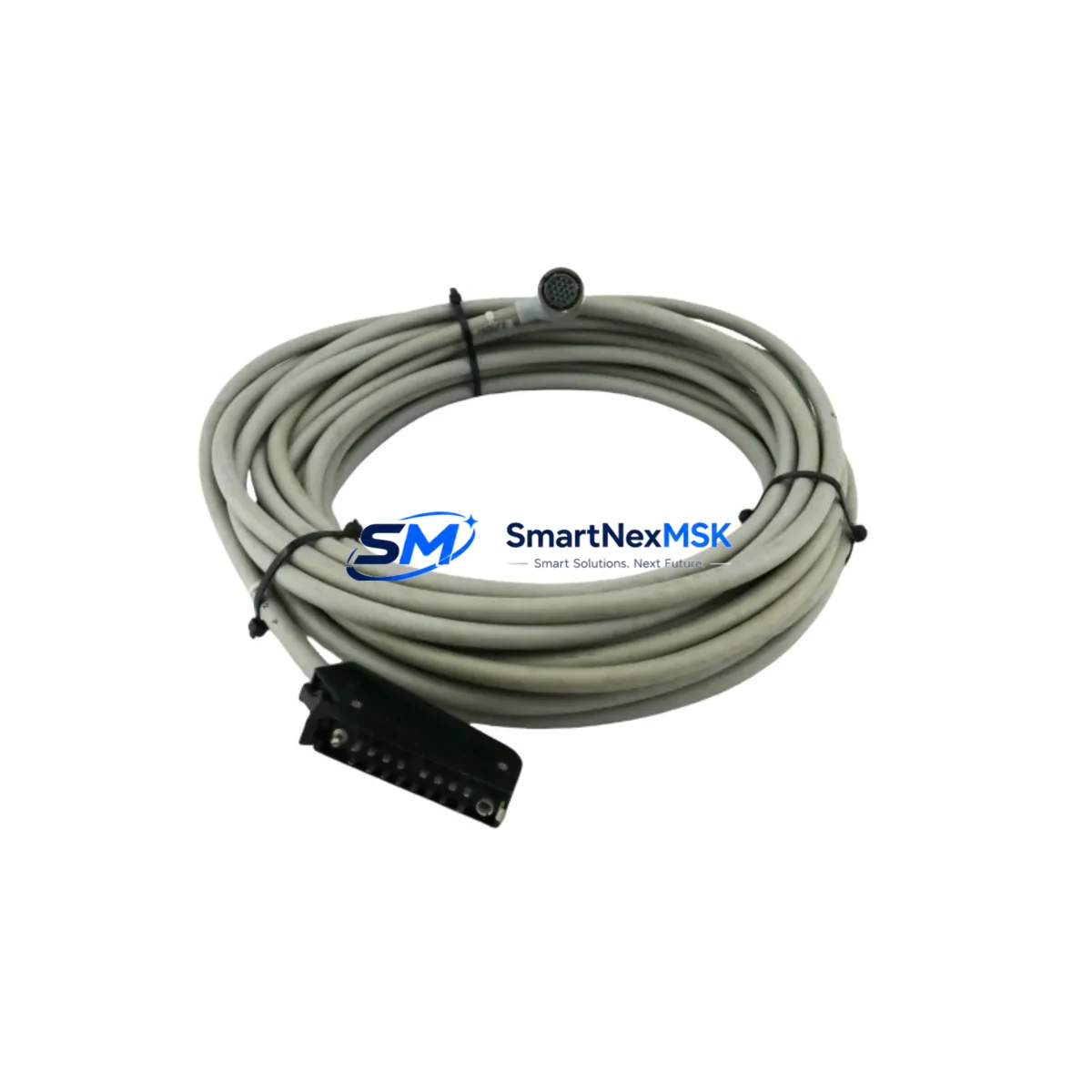
FUJIKURA 1886-455368-11 Retrofit-Ready RF Coaxial Cable for 2800/3000 Series Control Systems
The FUJIKURA 1886-455368-11 (cross-reference: 716-140139-313, also catalogued under 156403 / 17E181W412G1) is a 52-foot RF coaxial cable assembly engineered for seamless compatibility with FUJIKURA 2800 Series and 3000 Series fusion splicer platforms. As original-equipment cable assemblies reach end-of-life or become difficult to source through OEM channels, this retrofit-ready replacement provides field engineers and maintenance teams with a verified drop-in solution that preserves signal integrity, connector geometry, and mechanical routing without requiring chassis modification or firmware changes.
Upgrade Compatibility Table
| Parameter | Detail |
|---|---|
| Primary SKU | 1886-455368-11 |
| Cross-Reference SKU | 716-140139-313 / 156403 / 17E181W412G1 |
| Compatible Series | FUJIKURA 2800 Series, 3000 Series fusion splicers |
| Cable Length | 52 FT (approx. 15.85 m) |
| Assembly Type | RF Coaxial Cable Assembly |
| Connector Interface | OEM-matched; verify connector gender and locking type before installation |
| Installation Requirement | No chassis modification required; direct plug-in replacement |
| Communication Compatibility | Maintains RF signal path for internal splicer communication and sensor circuits |
| Replacement Recommendation | Recommended when OEM cable shows signal degradation, physical damage, or is discontinued |
| Commissioning Notes | Perform arc calibration and motor alignment check after cable swap |
| Warranty | 12-Month Warranty against manufacturing defects |
| Origin | China (CN) |
Retrofit Planning for Existing Automation Systems
When planning a cable assembly replacement within a FUJIKURA 2800 or 3000 Series splicer, the scope of work extends beyond the cable itself. Technicians should begin by auditing the internal routing path: the 52-foot length of the 1886-455368-11 is designed to accommodate the full internal harness run from the RF source board to the sensor or display sub-assembly, and any deviation in routing can introduce bend-radius violations that degrade signal quality over time.
Before removing the legacy cable, document the existing connector seating positions and cable tie anchor points. In many 2800 Series units, the RF coaxial assembly shares the cable tray with the motor drive harness and the arc electrode power leads — disturbing these adjacent assemblies without a re-routing plan is a common source of post-repair faults. If the unit also requires a motor drive board replacement or an arc power supply swap during the same maintenance window, coordinate those tasks to avoid repeated disassembly.
For 3000 Series platforms that have been upgraded with an enhanced image processing module or a touchscreen HMI display board, verify that the new cable routing does not conflict with the ribbon cable runs serving those upgraded sub-assemblies. The FUJIKURA FSM-30S, FSM-60S, and FSM-80S splicer families share similar internal architecture with the 2800/3000 platform lineage, and technicians familiar with those models will find the cable routing conventions largely transferable.
Power supply integrity is a prerequisite for any RF cable replacement. Confirm that the internal DC-DC converter module supplying the RF circuit board is within specification before closing the chassis — a marginal power rail will cause intermittent arc-trigger faults that are difficult to distinguish from a cable fault. Similarly, inspect the main battery pack or AC adapter interface for the 3000 Series field units, as low supply voltage can mask a successful cable repair during bench testing but manifest as field failures under load.
Communication link verification should follow physical installation. For splicers integrated into a network-managed maintenance workflow via USB programming cable or Bluetooth adapter, re-establish the device connection and confirm that the splicer’s internal self-test routine completes without RF-related error codes. If the unit communicates with a laptop-based splice management software, run a full diagnostic cycle to validate that arc calibration data, splice program parameters, and loss estimation algorithms are functioning correctly after the cable swap.
Shops maintaining a mixed fleet of FUJIKURA 2800 and 3000 Series units alongside older FSM-17S or FSM-18S splicers should note that the 1886-455368-11 is not cross-compatible with those earlier platforms — those units use a shorter, differently terminated RF assembly. Keeping a clear parts inventory that separates 2800/3000 Series cable assemblies from legacy stock prevents mis-installation during high-pressure repair scenarios.
Downtime Control During System Migration
Minimizing splicer downtime during a cable assembly replacement requires pre-staging all required components before taking the unit offline. Confirm that the 1886-455368-11 assembly, any required connector cleaning tools, torque drivers, and cable tie stock are on hand before opening the chassis. For field operations where the splicer is the sole fusion asset on site, arrange a backup unit or schedule the replacement during a planned maintenance window rather than responding reactively to a cable failure.
The original splice program library stored in the splicer’s internal memory is not affected by a cable assembly replacement — no program backup is required as a precaution for this specific repair. However, if the maintenance window also includes a firmware update or a memory board replacement, back up all splice programs and arc calibration profiles to an external USB drive before proceeding. This protects the accumulated calibration history that experienced operators rely on for consistent splice loss results.
After reinstalling the 1886-455368-11 and reassembling the chassis, perform a full arc calibration sequence using a standard single-mode fiber pair before returning the unit to production. This step re-establishes the arc power baseline and confirms that the RF signal path is intact. A successful arc calibration with loss estimates within the unit’s normal operating range is the primary acceptance criterion for this repair. Document the post-repair calibration results and attach them to the unit’s maintenance log to support warranty claims and future troubleshooting.
For operations running continuous fiber splicing shifts, consider maintaining one pre-tested spare 1886-455368-11 assembly in inventory. The 12-month warranty coverage on this replacement assembly provides assurance against early-life failures, and having a verified spare on the shelf reduces mean-time-to-repair for future cable faults to the time required for physical swap and arc calibration — typically under two hours for a trained technician.
Retrofit Support FAQ
Q1: Is the 1886-455368-11 a direct replacement for the original FUJIKURA cable in 2800 and 3000 Series splicers?
Yes. The 1886-455368-11 is a retrofit-ready replacement that matches the OEM connector interface, cable length (52 FT), and RF impedance characteristics of the original assembly. Cross-reference part numbers 716-140139-313, 156403, and 17E181W412G1 confirm compatibility across the 2800 and 3000 Series platform variants. No chassis modification or firmware change is required.
Q2: What commissioning steps are required after installing the replacement cable?
After physical installation, perform a full arc calibration sequence using a standard single-mode fiber pair. Verify that the splicer’s internal self-test completes without RF-related error codes. If the unit is connected to splice management software, run a full diagnostic cycle to confirm that arc calibration data and splice program parameters are intact. Document the post-repair calibration results for the maintenance log.
Q3: How do I verify connector and wiring compatibility before installation?
Confirm connector gender, locking mechanism type (push-pull, screw, or snap), and pin-out orientation against the original cable before installation. Photograph the existing cable routing and connector seating positions before removal to use as a reference during reinstallation. If the unit has been previously repaired with a non-OEM cable, compare the replacement against the original FUJIKURA service manual connector specification rather than the existing cable.
Q4: What does the 12-month warranty cover, and how is it claimed?
The 12-month warranty covers manufacturing defects in materials and workmanship, including connector termination integrity, cable jacket condition, and RF signal continuity. Warranty claims require proof of purchase and a description of the failure mode. Units that show physical damage from improper installation, over-bending, or connector over-torque are not covered. Contact [email protected] with your order reference and failure description to initiate a warranty claim.
© 2026 SMARTNEXMSK. All rights reserved.
Original Source: https://smartnexmsk.com
Contact: [email protected] | +86 18259474341