
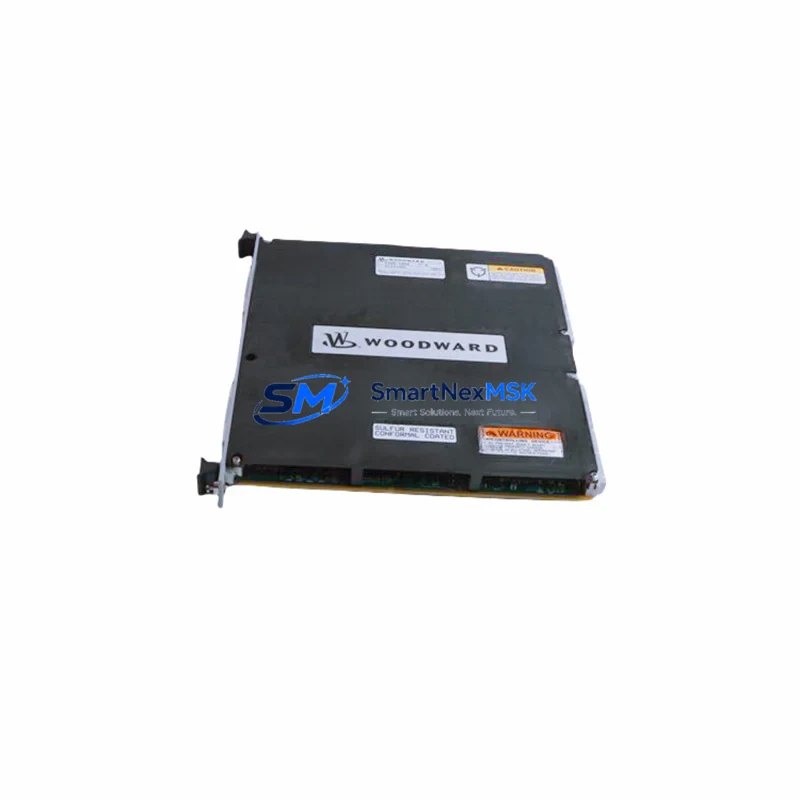
HIGHLAND T900 122138 Retrofit-Ready Timing Control for T900 Series Control Systems
The HIGHLAND T900 122138 is a precision timing and control module engineered for seamless integration into T900 series control architectures, with particular relevance to Cymer laser platform modernization projects. As legacy laser control systems approach end-of-life and OEM spare parts become increasingly scarce, the T900 122138 provides a verified, drop-in compatible solution for facilities managing aging semiconductor fabrication equipment, excimer laser systems, and precision motion control cabinets.
This module is stocked, tested, and available for immediate dispatch. Each unit undergoes functional verification prior to shipment and is backed by a 12-month warranty. Whether you are executing a planned retrofit, responding to an unplanned failure, or building a strategic spare inventory, the HIGHLAND T900 122138 delivers the reliability and traceability required by industrial maintenance teams.
Upgrade Compatibility Table
| Parameter | Details |
|---|---|
| Module SKU | HIGHLAND T900 122138 |
| Series | HIGHLAND T900 |
| Function | Timing & Control |
| Primary Application | Cymer Laser Control Systems, Excimer Laser Platforms |
| Form Factor | Board-level module, rack-mountable per T900 backplane spec |
| Backplane Interface | T900 series proprietary backplane connector |
| Communication Compatibility | Compatible with T900 series internal timing bus; verify host controller firmware revision before installation |
| Power Requirements | Supplied via T900 backplane; confirm PSU capacity before hot-swap or cold-swap replacement |
| Installation Type | Direct replacement; no mechanical modification required for standard T900 chassis |
| Replacement Recommendation | Suitable for 1:1 replacement of failed or degraded T900 122138 units; confirm firmware compatibility with system integrator |
| Commissioning Notes | Re-initialize module address after installation; validate timing outputs against system baseline before resuming production |
| Warranty | 12 months from date of shipment |
| Condition | New / Refurbished (specify at order) |
| Lead Time | In stock — same-day or next-business-day dispatch available |
Retrofit Planning for Existing Automation Systems
Replacing the HIGHLAND T900 122138 in an operational laser control cabinet requires a structured approach that accounts for the interdependencies between timing, power, and communication subsystems. Before initiating the swap, maintenance engineers should audit the T900 chassis power supply — typically a dedicated DC power module within the T900 rack — to confirm it can sustain the inrush current profile of a new timing board. Undersized or aging power supplies are a common root cause of premature module failure in retrofit scenarios and should be replaced or load-tested concurrently.
Terminal wiring on the T900 122138 follows the standard T900 series I/O connector pinout. Engineers should photograph or document the existing wiring harness before disconnection, particularly for any custom signal routing added during the original system commissioning. If the control cabinet includes a T900 series analog output module or digital I/O expansion module sharing the same backplane, verify that the backplane address switches on the replacement 122138 are set identically to the outgoing unit to avoid address conflicts that would prevent the host controller from recognizing the module.
In systems where the T900 platform communicates upstream to a supervisory PLC — such as a Siemens S7-300 series controller or an Allen-Bradley ControlLogix rack — the communication link between the laser control subsystem and the plant-level SCADA or DCS must be validated after module replacement. If the facility uses a dedicated HMI panel (such as a Siemens TP700 or equivalent operator panel) to display laser status and timing parameters, the HMI screen tags referencing T900 timing outputs should be verified against the replacement module’s output register map to ensure display accuracy is maintained post-retrofit.
For systems that include a T900 series communications interface module handling RS-232, RS-485, or Ethernet-based protocol links to upstream equipment, confirm that the timing synchronization signals generated by the 122138 are within the expected frequency and phase tolerance required by the communications module. Timing drift introduced by a degraded module is a frequent but underdiagnosed cause of intermittent communication faults in aging laser control systems.
Where the retrofit scope extends beyond a single module replacement to a broader control cabinet upgrade — for example, migrating from a legacy T900-based laser controller to a modern embedded control platform — the 122138 can serve as a bridging component, maintaining laser timing continuity while other subsystems are upgraded in parallel. This phased approach minimizes production disruption and allows engineering teams to validate each upgrade stage independently before committing to a full system cutover.
Downtime Control During System Migration
Unplanned downtime in semiconductor fabrication or precision laser processing environments carries significant production cost. A structured replacement protocol for the HIGHLAND T900 122138 can reduce mean time to repair (MTTR) to under two hours for experienced maintenance teams with a pre-staged spare unit on hand.
The recommended approach is a cold-swap replacement performed during a scheduled maintenance window. Before powering down the T900 chassis, use the host controller’s diagnostic interface to capture a snapshot of the current timing parameters, module address assignments, and any active fault codes. This baseline record serves as the reference for post-installation validation. If the system supports it, export the PLC or controller program to a backup medium before beginning physical work — this protects against accidental parameter loss if the controller performs an automatic re-scan of the backplane after module replacement.
After installing the replacement T900 122138, power up the chassis in a controlled sequence: confirm the power supply rails stabilize before enabling the backplane, then allow the host controller to enumerate the module. Verify that the module address is recognized correctly and that timing outputs are within specification before re-enabling laser firing sequences. A brief functional test using the system’s built-in self-test routine — if available — provides additional confidence before returning the equipment to production.
For facilities managing multiple T900-based laser systems, maintaining a minimum of one spare T900 122138 per production line is a practical inventory strategy that eliminates lead-time risk in the event of an unplanned failure. Each unit shipped by SMARTNEXMSK is individually tested and documented, ensuring that spare stock is ready for immediate deployment without additional incoming inspection.
Retrofit Support FAQ
Q1: Is the HIGHLAND T900 122138 a direct replacement for the original OEM module?
Yes. The T900 122138 is designed as a form-fit-function replacement for the original HIGHLAND Technology module of the same part number. No mechanical modification to the T900 chassis or backplane is required. Firmware compatibility should be confirmed with your system integrator if the host controller has been updated since the original installation.
Q2: What commissioning steps are required after installation?
After physical installation, re-initialize the module address to match the outgoing unit’s backplane address setting. Power up the chassis and confirm the host controller recognizes the module without fault codes. Validate timing output signals against the system baseline specification before resuming production operations. Document the replacement in the equipment maintenance log for traceability.
Q3: Can this module be used in a system that has been partially upgraded to a newer control platform?
In most cases, yes. The T900 122138 is compatible with standard T900 series backplane architectures regardless of whether other modules in the chassis have been updated. However, if the host controller firmware has been significantly revised, verify that the timing register map expected by the new firmware matches the output format of the 122138. Contact our technical team with your system configuration details for a pre-sale compatibility assessment.
Q4: What does the 12-month warranty cover?
The 12-month warranty covers manufacturing defects and functional failures under normal operating conditions consistent with the module’s rated specifications. Each unit is functionally tested prior to shipment. Warranty claims are supported by SMARTNEXMSK’s technical team, with replacement or repair turnaround coordinated to minimize your system downtime. Warranty does not cover damage resulting from incorrect installation, overvoltage, or operation outside the module’s rated environmental parameters.
© 2026 SMARTNEXMSK. All rights reserved.
Original Source: https://smartnexmsk.com
Contact: [email protected] | +86 18259474341