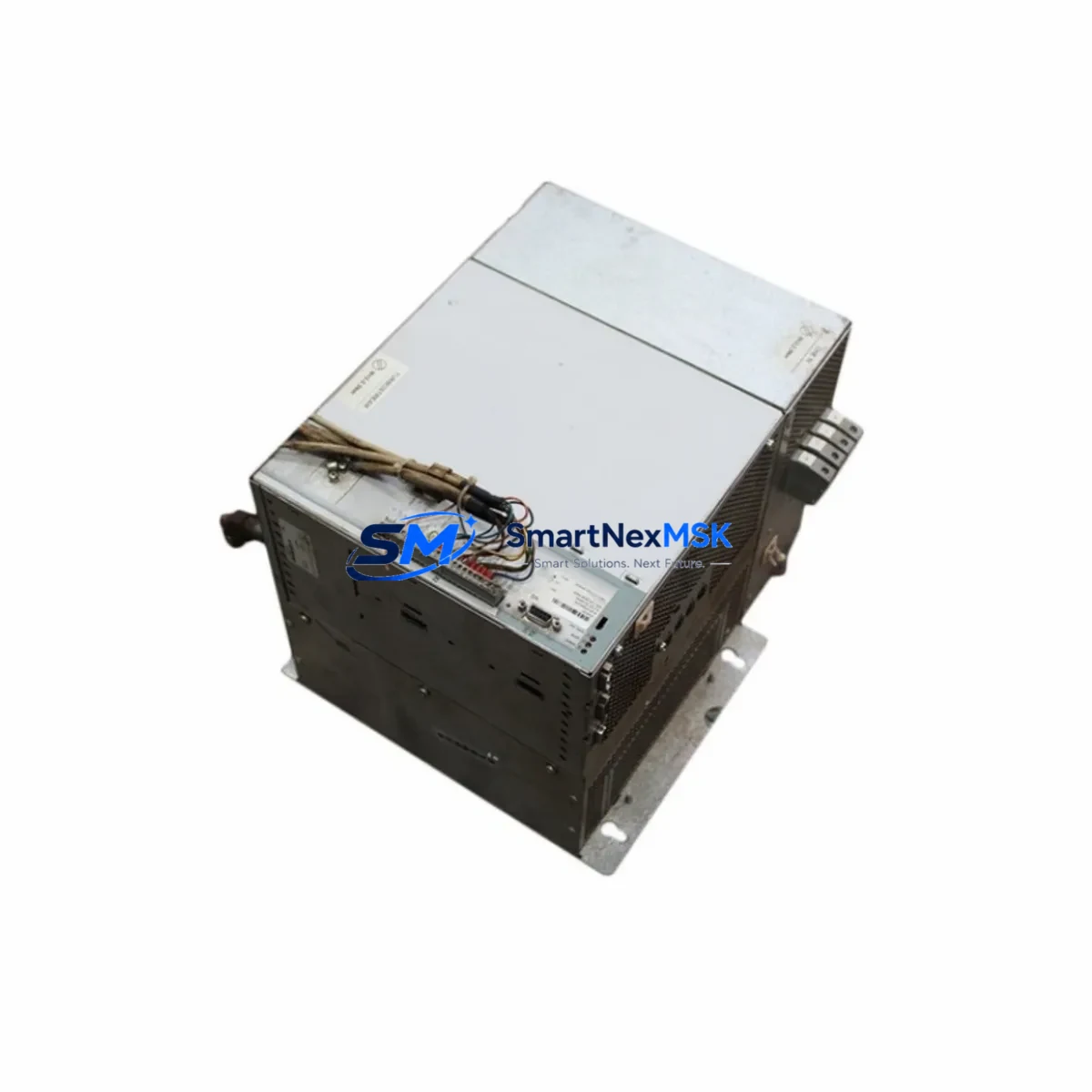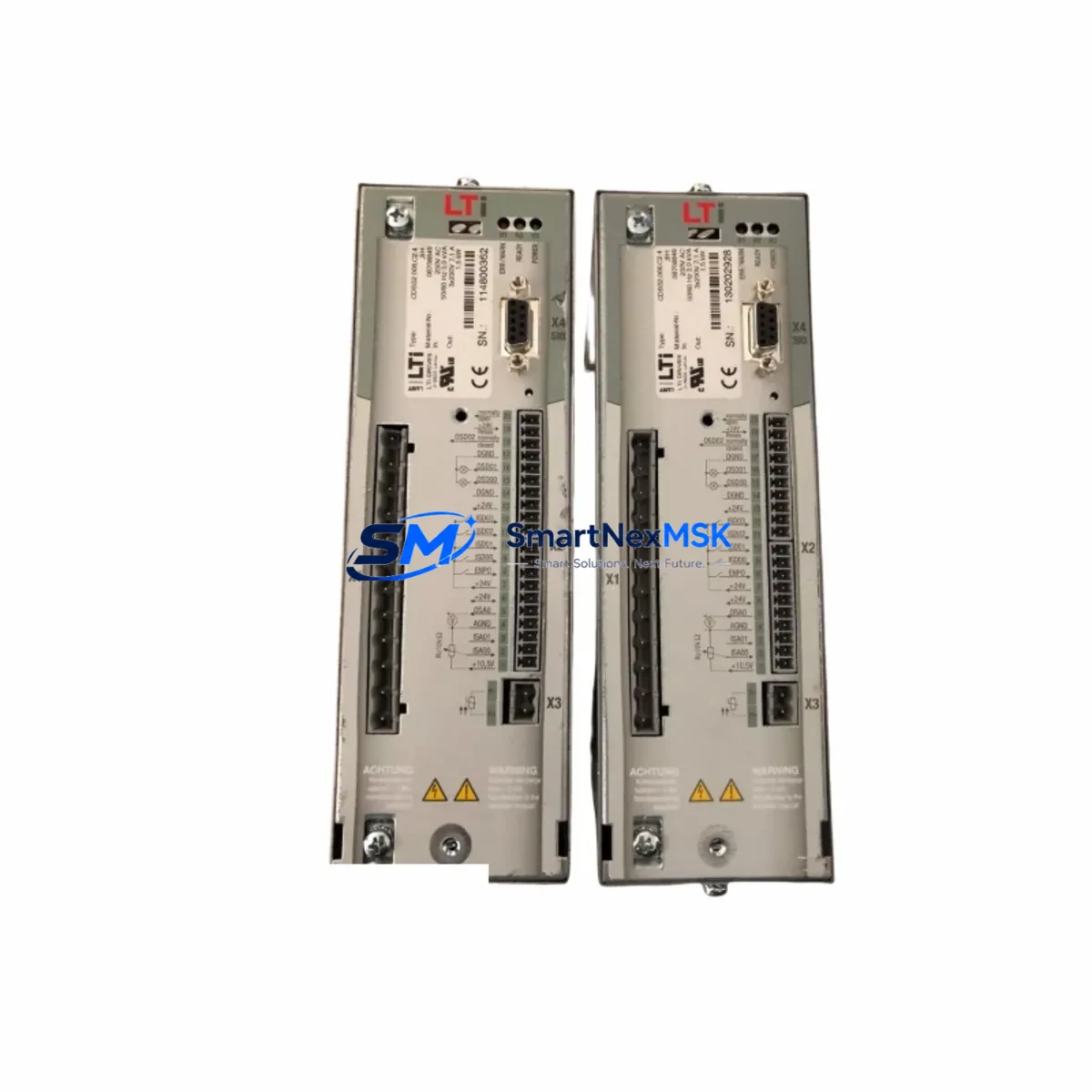
LUST CDB32.008.C2.4 Spare for CDB32 Automation: Spare Replacement & Industrial Downtime Risk Control
The LUST CDB32.008.C2.4 is a single-axis servo drive amplifier from LUST Antriebstechnik’s CDB32 series, engineered for precision motion control in demanding industrial automation environments. Whether you are managing a planned maintenance shutdown, responding to an unplanned axis fault, or building a proactive spare parts inventory for aging servo systems, the CDB32.008.C2.4 represents a critical line-of-defense component that maintenance and procurement engineers must keep readily available.
Rated at 0.8 A continuous output current and designed for 24 VDC logic supply with a single-phase or three-phase AC power input, the CDB32.008.C2.4 integrates seamlessly into existing CDB32-series control cabinets without requiring firmware reconfiguration when replacing a like-for-like unit. Its compact DIN-rail or panel-mount form factor makes it suitable for space-constrained control enclosures commonly found in packaging lines, textile machinery, printing equipment, and general-purpose servo positioning systems.
For maintenance engineers, the CDB32.008.C2.4 is not an isolated component — it operates within a broader electrical ecosystem. When replacing this drive, a thorough site inspection should include verification of the 24 VDC auxiliary power supply module feeding the drive’s logic board, inspection of the motor feedback cable (resolver or encoder interface), and confirmation that the motor power cable shielding and connector integrity are intact. Degraded shielding on feedback lines is a common root cause of recurring drive faults that are misdiagnosed as drive failures.
Procurement engineers sourcing the CDB32.008.C2.4 as a long-term spare should also consider stocking companion components from the CDB32 series ecosystem. The CDB32 platform typically shares a common DC bus architecture, meaning that a DC bus capacitor bank or braking resistor module within the same cabinet may be subject to similar aging cycles. Fuses protecting the drive’s input stage, terminal blocks on the I/O expansion connector, and the 24 VDC SMPS (switched-mode power supply) feeding the control logic are all components that should be inspected and potentially replaced during the same maintenance window.
In systems where the CDB32.008.C2.4 communicates via a fieldbus interface — such as CANopen, PROFIBUS-DP, or a serial RS-232/RS-485 link — the communication module or gateway card should be verified for firmware compatibility after a drive swap. If the system uses a LUST CDD or CDM series master drive in a multi-axis configuration, confirming that the replacement drive’s parameter set matches the original is essential before resuming production. Parameter backup via the LUST DriveManager software prior to any replacement is strongly recommended.
For facilities running legacy automation systems where the CDB32 series is no longer in active production, maintaining a buffer stock of two to three units per production line is a widely adopted strategy among reliability engineers. The CDB32.008.C2.4 is tested and shipped with full functional verification, and each unit is covered by a 12-month warranty from the date of shipment, giving procurement teams confidence in long-term supply continuity.
Spare Maintenance Table
| Parameter | Specification |
|---|---|
| SKU / Part Number | CDB32.008.C2.4 |
| Brand | LUST Antriebstechnik |
| Series | CDB32 |
| Product Type | Single-Axis Servo Drive Amplifier |
| Continuous Output Current | 0.8 A |
| Logic Supply Voltage | 24 VDC |
| Feedback Interface | Resolver / Incremental Encoder |
| Communication Options | CANopen, PROFIBUS-DP, RS-232/RS-485 |
| Mounting | DIN Rail / Panel Mount |
| Origin | Germany (DE) |
| Weight | 3.9 kg |
| Compatibility | CDB32 Series; LUST CDD/CDM multi-axis systems |
| Application Environment | Packaging, Textile, Printing, General Servo Positioning |
| Maintenance Recommendation | Replace fuses, inspect feedback cables, verify DC bus components during same maintenance window |
| Warranty | 12 Months from Date of Shipment |
| Testing | Full functional verification before shipment |
Maintenance Planning for Continuous Operation
Effective maintenance planning for a CDB32.008.C2.4-equipped system goes well beyond the drive itself. During a scheduled control cabinet inspection, maintenance engineers should systematically evaluate every component in the servo drive’s electrical circuit. The 24 VDC SMPS module — often a LUST or third-party branded unit mounted adjacent to the drive — should be load-tested to confirm output voltage stability under full logic demand. Voltage sag on the 24 VDC rail is a known cause of intermittent drive faults and communication dropouts.
The motor power contactor or solid-state relay upstream of the CDB32.008.C2.4 should be inspected for contact wear, particularly in applications with frequent start-stop cycles. Input-side fuses or circuit breakers protecting the drive’s AC supply should be replaced on a time-based schedule rather than waiting for failure. Terminal blocks on the I/O connector — used for enable signals, fault outputs, and analog reference inputs — should be checked for loose connections and oxidation, especially in humid or vibration-prone environments.
If the system includes a LUST HMI operator panel or a third-party HMI communicating with the drive via serial link, the communication cable and connector should be inspected for continuity and shielding integrity. Signal isolators on analog reference inputs (±10 V speed or torque reference) help protect the drive’s input stage from ground loop interference and should be included in the spare parts kit. Braking resistors connected to the drive’s regenerative energy output should be checked for resistance drift and thermal discoloration, which indicate overload history.
For multi-axis systems using a shared DC bus, the bus capacitor bank and any DC bus fuses should be part of the periodic inspection checklist. A failing capacitor bank can cause overvoltage faults across all drives on the bus, leading to a full production line shutdown rather than a single-axis fault — a scenario that significantly amplifies downtime cost and recovery time.
Site Replacement Workflow
When replacing a failed or end-of-life CDB32.008.C2.4 on-site, the following workflow minimizes downtime and ensures system compatibility:
Step 1 — Parameter Backup: Before powering down the failed drive, attempt to connect via LUST DriveManager software and export the full parameter set. If the drive is non-responsive, retrieve the parameter backup from your maintenance management system or from a previously saved configuration file.
Step 2 — Power Isolation: Isolate the AC supply and 24 VDC logic supply to the drive. Verify zero energy state using a calibrated multimeter before opening the cabinet.
Step 3 — Cable Labeling and Disconnection: Label all motor power, feedback, I/O, and communication cables before disconnection. Photograph the wiring layout for reference. Disconnect in reverse order: communication, I/O, feedback, motor power, AC supply.
Step 4 — Drive Removal and Inspection: Remove the failed CDB32.008.C2.4 and inspect the mounting rail, adjacent components, and wiring harness for signs of heat damage, arcing, or insulation degradation. Address any findings before installing the replacement unit.
Step 5 — Replacement Installation: Mount the new CDB32.008.C2.4, reconnect all cables in the documented order, and verify terminal torque specifications. Confirm that the replacement unit’s hardware revision is compatible with the existing firmware and parameter set.
Step 6 — Parameter Restore and Commissioning: Upload the saved parameter set via DriveManager. Perform a no-load test run to verify drive response, then a loaded test run at reduced speed before returning the axis to full production speed.
This structured replacement workflow reduces mean time to repair (MTTR) and eliminates the risk of commissioning errors that can cause secondary failures or product quality issues on restart.
Spare Parts Support FAQ
Q1: What is the warranty coverage for the CDB32.008.C2.4?
Each CDB32.008.C2.4 unit supplied by SMARTNEXMSK is covered by a 12-month warranty from the date of shipment. The warranty covers manufacturing defects and functional failures under normal operating conditions. Prior to shipment, every unit undergoes full functional verification testing to confirm output performance, communication interface integrity, and I/O response.
Q2: How do I confirm compatibility between the replacement CDB32.008.C2.4 and my existing system?
Compatibility verification should include confirming the hardware revision of the replacement unit against the original, verifying that the motor feedback type (resolver or encoder) matches the drive’s configured feedback interface, and ensuring that the fieldbus communication protocol and baud rate settings are consistent with the existing network configuration. SMARTNEXMSK’s technical team can assist with compatibility confirmation prior to order placement.
Q3: What is the recommended spare parts inventory strategy for CDB32 series drives?
For production lines with one to three CDB32-equipped axes, maintaining one spare CDB32.008.C2.4 unit on-site is the minimum recommended buffer. For lines with four or more axes, a two-unit buffer is advisable. Given that the CDB32 series is a mature product line, lead times for new units can vary; maintaining an on-site spare eliminates the risk of extended downtime while awaiting resupply. SMARTNEXMSK offers long-term supply agreements for customers requiring guaranteed stock availability.
Q4: Can the CDB32.008.C2.4 replace other CDB32 series variants with different current ratings?
The CDB32.008.C2.4 is rated for 0.8 A continuous output and is designed for specific motor load profiles. Substituting a different current-rated variant (e.g., CDB32.016 or CDB32.024) requires careful evaluation of the motor’s rated current, peak torque demand, and thermal envelope. Cross-variant substitution should only be performed after consulting the CDB32 series technical documentation and, where necessary, LUST Antriebstechnik’s application engineering guidance. SMARTNEXMSK can provide technical support for cross-variant compatibility assessment.
© 2026 SMARTNEXMSK. All rights reserved.
Original Source: https://smartnexmsk.com
Contact: [email protected] | +86 18259474341