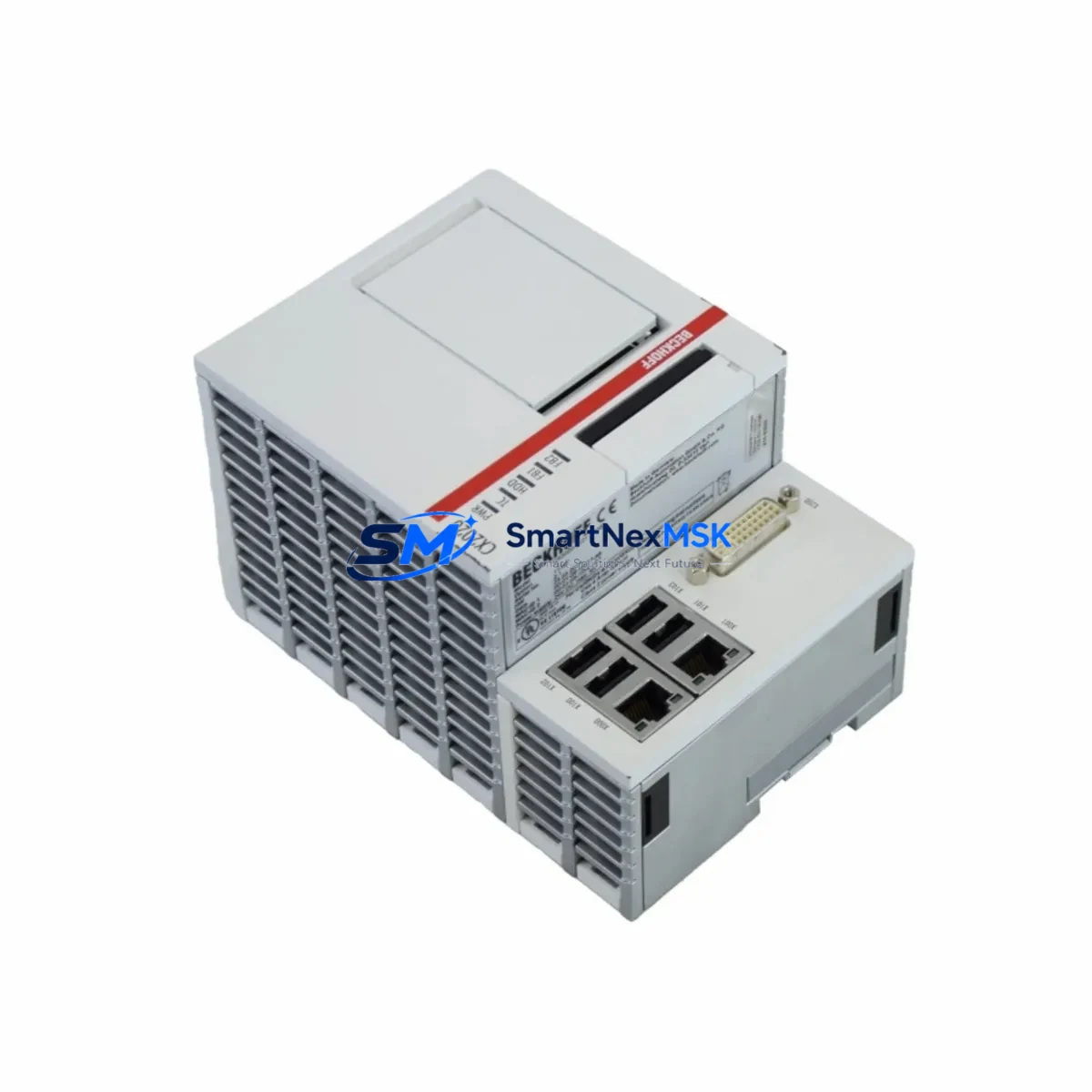
Mitsubishi FR-CV-H30K Spare for FR-CV Series Automation: Spare Replacement & Industrial Downtime Risk Control
The Mitsubishi Electric FR-CV-H30K is a 30kW regenerative converter unit designed for use within the FR-CV Series drive system architecture. As a critical power-front-end component, it enables four-quadrant operation and regenerative braking energy return to the AC supply, making it indispensable in high-cycle industrial applications such as cranes, hoists, centrifuges, and large conveyor systems. When this unit fails or degrades, the entire drive train is at risk of unplanned shutdown — a scenario that maintenance and procurement engineers must plan against with a verified, ready-to-deploy spare.
Sourced as an original Mitsubishi Electric spare part, the FR-CV-H30K is fully compatible with the FR-CV Series system configuration and is supplied with a 12-month warranty, pre-shipment functional testing, and traceable documentation. Whether you are managing a planned overhaul, responding to an emergency fault, or building a strategic spare parts inventory for aging drive infrastructure, this unit ships ready for immediate site installation.
Spare Maintenance Table
| Parameter | Specification |
|---|---|
| SKU / Part Number | FR-CV-H30K |
| Brand | Mitsubishi Electric |
| Series | FR-CV Series |
| Product Type | Regenerative Converter Unit |
| Rated Power | 30 kW |
| Input Voltage | 3-phase 380–480V AC (H-class) |
| Topology | PWM Regenerative Converter (4-quadrant) |
| Compatibility | FR-CV Series; pairs with FR-A700 / FR-F700 / FR-E700 inverter units via DC bus link |
| Cooling Method | Forced air cooling (internal fan) |
| Installation | Panel-mount, DIN rail or screw-fixed; vertical orientation required |
| Operating Temperature | -10°C to +50°C (derate above 40°C) |
| Protection Rating | IP20 (panel installation) |
| Origin | Japan |
| Weight | Approx. 4.8 kg |
| Warranty | 12 months from shipment date |
| Pre-shipment Test | Functional power-on and parameter verification |
| Maintenance Recommendation | Inspect DC bus capacitors, cooling fan, and input reactor every 12–18 months; replace electrolytic capacitors at 5-year intervals or per Mitsubishi service bulletin |
Maintenance Planning for Continuous Operation
Replacing the FR-CV-H30K in a live production environment requires a structured approach that goes beyond swapping the converter unit itself. Maintenance engineers should treat this replacement as an opportunity to audit the entire drive front-end and associated control cabinet components to prevent secondary failures and reduce the risk of repeat downtime.
Before powering down the system, verify the condition of the FR-BEL or FR-BIF input reactor connected upstream of the converter — a degraded reactor can cause harmonic distortion that accelerates converter capacitor aging. Inspect the DC bus fuses and DC link capacitor bank for signs of bulging, leakage, or elevated ESR; these are common failure companions to a converter unit fault. If the system uses a FR-A740 or FR-F740 inverter on the same DC bus, confirm that the inverter’s internal capacitors and gate driver boards are within service life before restoring power.
Check the control power supply unit (CPSU) feeding the converter’s logic board — an unstable 24VDC rail is a frequent root cause of spurious converter faults that are misdiagnosed as converter hardware failure. Inspect all terminal block connections (TB1, TB2) for oxidation and torque compliance; loose power terminals on a 30kW converter can cause arc damage within weeks of reinstallation. Review the communication link between the converter and the PLC or SCADA system — if the site uses a Mitsubishi MELSEC Q-series or iQ-R PLC with CC-Link or SSCNET III/H for drive coordination, verify that the network adapter module and parameter settings are intact after the swap.
For sites running older FR-CV installations, it is advisable to simultaneously stock a spare FR-CV-H15K or FR-CV-H22K unit for adjacent lower-power drive circuits, as these share similar capacitor and fan service intervals. If the control cabinet includes Mitsubishi A1SY10 or QY10 output modules driving contactors or relay logic associated with the regenerative circuit, inspect those modules for contact wear. Signal isolators on the speed reference and torque limit analog inputs should also be checked — a drifting 4–20mA signal isolator can cause the converter to operate outside its optimal regeneration window, increasing thermal stress.
Finally, confirm that the surge protection devices (SPDs) on the AC input and the EMC filter upstream of the converter are functional. A failed SPD that has absorbed a transient event may appear intact visually but offer no further protection — this is a common oversight during emergency replacements that leads to repeat converter failures within months.
Site Replacement Workflow
Step 1 — Isolation & Lockout: Isolate the main AC supply and DC bus. Discharge the DC bus capacitors fully (minimum 10 minutes after isolation, verify with a calibrated DC voltmeter before touching bus bars). Apply LOTO per site procedure.
Step 2 — Documentation: Photograph all wiring connections, terminal labels, and parameter settings on the existing unit’s keypad or connected GOT2000 HMI before removal. Record the FR-CV-H30K’s current parameter set using FR Configurator2 if accessible.
Step 3 — Mechanical Removal: Disconnect AC input (R/S/T), DC bus output (P/N), and control wiring (CN1, CN2). Remove mounting screws and extract the unit. Note the orientation — the FR-CV-H30K requires vertical mounting for correct cooling airflow.
Step 4 — Inspection & Cleaning: Clean the cabinet interior, inspect the bus bar connections for arc marks, and verify that the cooling duct is unobstructed. Replace the cabinet filter mat if present.
Step 5 — Installation of Replacement Unit: Mount the new FR-CV-H30K, reconnect all wiring per the original documentation and Mitsubishi FR-CV Installation Manual. Torque all power terminals to specification (refer to the manual for terminal torque values by wire gauge).
Step 6 — Parameter Restore & Commissioning: Restore the parameter set. Perform a no-load power-on test, verify DC bus voltage, check for fault codes, and confirm regenerative operation at low speed before returning to full production load.
Step 7 — Documentation & Spare Replenishment: Log the replacement in the CMMS, update the spare parts inventory, and initiate a reorder for the next FR-CV-H30K spare to maintain buffer stock continuity.
Spare Parts Support FAQ
Q1: Is the FR-CV-H30K still available as a new original spare, or only as a refurbished unit?
The FR-CV-H30K is supplied as a new original Mitsubishi Electric spare part. Each unit undergoes pre-shipment functional testing and is shipped with traceable documentation. Refurbished or reconditioned units are not offered — only factory-original stock is dispatched.
Q2: What does the 12-month warranty cover, and how is a warranty claim initiated?
The 12-month warranty covers manufacturing defects and functional failures under normal operating conditions from the date of shipment. It does not cover damage caused by incorrect installation, overvoltage events, or operation outside the rated parameters. To initiate a claim, contact [email protected] with the order reference, fault description, and site photos. Replacement or repair is assessed on a case-by-case basis with a typical response within 3 business days.
Q3: How do I confirm compatibility before ordering if my system uses a non-standard FR-CV configuration?
Provide your existing unit’s nameplate data (full model code, voltage class, and serial number prefix) along with the paired inverter model to our technical team at [email protected]. Compatibility is verified against Mitsubishi’s FR-CV Series compatibility matrix before shipment. For sites with customized DC bus configurations or multi-drive common DC bus setups, a pre-order technical review is recommended.
Q4: What is the recommended spare parts stocking strategy for FR-CV Series installations?
For critical production lines, maintain a minimum of one FR-CV-H30K on-site or in a regional warehouse with a replenishment lead time of no more than 5 business days. For multi-drive installations, consider stocking one spare per power class (e.g., H15K, H22K, H30K) rather than one per unit. Review and rotate stock every 3 years to prevent capacitor aging in stored units — store in a dry, temperature-controlled environment (5–35°C, <90% RH non-condensing) per Mitsubishi storage guidelines.
© 2026 SMARTNEXMSK. All rights reserved.
Original Source: https://smartnexmsk.com
Contact: [email protected] | +86 18259474341