
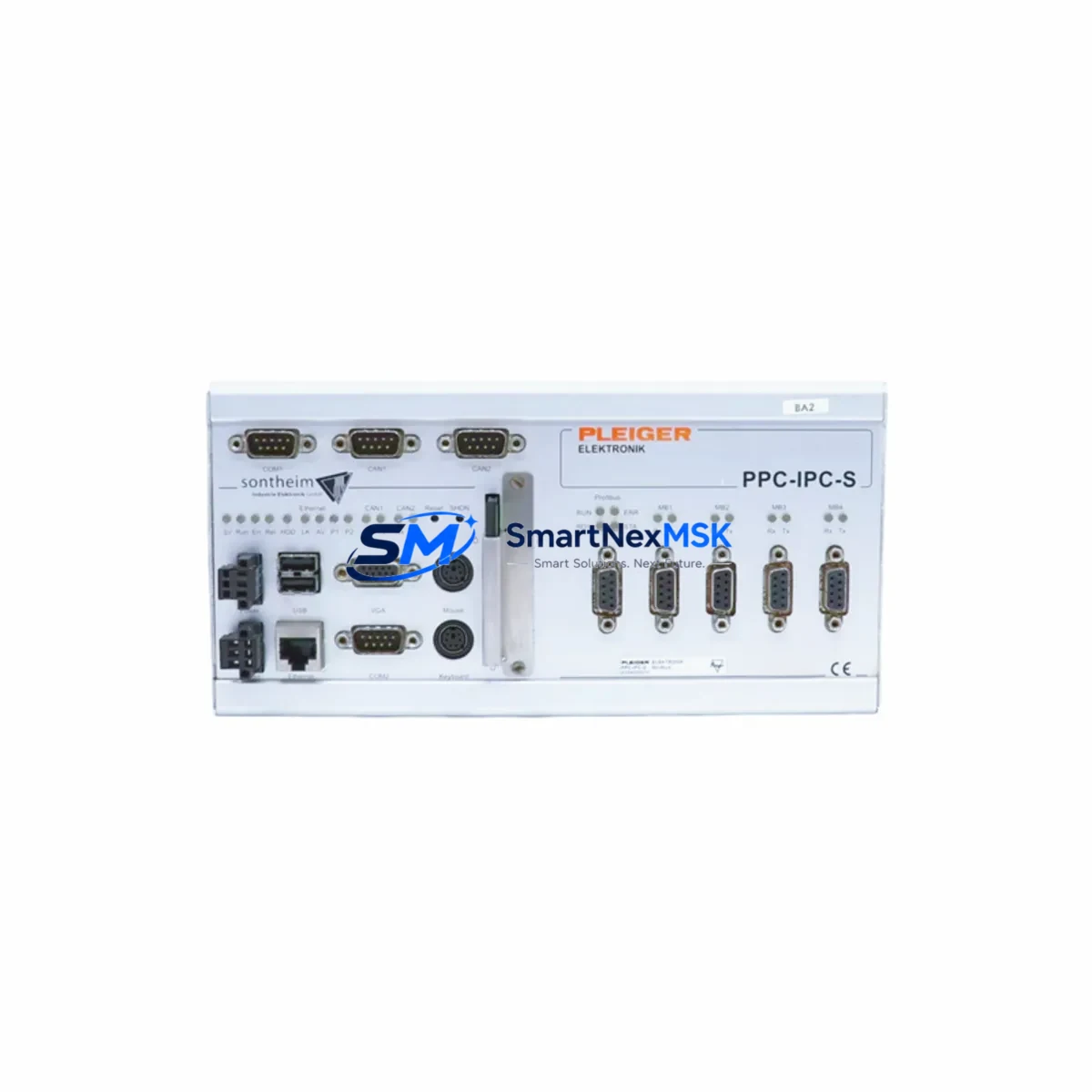
PLEIGER PPC-IPC-S2 Maintenance-Ready Spare for PPC Series Automation
The PLEIGER PPC-IPC-S2 is a critical industrial PC controller module designed for valve automation and process control applications within the PLEIGER PPC Series platform. For maintenance engineers and procurement teams managing aging control infrastructure, securing a verified spare of the PPC-IPC-S2 is a foundational step in any downtime-reduction strategy. Whether you are executing a planned shutdown, responding to an unscheduled fault, or building a strategic spare parts inventory for a long-running valve automation system, the PPC-IPC-S2 represents one of the highest-priority components to have on the shelf.
PLEIGER’s PPC Series is widely deployed in marine, offshore, and industrial valve control panels, where the IPC controller serves as the central processing unit coordinating I/O signals, actuator feedback, and communication with supervisory systems. A failure of the PPC-IPC-S2 can immediately halt valve positioning, disrupt process flow, and trigger cascading alarms across the control network. Fast access to a tested, original-specification replacement is therefore not optional — it is a core element of operational resilience.
This listing provides an original PLEIGER PPC-IPC-S2 spare, sourced from authorized supply channels, inspected prior to dispatch, and backed by a 12-month warranty covering manufacturing defects and functional performance. Each unit is tested for communication integrity, I/O response, and power rail stability before shipment, ensuring that the replacement module is field-ready upon arrival.
Spare Maintenance Table
| Part Number | PPC-IPC-S2 |
| Brand | PLEIGER |
| Series | PPC Series |
| Product Type | Industrial PC Controller Module |
| Application | Valve Automation, Marine Control Panels, Process Control |
| Compatibility | PLEIGER PPC Series valve control systems; replaces legacy PPC-IPC-S1 and equivalent IPC variants |
| Communication Interface | Serial / fieldbus per PPC platform specification |
| Mounting | DIN rail / panel-mount per PPC enclosure standard |
| Operating Temperature | -10°C to +55°C (industrial grade) |
| Power Supply | 24 VDC nominal (per PPC panel supply rail) |
| Origin | Germany |
| Condition | New / Original Spare |
| Pre-shipment Test | Power-on, I/O check, communication verification |
| Warranty | 12 Months — covers manufacturing defects and functional performance |
| Lead Time | In-stock units ship within 2–5 business days |
Maintenance Planning for Continuous Operation
When a PPC-IPC-S2 failure is identified — whether through a diagnostic alarm, communication dropout, or physical inspection during a scheduled panel audit — the replacement process should be treated as part of a broader system health review. Maintenance engineers are advised not to limit their inspection to the IPC module alone. The surrounding components in the same control cabinet and electrical circuit are subject to the same operational stresses and should be evaluated concurrently.
Begin with the 24 VDC panel power supply feeding the PPC-IPC-S2. A degraded or undersized power supply is a common root cause of IPC instability and should be load-tested before the new module is commissioned. Inspect the terminal blocks and wiring harness connecting the IPC to the I/O field devices — corroded terminals or loose crimps can introduce signal noise that mimics controller faults. Check the digital input and output modules in the same rack or panel section; if the IPC was reporting I/O errors prior to failure, the fault may originate in a downstream I/O card rather than the controller itself.
For systems using fieldbus or serial communication, verify the integrity of the communication cables and connectors between the PPC-IPC-S2 and any upstream SCADA, DCS, or HMI. A damaged RS-485 cable or a failed signal isolator can corrupt data transmission and cause the IPC to appear unresponsive. If the panel includes a PLEIGER PPC operator panel or local HMI, confirm that the display and keypad interface are functioning correctly after IPC replacement, as these units share the same communication bus.
Relay outputs driving valve actuators should also be inspected. Intermediate relay modules in the output circuit — particularly those switching inductive loads — are subject to contact wear and may have degraded alongside the IPC. Replace any relay showing signs of arcing, contact resistance increase, or intermittent switching. Similarly, check fuse holders and miniature circuit breakers protecting the IPC power input and output circuits; a nuisance trip or a slow-blow fuse operating near its rating can cause intermittent resets that are difficult to diagnose without a spare on hand.
For older PPC installations, consider auditing the backup battery or capacitor maintaining the IPC’s real-time clock and parameter memory. A depleted backup power source will cause the replacement module to lose configuration data after a power cycle, requiring re-parameterization on every restart. Procuring a replacement battery or supercapacitor module at the same time as the PPC-IPC-S2 eliminates this risk.
Site Replacement Workflow
Step 1 — Isolation and Backup: Before removing the PPC-IPC-S2, isolate the panel from the process by placing all associated valves in a safe position. Export or photograph the current IPC configuration, parameter set, and I/O mapping. If the system supports online backup via the PPC software tool, perform a full configuration export to a laptop or USB drive.
Step 2 — Physical Removal: De-energize the panel supply rail. Disconnect all wiring connectors from the PPC-IPC-S2 in sequence, labeling each connector if not already marked. Remove the module from its DIN rail or panel mounting position. Inspect the mounting slot and backplane connector for corrosion or mechanical damage before installing the replacement.
Step 3 — Installation and Configuration: Mount the new PPC-IPC-S2 and reconnect all wiring connectors in reverse order. Restore the saved configuration using the PPC software tool or manual parameter entry. Verify that the firmware version of the replacement module is compatible with the existing PPC system software; if a firmware update is required, perform it before reconnecting to the live network.
Step 4 — Commissioning and Verification: Re-energize the panel and observe the IPC startup sequence. Confirm that all I/O channels report correctly, that communication with the upstream system is established, and that valve positioning commands are executed as expected. Document the replacement in the maintenance log, including the date, the replaced module’s serial number, and the commissioning test results.
Step 5 — Spare Stock Replenishment: After a successful replacement, initiate a procurement order to restore the spare PPC-IPC-S2 to your inventory. For critical valve automation systems, a minimum of one spare IPC module per installed panel is recommended. For multi-panel installations or remote sites with long logistics lead times, a ratio of one spare per three panels is a practical baseline.
Spare Parts Support FAQ
Q1: Is the PPC-IPC-S2 a direct drop-in replacement for older PLEIGER PPC IPC variants?
The PPC-IPC-S2 is designed as the current-generation IPC module for the PLEIGER PPC Series and is backward-compatible with most PPC panel configurations. However, firmware version alignment and connector pinout verification are recommended before installation, particularly in panels originally built with first-generation PPC-IPC-S1 modules. Our technical team can assist with compatibility confirmation prior to shipment.
Q2: How is the PPC-IPC-S2 tested before shipment?
Each unit undergoes a pre-shipment functional test covering power-on initialization, I/O channel response, and communication interface verification. Units that do not pass all test criteria are quarantined and not dispatched. A test record is available upon request for quality-critical procurement processes.
Q3: What does the 12-month warranty cover?
The 12-month warranty covers manufacturing defects and functional failures under normal operating conditions. It does not cover damage resulting from incorrect installation, overvoltage events, or physical mishandling. Warranty claims are processed with a replacement-first policy to minimize downtime; a replacement unit is dispatched upon receipt of the defective module.
Q4: Can you support long-term or blanket spare parts orders for multi-site installations?
Yes. For customers managing multiple PPC Series installations or operating in regions with extended logistics lead times, we support blanket purchase orders, consignment stock arrangements, and scheduled delivery programs. Contact our sales team to discuss volume pricing and inventory reservation options for the PPC-IPC-S2 and associated PPC Series components.
© 2026 SMARTNEXMSK. All rights reserved.
Original Source: https://smartnexmsk.com
Contact: [email protected] | +86 18259474341