
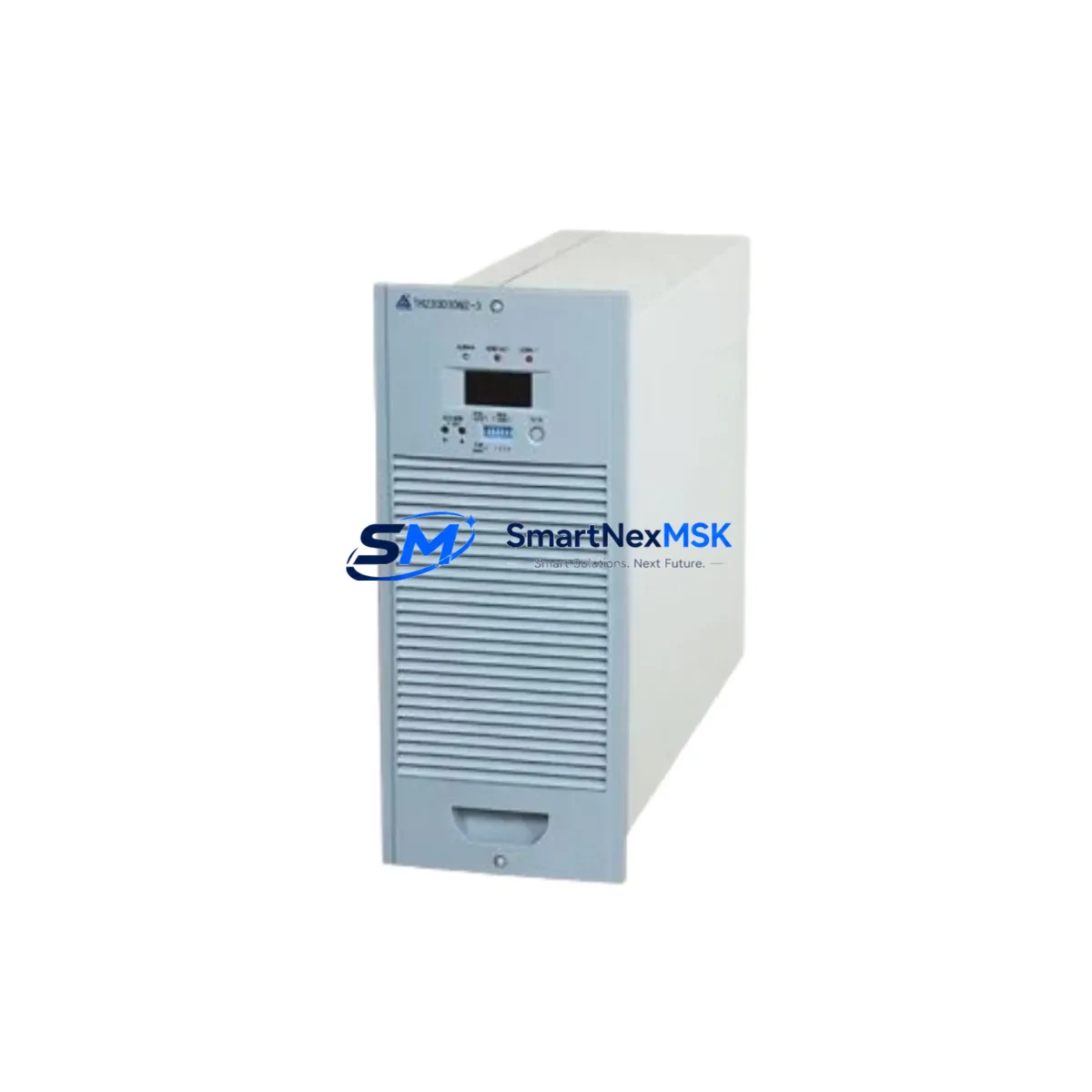
TONHE TH230D40NZ-3 Spare for TH Series Automation: Spare Replacement & Industrial Downtime Risk Control
The TONHE TH230D40NZ-3 is an original three-phase force-air cooled rectifier module engineered for continuous-duty industrial automation systems operating within the TH Series platform. For maintenance engineers managing aging control cabinets, power conversion panels, and drive systems, this module represents a critical spare that directly determines uptime reliability. Whether you are executing a planned shutdown inspection, responding to an unplanned fault, or building a strategic spare parts inventory, having a verified TH230D40NZ-3 on hand eliminates the most common cause of extended downtime: waiting for a replacement rectifier to arrive.
In industrial environments where three-phase AC-to-DC conversion is central to motor drives, servo amplifiers, and DC bus architectures, the rectifier module is a high-stress component subject to thermal cycling, capacitive aging, and surge events. The TH230D40NZ-3 is designed to handle these conditions, but like all power electronics, it has a finite service life. Procurement engineers sourcing this module should confirm compatibility with the existing TH Series control cabinet configuration, verify input voltage range (typically 3-phase 380V AC), output DC bus voltage, and rated current capacity before installation.
Every unit supplied by SMARTNEXMSK is tested prior to shipment and backed by a 12-month warranty, ensuring that the replacement module performs to original specification from the moment it is installed on site.
Spare Maintenance Table
| Parameter | Specification / Recommendation |
|---|---|
| Part Number | TH230D40NZ-3 |
| Brand | TONHE |
| Series | TH Series |
| Module Type | Three-Phase Force-Air Cooled Rectifier Module |
| Input Voltage | 3-Phase 380V AC (±10%), 50/60 Hz |
| Output | DC Bus (rated current 40A, inferred from SKU suffix) |
| Cooling Method | Forced Air (fan-cooled) |
| Origin | China (CN) |
| Compatibility | TH Series industrial automation control cabinets and drive systems |
| Installation | DIN rail or panel mount; verify bus bar torque spec before installation |
| Application Environment | Industrial control rooms, motor drive panels, power conversion cabinets |
| Maintenance Interval | Inspect cooling fan and heat sink every 6–12 months; replace module at first sign of thermal runaway or output ripple increase |
| Pre-Shipment Test | Yes — functional and load test performed before dispatch |
| Warranty | 12 Months from date of shipment |
| Long-Term Supply | Available — stocked for legacy TH Series system support |
Maintenance Planning for Continuous Operation
When replacing the TH230D40NZ-3 rectifier module during a planned or emergency maintenance event, a thorough maintenance engineer will not stop at the module itself. The rectifier sits at the front end of the DC power chain, and its failure or degradation often places stress on adjacent components that may themselves be approaching end-of-life.
Begin by inspecting the input AC contactor and fuse assembly upstream of the rectifier — blown fuses or a welded contactor are common co-failure indicators. Check the DC bus capacitor bank for bulging, leakage, or elevated ESR, as capacitor degradation is frequently the root cause of rectifier overstress. If the system uses a TONHE TH Series braking resistor module or regenerative braking unit, verify its condition and connection integrity, since a failed braking circuit can back-feed voltage spikes into the rectifier bridge.
On the output side, inspect the DC bus bar connections and terminal blocks for oxidation, loose torque, or thermal discoloration — these are silent contributors to rectifier failure. If the cabinet includes a TONHE TH Series inverter module or servo drive unit sharing the same DC bus, confirm that the drive’s input filter capacitors are within specification before energizing the new rectifier.
For systems with PLC I/O modules monitoring the drive enable signal or fault relay output, verify that the 24VDC control power supply feeding the PLC rack is stable — a drooping control supply can cause spurious fault trips that are misdiagnosed as rectifier failures. Similarly, check any signal isolation modules or optocoupler interface cards in the fault feedback loop, as degraded isolation can corrupt fault diagnostics.
If the system includes a communication module (PROFIBUS, Modbus RTU, or CANopen) linked to the drive or rectifier controller, confirm that the module’s termination resistors are intact and that the network is free of ground loops — a common issue in older cabinets that have undergone multiple repair cycles. Finally, inspect the cooling fan assembly for the rectifier module itself: a seized or slow fan is the single most common cause of premature rectifier failure in force-air cooled designs.
Building a cabinet-level spare kit around the TH230D40NZ-3 — including a spare fuse set, a replacement cooling fan, and a standby DC bus capacitor module — reduces mean time to repair (MTTR) from hours to minutes and is the hallmark of a mature industrial maintenance program.
Site Replacement Workflow
Step 1 — Isolation & Lockout/Tagout: De-energize the cabinet, apply LOTO, and verify zero voltage on the DC bus with a calibrated meter before touching any components. Allow the DC bus capacitors to discharge fully (minimum 5 minutes after power-off).
Step 2 — Document Existing Wiring: Photograph or sketch all AC input connections, DC output bus bar connections, fan power leads, and any control signal wiring before removal. The TH230D40NZ-3 replacement must be wired identically to maintain system compatibility.
Step 3 — Remove the Faulty Module: Disconnect AC input terminals, DC output bus bars, and the cooling fan connector. Remove mounting hardware and slide the module out of the cabinet rail or panel position.
Step 4 — Inspect the Mounting Position: Check the heat sink mounting surface for flatness and cleanliness. Apply fresh thermal interface material if the module uses a heatsink-to-chassis contact interface. Verify that the cabinet airflow path is unobstructed.
Step 5 — Install the TH230D40NZ-3 Replacement: Mount the new module, reconnect all terminals per the documented wiring, and torque all bus bar connections to specification. Reconnect the cooling fan and verify fan rotation direction before closing the cabinet.
Step 6 — Pre-Energization Check: Confirm input fuse ratings, verify no short circuits on the DC bus, and check that all downstream drive or inverter modules are in a safe state before applying power.
Step 7 — Functional Test: Energize the system, monitor DC bus voltage and output ripple, and confirm that the downstream drive or motor load operates normally. Log the replacement date and module serial number in the maintenance record.
This workflow is applicable whether the TH230D40NZ-3 is replacing a failed unit in an emergency or being installed as part of a scheduled life-cycle replacement to extend the operational life of an older TH Series automation system.
Spare Parts Support FAQ
Q1: Is the TH230D40NZ-3 a direct drop-in replacement for older TH Series rectifier modules?
A: Yes, the TH230D40NZ-3 is designed as a compatible replacement within the TONHE TH Series platform. However, always verify the input voltage rating, output current rating, and physical mounting dimensions against your existing installation before ordering, as sub-variants within the TH Series may have different bus bar configurations or fan connector pinouts.
Q2: What pre-shipment testing is performed on each unit?
A: Every TH230D40NZ-3 supplied by SMARTNEXMSK undergoes functional testing under load conditions prior to dispatch. Test records are available upon request. Units are packaged in anti-static, shock-resistant packaging to prevent transit damage.
Q3: What does the 12-month warranty cover, and how is a warranty claim handled?
A: The 12-month warranty covers manufacturing defects and functional failures under normal operating conditions. It does not cover damage caused by incorrect installation, overvoltage events, or physical mishandling. To initiate a warranty claim, contact [email protected] with the order number, installation date, and a description of the fault. Replacement or repair will be arranged promptly.
Q4: Can SMARTNEXMSK support long-term supply of TH230D40NZ-3 for multi-site maintenance programs?
A: Yes. SMARTNEXMSK maintains stock of TH Series spare modules to support ongoing maintenance programs, including multi-site industrial facilities and OEM service organizations. Blanket order arrangements and consignment stock options are available for high-volume customers. Contact our team to discuss your spare parts inventory strategy.
© 2026 SMARTNEXMSK. All rights reserved.
Original Source: https://smartnexmsk.com
Contact: [email protected] | +86 18259474341