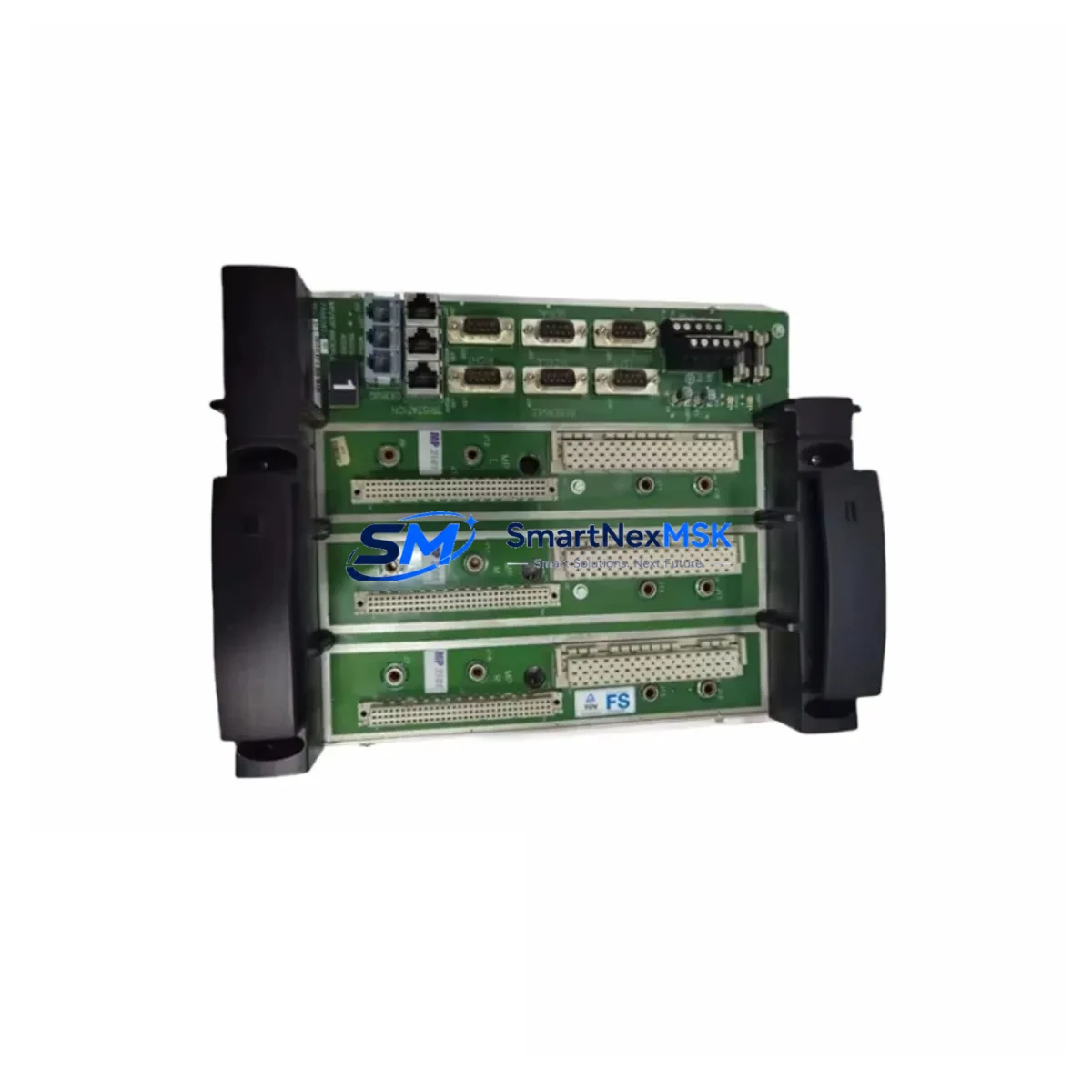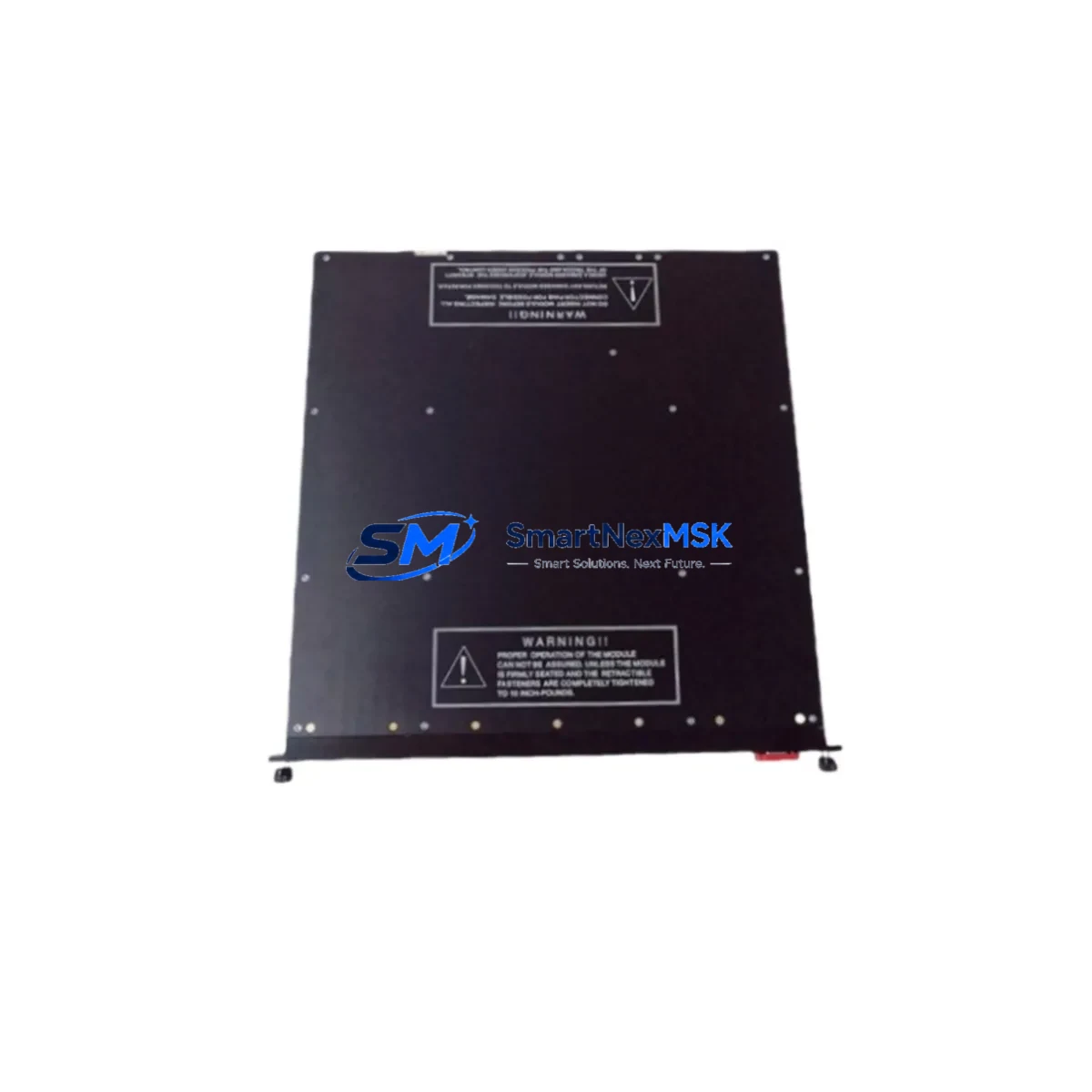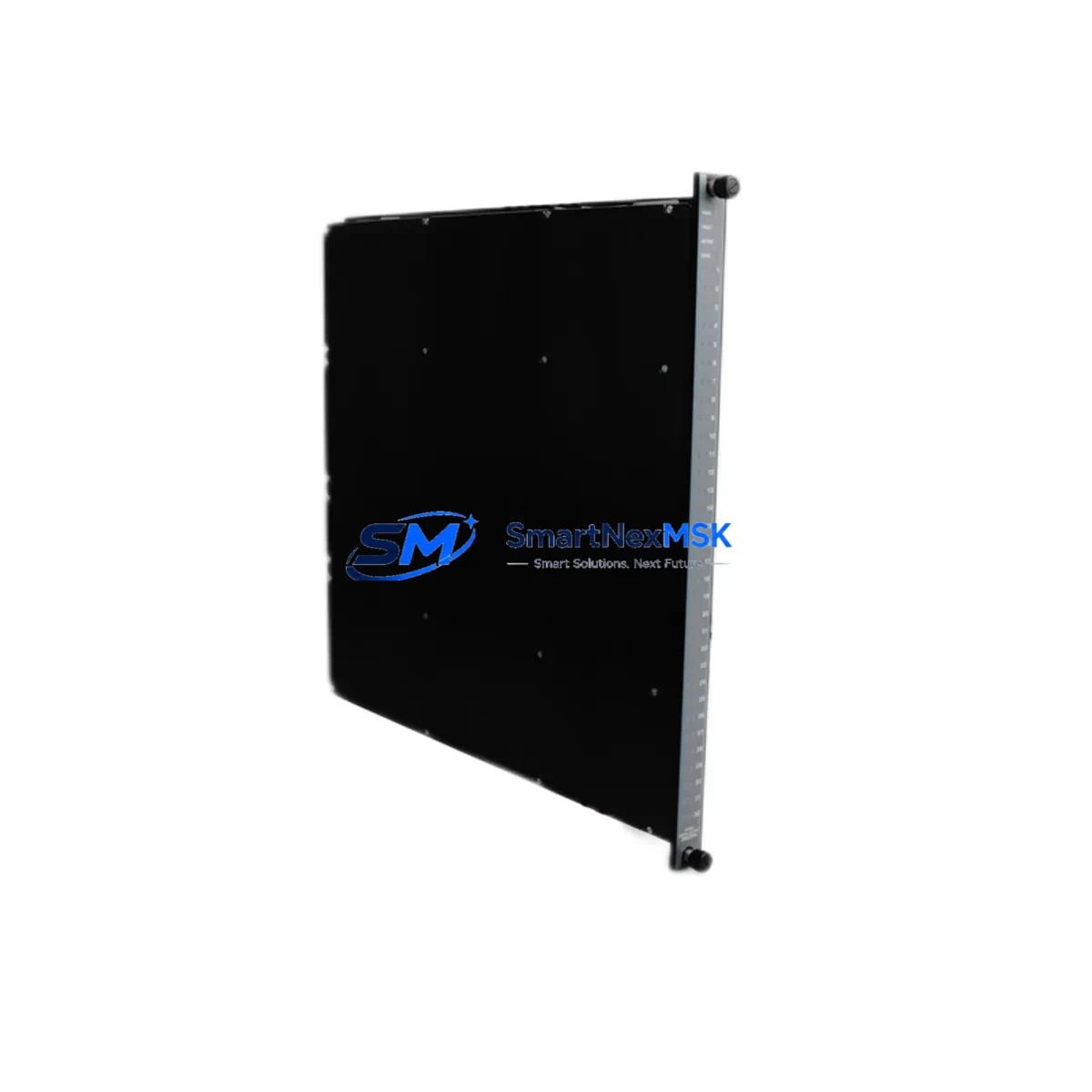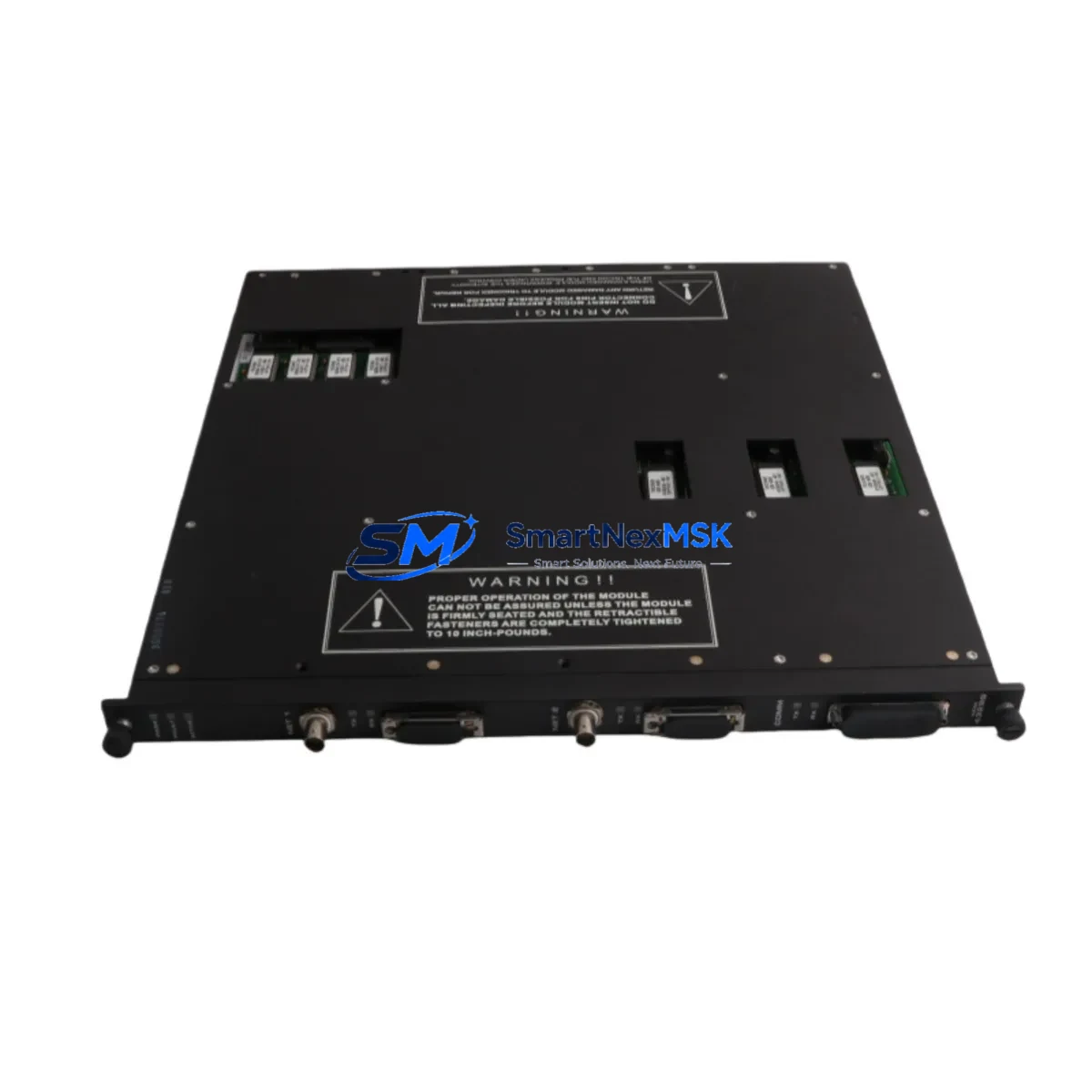
Triconex 4329G Retrofit-Ready Communication Module for Tricon TMR Control Systems
The Triconex 4329G is a high-availability communication module engineered for seamless integration into Tricon Triple Modular Redundant (TMR) Safety Instrumented Systems (SIS). Designed as a retrofit-ready, drop-in replacement for legacy Triconex communication hardware, the 4329G supports both OPC Server and Modbus TCP/IP protocols over dual redundant Ethernet ports — enabling engineers to modernize aging control networks without replacing the entire safety controller chassis or rewriting certified safety logic.
For facilities operating Tricon v9 or v10 main processors — including the Triconex 3008 and 3009 main processor modules — the 4329G provides a direct upgrade path that preserves existing I/O wiring, backplane slot assignments, and module addressing. This is critical in brownfield SIS environments where minimizing engineering rework and maintaining SIL 2/3 certification continuity are non-negotiable requirements.
Upgrade Compatibility Table
| Parameter | Details |
|---|---|
| Compatible Chassis | Tricon 3700A, 3700E, 3706A, 3721 main chassis; compatible with standard 7-slot and 14-slot Tricon backplanes |
| Replaces / Upgrades | Triconex 4329 (legacy), 4351B, 4352B communication modules; direct slot-for-slot replacement |
| Communication Protocols | OPC DA/AE, Modbus TCP/IP, TriStation 1131 programming interface |
| Network Interface | Dual redundant 10/100 Ethernet (RJ-45); supports network segmentation and VLAN configuration |
| Main Processor Compatibility | Triconex 3008, 3009 main processors; Tricon v9.x and v10.x firmware |
| Installation Requirement | Hot-swap capable; no chassis power-down required in most configurations (verify with site SIS MOC procedure) |
| Module Addressing | Slot-based addressing retained; no TriStation 1131 project re-download required for direct replacement |
| Debugging / Commissioning | TriStation 1131 v4.x+ diagnostic panel; verify OPC tag mapping and Modbus register table post-swap |
| Warranty | 12 months from date of shipment; covers manufacturing defects and functional failure under normal operating conditions |
Retrofit Planning for Existing Automation Systems
Successful integration of the Triconex 4329G into an existing SIS architecture requires a structured retrofit assessment. Begin by auditing the current communication module’s slot position within the Tricon chassis — typically slots 1 through 3 in a standard 7-slot backplane — and confirming that the Triconex 3700A or 3706A chassis backplane revision supports the 4329G’s dual-port Ethernet interface.
Power budget verification is the next critical step. The Tricon power supply modules — commonly the Triconex 8310 or 8312 DC power supply — must provide sufficient margin for the 4329G’s increased Ethernet processing load compared to older single-port communication modules. Confirm total chassis power draw against the power supply’s rated output before proceeding with the swap.
Terminal wiring for the 4329G uses standard RJ-45 Ethernet connections rather than the coaxial or proprietary connectors found on some legacy Triconex communication cards. If migrating from a Triconex 4351B or 4352B, the existing field wiring to I/O modules — including Triconex 3703E digital input modules and Triconex 3805E analog input modules — remains completely unchanged, as the 4329G communicates exclusively over the backplane bus and the Ethernet network, not through field terminal blocks.
For sites using TriStation 1131 as the programming and configuration environment, the 4329G appears as a standard communication module within the hardware configuration tree. In most direct-replacement scenarios, no project re-download is required — the existing certified safety program, including all function block logic, cause-and-effect matrices, and SIL-rated interlock sequences, remains intact on the main processor. However, engineers should verify the OPC server tag database and Modbus register mapping table against the DCS historian or SCADA system — typically a Honeywell Experion PKS, Emerson DeltaV, or third-party OPC client — to confirm that all process variable addresses remain correctly mapped after the module swap.
HMI screen updates are rarely required when replacing a communication module of the same protocol family, but operators should confirm that the Wonderware InTouch or equivalent HMI application is reading live data from the correct OPC server node name and IP address assigned to the 4329G. Communication link verification using a Modbus polling tool or OPC client browser is recommended before returning the SIS loop to automatic mode.
For sites planning a broader control system migration — for example, transitioning from a legacy Tricon v9 platform to a Tricon CX or integrating with a Triconex TREX field communicator for remote diagnostics — the 4329G serves as a stable interim communication bridge, allowing the DCS and SIS to remain synchronized while the broader migration project is phased in over multiple planned outage windows.
Downtime Control During System Migration
Minimizing unplanned downtime is the primary operational concern when replacing any component within a certified Safety Instrumented System. The Triconex 4329G’s hot-swap capability — supported in Tricon TMR architectures where the remaining two legs of the triple-redundant processor continue to execute the safety program — allows the communication module to be replaced during a controlled maintenance window without initiating a full process shutdown.
Prior to the swap, engineers should place the affected SIS loop in manual bypass mode in accordance with the site’s Management of Change (MOC) and Safety Bypass Authorization procedures. The existing safety program logic, including all latched outputs, timer states, and interlock conditions, is preserved in the Triconex 3008 or 3009 main processor’s non-volatile memory and is not affected by the communication module replacement.
Post-installation, the recommended commissioning sequence is: (1) confirm module power-up and backplane communication via the TriStation 1131 diagnostic panel; (2) verify Ethernet link status on both redundant ports; (3) confirm OPC server connectivity from the DCS historian; (4) validate Modbus TCP register reads against the process variable live values; (5) release the SIS loop from bypass and confirm automatic mode operation. This structured sequence typically allows a 4329G replacement to be completed within a two-to-four hour planned maintenance window, significantly reducing the risk of extended process downtime.
All units supplied by SMARTNEXMSK are pre-tested under functional load conditions prior to shipment, with test records available upon request. In-stock availability ensures same-day or next-business-day dispatch for urgent retrofit and emergency replacement requirements.
Retrofit Support FAQ
Q1: Is the Triconex 4329G a direct drop-in replacement for the legacy 4329 and 4351B communication modules?
Yes. The 4329G occupies the same backplane slot and uses the same slot-based module addressing as the legacy 4329 and 4351B. In most Tricon v9 and v10 configurations, no TriStation 1131 project modification or re-download is required. Engineers should verify the OPC tag mapping and Modbus register table against the connected DCS or SCADA system after installation.
Q2: What wiring changes are required when installing the 4329G?
Field terminal wiring to I/O modules is not affected. The 4329G connects to the plant network via standard RJ-45 Ethernet cables on its two redundant network ports. If the existing network infrastructure uses fiber optic uplinks, a managed Ethernet switch with copper-to-fiber conversion will be required at the panel level.
Q3: How is compatibility with the existing safety program and SIL certification verified?
The 4329G does not modify or interact with the certified safety logic stored in the Tricon main processor. Compatibility is verified by confirming the chassis backplane revision, main processor firmware version (v9.x or v10.x), and TriStation 1131 hardware configuration file. SMARTNEXMSK can provide the module’s factory test report and firmware version documentation to support your site’s SIL verification and MOC process.
Q4: What does the 12-month warranty cover, and what is the process for a warranty claim?
The 12-month warranty covers manufacturing defects and functional failure under normal operating and storage conditions from the date of shipment. It does not cover damage resulting from incorrect installation, overvoltage, or unauthorized modification. To initiate a warranty claim, contact SMARTNEXMSK at [email protected] with the order reference, module serial number, and a description of the observed fault. Replacement units are dispatched upon fault confirmation, with advance replacement available for critical SIS applications.
© 2026 SMARTNEXMSK. All rights reserved.
Original Source: https://smartnexmsk.com
Contact: [email protected] | +86 18259474341