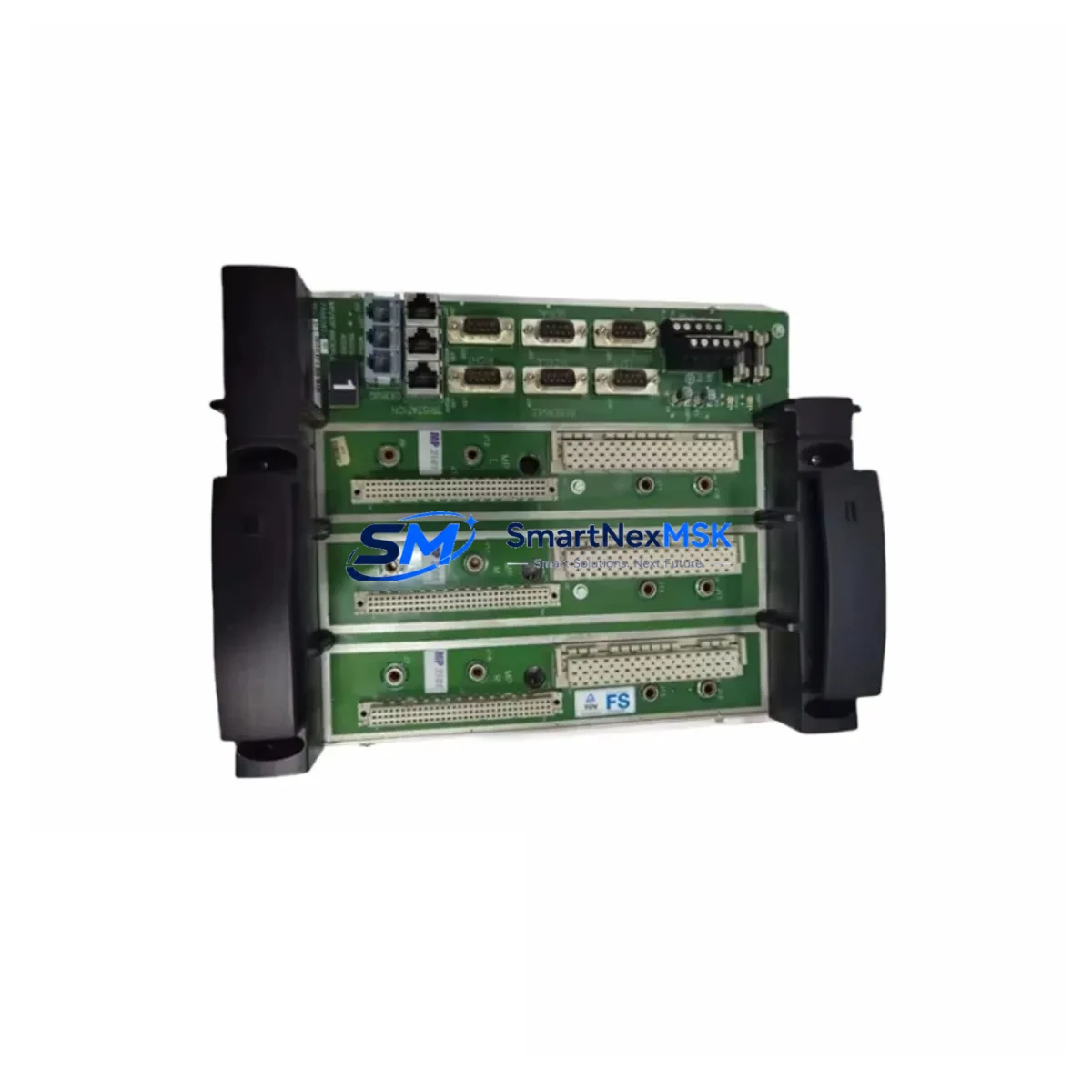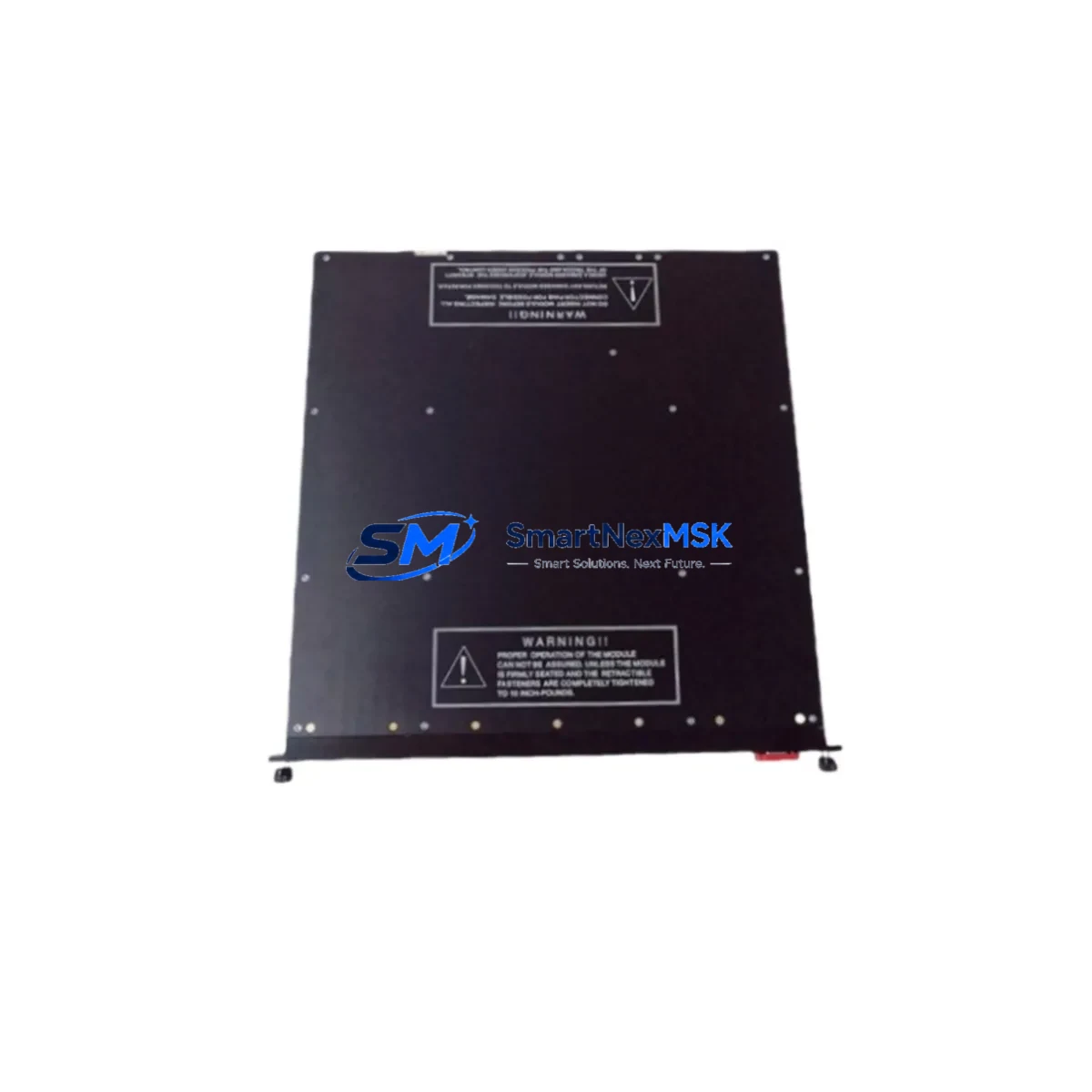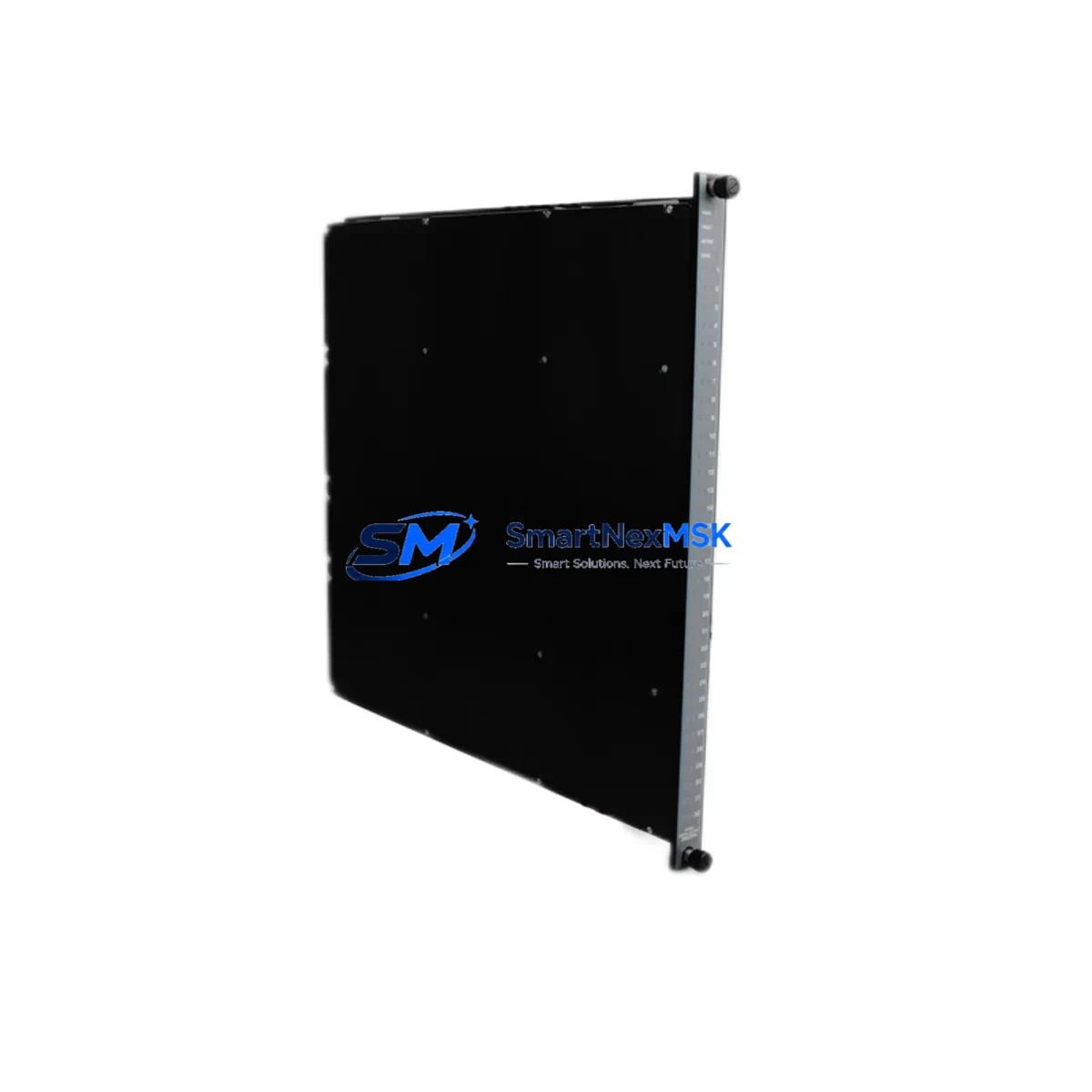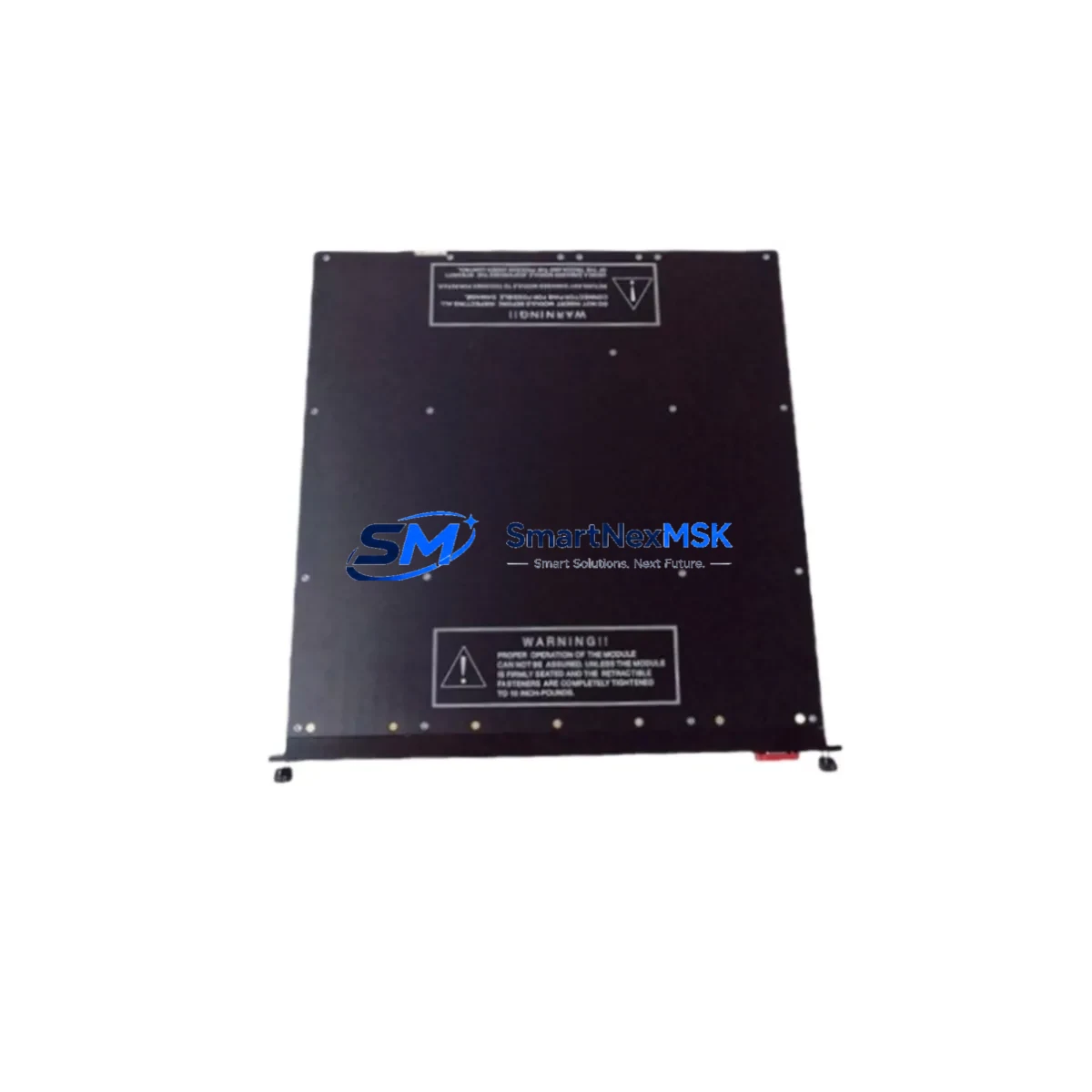
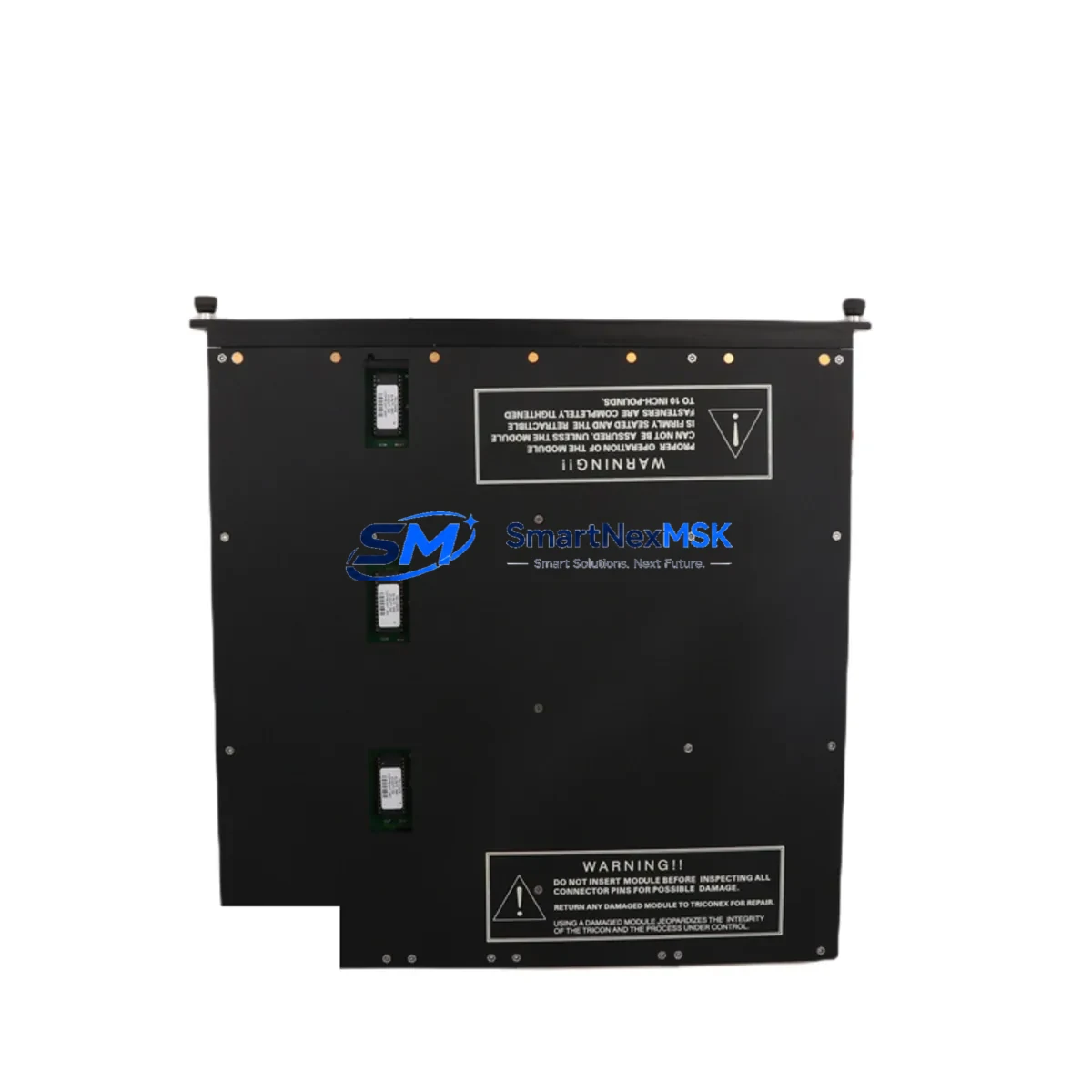
TRICONEX 3721 Retrofit-Ready Analog Input Module for Tricon TMR Control Systems
The TRICONEX 3721 is a high-integrity analog input module designed for the Tricon Triple Modular Redundant (TMR) Safety PLC platform. As aging Tricon systems approach end-of-life and original spare parts become increasingly scarce, the 3721 remains a critical component for facilities seeking to extend operational life, execute controlled system migrations, or restore failed safety loops without full platform replacement. SMARTNEXMSK maintains verified stock of the TRICONEX 3721, fully tested and backed by a 12-month warranty.
Whether your facility is managing a refinery safety instrumented system (SIS), a chemical plant emergency shutdown (ESD) loop, or a power generation protection circuit, the 3721 module provides the analog signal conditioning and TMR voting logic required to maintain SIL-rated control integrity. Each unit shipped by SMARTNEXMSK undergoes functional verification against original TRICONEX factory specifications before dispatch.
Upgrade Compatibility Table
| Parameter | Details |
|---|---|
| Module SKU | TRICONEX 3721 |
| Platform Compatibility | Tricon TMR Safety PLC (v9.x / v10.x chassis) |
| Module Type | Analog Input (AI) |
| Signal Range | 4–20 mA / 1–5 V (field-configurable) |
| Channel Count | 16 channels (8 per leg, TMR voted) |
| Backplane Interface | Tricon standard TMR backplane slot — direct plug-in replacement |
| Installation Requirement | Tricon chassis with compatible power supply (e.g., TRICONEX 8312 or 8110) |
| Communication Compatibility | TriStation 1131 programming environment; Modbus RTU / TCP via Tricon CM |
| Replacement Recommendation | Direct drop-in for failed or end-of-life 3721 units; verify chassis slot addressing before installation |
| Commissioning Notes | Confirm module address in TriStation project; validate AI channel scaling and fault tolerances post-swap |
| Warranty | 12 months from shipment date — covers functional defects under normal operating conditions |
Retrofit Planning for Existing Automation Systems
Replacing a TRICONEX 3721 within a live or recently decommissioned Tricon TMR system requires careful pre-planning to avoid configuration drift and unplanned shutdowns. Before pulling the module, engineers should document the current slot assignment within the Tricon chassis and cross-reference it against the TriStation 1131 project file to confirm the module address has not been reassigned during prior maintenance cycles.
Power budget verification is essential. The Tricon chassis relies on redundant power supplies — typically the TRICONEX 8312 Power Supply Module or the earlier TRICONEX 8110 — and adding or swapping an analog input module may affect the total chassis load. Confirm available wattage per leg before proceeding. Field wiring connected to the 3721 uses the standard Tricon terminal panel; verify that the TRICONEX 3703E or 3703 terminal board is correctly seated and that all 4–20 mA field loops are isolated prior to module removal.
For facilities running older Tricon v9 chassis, the 3721 slots into the same backplane positions as later revisions, but firmware compatibility with the Tricon Main Processor (MP) module — such as the TRICONEX 4351B or 4119 — should be confirmed via the TRICONEX compatibility matrix. If the site is also migrating communication infrastructure, note that the TRICONEX 4609 Enhanced Intelligent Communication Module (EICM) or the TRICONEX 4119A ACM may require updated driver configurations when analog input data is re-mapped after module replacement.
I/O expansion scenarios — where the 3721 is being added to an existing chassis rather than replacing a failed unit — require slot reservation in the TriStation project and a full download cycle. Coordinate this with the site’s safety management of change (MOC) process. HMI screens connected via OPC or Modbus to the Tricon system should be updated to reflect any new tag addresses or channel scaling changes introduced during the retrofit. The TRICONEX 3805E Digital Output Module and TRICONEX 3664 Analog Output Module are commonly serviced in the same maintenance window, as they share the same chassis and terminal infrastructure.
Downtime Control During System Migration
Minimizing unplanned downtime during a Tricon TMR analog input module swap is achievable with the right preparation. The TMR architecture of the Tricon platform provides inherent fault tolerance — a single-leg failure does not immediately trip the safety function — which creates a controlled window for hot-swap or scheduled cold-swap operations depending on site safety procedures and SIL classification.
Before the maintenance window opens, back up the full TriStation 1131 project to a secure offline location. Confirm that the backup includes all AI channel configurations, fault tolerances, and alarm setpoints associated with the 3721 channels. During the swap, use the Tricon diagnostic panel or TriStation online monitoring to verify that the replacement module is recognized by the MP and that all three legs report healthy status within the expected initialization time.
Post-installation, perform a channel-by-channel loop check against the field instruments connected to the 3721. Verify that 4–20 mA signals are reading within calibrated range on all active channels before releasing the system back to automatic control. If the site uses a TRICONEX 4609 EICM for Modbus TCP communication to the DCS or historian, confirm that analog input tags are updating correctly at the SCADA layer before closing the work order. Document all as-found and as-left readings per the site’s functional safety management system requirements.
SMARTNEXMSK ships the TRICONEX 3721 with full functional test documentation, reducing on-site verification time and supporting faster return-to-service. Standard lead time from confirmed order to dispatch is 1–3 business days for in-stock units.
Retrofit Support FAQ
Q1: Is the TRICONEX 3721 a direct replacement for all Tricon TMR chassis generations?
The 3721 is compatible with Tricon v9.x and v10.x chassis platforms. For v8.x or earlier systems, consult the TRICONEX hardware compatibility guide or contact SMARTNEXMSK for a pre-sale compatibility review. Slot addressing and backplane pinout are consistent across supported generations, but MP firmware version may affect module recognition.
Q2: What wiring changes are required when replacing a failed 3721?
In most cases, no field wiring changes are required. The 3721 uses the standard Tricon terminal board (3703 or 3703E series), and field cables remain connected to the terminal panel during module swap. Verify that all field loops are in a safe state or bypassed per site procedures before removing the module. Re-confirm loop integrity after installation.
Q3: Does SMARTNEXMSK test the 3721 before shipment?
Yes. Every TRICONEX 3721 unit shipped by SMARTNEXMSK undergoes functional testing against original factory specifications. A test report is available upon request. All units are covered by a 12-month warranty from the date of shipment, covering functional defects under normal operating and storage conditions.
Q4: Can the 3721 be used in a system that is being migrated from Tricon to a newer platform?
Yes. During phased migration projects where the Tricon TMR system remains operational while a new control platform is being commissioned in parallel, the 3721 can continue to serve its original function. This approach is common in brownfield upgrades where full platform cutover is deferred. SMARTNEXMSK can supply multiple units to support parallel operation and staged decommissioning timelines.
© 2026 SMARTNEXMSK. All rights reserved.
Original Source: https://smartnexmsk.com
Contact: [email protected] | +86 18259474341