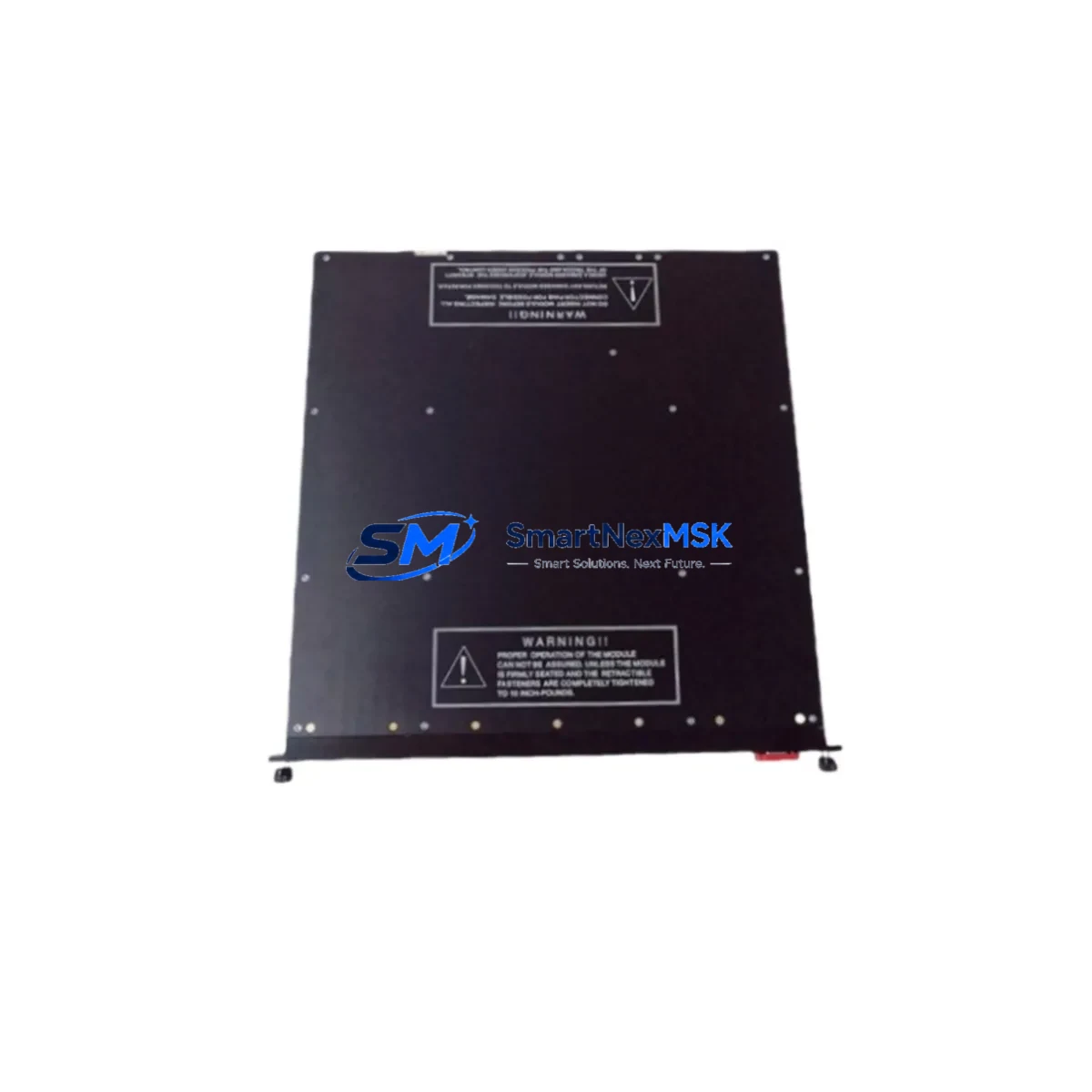
Triconex SDO-3411 Retrofit-Ready Safety Digital Output Module for Tricon TMR Control Systems
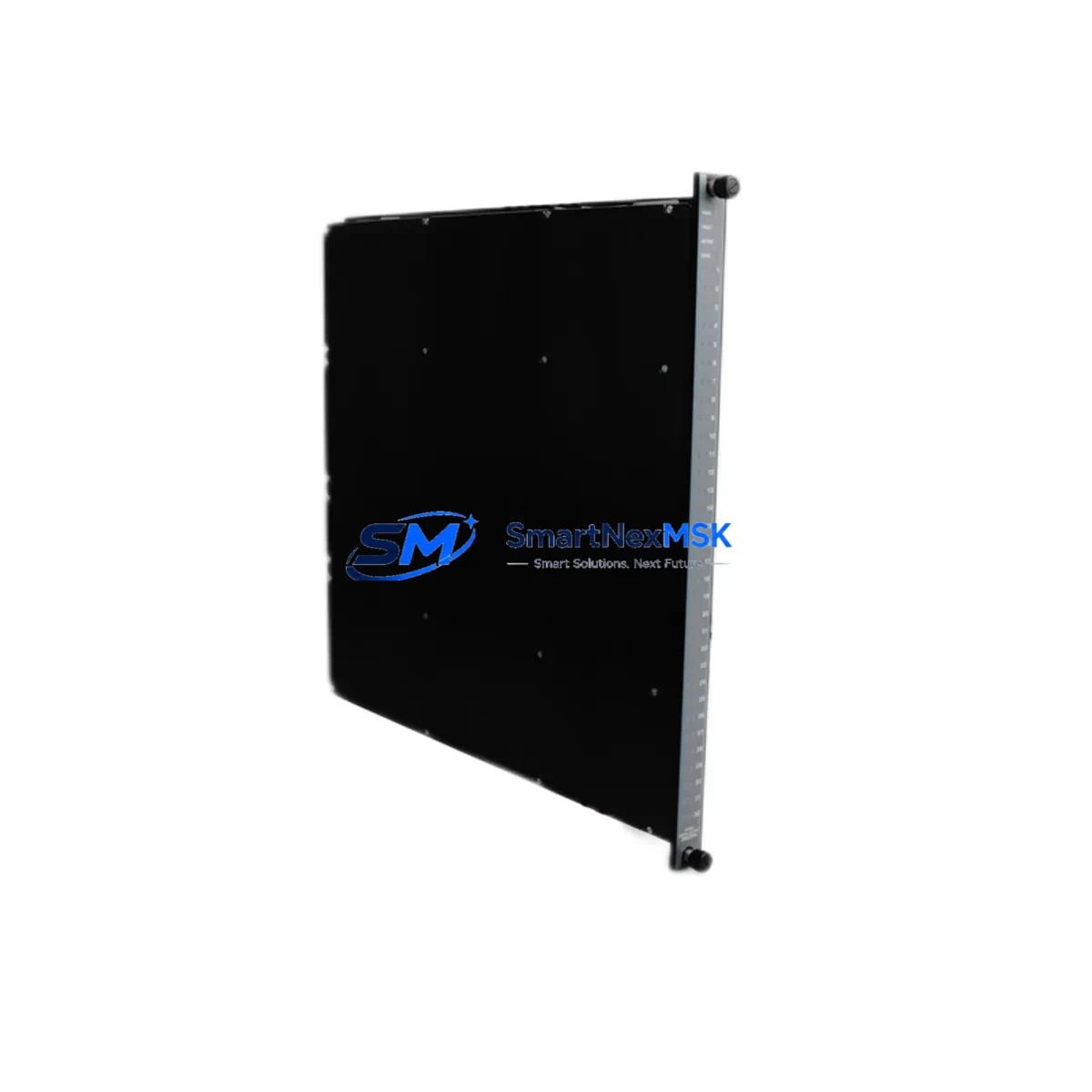
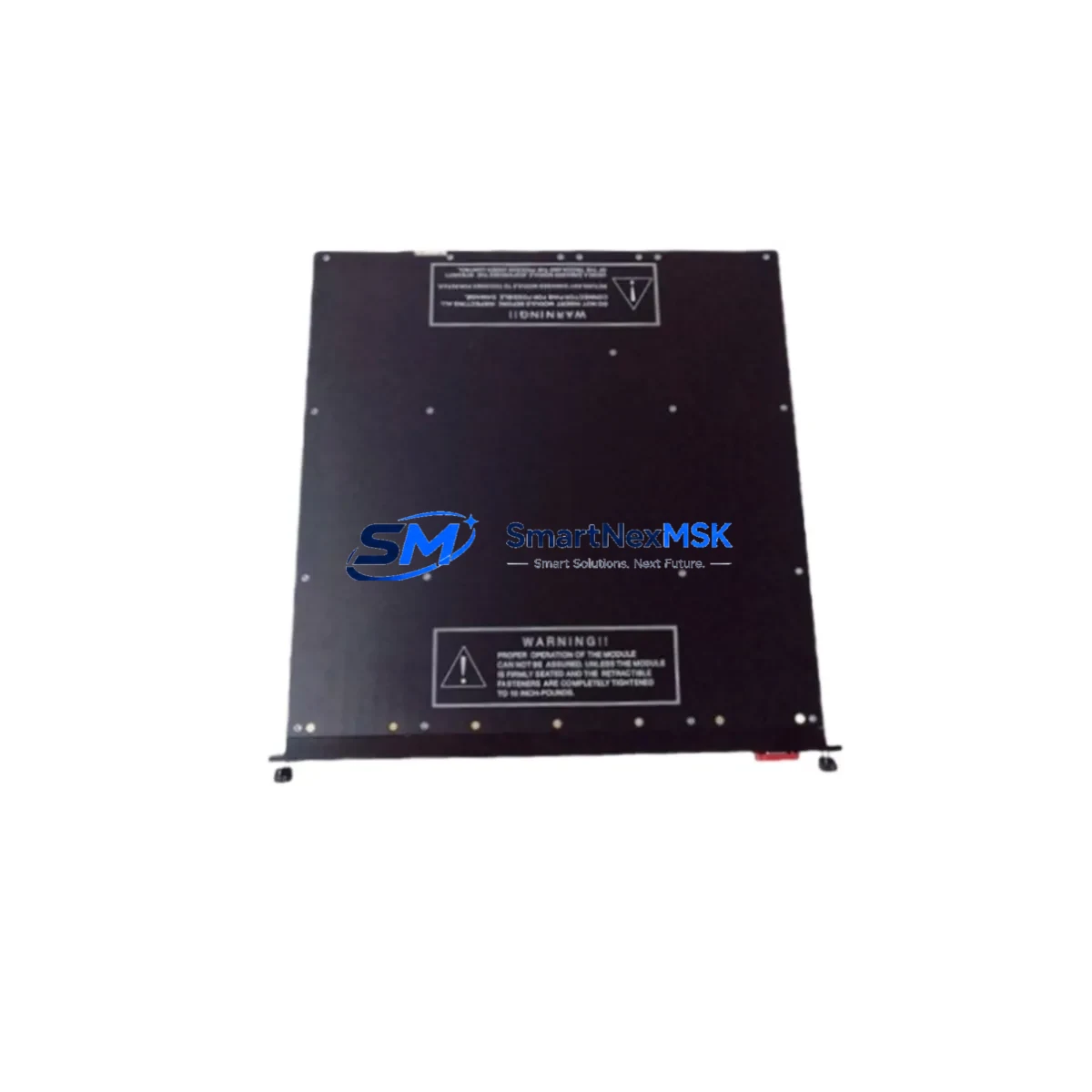
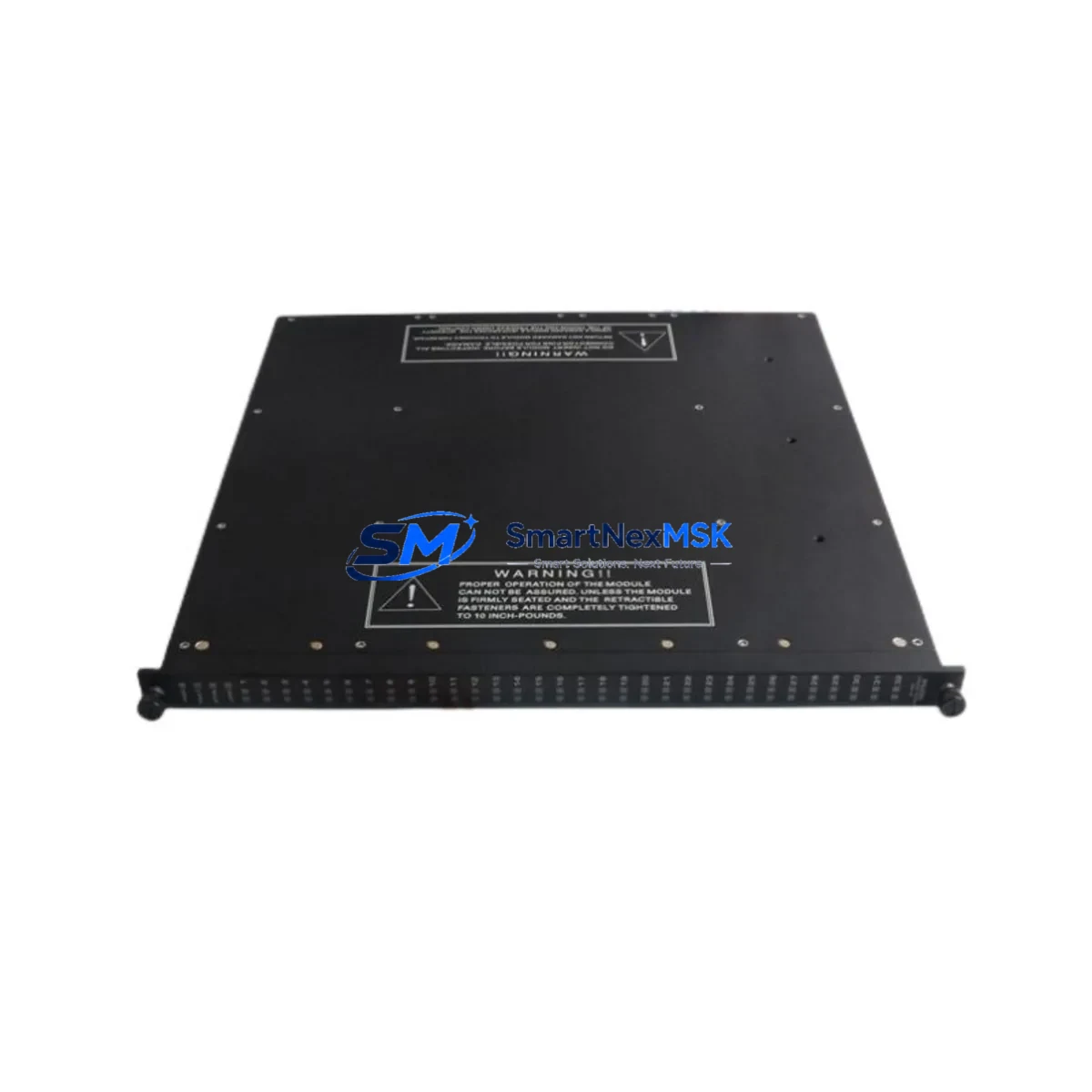
The Triconex SDO-3411 is a Safety Digital Output (SDO) module designed for the Tricon Triple Modular Redundant (TMR) Safety Instrumented System (SIS) platform. As legacy Tricon systems continue to operate across petrochemical, oil & gas, power generation, and process manufacturing facilities, the SDO-3411 remains a critical spare for both emergency replacement and planned retrofit programs. SMARTNEXMSK maintains verified stock of the SDO-3411 with full functional testing, 12-month warranty coverage, and rapid global dispatch to minimize unplanned downtime.
Upgrade Compatibility Table
| Parameter | SDO-3411 Specification | Retrofit / Replacement Notes |
|---|---|---|
| Platform Compatibility | Tricon TMR (v9.x / v10.x / v11.x) | Verify chassis firmware revision before installation |
| Output Channels | 16 × Digital Output (DO), 24 VDC / 120 VAC | Confirm field wiring voltage matches module output rating |
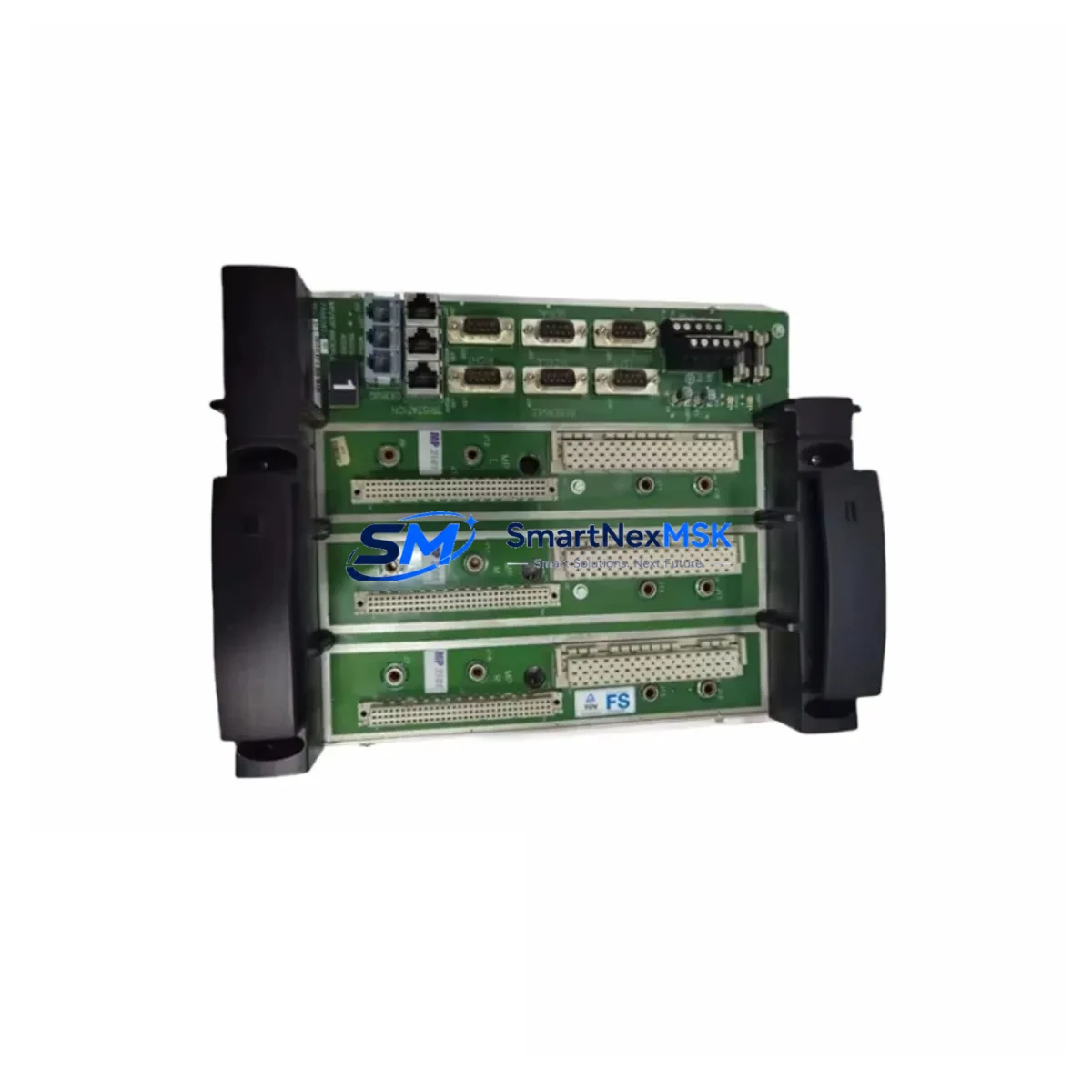
| Backplane Interface | Tricon Main Chassis / Expansion Chassis slot | Compatible with standard Tricon 3-slot and 15-slot chassis |
| Module Address | Configured via TriStation 1131 software | Re-use existing address map; no re-addressing required for drop-in swap |
| Communication Protocol | Tricon internal TMR bus | No protocol migration required; transparent to Modbus/OPC-DA/OPC-UA supervisory layer |
| Installation Type | Hot-swap capable (with SIS bypass procedure) | Follow site SIS bypass and MOC procedures before removal |
| Replacement for | SDO-3411 (all revisions), discontinued SDO-3401 | Functional drop-in; verify terminal wiring diagram against as-built drawings |
| Commissioning Tool | TriStation 1131 v4.x / v9.x / v10.x | Download and verify program after module swap; check DO channel diagnostics |
| Warranty | 12-Month Warranty — Functional test report available on request | |
Retrofit Planning for Existing Automation Systems
Replacing the SDO-3411 within an operating Tricon TMR SIS requires careful pre-planning across multiple system layers. Before scheduling the swap, engineers should audit the Tricon Main Chassis power budget: the chassis power supply — typically a Tricon PS6101 or PS6201 power supply module — must have sufficient headroom to support the SDO-3411’s inrush and steady-state load alongside co-installed modules such as the SDI-3220 Safety Digital Input module, SAI-3351 Safety Analog Input module, and any SCM-3711 Safety Communication Module used for Modbus RTU or HART pass-through.
Terminal wiring verification is equally critical. The SDO-3411 uses a field termination assembly (FTA) connected via a dedicated cable harness. Technicians must cross-reference the existing Tricon FTA wiring diagram against the as-built P&ID to confirm that each DO channel maps to the correct final element — typically solenoid valves, motor starters, or shutdown relays. Where the original installation used a Tricon ICTB-3411 termination board, the replacement module slots directly into the same FTA without re-termination, significantly reducing installation time.
For sites running TriStation 1131 as the programming environment, the module swap procedure involves: (1) placing the affected leg into bypass using the Tricon keyswitch and TriStation diagnostic panel; (2) physically removing the faulted SDO-3411; (3) inserting the replacement module; (4) confirming auto-configuration via the TriStation module status screen; and (5) releasing the bypass and verifying all 16 DO channels return to their pre-bypass states. No program download is required for a like-for-like replacement — the Tricon TMR controller retains the application logic in the remaining two legs throughout the swap.
Sites integrating the Tricon SIS with a DeltaV SIS or Honeywell Safety Manager supervisory layer via OPC-DA or OPC-UA should verify that the DO channel tag assignments in the OPC server configuration remain consistent after the module replacement. In most cases, the tag structure is address-based and requires no update. However, if the site uses a Tricon Communication Module (TCM) for Ethernet-based supervisory connectivity, confirm that the TCM firmware version is compatible with the replacement SDO-3411 hardware revision.
For broader control cabinet upgrades — for example, migrating from a Tricon v9 chassis to a Tricon v11 chassis — the SDO-3411 is forward-compatible and can be reused in the new chassis without modification. In such migrations, the primary integration work involves updating the TriStation 1131 project file to reflect the new chassis configuration, re-mapping any Tricon Expansion Chassis (EXC-3100) slots, and re-validating the SIL rating of the updated SIS loop using the new hardware’s PFD data.
Downtime Control During System Migration
Minimizing process downtime during an SDO-3411 replacement is achievable through disciplined pre-staging and a structured Management of Change (MOC) process. The recommended approach is to pre-configure and bench-test the replacement module before the maintenance window opens. SMARTNEXMSK ships each SDO-3411 with a functional test report confirming channel-by-channel output verification, which can be used as the acceptance test baseline and submitted as part of the site MOC package.
During the maintenance window, the Tricon TMR architecture itself provides the primary downtime protection mechanism: because the system operates with three independent legs (Leg A, Leg B, Leg C), a single-leg bypass allows the module swap to proceed while the remaining two legs maintain 2-out-of-3 (2oo3) voting and continuous process control. This means the SIS remains fully functional and the process does not need to be shut down for a single-module replacement — provided the site’s SIS bypass procedure and safety case permit single-leg bypass.
After reinsertion, the Tricon controller performs automatic self-diagnostics on the new SDO-3411 within seconds. Technicians should monitor the TriStation diagnostic screen for any channel fault flags, confirm that all 16 DO outputs are energized or de-energized in accordance with the current process state, and verify that the HMI faceplate — whether running on a Wonderware InTouch, FactoryTalk View SE, or Ignition SCADA platform — reflects the correct output status without requiring a screen refresh or tag re-subscription. The entire hot-swap procedure, from bypass initiation to bypass release, typically completes within 15–30 minutes for an experienced SIS technician.
Retrofit Support FAQ
Q1: Is the SDO-3411 a direct drop-in replacement for the discontinued SDO-3401?
Yes. The SDO-3411 is the designated replacement for the SDO-3401 across all Tricon TMR chassis versions. The module occupies the same backplane slot, uses the same FTA cable harness, and requires no changes to the TriStation 1131 application program. Verify the hardware revision label on the replacement module matches or supersedes the revision specified in your site’s approved spare parts list.
Q2: What commissioning checks are required after installing the replacement SDO-3411?
After releasing the bypass, perform the following: (1) confirm all 16 DO channels show healthy status in TriStation diagnostics; (2) verify field device response by checking solenoid valve or relay feedback signals in the HMI; (3) review the Tricon event log for any transient faults during the swap; and (4) complete the site’s post-maintenance SIS functional test checklist as required by IEC 61511 proof test procedures.
Q3: How do I verify wiring compatibility before installing the SDO-3411?
Retrieve the as-built wiring diagram for the existing FTA and compare terminal assignments against the SDO-3411 I/O wiring specification. Pay particular attention to the output voltage rating (24 VDC vs. 120 VAC variants) and the common return wiring for each output group. If the site uses a Tricon ICTB-3411 termination board, no re-termination is required — the FTA cable plugs directly into the replacement module.
Q4: What does the 12-month warranty cover, and is a test report available?
The 12-month warranty covers all functional defects arising from manufacturing or component failure under normal operating conditions. Each SDO-3411 shipped by SMARTNEXMSK is subject to a full channel-by-channel functional test prior to dispatch. A test report is available upon request and can be included with the shipment documentation for your site’s incoming inspection and MOC records. Warranty claims are processed via [email protected] with a target response time of 24 business hours.
© 2026 SMARTNEXMSK. All rights reserved.
Original Source: https://smartnexmsk.com
Contact: [email protected] | +86 18259474341