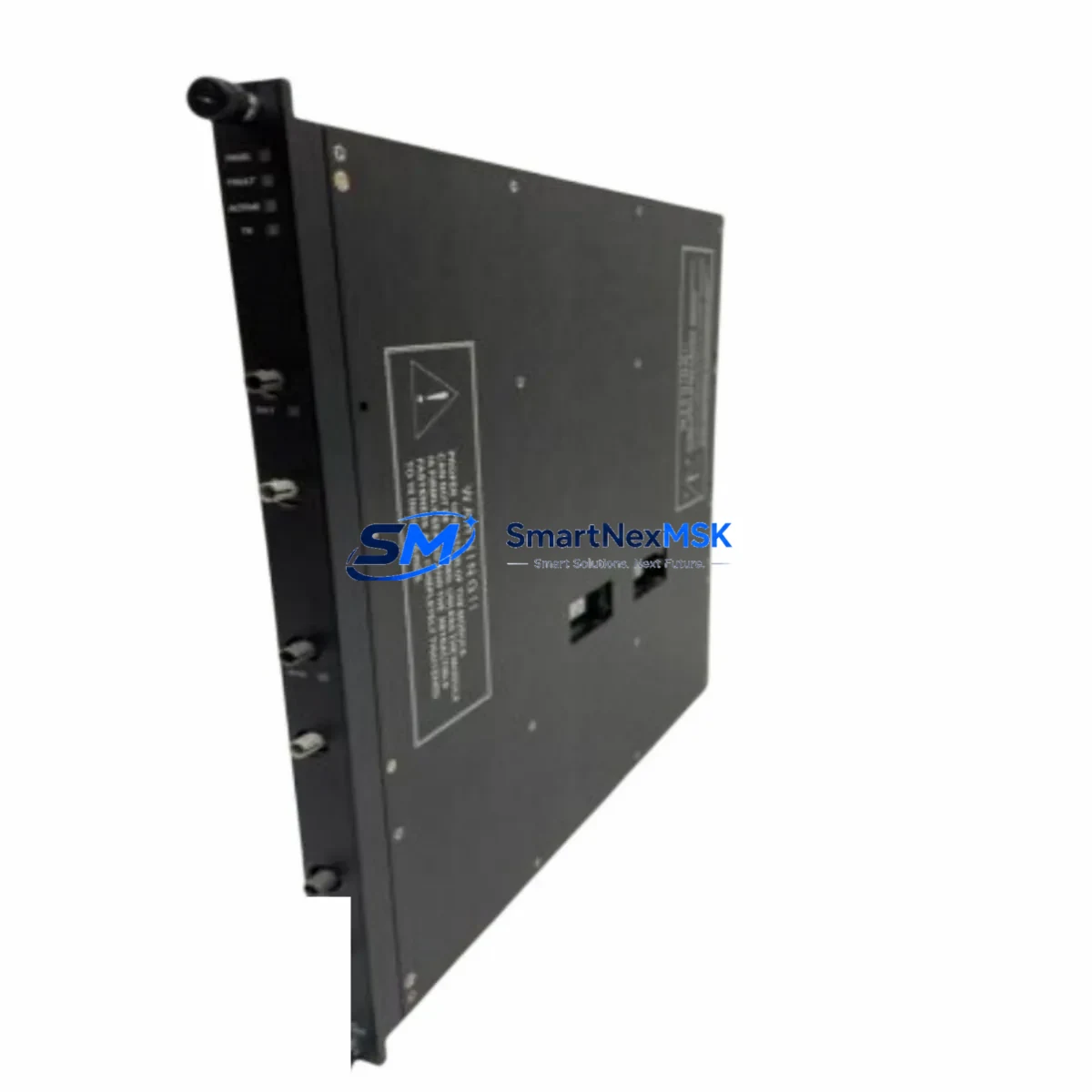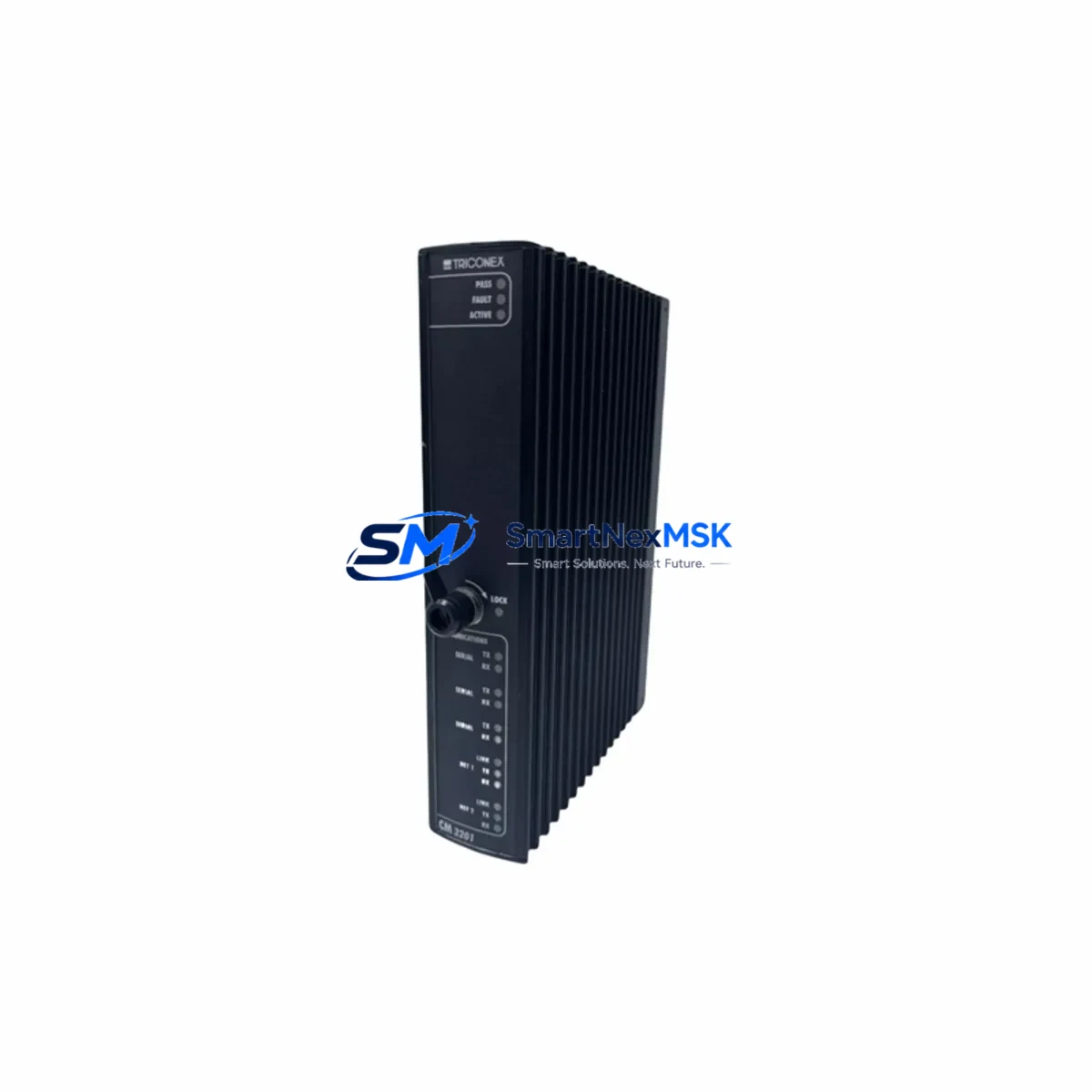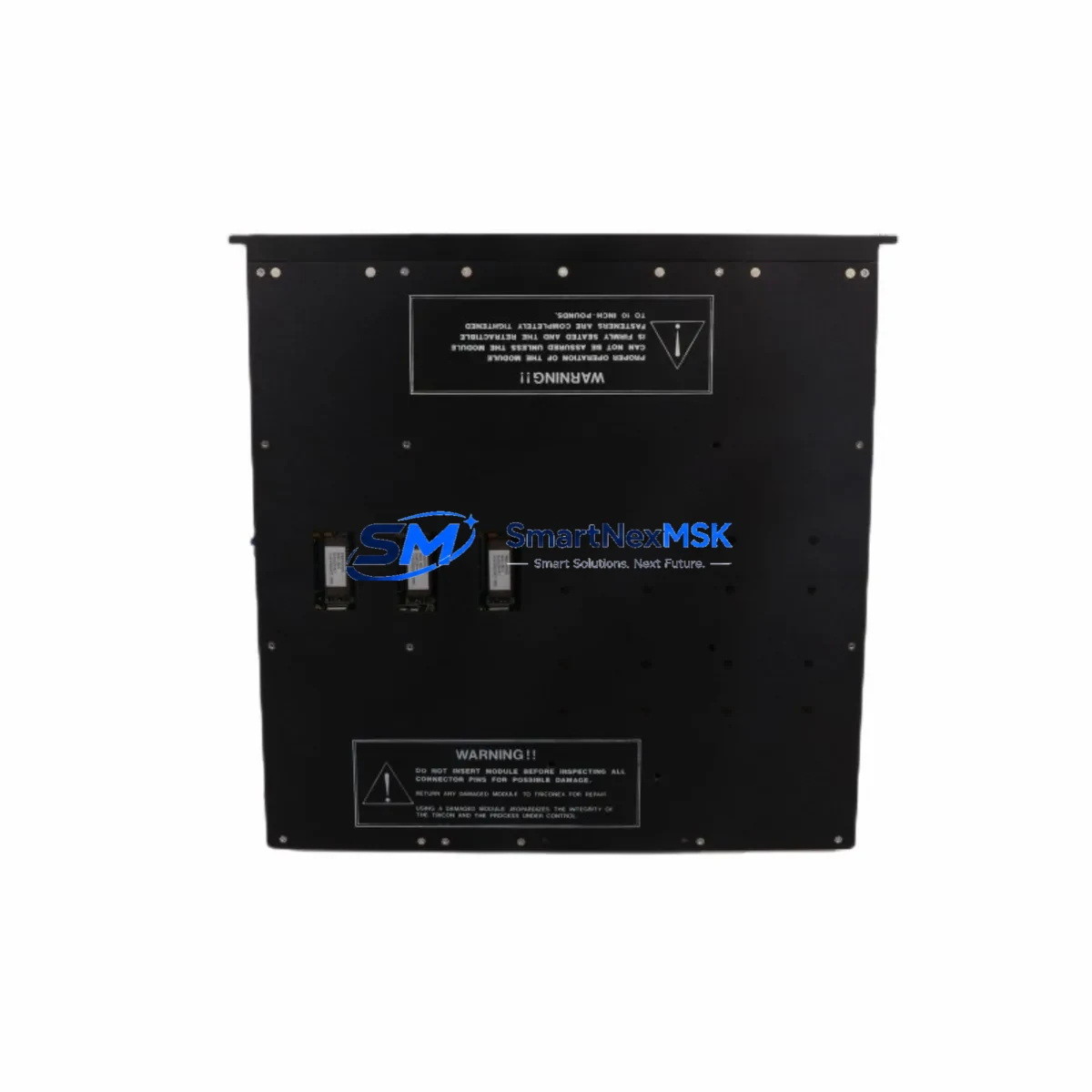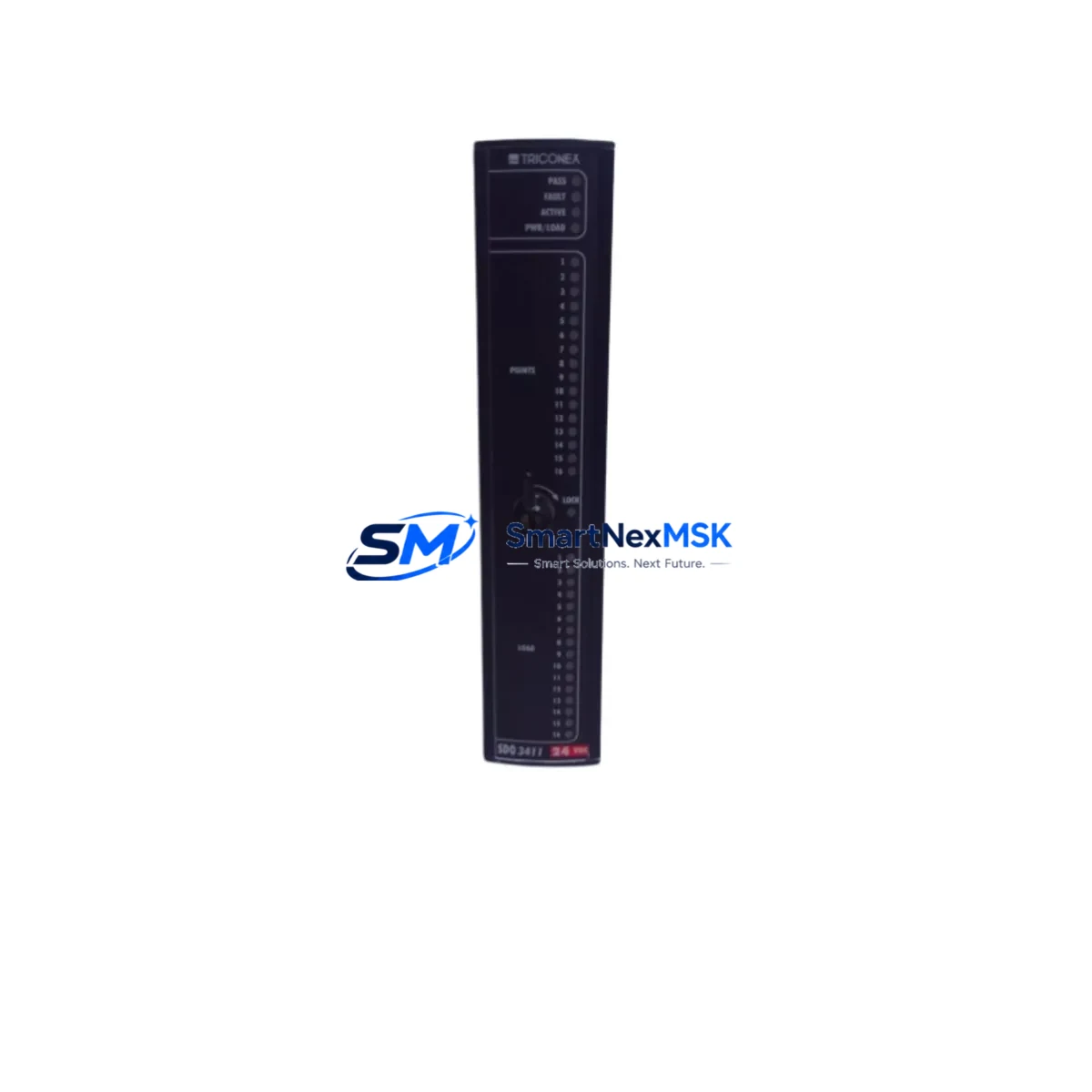
TRICONEX SDO3411 Retrofit-Ready Safety Digital Output for Tricon TMR Control Systems
The TRICONEX SDO3411 is a Triple Modular Redundant (TMR) safety digital output module engineered for mission-critical process control environments. Designed to integrate seamlessly into Tricon TMR safety systems, this module delivers SIL 3-certified discrete output control across oil & gas, petrochemical, power generation, and chemical processing facilities. As legacy Tricon platforms approach end-of-life and original spare parts become increasingly scarce, the SDO3411 serves as a proven retrofit and replacement solution that preserves existing system architecture while restoring full operational integrity.
Whether you are replacing a failed output module on an aging Tricon chassis, upgrading a control cabinet to extend system life, or executing a phased migration away from discontinued hardware, the SDO3411 provides the compatibility, reliability, and documentation support that industrial maintenance teams require. SMARTNEXMSK maintains verified stock of the SDO3411 with full functional testing, 12-month warranty coverage, and rapid dispatch to minimize unplanned downtime.
Upgrade Compatibility Table
| Parameter | SDO3411 Specification | Retrofit Notes |
|---|---|---|
| Module Type | Safety Digital Output (TMR) | Direct slot-compatible with Tricon chassis |
| Safety Integrity Level | SIL 3 (IEC 61508) | Maintains existing SIL classification; no re-validation required for like-for-like swap |
| Output Channels | 16 channels, 24 VDC solid-state | Verify field wiring terminal assignments against existing I/O schedule before installation |
| Backplane Interface | Tricon TMR backplane bus | Compatible with Tricon 3006, 3007, 3008 main chassis; confirm chassis revision with engineering |
| Power Consumption | Refer to module datasheet | Audit chassis power budget (TRICON PS6000 or PS6001 power supply) before adding modules |
| Communication Protocol | Tricon proprietary TMR bus | No protocol migration required; compatible with TriStation 1131 programming environment |
| Module Address | Slot-assigned via TriStation configuration | Reassign module address in TriStation 1131 project file; verify I/O map before download |
| Replacement Compatibility | Replaces SDO3411 and functionally equivalent legacy output modules | Cross-reference with Triconex part number database; consult SMARTNEXMSK for equivalency confirmation |
| Commissioning Requirement | TriStation 1131 v4.x or later | Perform online module replacement where supported; offline replacement requires controlled shutdown |
| Warranty | 12 Months | Covers manufacturing defects; includes pre-shipment functional test report |
Retrofit Planning for Existing Automation Systems
A successful SDO3411 retrofit begins well before the module arrives on site. Maintenance engineers should start by auditing the existing Tricon TMR chassis configuration — identifying the chassis model (3006, 3007, or 3008), the installed TRICON PS6000 or PS6001 power supply capacity, and the current slot assignments documented in the TriStation 1131 project. The SDO3411 occupies a standard I/O slot and draws power from the chassis backplane; confirming available power headroom is essential before installation, particularly in fully populated cabinets.
Terminal wiring is the next critical checkpoint. The SDO3411 uses a field termination assembly (FTA) that must match the existing wiring harness. Engineers should verify the TRICONEX FTA termination panel model installed in the control cabinet and confirm that the wiring schedule aligns with the SDO3411 channel-to-terminal mapping. Mismatched FTA models are a common source of commissioning delays during legacy system retrofits.
For facilities running Modbus TCP or OPC DA/UA data highways alongside the Tricon safety layer, the SDO3411 replacement does not affect the communication gateway configuration. The TRICONEX TCM 4351B or TCM 4352B communication module handles all external protocol bridging independently of the I/O module swap. However, engineers should confirm that the HMI tag database — whether hosted on a Wonderware InTouch, Ignition SCADA, or Emerson DeltaV operator station — correctly maps to the updated I/O addresses after any TriStation project download.
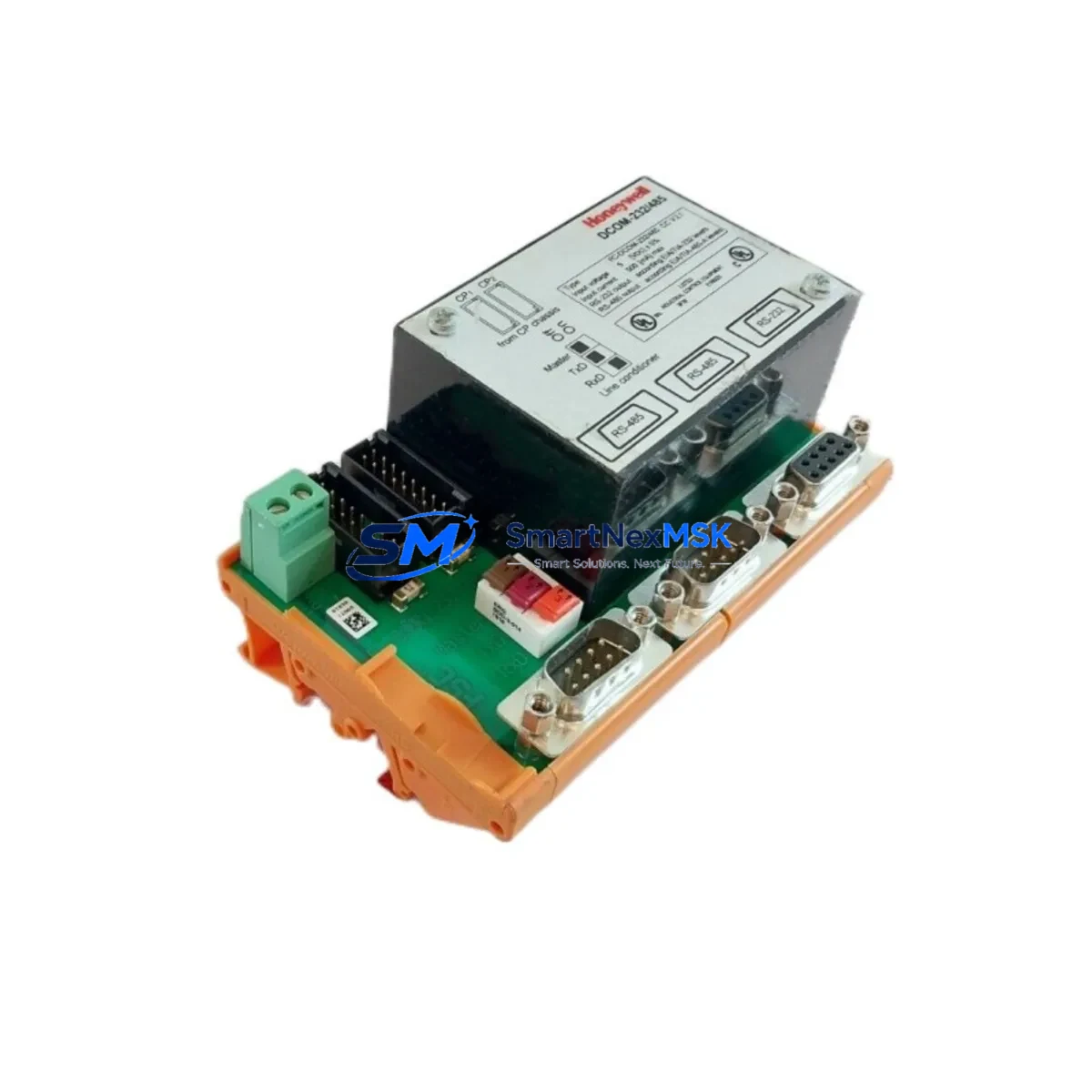
In mixed-generation control rooms where the Tricon safety system operates alongside a Honeywell Experion PKS or ABB 800xA distributed control system, the SDO3411 retrofit is isolated to the safety layer and does not require changes to the DCS configuration. The safety system’s output signals to final control elements — valves, motor starters, and interlock circuits — remain on the same field wiring, preserving the existing loop drawings and cause-and-effect matrices.
Where I/O expansion is part of the upgrade scope, the SDO3411 can be installed alongside additional TRICONEX SDI3220 digital input modules or TRICONEX SAI3251 analog input modules within the same chassis, provided slot availability and power budget allow. For projects requiring additional chassis capacity, the TRICONEX EXP3100 expansion chassis and associated TRICONEX XICM inter-chassis module provide a validated path to extend the I/O count without replacing the main controller.
Programming compatibility is maintained through the TriStation 1131 development environment. The SDO3411 replacement does not require logic changes in most like-for-like swap scenarios; however, engineers should perform a full project compile and simulation in TriStation before downloading to the live system. If the facility uses a TRICONEX MP3008 main processor, confirm the firmware revision supports the installed module set and that the project file version is consistent across all three redundant legs.
Downtime Control During System Migration
Minimizing production interruption during a Tricon module replacement requires a structured approach to change management. Where the Tricon system supports online module replacement (hot-swap), the SDO3411 can be installed while the system remains in the RUN state, provided the replacement procedure follows the Triconex online maintenance guidelines. The TMR architecture continues to execute the safety logic across the remaining two legs during the swap, maintaining process protection throughout.
For systems that require an offline replacement — typically older chassis revisions or sites where online swap has not been validated — the recommended approach is to schedule the replacement during a planned process shutdown or turnaround. Prior to shutdown, engineers should export the current TriStation project, verify the backup copy against the running configuration, and document all module diagnostic states. This ensures that the post-replacement download restores the exact logic and I/O configuration without introducing unintended changes.
Field teams should prepare a pre-tested SDO3411 unit with the functional test report provided by SMARTNEXMSK, confirm the FTA wiring before powering the chassis, and execute a structured commissioning checklist that covers module diagnostics, output channel verification, HMI alarm acknowledgment, and safety function proof test. Keeping a spare TRICONEX SDO3411 on the shelf — alongside critical companion modules such as the TRICONEX TCM 4351B communication module and the TRICONEX PS6001 power supply — is the most effective strategy for reducing mean time to repair (MTTR) on safety-critical Tricon installations.
Retrofit Support FAQ
Q1: Is the SDO3411 a direct drop-in replacement for the original Triconex part?
Yes. The SDO3411 is slot-compatible with the Tricon TMR chassis and uses the same FTA wiring interface as the original module. No hardware modifications to the chassis or field wiring are required for a like-for-like replacement. SMARTNEXMSK provides a pre-shipment functional test report confirming module operability before dispatch.
Q2: Do I need to modify my TriStation 1131 project after replacing the SDO3411?
In most like-for-like replacement scenarios, no logic changes are required. You will need to perform a module configuration download in TriStation 1131 to register the new module in the slot. Verify the I/O address map and confirm that all output channel assignments match the existing field wiring schedule before going online.
Q3: What wiring checks are required before installing the SDO3411?
Confirm that the installed FTA termination panel is compatible with the SDO3411 channel configuration. Verify terminal torque settings, check for any field wiring modifications made since the original installation, and test continuity on all output circuits before energizing. Review the existing loop drawings and cause-and-effect matrix to ensure no interlock circuits are inadvertently affected during the swap.
Q4: What does the 12-month warranty cover, and what testing is performed before shipment?
The 12-month warranty covers manufacturing defects and module functionality under normal operating conditions. Prior to shipment, each SDO3411 unit undergoes functional testing that verifies output channel operation, backplane communication, and diagnostic self-check routines. A test report is included with the shipment. Warranty claims are supported directly by SMARTNEXMSK with replacement dispatch prioritized to minimize site downtime.
© 2026 SMARTNEXMSK. All rights reserved.
Original Source: https://smartnexmsk.com
Contact: [email protected] | +86 18259474341