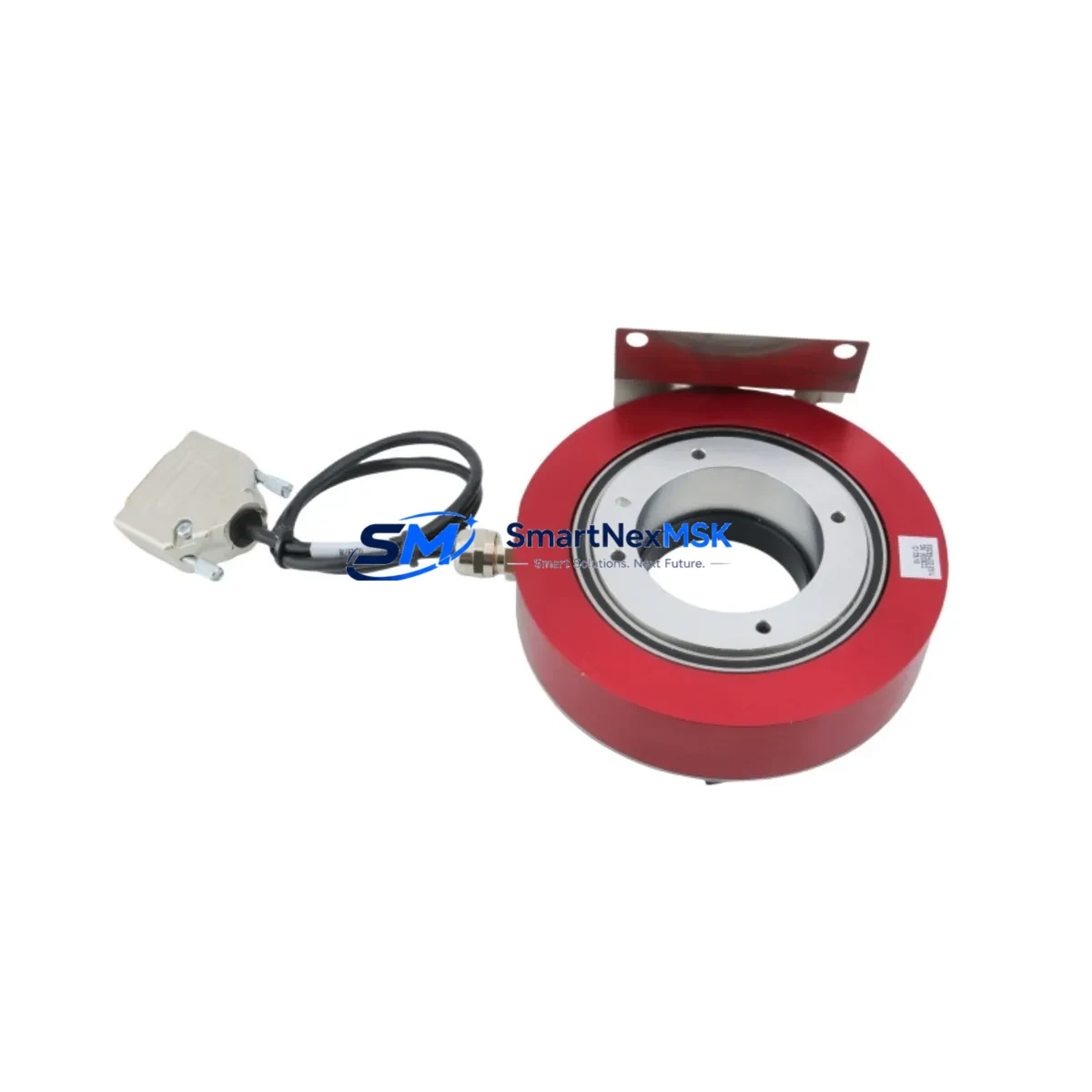
VARIAN E19299450 Maintenance-Ready Spare Mercury II Automation
Unplanned downtime on a VARIAN Mercury II 6000 ion implanter carries significant production risk. The VARIAN E19299450 / E19299451 Tilt Encoder Assembly — also referenced under board assembly ME-88-Y233-1 and PCA number PCA-28430 — is a precision motion-feedback component that governs wafer tilt positioning during implant cycles. When this encoder degrades or fails, beam angle accuracy is compromised, leading to process excursions, wafer rejects, and extended unscheduled maintenance windows.
Sourced as an original-specification spare, this assembly is tested prior to shipment and backed by a 12-month warranty. It is stocked to support rapid replacement for maintenance engineers managing legacy Mercury II 6000 systems, as well as procurement teams building strategic spare-parts inventories for semiconductor fab and ion implant tool fleets.
Spare Maintenance Table
| Parameter | Specification / Detail |
|---|---|
| Part Numbers | E19299450 / E19299451 |
| Board Assembly | ME-88-Y233-1 |
| PCA Reference | PCA-28430 |
| Component Type | Tilt Encoder Assembly |
| Compatible System | VARIAN Mercury II 6000 Ion Implanter |
| Function | Wafer tilt angle feedback and motion control encoding |
| Mounting | PCB-integrated assembly; direct board replacement |
| Operating Environment | Cleanroom-compatible; semiconductor fab environment |
| Condition | Original specification; pre-shipment functional test |
| Origin | United States |
| Weight | 2.6 kg |
| Warranty | 12 Months |
| Lead Time | In-stock; ships within 2–5 business days |
| Maintenance Interval | Inspect at scheduled PM; replace on encoder drift or fault alarm |
| Compatibility Verification | Match board revision and PCA number before installation |
Maintenance Planning for Continuous Operation
The E19299450 / E19299451 tilt encoder assembly sits within the wafer handling and beam-line positioning subsystem of the Mercury II 6000. During a planned corrective or preventive maintenance event involving this encoder, experienced maintenance engineers treat the replacement as an opportunity to audit the broader motion-control and power-distribution chain to prevent secondary failures.
Begin with the end-effector drive board and associated servo amplifier module — encoder signal degradation is frequently accompanied by amplifier over-current faults or position-loop instability. Inspect the wafer handler I/O interface board for loose connectors or corroded signal pins that may have contributed to encoder noise. The DC power supply rails feeding the encoder and motion-control circuitry should be measured under load; a sagging +5 V or ±15 V rail is a common root cause of intermittent encoder read errors.
Check the ribbon cable harness and flex cable assemblies routing encoder signals from the tilt stage to the controller backplane — these are high-flex, high-cycle components that fatigue over time. Inspect the terminal block connections on the motion-control chassis for fretting corrosion, particularly in facilities with vibration from adjacent process equipment. If the system uses a VARIAN Mercury II communications interface board for host-to-tool data exchange, verify that encoder position data is being correctly reported to the fab MES after replacement.
For tools with accumulated runtime, this is also the right moment to evaluate the tilt stage limit switch assembly and home-position sensor — both are wear items that interact directly with the encoder feedback loop. If the system has a signal isolation module between the encoder output and the motion controller, test its output integrity; isolation barrier degradation can introduce ground loops that mimic encoder failure. Finally, confirm that the system interlock relay board is not logging latent faults that could mask a successful encoder replacement during post-maintenance verification.
Site Replacement Workflow
Replacing the E19299450 / E19299451 tilt encoder assembly on a Mercury II 6000 follows a structured sequence to minimize downtime and ensure first-time-right restoration:
1. Pre-replacement verification: Confirm the replacement part number and board revision match the installed assembly. Cross-reference PCA-28430 against the tool’s maintenance log and BOM. Do not substitute with an unverified revision — encoder firmware compatibility must be confirmed before installation.
2. Safe isolation: Follow the Mercury II 6000 lockout/tagout procedure. De-energize the wafer handler subsystem and discharge any stored energy in the servo drive capacitors before accessing the encoder assembly.
3. Board removal and installation: Document connector positions and cable routing with photographs before disconnection. Install the replacement assembly, ensuring all connectors are fully seated and the board is secured to the mounting standoffs without mechanical stress.
4. Post-installation calibration: Execute the tilt-axis encoder calibration routine per the Mercury II 6000 maintenance manual. Verify encoder count, direction, and zero-position alignment before returning the tool to automatic mode.
5. Functional verification: Run a dry-cycle wafer transfer sequence and confirm tilt-axis position feedback is within specification. Log the replacement in the tool’s maintenance record and update the spare-parts inventory accordingly.
This workflow supports legacy system life extension strategies, allowing fabs to defer capital equipment replacement while maintaining process yield and tool availability.
Spare Parts Support FAQ
Q1: Is this encoder assembly compatible with all Mercury II 6000 configurations?
The E19299450 / E19299451 assembly is designed for the VARIAN Mercury II 6000 ion implanter platform. Compatibility depends on the specific tool revision and board assembly revision (ME-88-Y233-1). We recommend confirming the PCA number and board revision from your tool’s maintenance documentation before ordering. Our technical team can assist with compatibility verification prior to shipment.
Q2: What pre-shipment testing is performed on this spare?
Each unit undergoes functional testing prior to dispatch to verify encoder signal integrity and board-level operation. Units are packaged in ESD-safe materials with anti-static shielding appropriate for sensitive electronic assemblies. A test report is available upon request.
Q3: What does the 12-month warranty cover?
The 12-month warranty covers defects in materials and workmanship under normal operating conditions consistent with the Mercury II 6000 application environment. It does not cover damage resulting from incorrect installation, electrical overstress, or use outside the specified operating parameters. Warranty claims are supported with direct technical assistance and expedited replacement.
Q4: Can this part support a long-term spare-parts stocking strategy?
Yes. For fabs operating multiple Mercury II 6000 tools or managing aging ion implant fleets, we recommend maintaining at least one E19299450 / E19299451 assembly as a critical on-hand spare. We support blanket order arrangements and can provide lead-time commitments for ongoing supply. Contact our team to discuss inventory planning and volume pricing.
© 2026 SMARTNEXMSK. All rights reserved.
Original Source: https://smartnexmsk.com
Contact: [email protected] | +86 18259474341