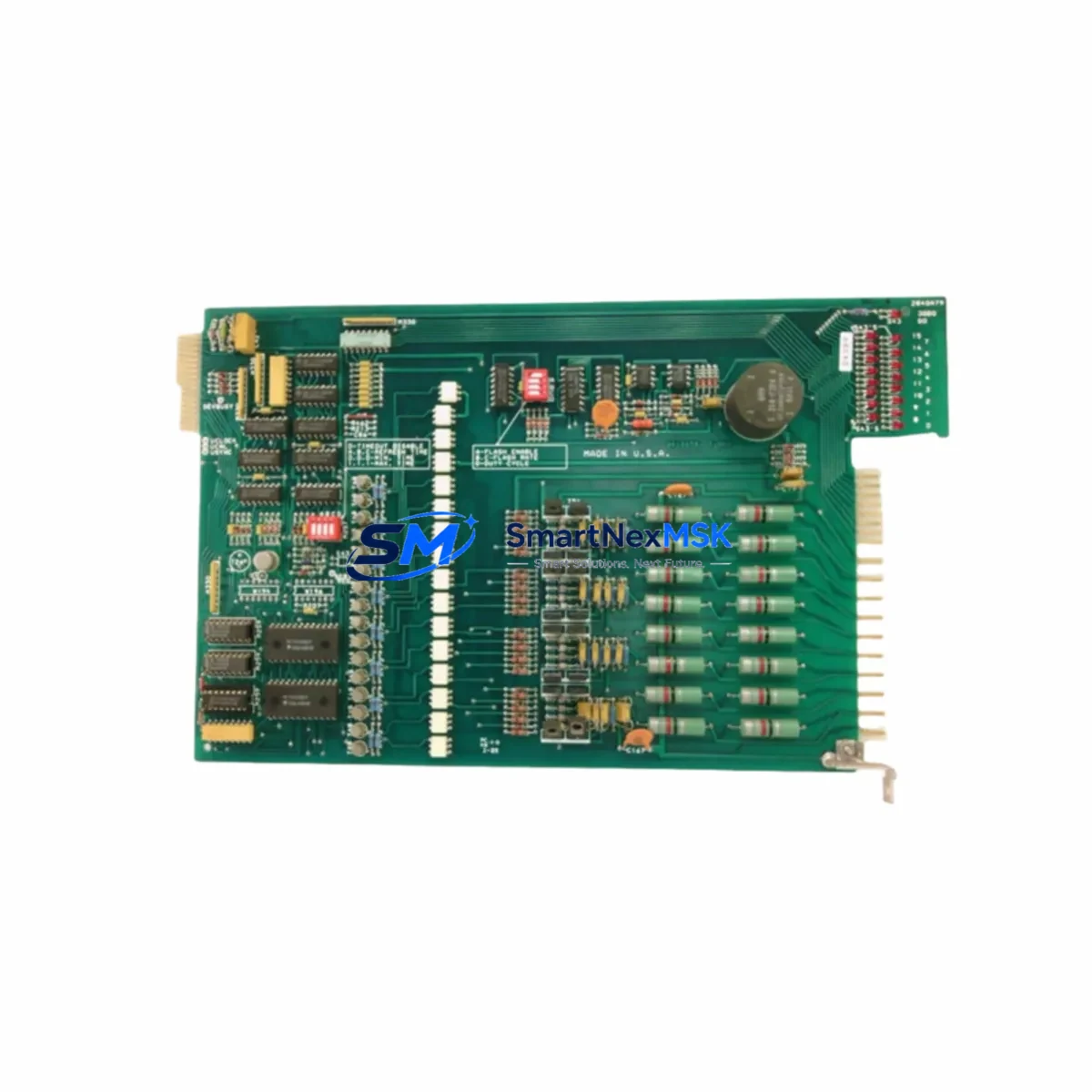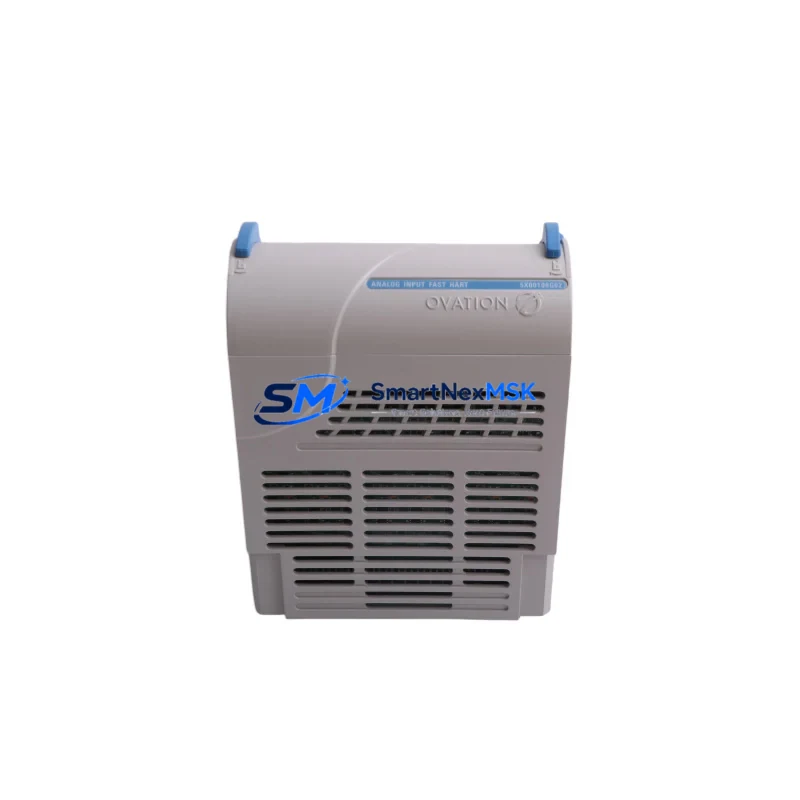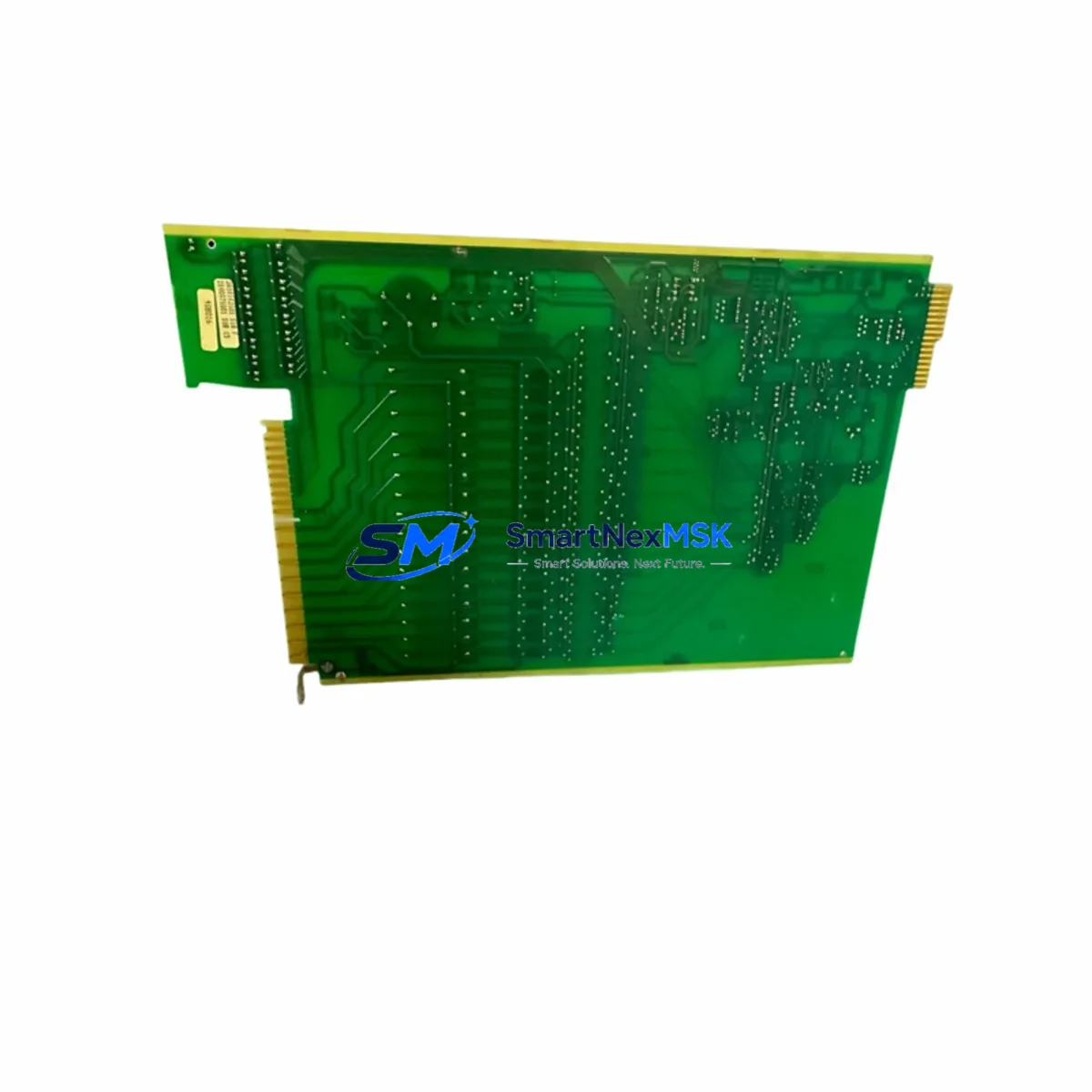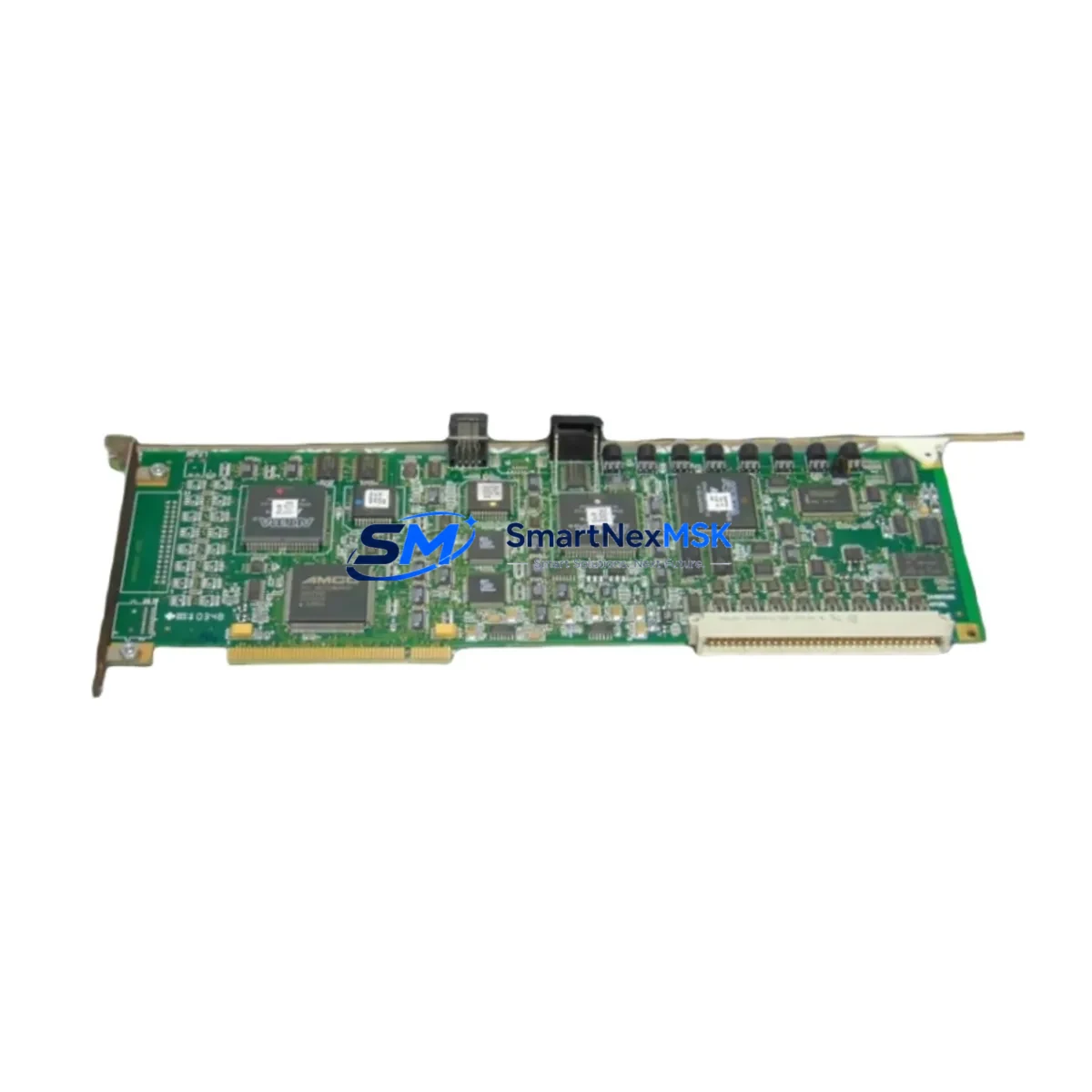
Westinghouse 3A99158G01-4PCRL1 Retrofit-Ready I/O Interface for Ovation DCS Control Systems
The Westinghouse 3A99158G01-4PCRL1 is a SUB-8 Local I/O Interface Board engineered for the Ovation Distributed Control System (DCS) platform. As aging Ovation installations approach end-of-support milestones, this module serves as the critical link between legacy field wiring and modernized control architectures. Whether you are executing a full panel upgrade, replacing a failed board on an active production line, or migrating from an earlier Ovation revision to a current-generation controller, the 3A99158G01-4PCRL1 provides a verified, drop-in compatible solution that preserves your existing I/O wiring infrastructure and minimizes engineering rework.
Sourced directly from authorized distribution channels and subjected to pre-shipment functional testing, each unit is dispatched with a 12-month warranty covering manufacturing defects and operational failures under normal service conditions. Fast global shipping from Xiamen ensures lead times that support both planned turnarounds and emergency breakdown recovery scenarios.
Upgrade Compatibility Table
| Parameter | Details |
|---|---|
| Part Number | 3A99158G01-4PCRL1 |
| Module Type | SUB-8 Local I/O Interface Board |
| Compatible Platform | Westinghouse Ovation DCS (all revisions) |
| Backplane Interface | Ovation SUB-8 local I/O backplane; compatible with standard Ovation I/O drop enclosures |
| Communication Protocol | Ovation proprietary local I/O bus; no additional protocol converter required for same-generation replacement |
| Installation Requirement | Direct board swap; verify slot address DIP switch settings match original module configuration |
| Replacement Scope | Drop-in replacement for discontinued or failed 3A99158G01-4PCRL1 units; also applicable as upgrade path from earlier SUB-8 revisions |
| Commissioning Note | Confirm I/O module address, verify field terminal wiring continuity, and perform Ovation controller I/O scan after installation |
| Warranty | 12 months from shipment date; covers manufacturing defects and functional failures under rated operating conditions |
| Pre-Shipment Testing | Functional burn-in test performed on each unit prior to dispatch |
| Origin | China (CN) |
Retrofit Planning for Existing Automation Systems
A successful retrofit of the 3A99158G01-4PCRL1 begins well before the replacement board arrives on site. Engineers should first audit the existing Ovation I/O drop enclosure to confirm the backplane slot assignment and verify that the Ovation I/O Interface Module (IOM) addressing scheme is documented. In multi-drop configurations, each SUB-8 local I/O interface board carries a unique node address; mismatched addressing after board swap is one of the most common causes of post-replacement communication faults.
Power budget verification is equally critical. The Ovation local I/O bus draws regulated DC power from the enclosure’s Ovation Power Supply Module. Before installing the replacement 3A99158G01-4PCRL1, confirm that the installed power supply — typically a redundant pair — can sustain the combined load of all active I/O modules in the drop. If the existing power supply is approaching its rated capacity, this retrofit is an appropriate trigger point to upgrade to a higher-capacity Ovation power supply module simultaneously.
Field terminal wiring should be photographed and documented before any board removal. The 3A99158G01-4PCRL1 interfaces with field devices through the enclosure’s marshalling terminal blocks. In older installations, terminal labeling may have drifted from the original engineering drawings; a point-to-point continuity check against the current I/O list prevents wiring errors during recommissioning. Where the original installation used Ovation Analog Input Modules or Ovation Digital Output Modules on the same backplane, their wiring and channel assignments remain unaffected by the interface board replacement.
For sites migrating from an earlier Ovation controller generation to the current Ovation OCR1100 Controller or OCR400 Controller, the 3A99158G01-4PCRL1 retains full compatibility with the updated controller firmware. No I/O configuration rebuild is required in the Ovation Developer Studio environment provided the module address and I/O list assignments are preserved. Engineers should export and archive the current Ovation database before beginning any hardware swap to ensure a clean restore point is available.
Where the retrofit scope extends to communication infrastructure, sites running Ovation Ethernet I/O Modules or integrating third-party devices via Ovation Serial Communication Modules should verify that the updated I/O drop configuration is reflected in the Ovation network topology map. HMI graphics linked to specific I/O tags will continue to function without modification as long as tag names and I/O addresses are preserved through the migration. If the HMI layer is being upgraded concurrently — for example, transitioning from an older Ovation Operator Station to a current-generation workstation — coordinate the I/O board replacement with the HMI database migration to avoid tag reference mismatches.
For I/O expansion projects where additional field points are being added alongside the interface board replacement, the Ovation Remote I/O Drop architecture supports incremental expansion without requiring changes to the existing local I/O configuration. Planning the expansion in parallel with the 3A99158G01-4PCRL1 replacement reduces total installation time and limits the number of separate outage windows required.
Downtime Control During System Migration
Minimizing control system downtime during a 3A99158G01-4PCRL1 replacement requires a structured pre-outage preparation protocol. The most effective approach is to complete all documentation, address verification, and spare parts staging before the maintenance window opens. This includes confirming that the replacement board’s DIP switch settings match the original module’s slot address configuration — a task that can be completed on the bench using the original engineering drawings before the system is taken offline.
Where the Ovation system supports hot-standby or redundant controller configurations, coordinate the board replacement to occur during a period when the redundant controller is confirmed healthy and capable of assuming full control. This allows the local I/O drop to be taken offline for the board swap without interrupting the broader control loop. After reinstalling the 3A99158G01-4PCRL1, the Ovation controller will automatically re-scan the I/O drop and restore communication with field devices, typically within seconds of power restoration.
For non-redundant installations, the outage window should be planned to coincide with a scheduled process hold or low-production period. Pre-stage all tools, the replacement board, and a copy of the current Ovation I/O configuration printout at the enclosure location before initiating the shutdown. A trained commissioning engineer should be present to monitor the Ovation controller diagnostic display during power-up and confirm that all I/O points return to their expected states before releasing the process back to automatic control. Document the as-found and as-left conditions for each I/O channel as part of the maintenance record.
Retrofit Support FAQ
Q1: Is the 3A99158G01-4PCRL1 a direct drop-in replacement for all Ovation SUB-8 local I/O interface board variants?
The 3A99158G01-4PCRL1 is the specific part number for this SUB-8 Local I/O Interface Board revision and is a direct replacement for units carrying the same part number. For adjacent revisions within the SUB-8 family, compatibility depends on the Ovation firmware version and backplane revision installed at your site. Contact our technical team with your Ovation system revision details for a confirmed cross-reference before ordering.
Q2: What commissioning steps are required after installing the replacement board?
After physical installation, verify the slot address DIP switch settings match the original module, restore power to the I/O drop enclosure, and monitor the Ovation controller diagnostic display for I/O communication confirmation. Perform a point-to-point I/O check against the current I/O list to confirm all field signals are reading correctly before returning the system to automatic control. No software changes are required in Ovation Developer Studio for a same-address replacement.
Q3: How is the board tested before shipment, and what does the 12-month warranty cover?
Each 3A99158G01-4PCRL1 unit undergoes a functional burn-in test prior to dispatch to verify board-level communication and I/O interface integrity. The 12-month warranty covers manufacturing defects and operational failures occurring under rated operating conditions from the shipment date. It does not cover damage resulting from incorrect installation, overvoltage, or environmental conditions outside the module’s rated specifications.
Q4: Can this board be used in an I/O expansion project rather than a direct replacement?
Yes. The 3A99158G01-4PCRL1 can be installed in an unoccupied SUB-8 backplane slot to add local I/O capacity to an existing Ovation drop enclosure, provided the enclosure’s power supply budget supports the additional load and an unused slot address is available. Coordinate the expansion configuration with your Ovation system integrator to update the I/O database and HMI tag assignments accordingly.
© 2026 SMARTNEXMSK. All rights reserved.
Original Source: https://smartnexmsk.com
Contact: [email protected] | +86 18259474341