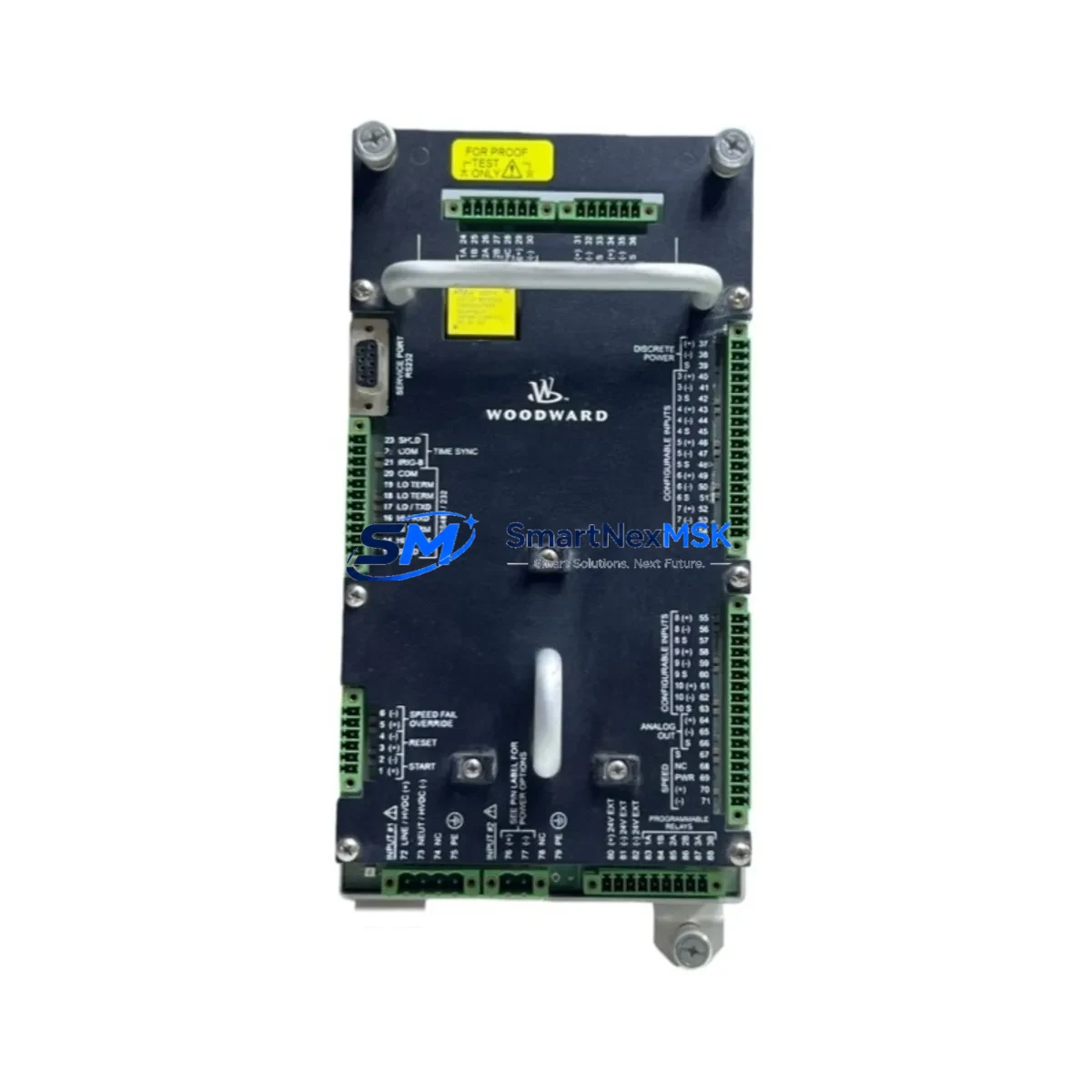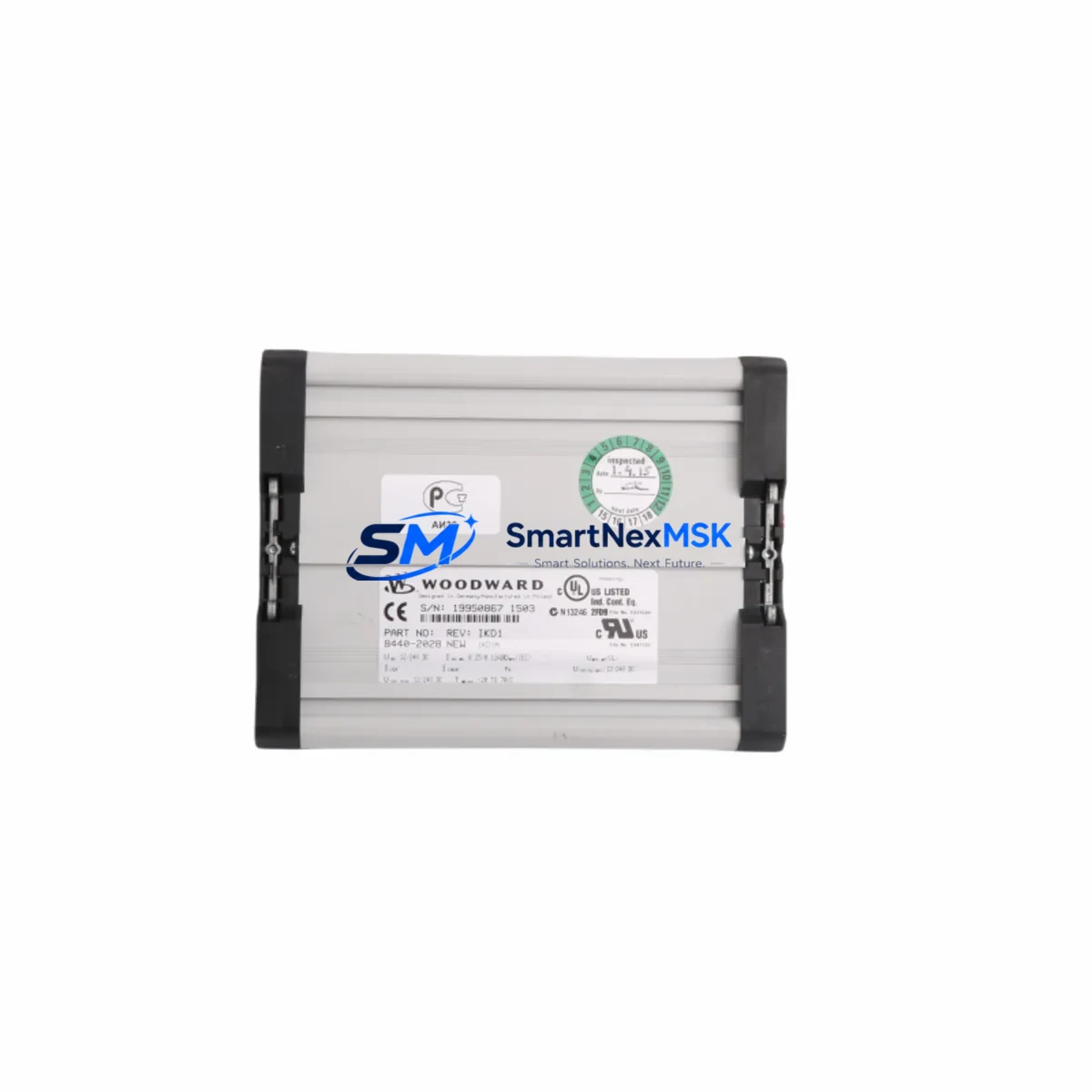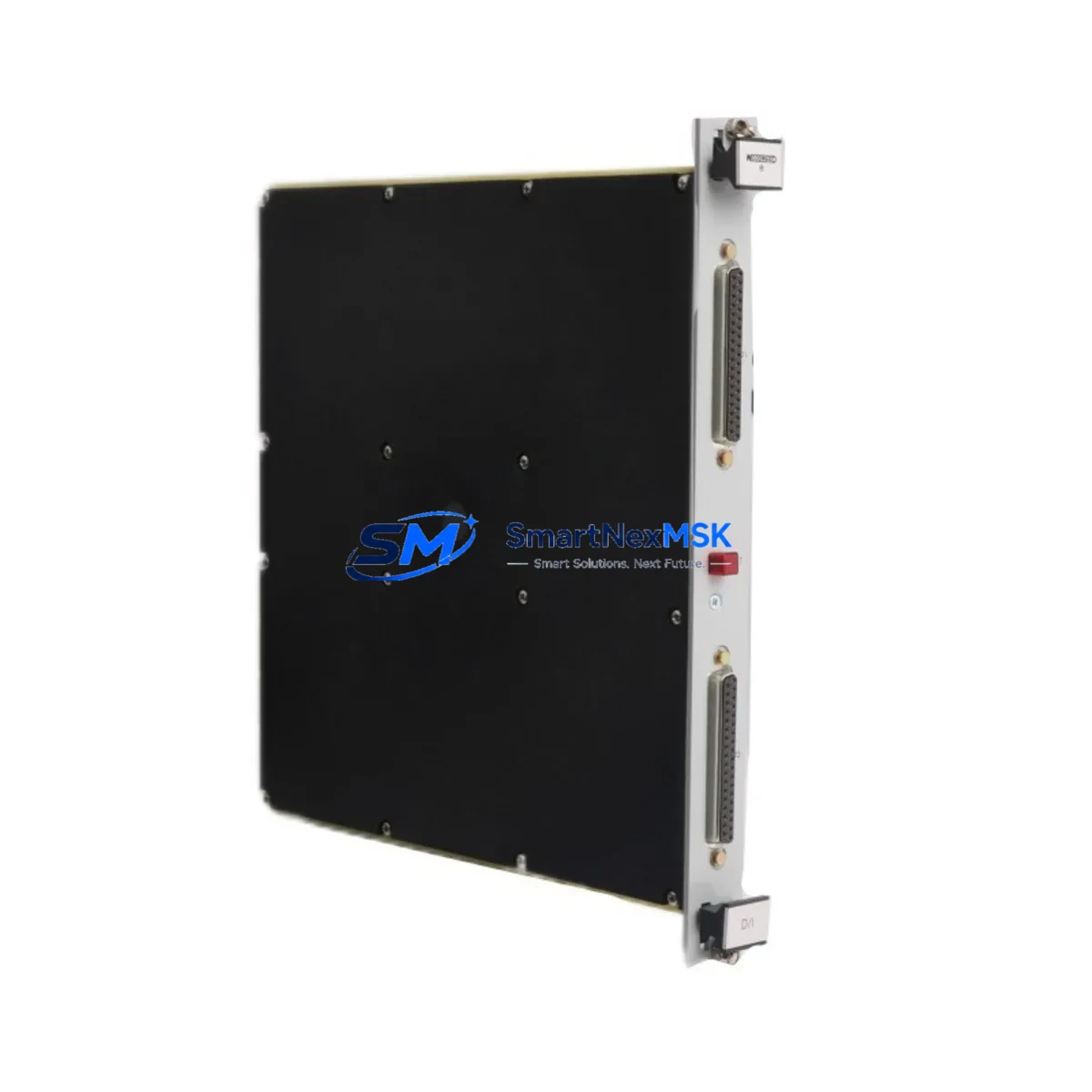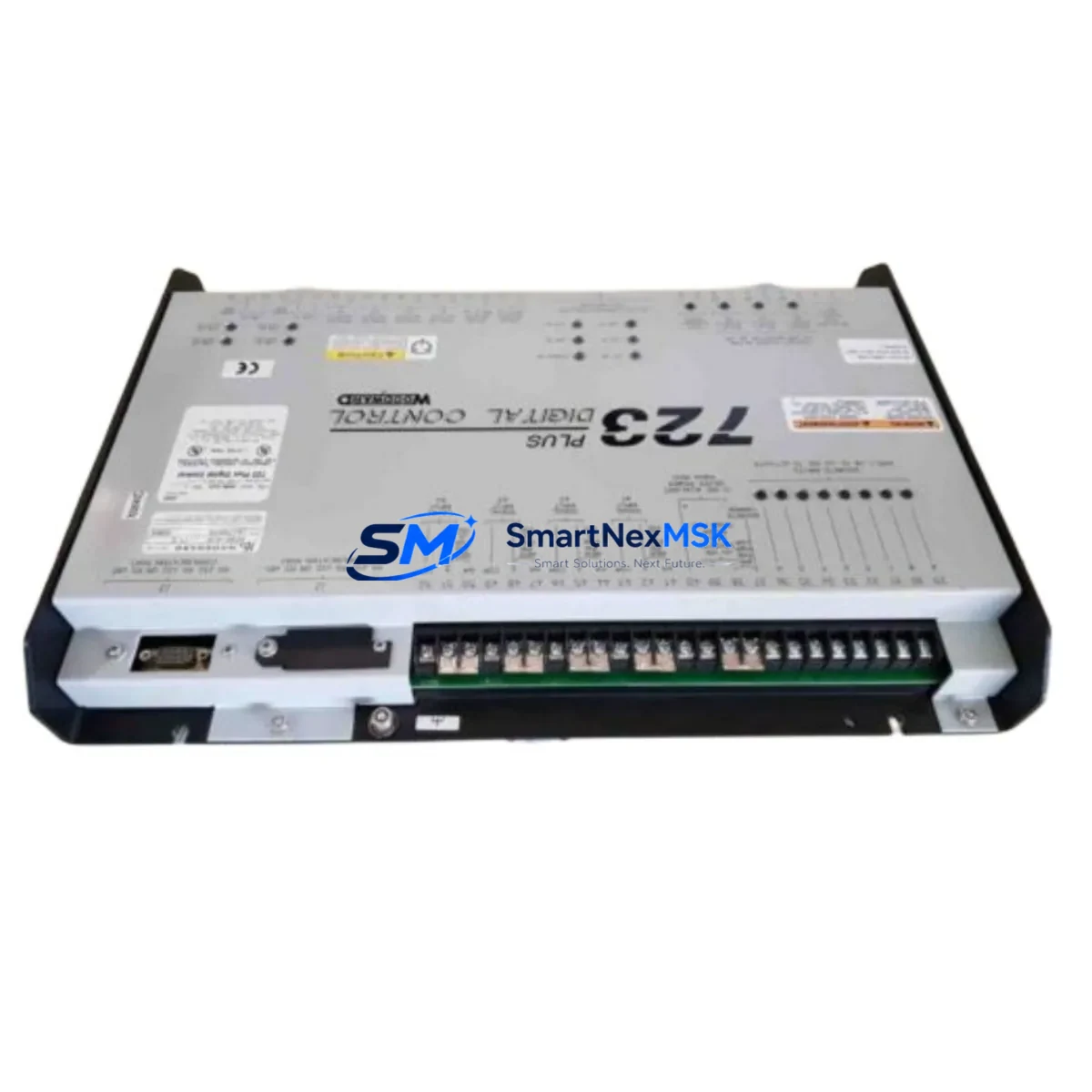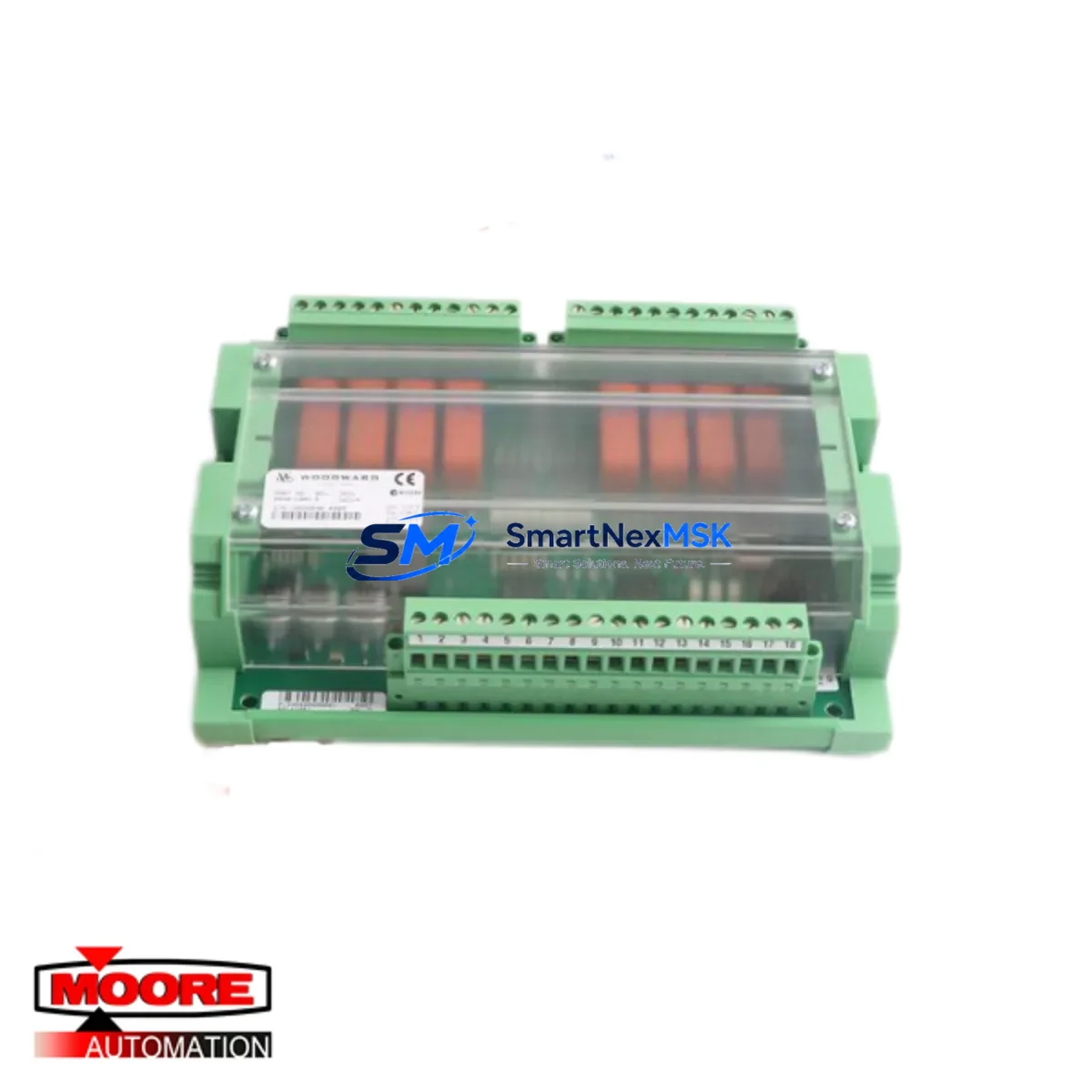
Woodward 9905-968 Retrofit-Ready Analog Input for MicroNet Control Systems
The Woodward 9905-968 is a 6-channel analog input module engineered for the MicroNet turbine and generator control platform. As legacy MicroNet installations approach end-of-support milestones, plant engineers and system integrators increasingly rely on verified retrofit-ready replacements to extend operational life without committing to a full control system overhaul. The 9905-968 addresses this need directly: it is a wiring-compatible, drop-in replacement that preserves existing terminal assignments, backplane interface geometry, and signal conditioning characteristics, allowing retrofit teams to execute module swaps with minimal engineering rework.
In retrofit and upgrade projects, the 9905-968 is typically deployed alongside the Woodward 9905-941 power supply module, which must be verified for adequate current capacity before the swap is initiated. Engineers should confirm that the MicroNet chassis — whether a 9905-001 or 9905-002 rack — has sufficient slot availability and that the backplane bus voltage rails are within specification. Terminal block wiring from the field instrument loop should be documented prior to removal; the 9905-968 retains the same 24-pin terminal arrangement as its predecessor, eliminating the need for field rewiring in most installations.
Module address configuration is handled through the MicroNet Toolbox software. After physical installation, the replacement module must be assigned the same logical address as the removed unit to ensure that the application program — typically a .mna or .mnb file — recognizes the new hardware without requiring source-code modification. This is a critical step: address mismatch will cause the controller to flag a hardware fault and inhibit output, extending downtime unnecessarily. SMARTNEXMSK recommends that customers retain a backup copy of the existing application program and configuration file before beginning any module replacement.
For sites running Modbus RTU or Modbus TCP communication links between the MicroNet controller and a supervisory SCADA or DCS layer — such as a Honeywell Experion or Emerson DeltaV system — the 9905-968 replacement does not alter the communication protocol stack. The MicroNet communication module, such as the 9905-976 Ethernet interface card, continues to handle protocol translation independently of the analog input module. However, engineers should verify that the SCADA tag database correctly maps the analog input register addresses after the swap, particularly if the replacement module firmware version differs from the original.
HMI screen updates are rarely required when replacing the 9905-968 on a like-for-like basis, provided the analog input scaling parameters — engineering units, range limits, and alarm setpoints — are preserved in the application program. Sites using a Woodward 2301E or 505E digital control panel as a local HMI should confirm that the panel’s analog input display pages reference the correct module slot address after the swap.
I/O expansion considerations are relevant when the retrofit is part of a broader system upgrade. If the project scope includes adding new measurement points — for example, additional thermocouple or 4–20 mA process inputs — the 9905-968 can be supplemented with additional analog input modules in adjacent rack slots, provided the MicroNet chassis has available capacity. In cases where the existing rack is fully populated, a secondary expansion chassis connected via the MicroNet inter-rack cable may be required, along with a corresponding 9905-941 power supply for the expansion rack.
Field commissioning after module replacement should follow a structured sequence: power-down the rack, seat the 9905-968 firmly into the backplane connector, restore power, observe the module status LED for a solid green indication, then use MicroNet Toolbox to perform a live I/O check against each of the six analog input channels. Any channel showing an out-of-range or open-circuit fault should be traced back to the field wiring before the unit is returned to automatic control mode. SMARTNEXMSK ships each 9905-968 with a pre-shipment functional test report, confirming that all channels have been verified against calibrated signal sources prior to dispatch.
Upgrade Compatibility Table
| Parameter | Detail |
|---|---|
| Compatible Platform | Woodward MicroNet (9905-001 / 9905-002 Chassis) |
| Channels | 6 × Analog Input (4–20 mA / 0–10 V configurable) |
| Backplane Interface | MicroNet standard backplane connector — direct replacement |
| Terminal Wiring | 24-pin field terminal block — wiring-compatible, no rewiring required |
| Communication Compatibility | Modbus RTU / Modbus TCP via MicroNet comm module (e.g. 9905-976) |
| Address Configuration | Via MicroNet Toolbox software — must match original slot address |
| Replacement Recommendation | Direct drop-in for 9905-968; verify power supply (9905-941) capacity |
| Commissioning Requirement | Live I/O check via MicroNet Toolbox after installation |
| Warranty | 12-Month Warranty — all units pre-tested before shipment |
Retrofit Planning for Existing Automation Systems
A successful MicroNet retrofit begins with a complete audit of the existing control cabinet. Before ordering the 9905-968, engineers should document the current rack configuration: chassis model (9905-001 or 9905-002), occupied slot positions, installed modules including the 9905-941 power supply, 9905-976 Ethernet communication module, any 9905-948 digital output modules, and the 9905-931 CPU module. This inventory ensures that the replacement module is compatible with the installed firmware baseline and that no inter-module dependencies are overlooked.
Power budget verification is mandatory. The 9905-941 power supply module has a defined output current capacity; adding or replacing modules without checking the aggregate load can cause undervoltage conditions on the backplane bus, leading to intermittent faults across multiple modules simultaneously. SMARTNEXMSK recommends calculating the total module current draw from the MicroNet hardware manual before proceeding.
For sites where the MicroNet rack also hosts a 9905-956 thermocouple input module or a 9905-962 RTD input module alongside the 9905-968, the retrofit team should verify that the application program’s I/O map correctly distinguishes between module types and slot addresses. Mixing up slot assignments in the Toolbox configuration is a common source of commissioning delays. Programming cables — typically a standard RS-232 to USB adapter compatible with MicroNet Toolbox — should be on hand during the swap to allow immediate configuration verification.
Downtime Control During System Migration
Minimizing downtime during a MicroNet module replacement requires preparation before the maintenance window opens. The application program and all configuration parameters should be backed up to a laptop running MicroNet Toolbox at least 24 hours before the scheduled outage. A printed I/O wiring diagram for the 9905-968 terminal block should be available to the field technician to eliminate any ambiguity during reconnection.
The physical swap of the 9905-968 typically takes under 15 minutes for an experienced technician. The majority of the maintenance window is consumed by the post-installation I/O verification sequence and the controlled return to automatic mode. By pre-staging the replacement module, pre-printing the wiring diagram, and pre-loading the application program backup on the Toolbox laptop, most sites can complete the full replacement — including functional verification — within a two-hour planned outage window, preserving field control continuity and avoiding unplanned production loss.
Retrofit Support FAQ
Q: Is the 9905-968 a direct replacement for the original Woodward MicroNet analog input module?
A: Yes. The 9905-968 is a direct, wiring-compatible replacement. Terminal block pinout, backplane connector, and module dimensions are identical to the original, requiring no mechanical or wiring modifications in the control cabinet.
Q: Does SMARTNEXMSK test the 9905-968 before shipment?
A: Every unit is functionally tested against calibrated signal sources on all six analog input channels before dispatch. A pre-shipment test report is included with each order. All units carry a 12-month warranty from the date of shipment.
Q: What software is required to configure the replacement module?
A: MicroNet Toolbox is required for address assignment and live I/O verification. The module must be assigned the same logical slot address as the removed unit. No source-code changes to the application program are required for a like-for-like replacement.
Q: Can the 9905-968 be used in a MicroNet system that also communicates via Modbus TCP to a DCS?
A: Yes. The analog input module operates independently of the communication stack. Modbus TCP communication is handled by the 9905-976 Ethernet interface module. After replacement, verify that the SCADA or DCS tag database correctly maps the analog input register addresses for the replaced module’s slot position.
© 2026 SMARTNEXMSK. All rights reserved.
Original Source: https://smartnexmsk.com
Contact: [email protected] | +86 18259474341