
Repair Exchange Spares: Set Core Return Terms
Link the replacement coming in to the failed unit going back, with clear core identity, condition, deadlines and closure evidence.
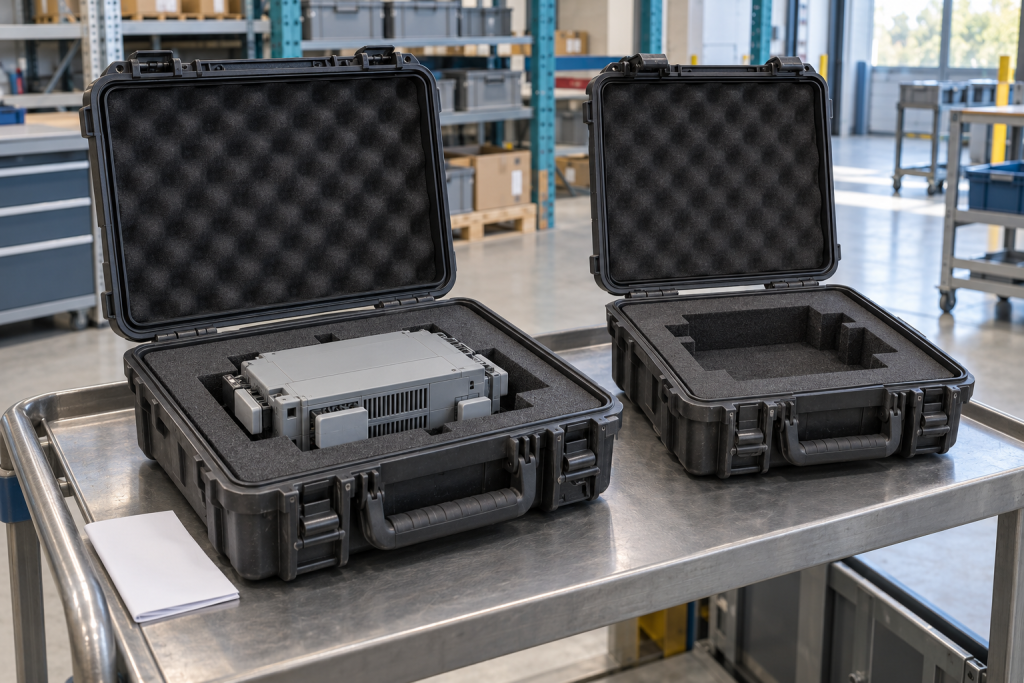
A production line can be running again while its spare-parts purchase remains unresolved. An advance exchange may deliver a replacement before the failed unit leaves the plant, but the old unit still has to satisfy the agreed return conditions. If it is discarded, mixed with another failure, or sent to the wrong destination, the recovery purchase can become a second problem.
For repair exchange spares, approve two linked movements: the replacement coming in and the failed unit going back. The useful purchasing question is not simply whether a replacement is available. It is whether maintenance, procurement and the receiving service provider agree on the identity, condition, timing and evidence required to complete the exchange.
Name the transaction before comparing quotations
An outright spare purchase, repair-and-return service and advance exchange are different arrangements. Ask whether the same physical unit will return, whether a replacement is released before inspection, and whether the quotation depends on surrendering an eligible failed unit, often called the core.
Rockwell Automation’s Repair+ user guide, January 2024, distinguishes repair service levels and priority exchange. It also identifies possible late-return, non-return and non-like-for-like charges under its agreement options. These are examples from that manufacturer’s program, not SmartNexMSK service terms or a universal policy for every supplier.
Get the applicable offer and agreement revision in writing. Do not borrow a return deadline, warranty or eligibility statement from a different region, program or historical brochure.
Tie the proposed core to one installed asset
Record the failed unit’s complete model, suffix, revision and serial number where present. Photograph its label, connectors and overall condition before removal or dispatch. Link those records to the asset location, failure report and exchange order. Keep the replacement’s identity separate; the two units need an auditable relationship, not one shared serial-number field.
If several similar controllers fail during a shutdown, assign each return a distinct reference. Do not assume that another unit from the same family can satisfy an exchange obligation. Ask who confirms acceptable equivalence and when that decision becomes binding for the order.
The PLC and controller spare category can help organize hardware identification. A catalog listing does not establish that a particular unit qualifies for an exchange program.
Resolve condition questions before shipping
Describe visible damage and known previous work honestly. Ask how the provider treats missing parts, altered labels, corrosion, contamination, fire damage or an incomplete assembly. Do not dismantle a failed module to improve its appearance or remove evidence before the return requirements are understood.
Request a written process for a rejected core: who inspects it, what evidence supports the decision, what alternatives are offered, and which charges or return arrangements require approval. Do not write an assumed credit into the maintenance budget before eligibility has been confirmed.
Keep commercial acceptance separate from installation suitability. An accepted core does not prove the supplied replacement fits the site’s firmware, connectors, project or operating requirements. The related legacy-controller lifecycle and service review explains why service availability and a functional replacement decision are different questions.
Define the return clock and its owner
Record the exact event that starts the return period: order acceptance, replacement shipment, delivery or another agreed milestone. Confirm whether completion means carrier collection or receipt at the specified service location. Also identify the required return authorization, destination, documentation and person authorized to request an extension.
A practical exchange register should contain:
- Order and return references, with both unit identities.
- Written eligibility and condition requirements.
- Deadline, triggering event and responsible employee.
- Dispatch evidence and the provider’s receipt acknowledgement.
- Inspection outcome, credit or charge status, and closure approval.
Assign responsibility before the replacement arrives. Maintenance may preserve the failed unit, stores may control its location, and procurement may own the service correspondence. The process still needs one person tracking completion across those handovers.
Preserve configuration and failure evidence
Before releasing hardware, follow the asset owner’s approved process for preserving configuration and necessary diagnostic records. Do not erase a unit merely because it is leaving the site, and do not disclose production projects or credentials simply to accelerate an exchange.
NIST SP 1339, published June 17, 2026, emphasizes tested OT backups integrated with change management. A retained file is not automatically a verified recovery path. Coordinate any data removal or transfer with the authorized owner and the agreed service instructions.
Close the purchase on evidence, not dispatch alone
Tracking information supports the transport record, but ask the provider to acknowledge the correct unit and return reference. Keep receipt, inspection and commercial closure as distinct steps. An unexplained delivery scan does not settle whether an incomplete or mismatched core was accepted.
Inspect the replacement independently against the order. Use the automation spare receiving-inspection checklist for identity, condition and accessories, then complete the application’s approved acceptance checks. Do not count the replacement as unrestricted stock while unresolved conditions still affect its intended use.
Frequently asked questions
Is an exchange price the same as an outright purchase price?
Not necessarily. Establish whether the offer depends on an eligible core and which unresolved return conditions can change the final charge.
Can another unit with the same family name be returned?
Only if the provider explicitly accepts it under the applicable agreement. Record the approved identity rather than assuming family-level equivalence.
Does courier delivery prove the exchange is complete?
No. Retain acknowledgement of the unit received, inspection outcome and agreed commercial closure, alongside tracking evidence.
Should configuration be erased before returning a controller?
Use the asset owner’s authorized process. Preserve verified recovery information and agree any data-handling requirements before altering or releasing the unit.
Prepare a precise sourcing request
Send the model, nameplate photos, failed-unit condition, discontinued-part replacement need and required delivery date to [email protected] or WhatsApp/Phone +86 18259474341. State whether you seek outright supply, repair-and-return or exchange evaluation; service scope, eligibility and terms require confirmation.
Route this topic into a sourcing request
Connect the article topic to a model number, category, brand, quantity, and destination before opening the RFQ.
Related Insights
Continue with sourcing and model matching guides
 Nov 28, 2026
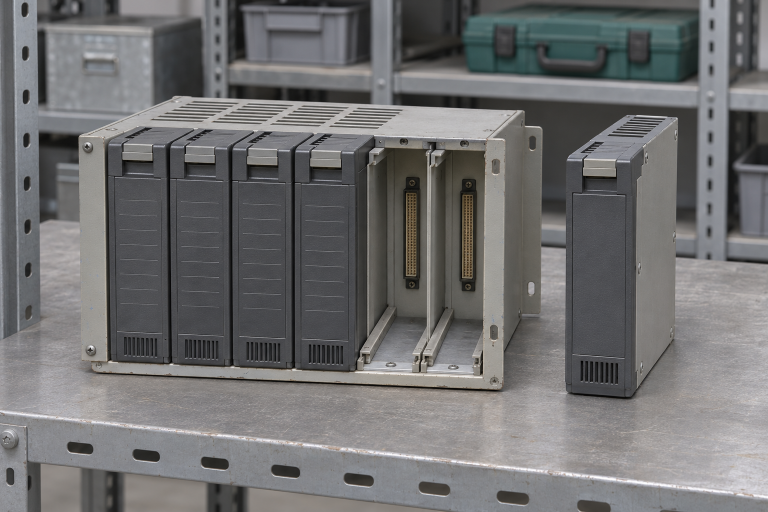
Series 90-30 Spares: Check the RX3i Rack Boundary
Separate exact Series 90-30 spares from the verified RX3i rack, processor and retained I/O needed for a planned migration.
Read guide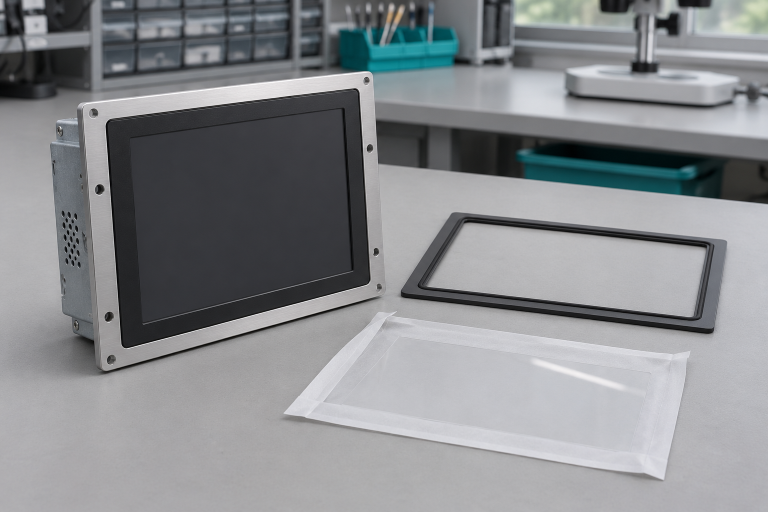 Nov 27, 2026
HMI Screen Spares: Identify the Failed Layer
Separate surface damage, touch input and the supported display assembly before specifying an HMI hardware spare.
Read guide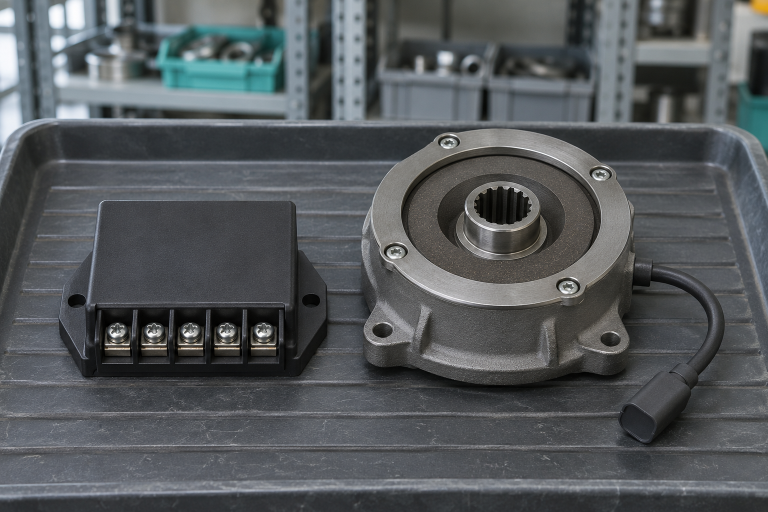 Nov 26, 2026
Motor Brake Rectifier Spares: Match the Coil
Check the fitted brake coil and approved control function before treating a motor brake rectifier as an exact spare.
Read guide