
Siemens S7-1200 G1 Phase-Out: Spare Planning Guide
Plan the Siemens S7-1200 G1 phase-out with practical guidance on spare coverage, G2 compatibility, migration risk, and RFQ evidence.
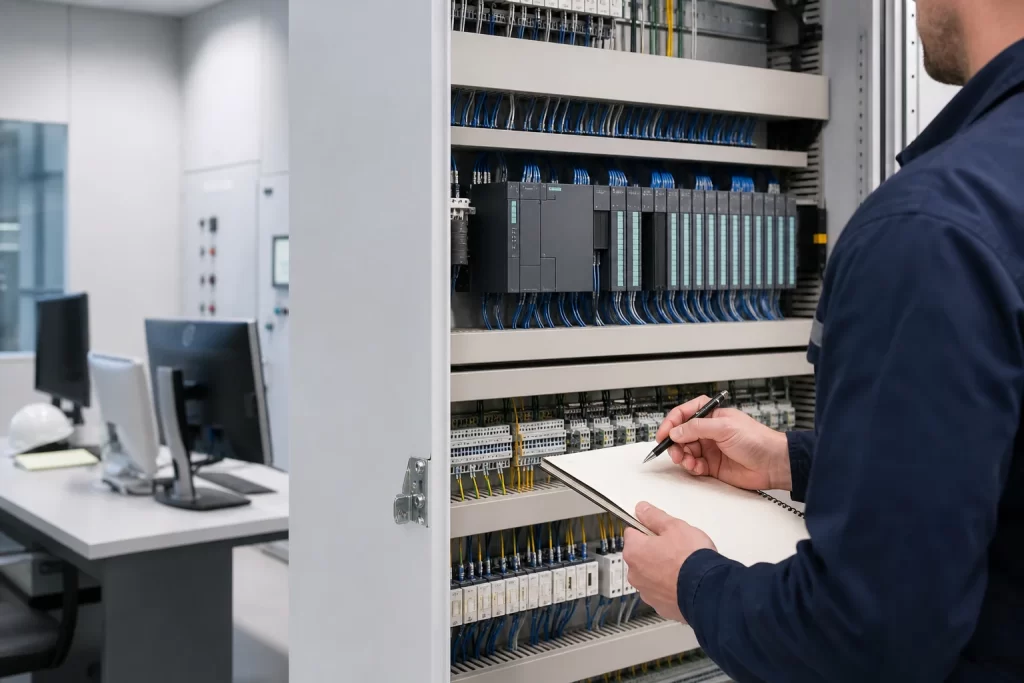
Siemens has announced that the first generation of SIMATIC S7-1200 controllers will begin a gradual phase-out process on November 1, 2026. For maintenance teams, this is not an instruction to replace every installed controller immediately. It is a signal to separate current project demand, emergency spare coverage, and longer-term migration planning before procurement options become narrower.
The official Siemens migration guidance states that the S7-1200 G1 can continue to be ordered as a new device until October 31, 2027, while modules are planned to remain available as spare parts until approximately 2036. Those dates provide useful planning room, but they do not remove the need to verify the exact CPU, signal modules, firmware, engineering environment, and installed communication design.
What the phase-out means for installed systems
A phase-out is a lifecycle planning event, not automatically an emergency failure event. An operating S7-1200 G1 installation may continue to perform normally, but the cost and effort of recovery can increase if the plant has no verified CPU spare, no current project backup, or no one who has confirmed the correct TIA Portal version.
Start by identifying every G1 controller in the installed base. Record the full CPU order number, firmware, signal-board and signal-module configuration, communication modules, memory card, power supply, panel connection, and machine location. Do not rely on a family name such as “S7-1200” alone. Different CPU variants can have different performance, memory, communications, and firmware requirements.
Separate three procurement decisions
Maintenance teams often mix three different decisions into one purchase request. Treat them separately:
- Emergency coverage: Which exact CPU and modules are needed to recover the most critical line after a failure?
- Project completion: Which G1 devices are still required for an approved machine build, expansion, or committed OEM project?
- Migration preparation: Which installations should move to a newer controller generation during a planned outage?
This separation prevents a project reservation from consuming the last emergency spare. It also helps procurement compare the cost of buying a verified G1 spare against the engineering cost and downtime exposure of moving to a newer platform.
Check compatibility before considering G2
The S7-1200 G2 is presented by Siemens as the successor platform for new projects. That does not mean it is a drop-in replacement for every G1 application. A responsible review should compare the program, firmware, engineering software, communications, motion functions, safety requirements, HMI connection, cabinet dimensions, power arrangement, and field wiring.
Also check the surrounding system. Replacing a CPU can affect diagnostics, data blocks, network addressing, remote I/O behavior, HMI tags, drives, and commissioning procedures. Where the installed wiring and signal list are valuable, Siemens also describes migration approaches that use signal adapters when moving from older systems. The right choice depends on the machine design and the level of validation required.
Use the Siemens automation sourcing page to organize brand-specific model requests, then compare the details against the PLC CPU replacement RFQ checklist. If the existing label or revision is unclear, send the model and label photos needed for verification before approving an alternative.
Build a G1 spare risk register
For each installed G1 system, assign a simple risk status: covered, partially covered, or exposed. “Covered” means the exact critical spare is identified, available or sourceable, and supported by a tested project recovery process. “Partially covered” means a spare exists but its revision, firmware, condition, or project backup is uncertain. “Exposed” means the plant depends on a single installed unit, an unknown model, or an unverified substitute.
Add the last inspection date, storage condition, battery or memory-card considerations, and the person responsible for the recovery test. A spare sitting in a cabinet is not equivalent to a spare that has been visually checked, matched to the machine record, and included in a controlled recovery exercise.
Procurement checklist for S7-1200 G1
A useful RFQ should include the complete CPU order number, hardware and firmware revision, quantity, condition requirement, destination, urgency, and whether the request is for an exact G1 unit or a migration review. Add photos of the nameplate, front face, connectors, and cabinet position where possible.
Ask suppliers to distinguish new, surplus, refurbished, repaired, and exchange condition. Request serial or traceability evidence, inspection scope, warranty period, packaging method, and estimated dispatch date. For an alternative, request a compatibility statement that identifies what is confirmed, what must be tested, and what engineering changes may be required.
FAQ: S7-1200 G1 phase-out planning
Does the November 2026 phase-out mean S7-1200 G1 stops working?
No. A phase-out affects future availability and planning. Existing equipment can continue operating, but the plant should confirm spare coverage and recovery capability before the installed base becomes difficult to support.
How long can S7-1200 G1 devices be ordered?
Siemens states that G1 devices can be ordered as new devices until October 31, 2027. Planned module availability as spare parts continues to approximately 2036, subject to the official lifecycle terms and specific product records.
Is S7-1200 G2 a direct replacement for every G1 installation?
No. The application, firmware, TIA Portal project, communications, I/O, HMI, motion, safety, wiring, and validation requirements must be reviewed before treating G2 as a suitable replacement.
What should a plant buy first?
Prioritize exact, verified emergency spares for the most critical and least replaceable G1 systems. Then address project demand and create a migration list for equipment that will require engineering work during a planned outage.
Plan before the last-time pressure arrives
The S7-1200 G1 timeline gives maintenance teams an opportunity to make decisions based on evidence rather than panic. SmartNexMSK can review CPU and module lists, label photos, condition requirements, migration questions, and delivery targets through [email protected] or WhatsApp/Phone +86 18259474341. Send the installed model details and the affected machine context so an exact spare or replacement path can be evaluated clearly.
Route this topic into a sourcing request
Connect the article topic to a model number, category, brand, quantity, and destination before opening the RFQ.
Related Insights
Continue with sourcing and model matching guides
 Sep 8, 2026
SANYO DENKI QS1E Spares: Save Parameters First
When a SANMOTION Q axis stops, the purchasing request often becomes a model number: “Please quote QS1E01AA0H4A3P1T.” That is a useful starting point, but…
Read guide Sep 6, 2026
Yaskawa SGDH-05DE-OY Spares: Check the Servo Chain
A servo drive fault often produces a deceptively simple purchasing request: “Replace the SGDH-05DE-OY.” In a running machine, however, the amplifier is only one…
Read guide Sep 5, 2026
GE IS220PCLAH1A Spares: Check Mark VIe Fit
When a Mark VIe cabinet develops an intermittent control fault, the urgent request often becomes a single line: “Please quote IS220PCLAH1A.” That is understandable…
Read guide