
Wastewater Lift Station PLC Spares: Plan for Recovery
Prepare wastewater lift station PLC spares with verified backups, hardware-fit records, station-specific tests, and a practical recovery checklist.
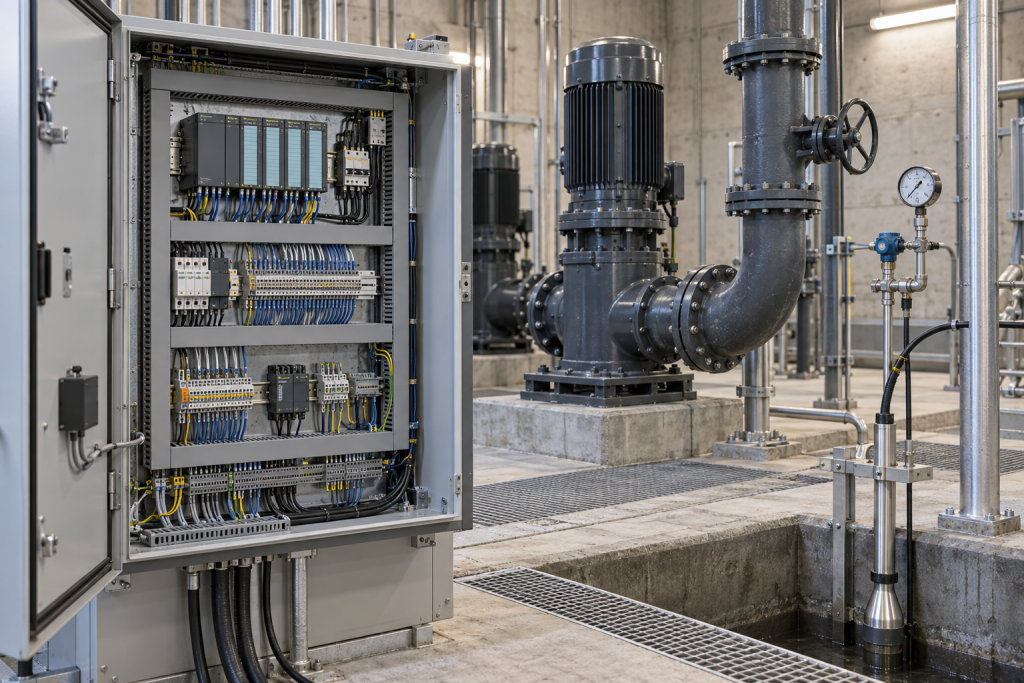
A lift-station alarm is rarely solved by swapping a controller on the first visit. A high-level alarm can reflect loss of incoming power, a pump or valve problem, a level instrument fault, a control fault, or a communications failure. If the station is remote and the original PLC project is missing, even a straightforward hardware replacement can turn into a longer outage.
For wastewater lift station PLC spares, the question is whether the fault can be isolated and the approved station configuration restored and tested—not just which PLC to keep on the shelf. A recovery-ready spare plan joins hardware, software, records, and a controlled test.
Start with the station, not the controller
Map the station’s control path: level sensing, pump commands, motor feedback, local controls, alarms, and telemetry. Record what remains available if the HMI or communications link is down. Use the station’s drawings and operating instructions, not generic assumptions about lead/lag or manual operation.
The same symptom can have different causes. The NEIWPCC collection-system manual hosted by EPA calls for station-specific troubleshooting, logging alarms even if they clear, recording wet-well and equipment readings, and identifying whether the fault is electrical, mechanical, or control-related before closing the response. See the EPA lift-station maintenance resource and its collection-system operations guide.
Define a recovery package
A practical spare plan has four parts.
1. A verified control-system backup. Preserve the PLC application, HMI project, communications settings, alarm configuration, and any required recipes or parameter files that are part of the station’s approved configuration. Keep the engineering software name and version, device and firmware identifiers, passwords or access procedures under the utility’s control, and a record of when and by whom the backup was verified. EPA’s 2024 water-sector backup guidance specifically includes PLC logic and HMI graphics among OT backup elements and recommends testing backups rather than assuming that a stored file is usable.
2. A compatibility record for replaceable hardware. For each critical controller, I/O module, power supply, adapter, or panel, record the full part number, relevant revision and firmware, base/terminal arrangement, supply, interface, and options. Compare against drawings, labels, the project, and manufacturer documentation. Treat an obsolete replacement as an engineering change: check electrical, mechanical, firmware, software, and communications compatibility.
3. The site-specific test and restart steps. Keep a controlled checklist for isolation authority, pre-power checks, I/O checks, pump-sequence and alarm verification, and return-to-service approval. Do not bypass interlocks or force outputs as shortcuts; energized and confined-space work must follow approved procedures and qualification requirements.
4. A realistic spares priority. Rank items by consequence of failure, lead time, commonality across stations, and whether the station has an approved fallback. This is more useful than buying one of everything. At minimum, separate “cannot restore control” items from items that can be borrowed from another station or temporarily supported under a documented operating plan. The PLC and controller category can help teams identify the equipment class when preparing an RFQ; it is not a substitute for checking the exact installed configuration.
Make the backup restorable
A filename is not proof of a usable backup. Record source device, date, revision, software environment, and repository reference. Keep a protected copy separate from the engineering laptop, restrict changes to the approved master, and preserve the pre-change version.
Test restoration on a safe bench or non-production system where practical: confirm the project opens in the documented software, targets the intended hardware, and matches approved drawings. Opening a file alone does not prove correct operation; verify the station sequence through an approved test. EPA’s backup-systems guidance recommends tested OT backups including PLC logic and HMI graphics. Its water-sector power-resilience guide frames power loss as a service-continuity concern.
What to put in the RFQ
For a spare RFQ, send nameplate and installed-module photos, complete part number, quantity, destination, required date, and whether the need is exact replacement, obsolescence planning, or urgent repair. Include configuration, software/firmware, base and connector details when known. Ask suppliers to disclose revision differences and compatibility assumptions; do not approve by family name alone.
Keep the approved backup location, restore-test date, spare status, compatibility notes, drawings, alarm response, and return-to-service owner in one record. The existing control-system backup and restore checklist offers a broader evidence framework.
Frequently asked questions
Should every lift station keep a spare PLC?
No universal quantity fits every utility. Base the decision on the station’s service consequence, installed hardware, restoration time, commonality, and available fallback. A tested backup and known-compatible module can be more valuable than an unverified spare.
Is an HMI backup enough to restore the station?
No. The HMI is only one part of the system. Preserve and verify the PLC project and other configuration needed for the actual installation, along with drawings and restart procedures.
Can I use a newer module with the same product-family name?
Only after a documented compatibility review. Hardware revision, firmware, base, wiring, network behavior, and engineering software can all matter. Confirm against manufacturer documentation and the approved project.
How often should a utility test its backups?
Follow the utility’s approved schedule and applicable requirements. EPA’s 2024 guidance recommends at least annual backup and recovery testing for OT and IT systems; critical stations may warrant more frequent checks based on risk and change activity.
What if the alarm clears before a technician arrives?
Do not treat that as proof that the fault is gone. EPA’s collection-system procedures say alarm conditions should still be checked and logged. Use the station-specific response plan and qualified staff.
Prepare before the alarm
If you are checking a lift-station spare or planning a replacement, send the installed model, nameplate photos, quantity, destination, required date, and whether the need is obsolete-equipment replacement or an urgent repair. Contact [email protected] or WhatsApp/Phone +86 18259474341. We can review the request against the available catalog and identify the information still needed before a sourcing decision.
Route this topic into a sourcing request
Connect the article topic to a model number, category, brand, quantity, and destination before opening the RFQ.
Related Insights
Continue with sourcing and model matching guides
 Nov 28, 2026
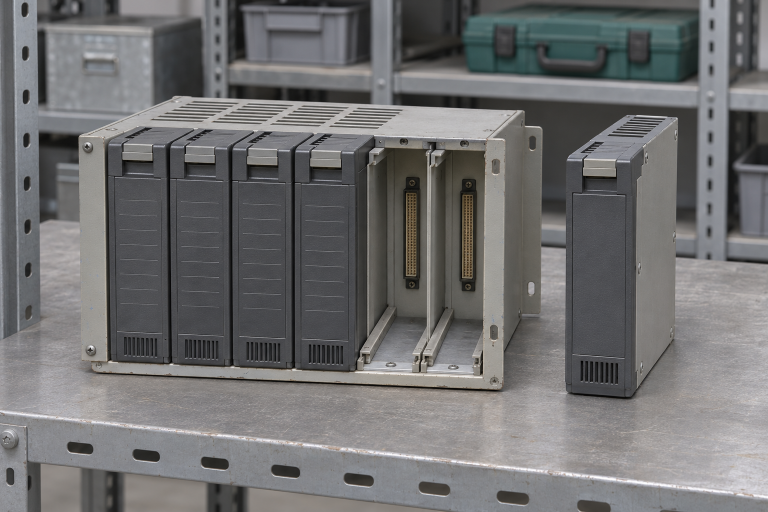
Series 90-30 Spares: Check the RX3i Rack Boundary
Separate exact Series 90-30 spares from the verified RX3i rack, processor and retained I/O needed for a planned migration.
Read guide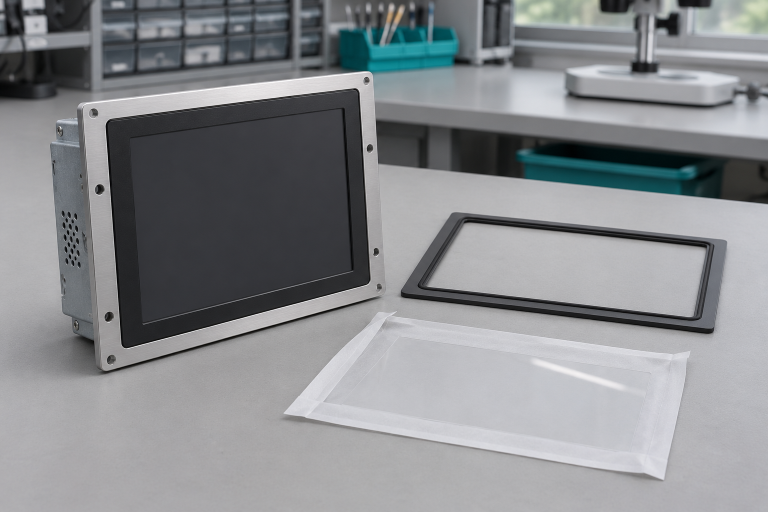 Nov 27, 2026
HMI Screen Spares: Identify the Failed Layer
Separate surface damage, touch input and the supported display assembly before specifying an HMI hardware spare.
Read guide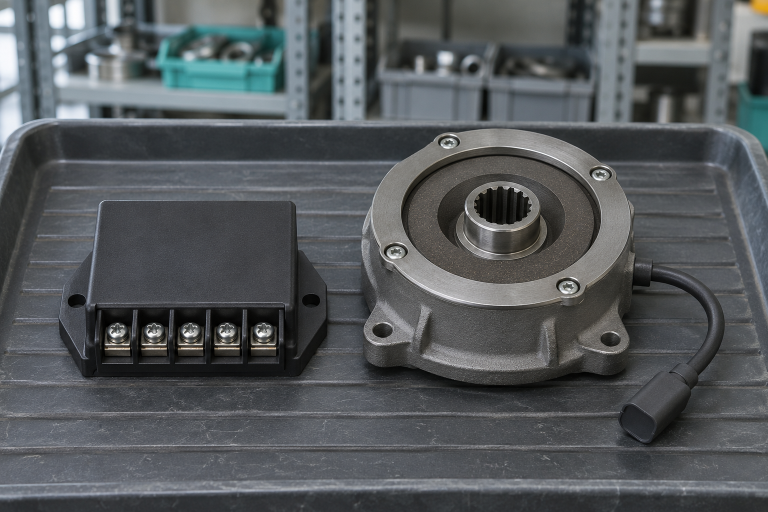 Nov 26, 2026
Motor Brake Rectifier Spares: Match the Coil
Check the fitted brake coil and approved control function before treating a motor brake rectifier as an exact spare.
Read guide