
IO-Link Sensor Spares: IODD Is Not a Backup
Separate device-description files from approved application settings, then confirm the scope and currency of the parameter-recovery route.
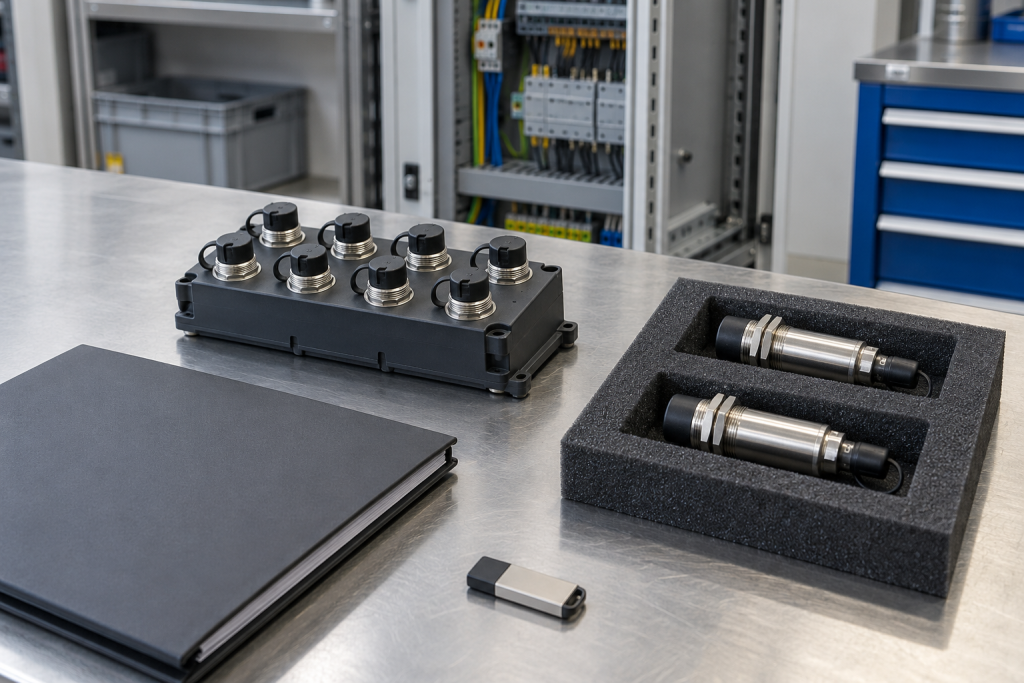
An IO-Link sensor spare can arrive with the correct connector and a downloadable IODD, yet still leave the plant without a usable replacement. The missing item may be the approved application settings, not another piece of hardware. For a procurement team, “IODD available” and “parameter recovery demonstrated” should be separate acceptance statements.
The practical question is whether the maintenance team can restore the intended device behavior through a known, controlled route. A file in a supplier’s download folder is not evidence of the settings last approved for a particular machine. Build that distinction into the spare request before an outage turns it into a commissioning problem.
Separate the device description from the plant record
ifm’s IODD explanation describes information about process-data structure, available parameters, identification and diagnostics. That information helps a tool interpret a device. In procurement terms, it does not establish which application values the plant selected or whether those values are recoverable today.
Keep three records distinct: the matching manufacturer device description, the plant’s approved parameter evidence and the documented restoration method. Defaults or parameter definitions in a description should not be mistaken for a verified copy of the installed device’s current settings.
Label each retained file with its role, source, applicable device identity and review date. A folder named “sensor backup” is too ambiguous if it contains only a description file and a screenshot of an unrelated setup. Make the evidence understandable to the next shift, not just its original author.
Check what Data Storage actually covers
The official SICK article What is the meaning of IO-Link Data Storage? describes a device-replacement mechanism between the device and master. The device’s IODD defines which parameters participate. SICK explicitly distinguishes this purpose from job assurance.
Accordingly, do not count Data Storage as proof that every setting, production recipe, controller project or master configuration is protected. Ask the responsible engineer to identify its scope for the exact device and application. Record any settings that need a separate recovery route, and keep that gap visible in the coverage register.
This distinction matters when a purchasing request includes both field devices and communication hardware. Replacing a sensor and replacing its master are different recovery tasks. The control-system backup and restore checklist provides a broader framework for documenting those dependencies; it is not evidence that a particular master retains every required setting.
Confirm the configured behavior, not just the feature name
SICK’s device replacement and Data Storage guide distinguishes disabled storage, Backup/Restore and Restore behavior. In its explanation, Restore does not automatically create a new backup when settings change. The guide also warns that parameter changes through PLC communication require attention to updating stored data.
The buying implication is straightforward: the existence of the feature does not prove that its stored values match the approved application. Ask for the current port configuration, the relevant manufacturer instructions and evidence of when the retained set was last reconciled with the intended settings. Avoid a blanket “automatic replacement supported” statement without these boundaries.
Do not change a storage mode or connect an unknown preconfigured device simply to discover what happens. The responsible engineer should define the authoritative parameter set and the permitted direction of transfer before any controlled replacement test.
Keep device identity and port context together
Record the complete installed and offered model numbers, revision information available from the devices, manufacturer identification and the associated master port. Keep a current port map with the application function and any configuration dependencies. A similar housing or shared connector does not establish that a replacement will be accepted or behave correctly.
Retain a clear nameplate photograph and keep exact replacement separate from a proposed alternate. The sensor model-matching checklist covers the accompanying mechanical and electrical identity checks. Parameter evidence complements those checks; it does not replace them.
When a supplier proposes another model, ask which requirements remain unchanged and which need review. Keep the original requirement open until the alternate’s identity, function and recovery route have been accepted. A quotation should not silently become an engineering substitution approval.
Write a request that separates supply from recovery
Specify quantity, condition requirement, complete model, applicable documentation, intended role and delivery deadline. Then state the plant-owned recovery requirements separately: approved parameter evidence, port context, software or tool access where applicable, and the acceptance work that remains with the site.
Ask the supplier to identify the offered unit and the scope of any checks actually performed. A bench communication result should not be described as proof that the plant’s approved settings have been restored. If the offered device has an unknown configuration history, include that fact in the release decision rather than leaving it for the installation team to discover.
Use the industrial sensor category to organize the sourcing enquiry. Reconcile product descriptions with official model information before linking them to a replacement requirement. Stop a recommendation when the listed device function or specifications conflict with the manufacturer record.
Close the acceptance record before counting coverage
Agree a controlled test scope covering identity, the intended parameter-transfer behavior and the resulting device function. Preserve the test configuration, observations and limitations with the unit record. The acceptance owner should decide what additional application checks are required before operational release.
Mark an unresolved parameter route as a recovery gap, even when the hardware is already on the shelf. This guide does not authorize live parameter writes, input forcing, interlock bypasses or a safety-related modification. Follow the site’s approved maintenance and change-control procedures.
FAQ
Is an IODD file a backup of our machine’s sensor settings?
No. It describes the device. Retain separate evidence of the approved application values and how they will be restored.
Does Data Storage protect every parameter and recipe?
Do not assume so. Confirm the exact device’s supported scope and keep recipe, controller and master recovery requirements separate.
Can an enabled storage feature still leave a recovery gap?
Yes. The configured behavior and the retained set’s currency matter. A feature label alone is not acceptance evidence.
What should accompany an IO-Link sensor spare request?
Provide exact identities, photographs, master and port context, documentation requirements, parameter-recovery responsibilities and the required delivery date.
Prepare the spare review
Send model numbers, nameplate photographs, discontinued replacement requirements and delivery deadlines to [email protected] or WhatsApp/Phone +86 18259474341. State whether the enquiry concerns hardware only or also needs a documented parameter-recovery review.
Route this topic into a sourcing request
Connect the article topic to a model number, category, brand, quantity, and destination before opening the RFQ.
Related Insights
Continue with sourcing and model matching guides
 Nov 28, 2026
Series 90-30 Spares: Check the RX3i Rack Boundary
Separate exact Series 90-30 spares from the verified RX3i rack, processor and retained I/O needed for a planned migration.
Read guide Nov 27, 2026
HMI Screen Spares: Identify the Failed Layer
Separate surface damage, touch input and the supported display assembly before specifying an HMI hardware spare.
Read guide Nov 26, 2026
Motor Brake Rectifier Spares: Match the Coil
Check the fitted brake coil and approved control function before treating a motor brake rectifier as an exact spare.
Read guide