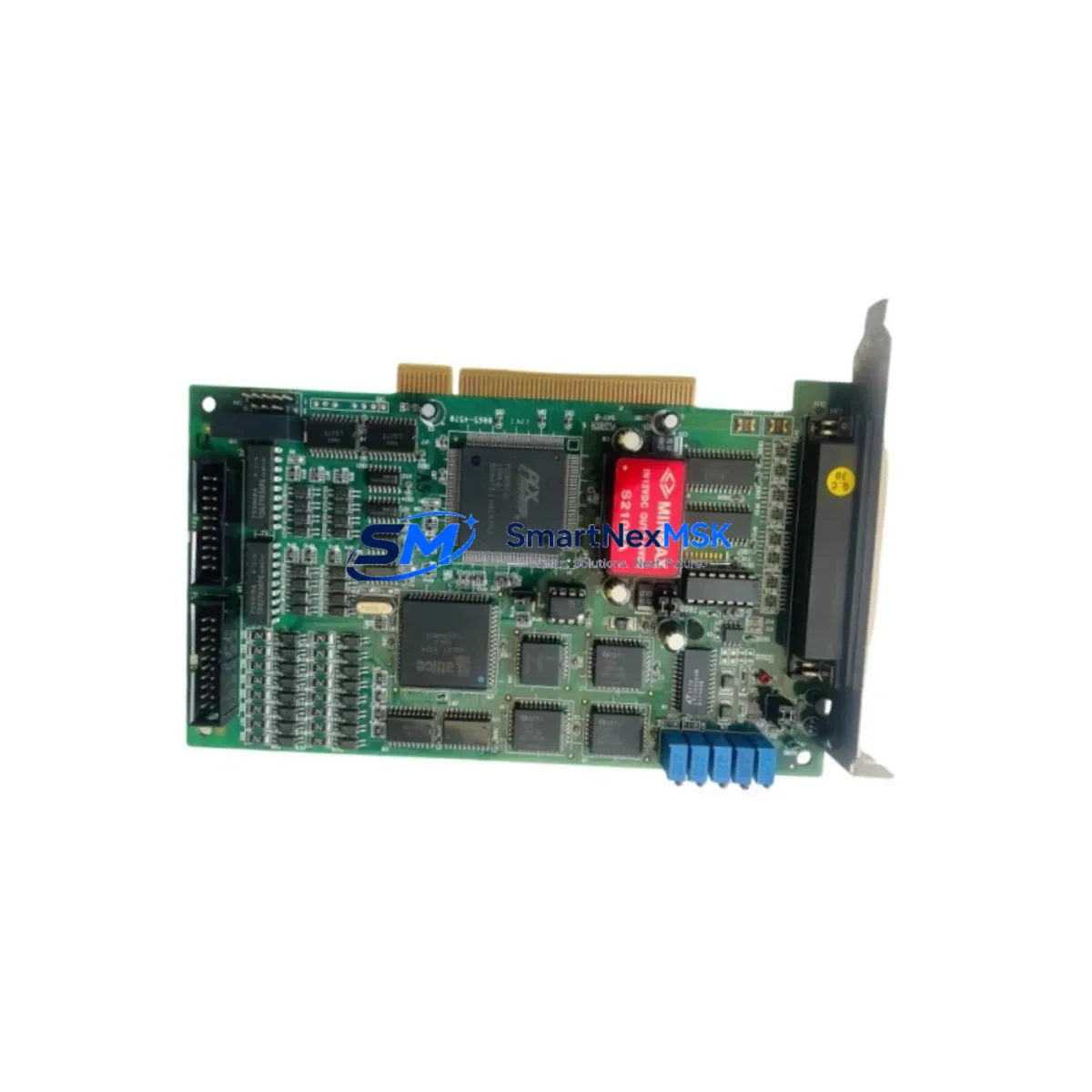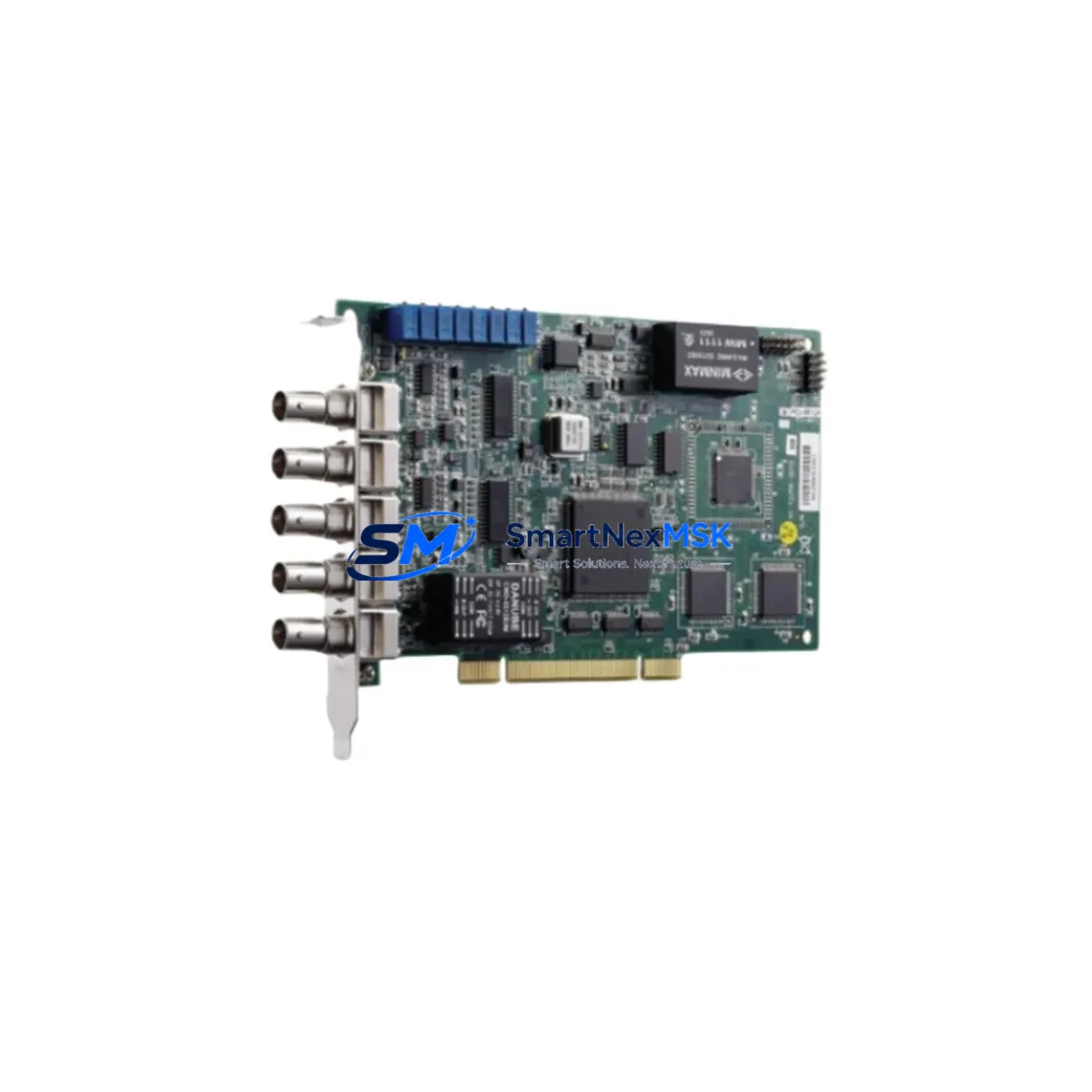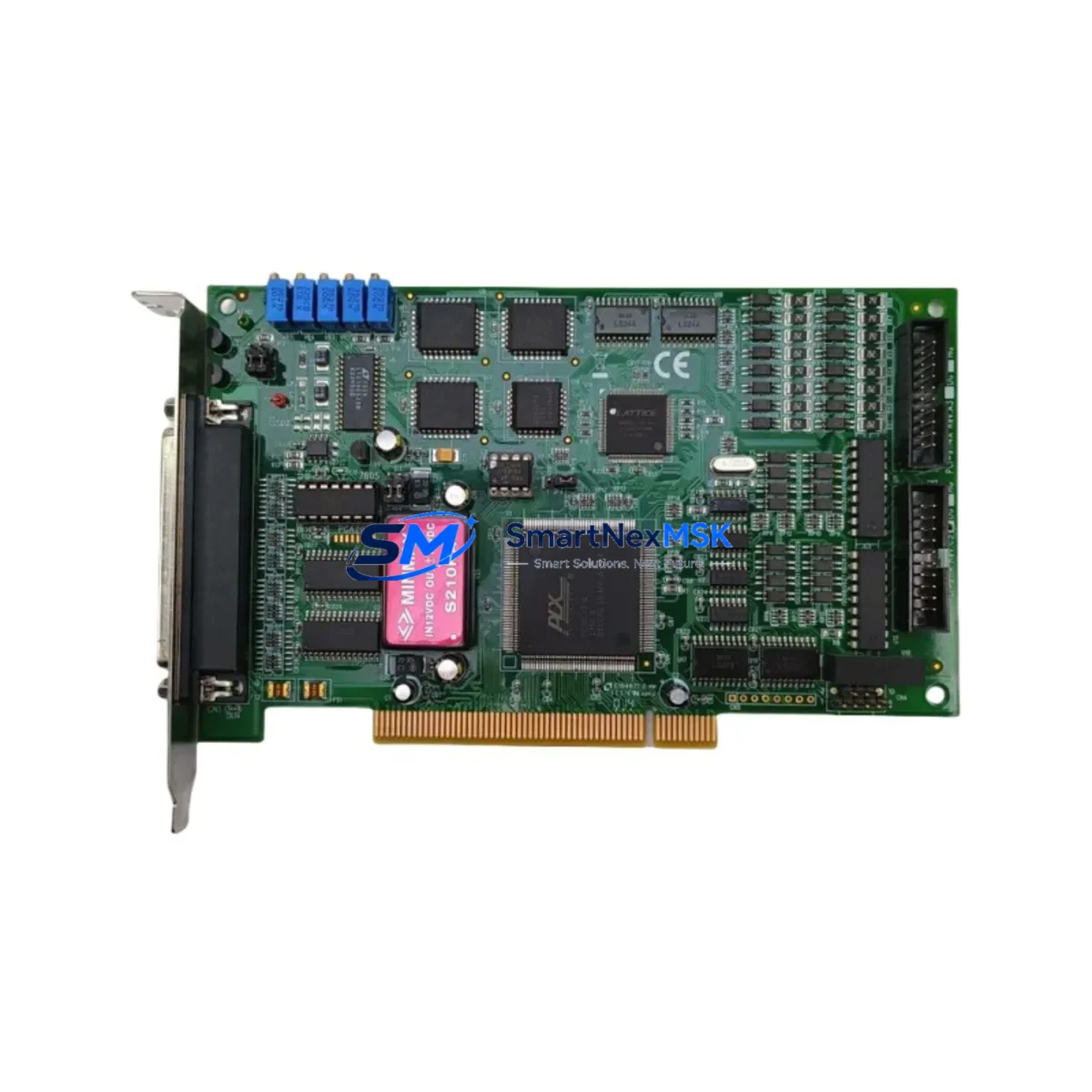
ADLINK PCI-9114DG Retrofit-Ready DAQ Card for PCI-9114 Series Control Systems
The ADLINK PCI-9114DG is a high-performance 16-channel analog input data acquisition card engineered for seamless integration into legacy PCI-9114 Series control platforms. Designed with retrofit compatibility at its core, this module addresses the growing demand for reliable, drop-in replacements in aging industrial automation environments where downtime is costly and sourcing discontinued components is increasingly difficult. Whether you are upgrading a legacy SCADA workstation, modernizing a data acquisition rack, or restoring a production-critical measurement system, the PCI-9114DG delivers verified electrical and software compatibility with the original PCI-9114 Series architecture.
Industrial facilities operating PCI-9114-based systems often face the challenge of sourcing end-of-life DAQ hardware. The PCI-9114DG resolves this by providing equivalent 16-channel single-ended or 8-channel differential analog input capability, 12-bit resolution, and programmable gain amplifier (PGA) settings that mirror the original module’s configuration registers. This means existing LabVIEW, MATLAB, or custom C/C++ driver code written for the PCI-9114 can be reused with minimal or no modification, protecting your software investment and reducing re-validation effort.
Before beginning a retrofit, engineers should verify several critical parameters. First, confirm the host PC’s available PCI slot bandwidth and bus mastering capability, as the PCI-9114DG requires a standard 32-bit, 33 MHz PCI slot — the same specification as the original card. Terminal block wiring should be reviewed against the original I/O connector pinout; the PCI-9114DG uses a standard 68-pin SCSI-II connector compatible with ADLINK’s ACL-10168 terminal board, ensuring that existing field wiring harnesses can be reused without re-termination. If your system uses the ADLINK ACL-10168 or a third-party equivalent breakout board, no mechanical adapter is required.
Driver compatibility is a key concern in any DAQ card retrofit. The PCI-9114DG is supported under ADLINK’s DAQ-LVIEW PnP driver library, which provides backward-compatible function calls for systems originally programmed against the PCI-9114 driver API. For Windows 10 and Windows 11 environments, updated WDM-compliant drivers are available, enabling migration from legacy Windows XP or Windows 7 workstations without rewriting application logic. Linux kernel module support is also available for systems running real-time OS environments such as RTAI or Xenomai, which are common in precision measurement and process control applications.
In multi-card configurations — for example, systems using two or more PCI-9114 cards for expanded channel counts — the PCI-9114DG supports hardware-synchronized multi-card triggering via the ADLINK SSI (System Synchronization Interface) bus. This is particularly relevant in vibration analysis, multi-axis motion feedback, and power quality monitoring applications where phase-coherent sampling across channels is mandatory. When replacing one card in a multi-card array, ensure that the remaining PCI-9114 cards and the new PCI-9114DG share a common trigger source, typically routed through the ADLINK ACL-8112 or a compatible trigger distribution board.
Upgrade Compatibility Table
| Parameter | PCI-9114 (Legacy) | PCI-9114DG (Retrofit) | Retrofit Notes |
|---|---|---|---|
| Bus Interface | 32-bit PCI, 33 MHz | 32-bit PCI, 33 MHz | Direct slot replacement, no adapter needed |
| Analog Input Channels | 16 SE / 8 DIFF | 16 SE / 8 DIFF | Channel mapping identical; no wiring changes |
| Resolution | 12-bit | 12-bit | Full code compatibility with existing software |
| Sampling Rate | Up to 100 kS/s | Up to 100 kS/s | No throughput degradation |
| Input Voltage Range | ±10V, ±5V, ±2.5V, ±1.25V | ±10V, ±5V, ±2.5V, ±1.25V | PGA settings preserved; no recalibration required |
| I/O Connector | 68-pin SCSI-II | 68-pin SCSI-II | Compatible with ACL-10168 terminal board |
| Driver Support | DAQ-LVIEW PnP (legacy) | DAQ-LVIEW PnP + WDM | Backward-compatible API; supports Win10/Win11 |
| Multi-Card Sync | SSI bus | SSI bus | Compatible with ACL-8112 trigger distribution |
| Installation Form Factor | Half-length PCI card | Half-length PCI card | Fits standard industrial PC chassis without modification |
| Warranty | End-of-life / No support | 12-Month Warranty | Includes functional test report on request |
Retrofit Planning for Existing Automation Systems
A successful PCI-9114DG retrofit begins with a thorough audit of the existing control cabinet and data acquisition rack. Start by documenting the current card slot assignment, IRQ allocation, and DMA channel configuration in the host industrial PC — typically a rack-mount IPC running a real-time OS or a hardened workstation. If the system uses an ADLINK IPC-610 or similar chassis, the PCI-9114DG installs directly into the same half-length PCI slot vacated by the original card.
Field wiring connected to the ACL-10168 terminal board should be labeled and photographed before disconnection. The 68-pin SCSI-II cable assembly — often an ADLINK CA-6868 or equivalent — can be reused without modification. If the terminal board itself shows signs of corrosion or mechanical wear from years of field service, this is an appropriate time to replace it with a new ACL-10168 unit, which remains in production and is readily available.
For systems that also include ADLINK PCI-9116 high-speed DAQ cards, PCI-9118 simultaneous sampling cards, or PCI-9812 high-speed digitizer modules in adjacent slots, the PCI-9114DG coexists without IRQ conflicts under modern ACPI-compliant BIOS configurations. Systems that additionally use ADLINK PCI-7230 isolated digital I/O cards or PCI-7248 96-channel DIO cards for relay control and discrete signal monitoring will find that the PCI-9114DG integrates cleanly into the same DAQ-LVIEW software framework, allowing unified channel management across analog and digital I/O resources.
If the retrofit scope extends beyond the DAQ card itself — for example, upgrading the motion controller from an ADLINK PCI-8132 or PCI-8158 to a current-generation controller — the PCI-9114DG can serve as the analog feedback acquisition layer while the new motion controller handles trajectory generation and servo loop closure. This modular approach allows phased upgrades that minimize capital expenditure and reduce the scope of any single maintenance window.
Power budget verification is straightforward: the PCI-9114DG draws +5V at approximately 800 mA and +12V at 200 mA from the PCI bus, within the standard PCI slot power envelope. Industrial PCs with aging power supplies should have their 5V rail load capacity confirmed before installation, particularly in fully populated chassis where multiple DAQ and motion control cards share the same supply rail.
Downtime Control During System Migration
Minimizing production downtime during a DAQ card replacement requires a structured pre-swap preparation protocol. Before the maintenance window opens, prepare a complete backup of the host PC’s system image, including the DAQ driver installation, calibration files, and application software. ADLINK’s DAQ-LVIEW calibration data is stored in the Windows registry and in card-specific EEPROM; the PCI-9114DG ships with factory calibration pre-loaded, but a field calibration against known reference voltages is recommended after installation to account for any offset introduced by the specific PCI slot and chassis environment.
The physical card swap itself takes under 15 minutes in a standard IPC chassis. Power down the host PC, discharge any residual bus voltage by pressing the power button after shutdown, remove the legacy PCI-9114, seat the PCI-9114DG in the same slot, and reconnect the 68-pin cable. On first boot, the Windows Device Manager will enumerate the new card; if the DAQ-LVIEW PnP driver is already installed, the card will be recognized automatically without requiring a driver reinstallation. For Linux-based systems, the kernel module must be reloaded with the new card’s PCI device ID if it differs from the legacy card — consult the ADLINK Linux driver release notes for the specific module parameter.
Application-level validation should follow a defined test sequence: verify channel-by-channel DC offset and gain accuracy against calibrated reference sources, confirm trigger timing against an external pulse generator, and run the existing application in a supervised mode for at least one full production cycle before returning the system to unattended operation. This validation sequence, combined with the 12-month warranty coverage on the PCI-9114DG, provides a defensible quality record for regulated industries including pharmaceutical manufacturing, energy generation, and aerospace test facilities.
For systems where even a brief interruption is unacceptable, a parallel installation strategy is recommended: install the PCI-9114DG in a spare PCI slot alongside the existing PCI-9114, run both cards simultaneously under the DAQ-LVIEW multi-card framework, validate the new card’s output against the legacy card’s readings in real time, and then decommission the old card during the next scheduled maintenance interval. This approach eliminates unplanned downtime entirely and provides a live comparison dataset for calibration verification.
Retrofit Support FAQ
Q: Is the PCI-9114DG a direct drop-in replacement for the PCI-9114 without any software changes?
A: In the majority of cases, yes. The PCI-9114DG uses the same DAQ-LVIEW PnP driver API as the PCI-9114, and the register-level programming interface is backward compatible. Applications written against the original PCI-9114 driver will function without modification. The only exception is if your application references the card by its PCI Device ID directly in low-level code; in that case, a one-line update to the device ID constant is required.
Q: Can I reuse my existing ACL-10168 terminal board and field wiring?
A: Yes. The PCI-9114DG uses the same 68-pin SCSI-II connector and identical signal pinout as the PCI-9114. Your existing ACL-10168 terminal board, CA-6868 cable assembly, and all field wiring can be reconnected without modification. We recommend inspecting connector contacts and cable shielding integrity as part of the retrofit procedure.
Q: What does the 12-month warranty cover, and is a functional test report available?
A: The 12-month warranty covers all manufacturing defects and functional failures under normal operating conditions. Each PCI-9114DG unit is bench-tested prior to shipment, verifying analog input accuracy, PGA gain settings, trigger functionality, and PCI bus enumeration. A functional test report can be provided upon request at the time of order. Warranty claims are processed with a standard RMA procedure; replacement units are dispatched within 3 business days of fault confirmation.
Q: What is the lead time, and do you maintain stock for urgent replacement orders?
A: We maintain ready stock of the PCI-9114DG to support urgent replacement scenarios. Standard orders ship within 1–3 business days. For critical production line failures requiring same-day dispatch, please contact our sales team directly to confirm real-time inventory availability and expedited shipping options.
© 2026 SMARTNEXMSK. All rights reserved.
Original Source: https://smartnexmsk.com
Contact: [email protected] | +86 18259474341