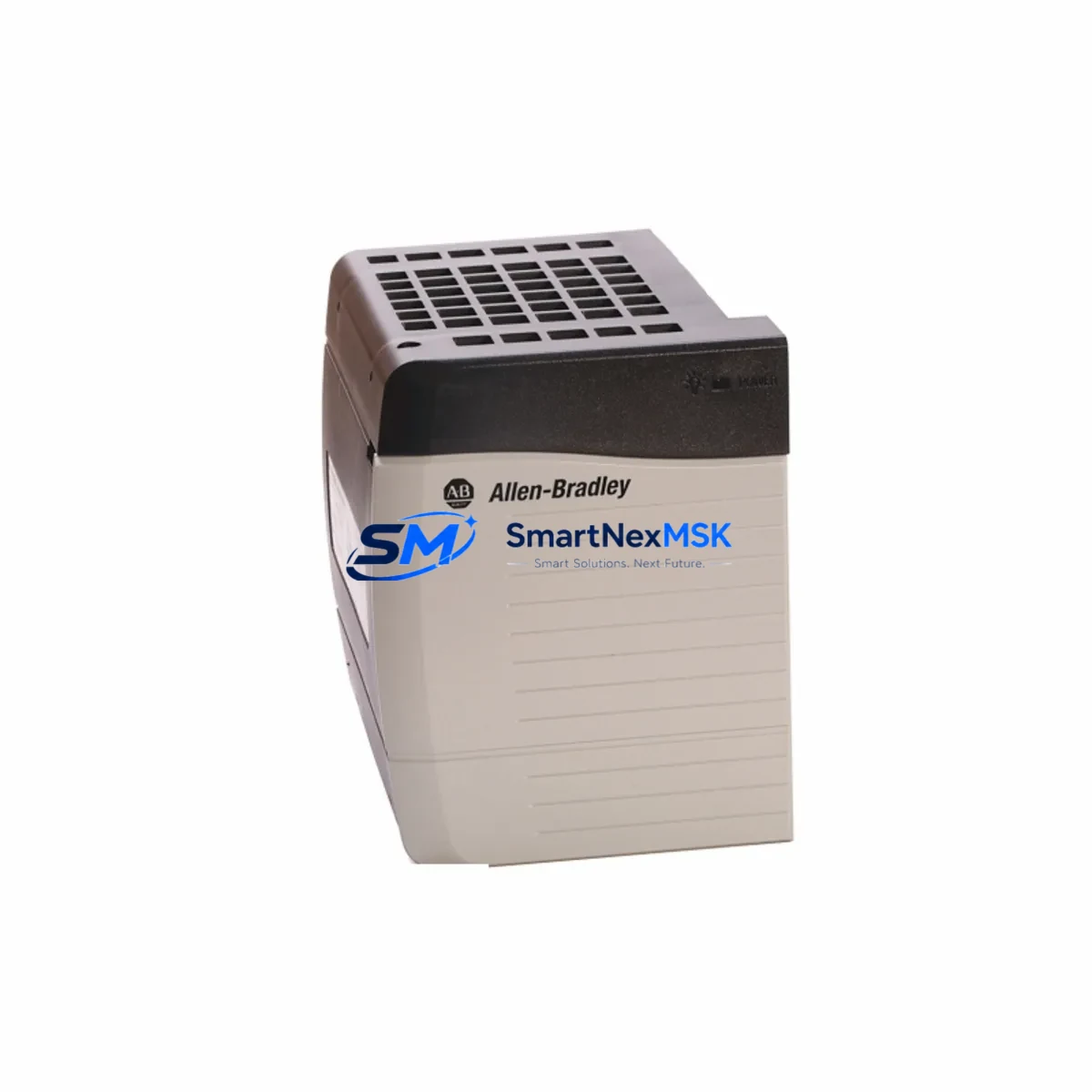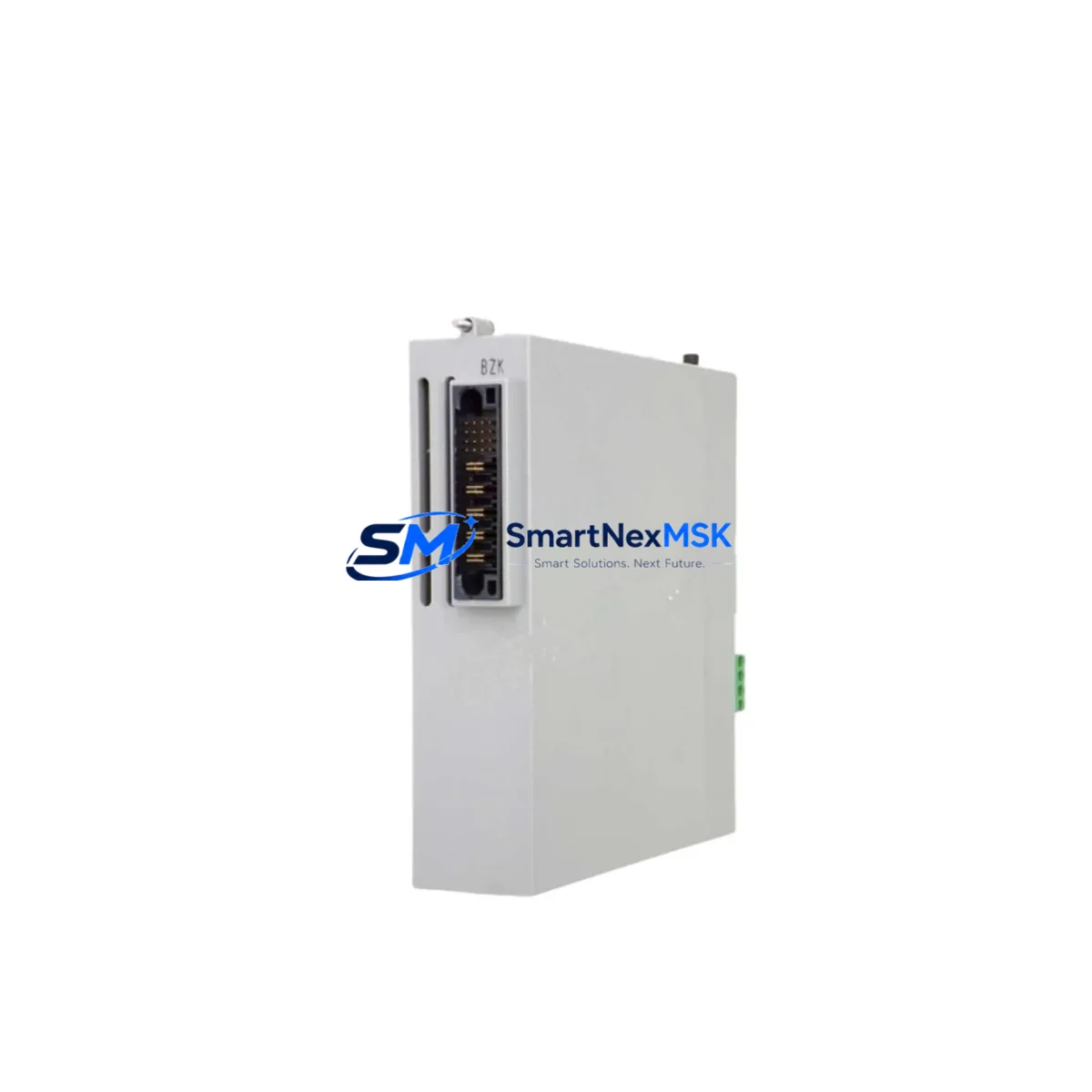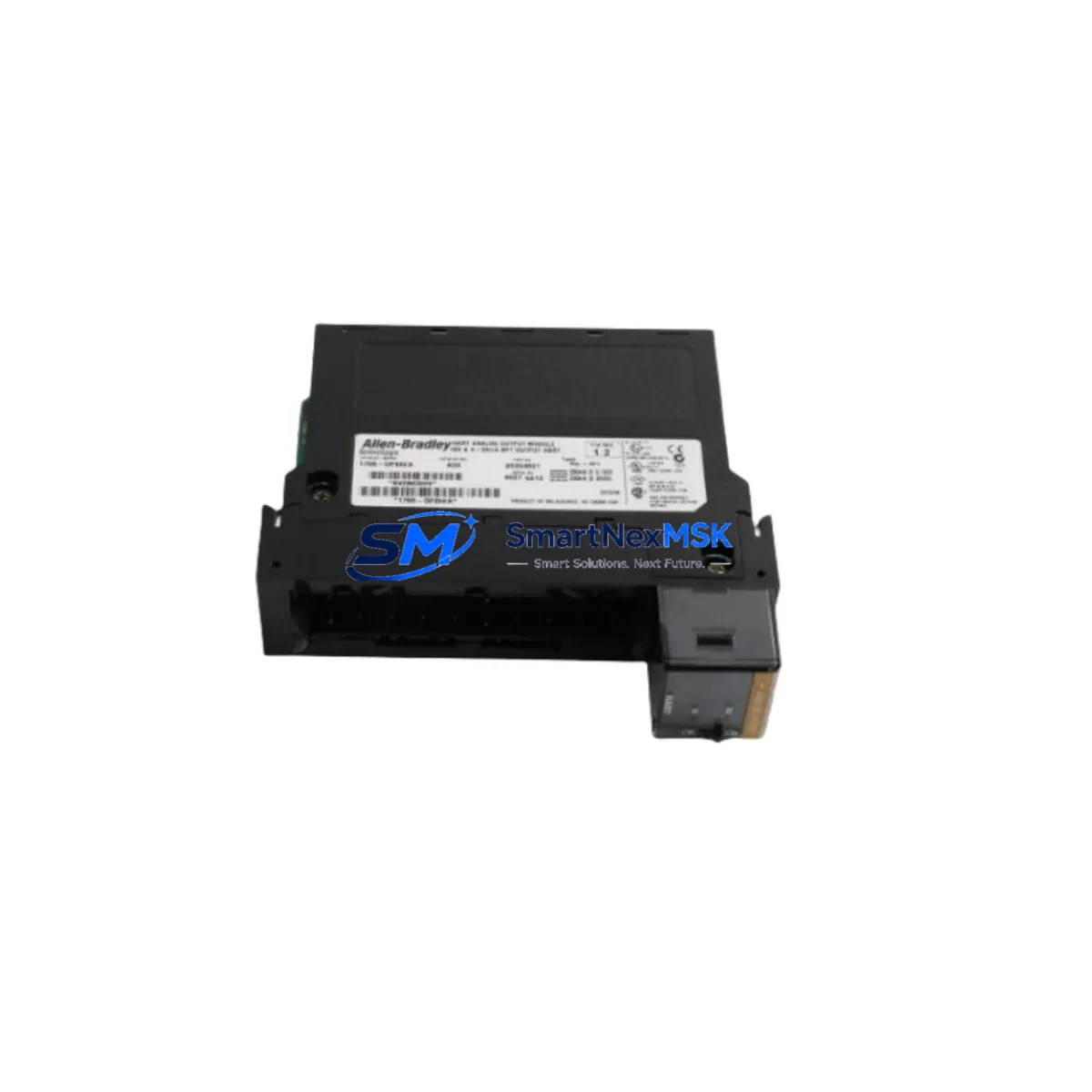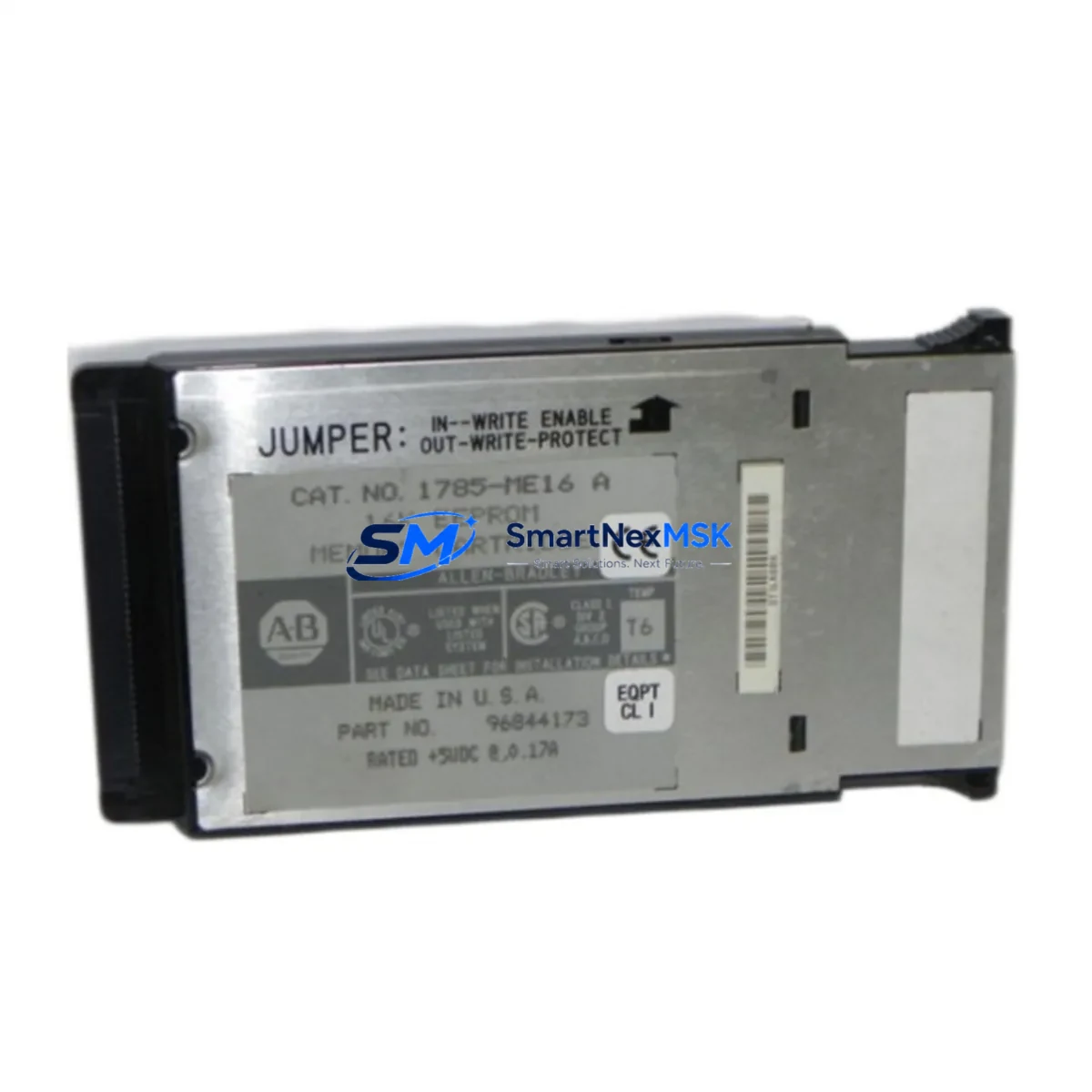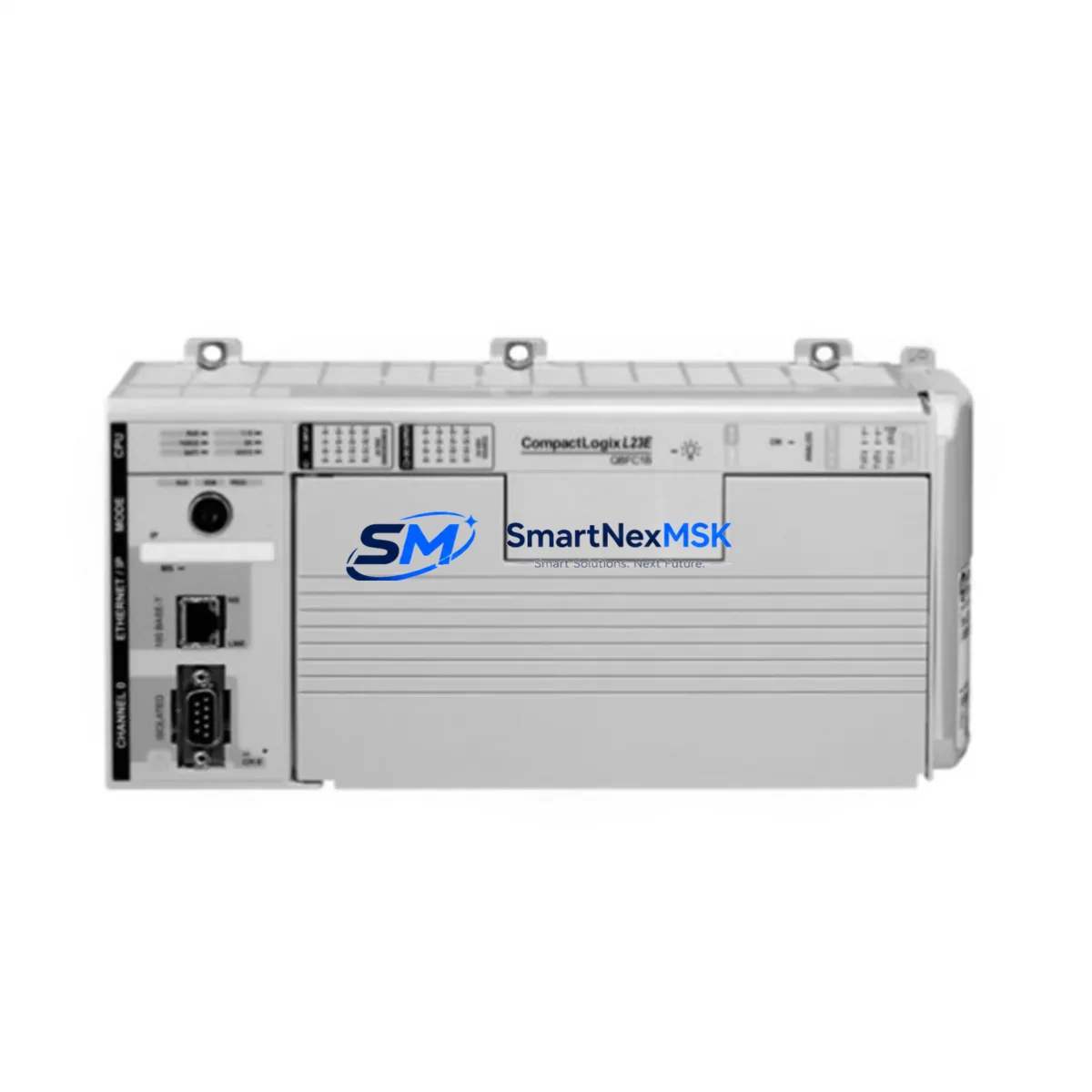
Allen-Bradley 1769-L23E-QBFC1B Retrofit-Ready Controller for CompactLogix Control Systems
The Allen-Bradley 1769-L23E-QBFC1B is a CompactLogix L23E series programmable logic controller designed for embedded control applications requiring onboard digital and analog I/O combined with EtherNet/IP connectivity. As legacy SLC 500, MicroLogix 1500, and early CompactLogix L20 and L35 platforms approach end-of-life, the 1769-L23E-QBFC1B has become a primary retrofit target for engineers modernizing existing control cabinets without full panel redesigns. This unit ships tested, verified, and backed by a 12-month warranty, making it a reliable choice for both emergency replacement and planned system upgrades.
With 512KB of user memory, onboard 24VDC digital inputs, digital outputs, and analog I/O channels, the 1769-L23E-QBFC1B eliminates the need for separate 1769-IQ16 or 1769-OB16 expansion modules in many compact machine control scenarios. Its integrated EtherNet/IP port supports direct connection to Stratix 5700 managed switches and existing plant SCADA networks running FactoryTalk View SE, reducing communication infrastructure costs during migration.
Upgrade Compatibility Table
| Parameter | Detail |
|---|---|
| SKU / Part Number | 1769-L23E-QBFC1B |
| Series | CompactLogix L23E |
| Replaces / Upgrades From | SLC 5/05, MicroLogix 1500 (1764-LRP), CompactLogix L20, L35 |
| User Memory | 512 KB |
| Onboard Digital I/O | 16 DI / 16 DO (24VDC) |
| Onboard Analog I/O | 4 AI / 2 AO |
| Communication Port | EtherNet/IP (RJ45), RS-232 (DF1/DH-485) |
| Backplane Interface | 1769 CompactLogix Compact I/O backplane |
| Power Supply Compatibility | 1769-PA2 / 1769-PB2 (24VDC or 120/240VAC) |
| Programming Software | Studio 5000 Logix Designer v21+ |
| Firmware Compatibility | Series B, Firmware Rev 20.x – 32.x |
| Installation Format | DIN rail or panel mount, 1769 compact I/O system |
| Communication Compatibility | EtherNet/IP, DF1, DH-485, Modbus RTU (via AOP) |
| Retrofit Recommendation | Direct replacement for L20/L35; program conversion required from SLC/MicroLogix |
| Commissioning Notes | Verify I/O module addressing, power budget, and EtherNet/IP node configuration |
| Warranty | 12 Months — covers hardware defects, functional failure, and DOA replacement |
Retrofit Planning for Existing Automation Systems
Successful integration of the 1769-L23E-QBFC1B into an existing control system begins with a thorough audit of the current panel layout. Engineers replacing a SLC 5/05 or MicroLogix 1500 (1764-LRP) must account for differences in terminal block wiring, since the CompactLogix platform uses 1769-series compact I/O modules such as the 1769-IQ32 for digital input expansion and the 1769-OF4 for analog output, rather than the fixed I/O architecture of the legacy controllers. Where the original system used a 1747-SN Remote I/O Scanner or a 1747-KE DH-485 to RS-232 bridge, these communication links must be re-evaluated and typically replaced with EtherNet/IP adapter modules or 1769-L23E’s native serial port configured for DF1 full-duplex.
Power budget verification is critical before installation. The 1769-PA2 power supply supports up to 2A at 5VDC on the backplane; adding multiple 1769-series I/O modules such as the 1769-IQ16, 1769-OB16, or 1769-IF4 can quickly approach this limit. A full power consumption calculation must be completed before finalizing the rack configuration. Where additional I/O capacity is required beyond the local 1769 backplane, a 1769-SDN DeviceNet Scanner or 1734 POINT I/O adapter connected via EtherNet/IP can extend the system without requiring a larger controller platform.
For facilities running legacy PanelView 550 or PanelView Plus 600 HMI terminals, the migration to the 1769-L23E-QBFC1B requires updating the HMI communication driver from DH-485 or Remote I/O to EtherNet/IP. In most cases, this also involves updating tag databases within FactoryTalk View ME or converting RSView32 screens to FactoryTalk View SE for network-based supervisory access. The 1769-L23E-QBFC1B’s dual-port EtherNet/IP capability simplifies this by allowing simultaneous connection to both the HMI network and the plant SCADA backbone without an additional 1761-NET-ENI Ethernet interface module.
Program conversion from RSLogix 500 (SLC/MicroLogix) to Studio 5000 Logix Designer is not automatic. Instruction set differences — particularly around integer file addressing, PID block configuration, and message instruction routing — require careful manual review. Rockwell’s Convert to Logix utility provides a starting point, but field validation of all analog scaling, timer presets, and communication message paths remains essential before live commissioning.
Downtime Control During System Migration
Minimizing production downtime during a CompactLogix retrofit requires a structured cutover plan. The recommended approach is to pre-configure the 1769-L23E-QBFC1B offline using Studio 5000 Logix Designer, loading the converted program and verifying all I/O module configurations, EtherNet/IP node addresses, and analog scaling parameters before the controller reaches the plant floor. Where possible, a parallel bench test using a 1769-IQ16 input simulator and a 1769-OB16 output load bank allows functional verification of all ladder logic rungs and function block routines without interrupting live production.
During the physical cutover window, terminal-by-terminal rewiring from the legacy SLC or MicroLogix terminal blocks to the new 1769-series I/O modules should follow a documented wire-by-wire migration sheet. Labeling all field wires before disconnection and using the same terminal numbering convention in the new 1769-IQ32 or 1769-OB32 modules reduces the risk of miswiring. The 1769-L23E-QBFC1B’s onboard EtherNet/IP port should be assigned its IP address and verified for network connectivity before the first program download.
After program download, a controlled startup sequence — beginning with outputs inhibited and inputs monitored in online mode — allows the engineer to confirm that all field signals are reading correctly before enabling output control. This approach protects the original process logic and maintains field control continuity, reducing the risk of unplanned actuator movement during the first live scan. Full commissioning, including HMI screen validation and SCADA tag verification, typically adds 2–4 hours to the cutover window but significantly reduces post-startup troubleshooting time.
Retrofit Support FAQ
Q: Is the 1769-L23E-QBFC1B a direct drop-in replacement for the SLC 5/05?
A: It is not a direct pin-for-pin replacement. The 1769-L23E-QBFC1B uses the CompactLogix 1769 compact I/O backplane and requires Studio 5000 Logix Designer for programming, whereas the SLC 5/05 uses RSLogix 500 and a 1746 I/O rack. Program conversion and terminal rewiring are required, but the functional capability — including EtherNet/IP communication — is a significant upgrade over the SLC platform.
Q: What wiring changes are needed when replacing a MicroLogix 1500?
A: The MicroLogix 1500 (1764-LRP) uses a fixed I/O base with screw-terminal connections. When migrating to the 1769-L23E-QBFC1B, field wiring must be re-terminated to the appropriate 1769-series I/O module terminal blocks. Analog signal wiring should be verified for current vs. voltage mode compatibility with the 1769-IF4 or 1769-OF4 modules. All shield grounds and common references must be re-confirmed at the new terminal points.
Q: Does the unit ship tested, and what does the 12-month warranty cover?
A: Yes. Every 1769-L23E-QBFC1B unit undergoes functional power-on testing and communication verification before shipment. The 12-month warranty covers hardware defects, functional failure under normal operating conditions, and dead-on-arrival (DOA) replacement. Warranty claims are processed with a return merchandise authorization (RMA) and typically resolved within 5–7 business days including replacement shipment.
Q: Can the 1769-L23E-QBFC1B communicate with legacy DeviceNet or DH+ networks?
A: The 1769-L23E-QBFC1B does not include native DH+ or DeviceNet ports. For DH+ integration, a 1761-NET-AIC or DHRIO gateway module is required. For DeviceNet, a 1769-SDN Scanner module can be added to the local 1769 backplane. EtherNet/IP remains the primary recommended network for new installations, and most legacy device-level networks can be bridged through appropriate gateway hardware during the migration phase.
© 2026 SMARTNEXMSK. All rights reserved.
Original Source: https://smartnexmsk.com
Contact: [email protected] | +86 18259474341