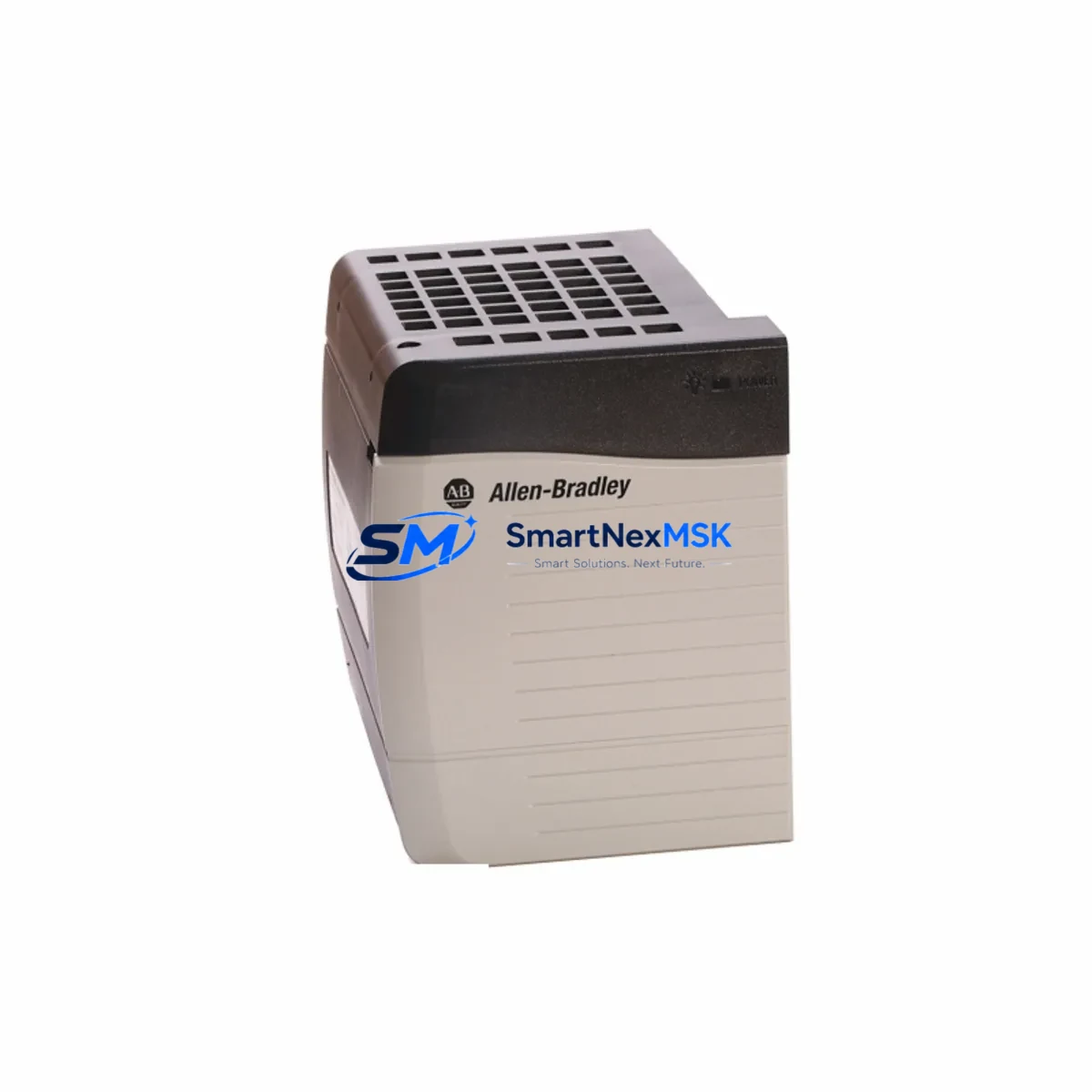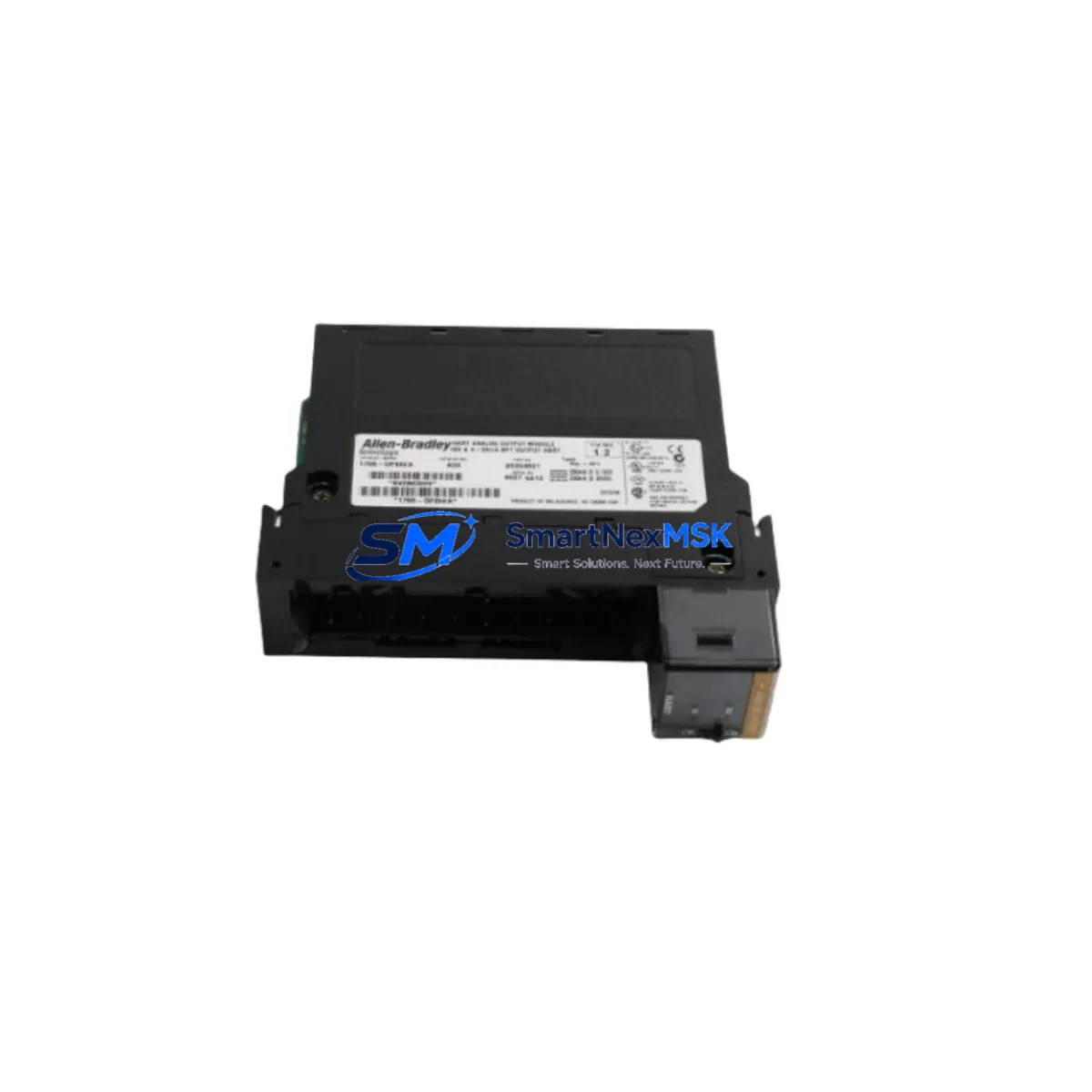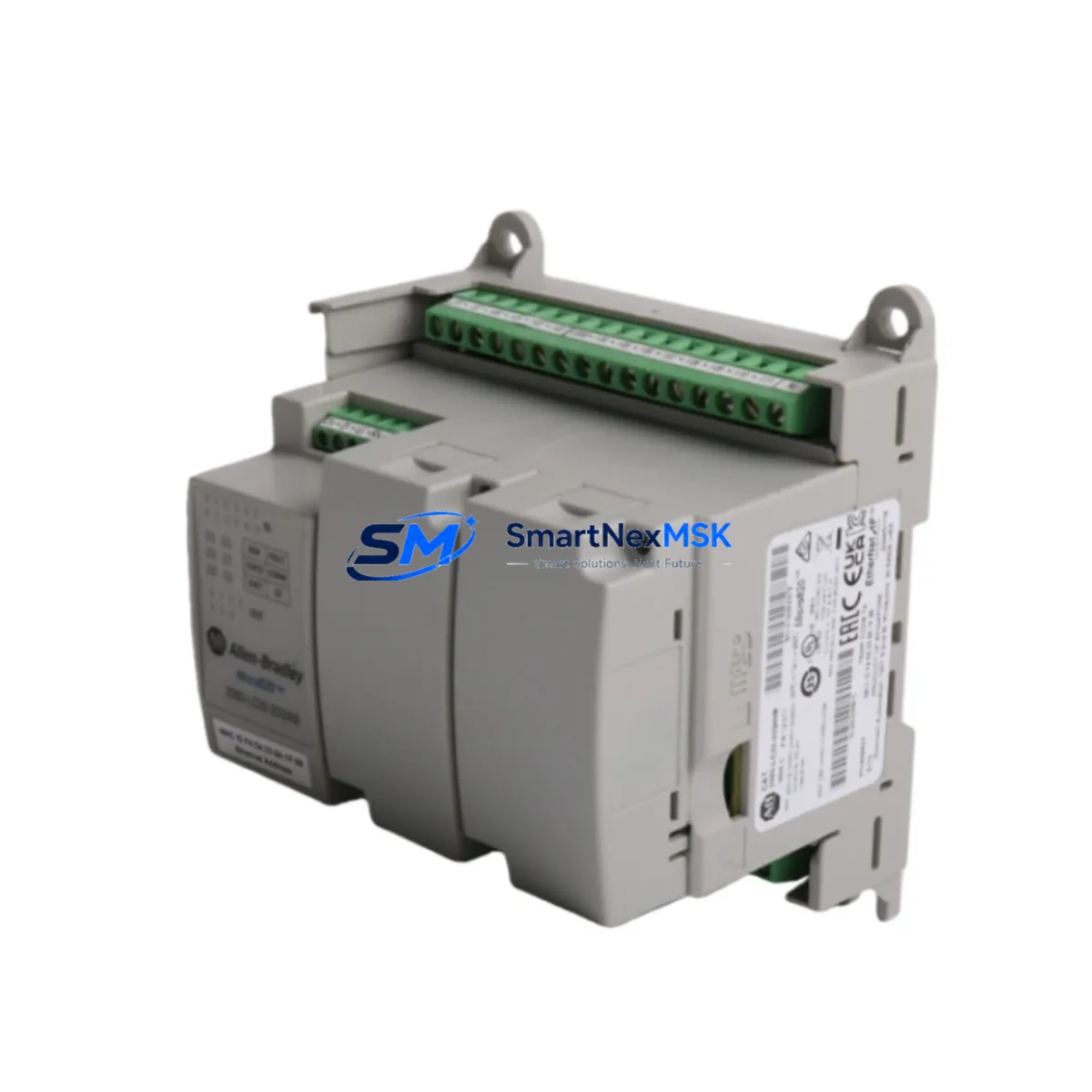
Allen-Bradley 2080-LC20-20QWB Retrofit-Ready PLC Controller: Seamless Compatibility for Legacy System Upgrades
The Allen-Bradley 2080-LC20-20QWB is a 20-point DC input/relay output controller from the Micro820 series within the Micro800 control platform. Designed for compact machine control, this unit is widely deployed in standalone automation cells, conveyor systems, packaging lines, and small-scale process control panels. As legacy Micro820 installations age and original units reach end-of-life, sourcing a verified retrofit-ready replacement becomes critical to maintaining production continuity without a full system redesign.
SMARTNEXMSK supplies the 2080-LC20-20QWB as a tested, retrofit-ready unit with full compatibility verification against the Micro800 hardware ecosystem. Each unit undergoes pre-shipment functional testing covering power-on diagnostics, I/O channel verification, and communication port integrity. A 12-month warranty is included with every shipment, covering hardware defects under normal operating conditions.
Upgrade Compatibility Table
| Parameter | Details |
|---|---|
| SKU / Part Number | 2080-LC20-20QWB |
| Series | Micro820 (Micro800 Platform) |
| I/O Configuration | 12 DC Inputs / 8 Relay Outputs (20-Point) |
| Power Supply Input | 24V DC |
| Communication Ports | USB (programming), RS-232/RS-485 serial |
| Plug-in Module Slots | 2 × 2080-series plug-in slots |
| Programming Software | Connected Components Workbench (CCW) |
| Replacement Compatibility | Direct drop-in for 2080-LC20-20QWB; verify firmware revision before program restore |
| Installation Requirement | DIN rail or panel mount; 24V DC power wiring per original terminal layout |
| Communication Compatibility | RS-232/RS-485 compatible with existing HMI and SCADA links |
| Retrofit Recommendation | Back up existing program via CCW before swap; verify plug-in module addressing post-installation |
| Commissioning Focus | I/O force test, serial link handshake, HMI tag mapping verification |
| Warranty | 12 Months — hardware defects under normal operating conditions |
Retrofit Planning for Existing Automation Systems
Replacing a 2080-LC20-20QWB in an operational control panel requires a structured approach to avoid configuration drift and unplanned downtime. Before removing the original unit, engineers should use Connected Components Workbench (CCW) to perform a full program backup, capturing ladder logic, function block diagrams, tag databases, and any configured motion or serial communication parameters.
Power supply capacity is the first hardware checkpoint. The 2080-LC20-20QWB draws power from a 24V DC rail, and the existing 2080-PS120-240VAC power supply or equivalent must be verified to have sufficient headroom after accounting for all plug-in modules and field device loads. If the panel also houses a 2080-LC20-20AWB (AC input variant) or a 2080-LC30-series controller in an adjacent cabinet, their shared power bus must be assessed independently.
Terminal wiring on the 2080-LC20-20QWB follows a fixed screw-terminal layout. During replacement, technicians should photograph or document the existing wiring before disconnection, paying particular attention to the relay output commons, which are grouped and may share a single common terminal across multiple output channels. Incorrect common wiring is a frequent source of commissioning errors during retrofit.
The two plug-in module slots on the 2080-LC20-20QWB accept 2080-series plug-in modules, including the 2080-SERIALISOL isolated serial module, the 2080-MOT-HSC high-speed counter module, and analog expansion modules such as the 2080-IF4 (4-channel analog input) or 2080-OF2 (2-channel analog output). After installing the replacement controller, plug-in modules must be reseated and their slot addresses verified in CCW to ensure the program references the correct physical slots.
For panels that include an HMI — such as a 2711R-series PanelView 800 or a third-party operator panel communicating over RS-232 or RS-485 — the serial communication parameters (baud rate, parity, stop bits, station address) must be confirmed to match the replacement controller’s port configuration. If the original unit used a 2080-SERIALISOL plug-in for isolated serial communication, the same module must be reinstalled in the same slot position to preserve HMI link integrity.
Where the control system integrates with a broader network — for example, connecting upstream to a CompactLogix L-series controller or a SCADA system via Modbus RTU — the 2080-LC20-20QWB’s serial port configuration must be validated against the network master’s polling parameters. Any mismatch in station address or baud rate will cause communication timeouts that may not be immediately visible at the HMI level but will manifest as stale data or alarm suppression.
After program restore, a structured I/O force test should be performed with the machine in a safe, de-energized state where possible. Each input channel should be verified against the field device signal, and each relay output should be exercised individually to confirm contact closure and load response. This step is especially important when the replacement unit carries a different firmware revision, as minor differences in scan cycle timing or instruction execution can affect edge-triggered logic.
Downtime Control During System Migration
Minimizing production downtime during a 2080-LC20-20QWB replacement depends on preparation quality. The most effective strategy is to pre-configure the replacement unit offline using CCW before the maintenance window begins. Load the backed-up program, configure all plug-in module parameters, and set serial port parameters to match the existing installation. This reduces the in-panel swap time to a physical exchange and a verification sequence rather than a full recommissioning cycle.
Where the original program includes retentive data — such as production counters, recipe parameters, or accumulated totals stored in retentive memory — engineers should document current values before power-down, as retentive data is not preserved across a controller swap unless explicitly exported and reloaded. CCW supports data file export for this purpose.
For systems where even brief interruptions are operationally sensitive, a parallel commissioning approach can be used: install and configure the replacement 2080-LC20-20QWB in a test panel or bench environment, validate all I/O and communication behavior against the original program, and then perform the physical swap during a scheduled maintenance window with the verified unit ready to install. This approach is particularly effective when the control panel also contains time-sensitive devices such as servo drives, variable frequency drives, or safety relays that require coordinated restart sequencing.
Post-swap, the first production run should be monitored closely for any anomalies in cycle timing, output sequencing, or HMI data display. Any discrepancies should be logged and addressed before returning the system to unattended operation.
Retrofit Support FAQ
Q: Is the 2080-LC20-20QWB a direct drop-in replacement for an existing Micro820 unit of the same part number?
A: Yes, the 2080-LC20-20QWB is a direct hardware replacement for units of the same part number. The terminal layout, plug-in module slots, and communication ports are identical. However, firmware revision differences between the original and replacement unit should be checked in CCW before restoring the program, as some firmware versions introduce minor behavioral changes in specific instructions.
Q: What commissioning steps are required after installing the replacement controller?
A: After physical installation and program restore, verify plug-in module slot addressing in CCW, confirm serial communication parameters match the HMI or SCADA configuration, perform a full I/O force test, and validate relay output contact closure under load. Document all findings before returning the system to production.
Q: How should I handle terminal wiring during the swap to avoid errors?
A: Photograph or map all terminal connections before disconnection, paying particular attention to relay output common terminals. The 2080-LC20-20QWB groups relay output commons, and incorrect common wiring is a frequent source of output faults during retrofit. Use the original panel drawings as the reference, and verify each wire position against the terminal diagram before power-up.
Q: What warranty coverage is provided with this unit?
A: Every 2080-LC20-20QWB supplied by SMARTNEXMSK includes a 12-month warranty covering hardware defects under normal operating conditions. Pre-shipment functional testing is performed on each unit, including power-on diagnostics, I/O channel verification, and communication port integrity checks. Warranty claims are supported directly through our sales team.
© 2026 SMARTNEXMSK. All rights reserved.
Original Source: https://smartnexmsk.com
Contact: [email protected] | +86 18259474341