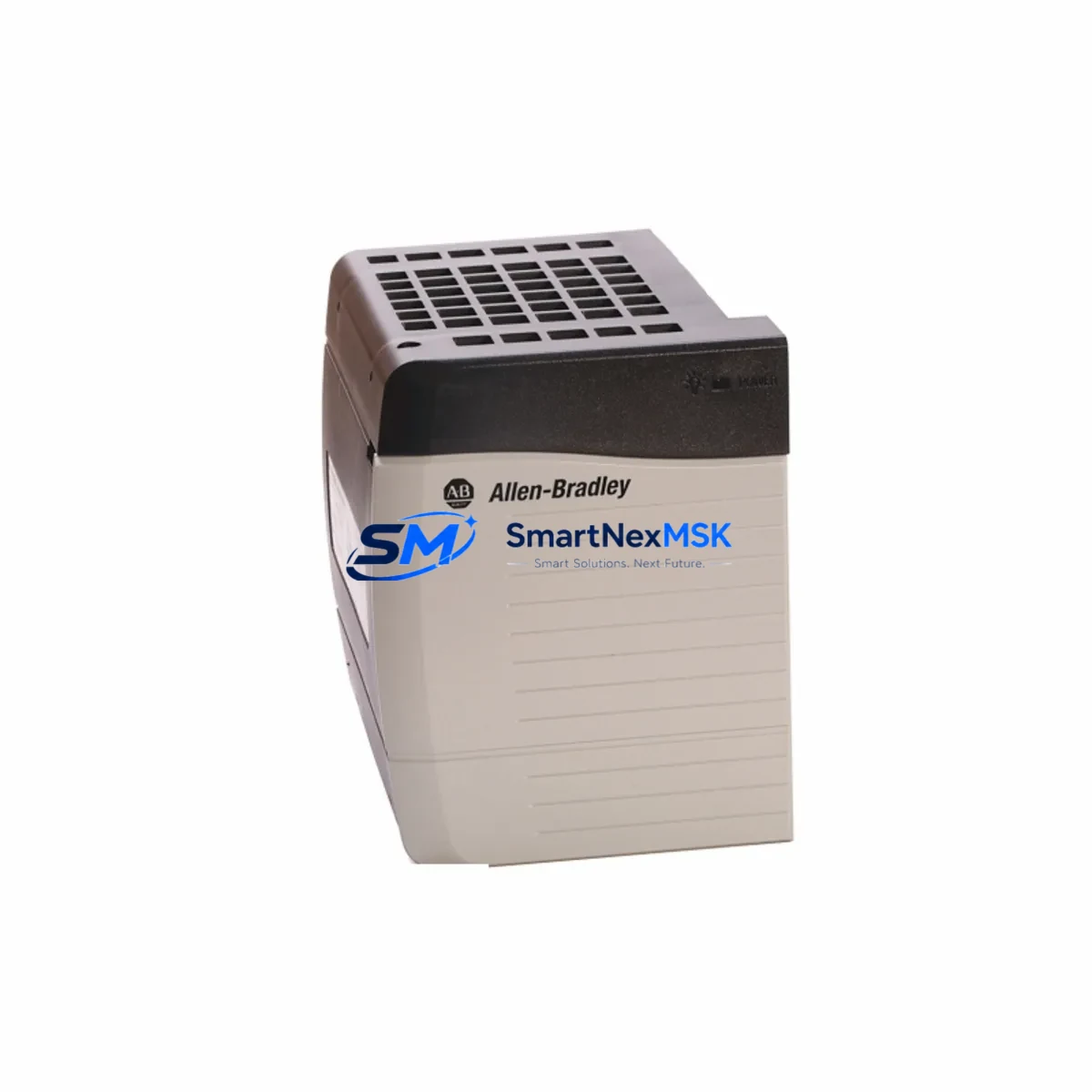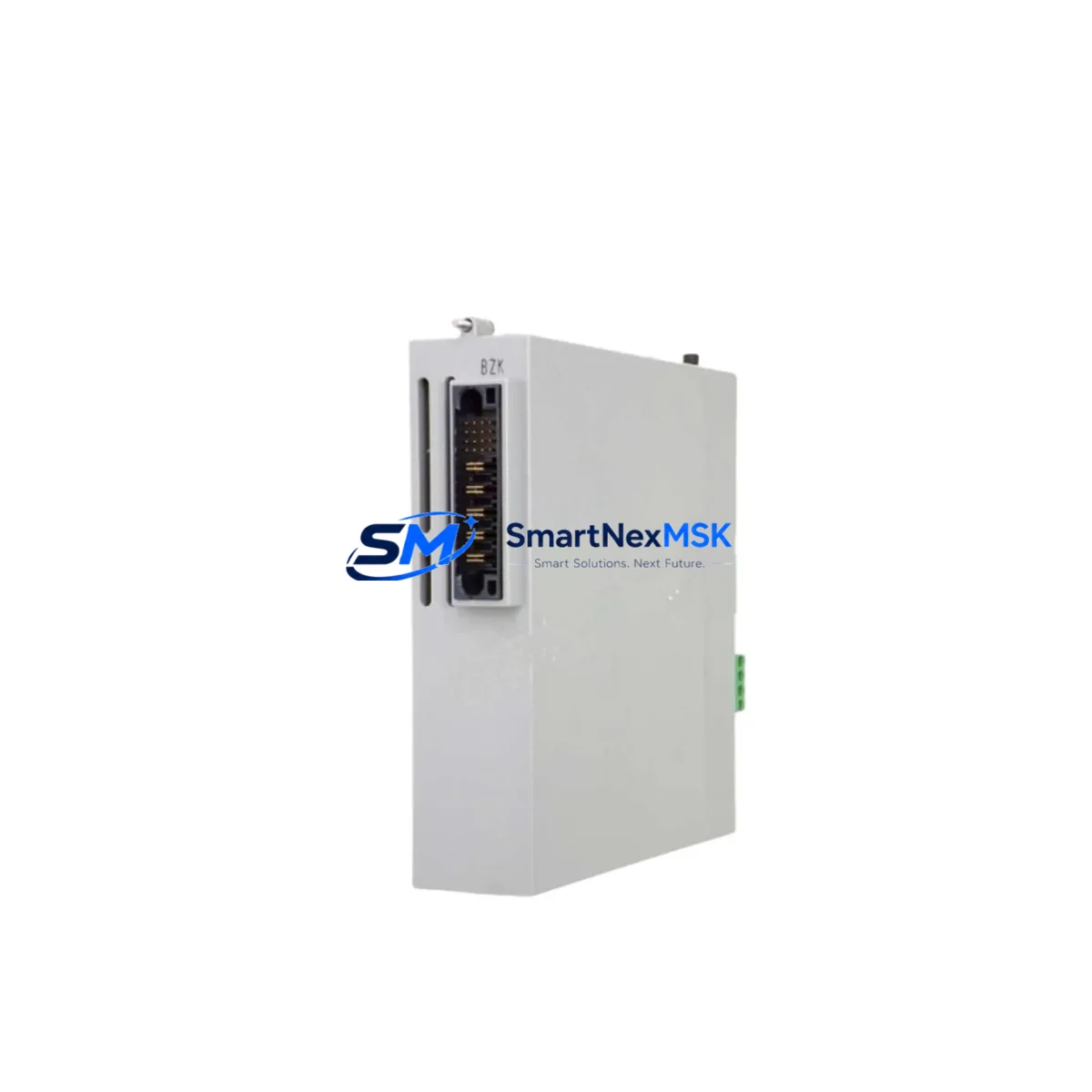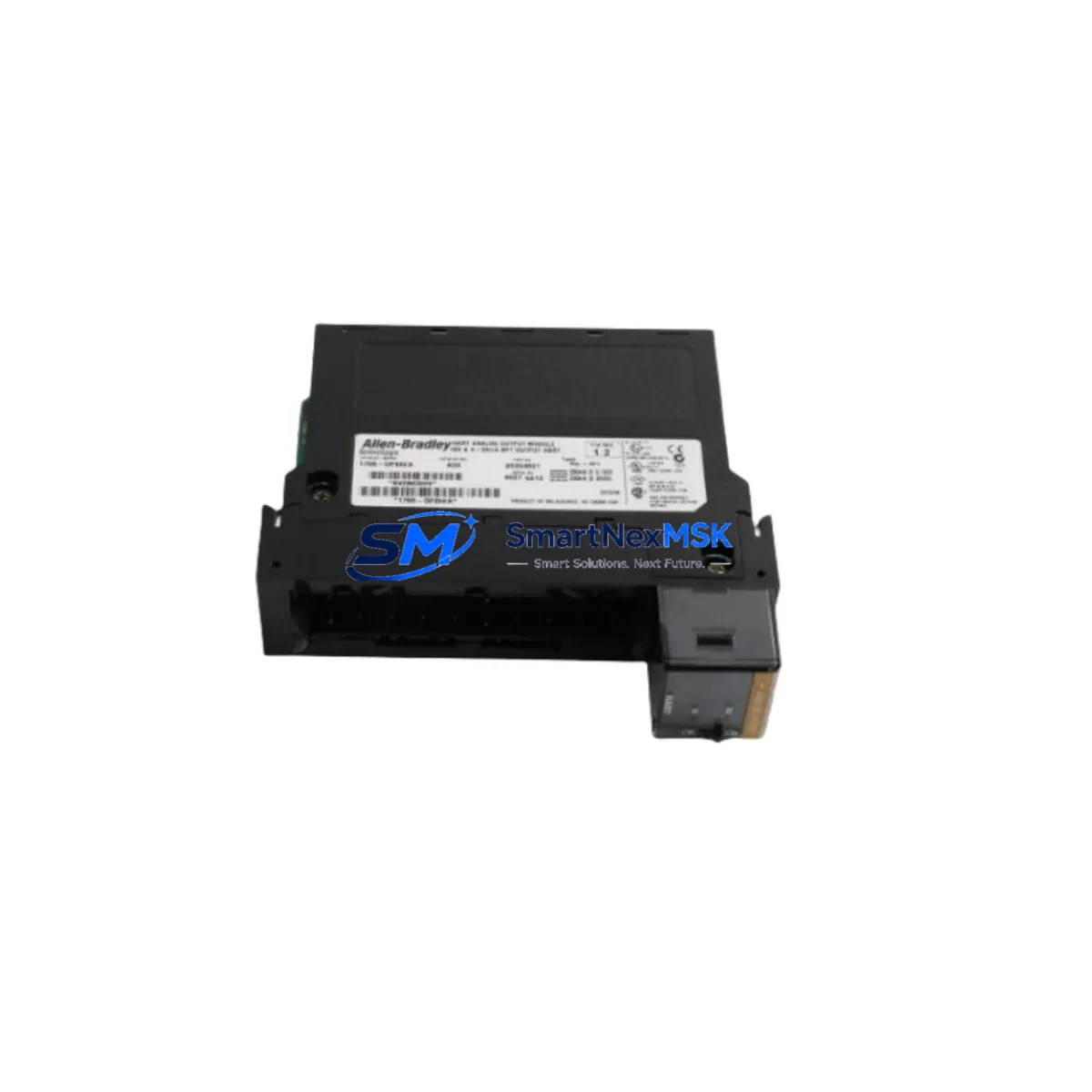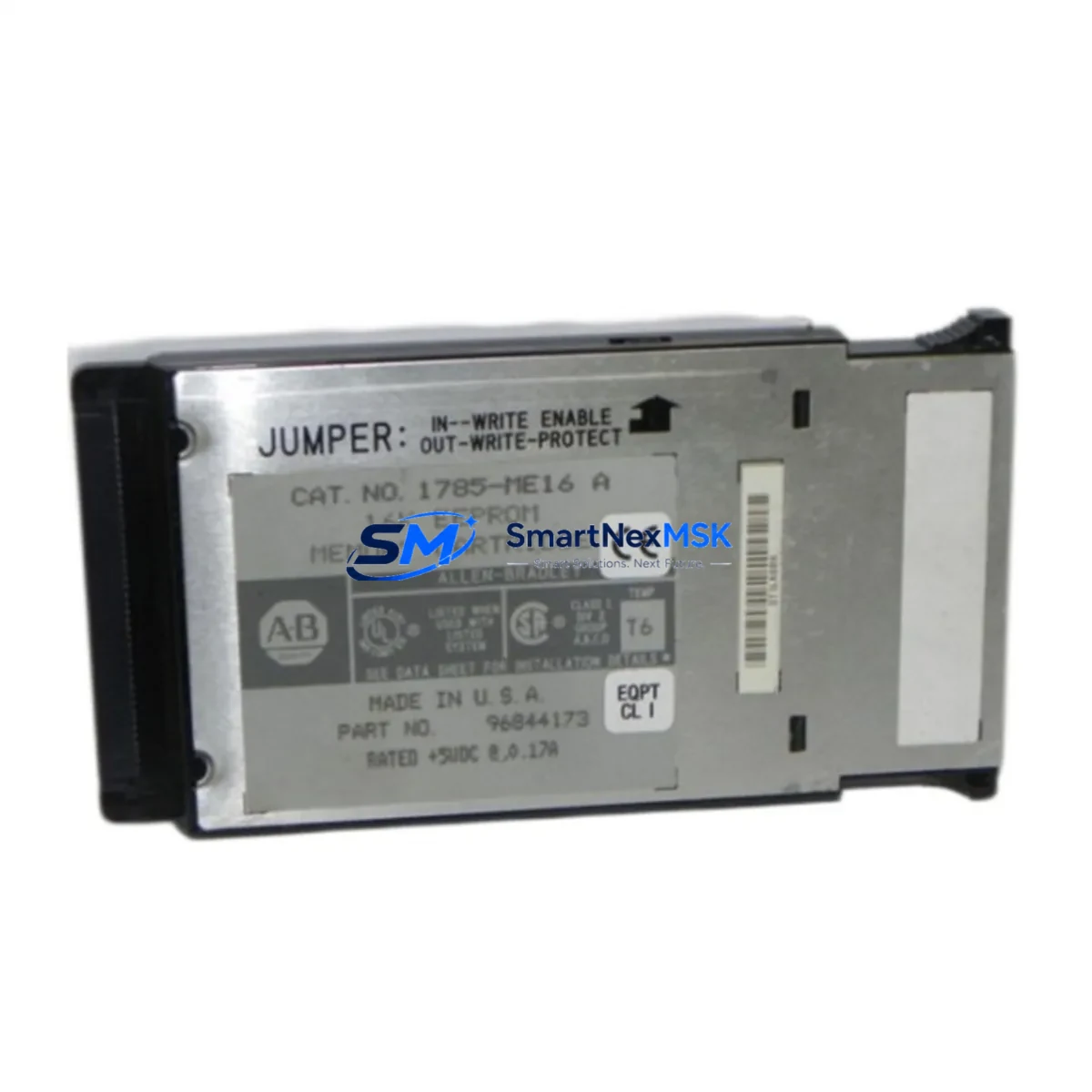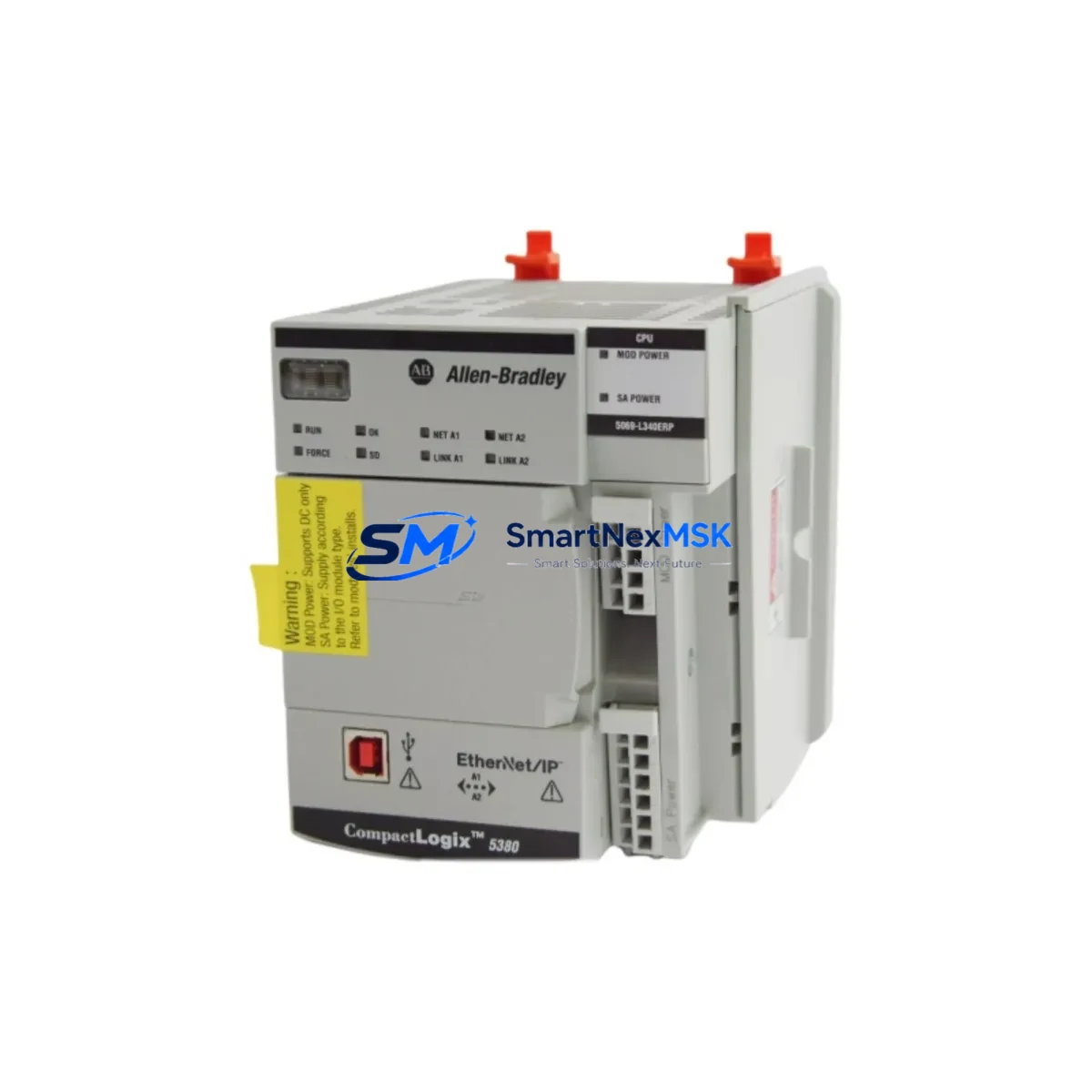
Allen-Bradley 5069-L340ERP Retrofit-Ready Controller for CompactLogix 5380: Compatible Modernization and Smooth System Upgrade
The Allen-Bradley 5069-L340ERP is a high-performance CompactLogix 5380 series programmable logic controller engineered for demanding industrial automation environments. As legacy control systems age out of Rockwell Automation’s active support lifecycle, facilities running older CompactLogix L3x or MicroLogix platforms face increasing pressure to modernize without disrupting production continuity. The 5069-L340ERP addresses this challenge directly — offering a retrofit-ready upgrade path that preserves existing program logic, minimizes rewiring, and reduces total migration downtime.
With 4 MB of user memory, dual EtherNet/IP ports, and native support for Logix Designer (Studio 5000), the 5069-L340ERP integrates seamlessly into existing Rockwell control architectures. Engineers migrating from discontinued models such as the 1769-L33ER or 1769-L36ERM will find that the 5069 Compact 5000 I/O system provides a structured upgrade path with backward-compatible tag structures and familiar ladder logic environments. The controller supports motion, safety, and process control within a single platform, reducing the need for separate motion controllers or safety PLCs in modernized panels.
Upgrade Compatibility Table
| Parameter | Legacy Model (e.g. 1769-L33ER) | 5069-L340ERP |
|---|---|---|
| Series | CompactLogix 5370 | CompactLogix 5380 |
| I/O System | 1769 Compact I/O | 5069 Compact 5000 I/O |
| EtherNet/IP Ports | 1 | 2 (dual-port, DLR capable) |
| User Memory | 2 MB | 4 MB |
| Motion Axes | Up to 16 | Up to 31 |
| Backplane Interface | 1769 local bus | 5069 local bus (not cross-compatible) |
| Programming Software | Studio 5000 / RSLogix 5000 | Studio 5000 Logix Designer v32+ |
| Communication Protocol | EtherNet/IP, DF1 | EtherNet/IP (DLR), CIP Safety |
| Replacement Recommendation | Direct platform upgrade required | Recommended retrofit target |
| Commissioning Focus | Tag remapping, I/O module re-addressing | Verify slot addressing, update AOP |
| Warranty | N/A (EOL) | 12-Month Warranty |
Retrofit Planning for Existing Automation Systems
A successful retrofit begins well before the controller is physically installed. Engineers should start by auditing the existing control cabinet for power supply capacity — the 5069-L600EP2 or 5069-L600ERMS2 power supply modules are commonly paired with the 5380 series and must be sized to support the full I/O load of the new 5069 Compact 5000 modules. Unlike the 1769 Compact I/O system, the 5069 backplane uses a different bus architecture, meaning existing 1769-IQ16, 1769-OB16, or 1769-IF4 analog modules cannot be reused and must be replaced with their 5069-series equivalents such as the 5069-IB16 digital input or 5069-OF8 analog output modules.
Terminal wiring from field devices can typically be preserved if the new I/O modules maintain the same channel count and signal type. However, engineers must verify terminal block compatibility and update the I/O tree within Studio 5000 to reflect the new module catalog numbers and slot assignments. Any changes to module addressing will require corresponding updates to the controller program tags — a process that can be partially automated using the Import/Export tag feature in Logix Designer.
For systems that include a PanelView Plus HMI communicating via EtherNet/IP, the HMI project will need to be reviewed for tag path references. If the controller name or IP address changes during migration, all tag bindings in the FactoryTalk View ME or SE project must be updated accordingly. It is advisable to export the existing HMI project, perform a global tag path search-and-replace, and validate all screen animations in offline simulation before going live.
Communication links to upstream SCADA systems, historian servers, or MES platforms via EtherNet/IP or OPC-DA/UA should be re-verified post-migration. The 5069-L340ERP’s dual-port EtherNet/IP with Device Level Ring (DLR) support enables network redundancy that was unavailable on many legacy platforms — a significant reliability improvement for continuous-process environments. If the existing network uses a linear topology, no additional hardware is required; DLR can be enabled later as the network infrastructure is upgraded.
For facilities using a 1756 ControlLogix rack alongside the CompactLogix system, the migration may also involve reviewing the 1756-EN2T or 1756-EN3TR communication modules to ensure firmware compatibility with the updated controller. Produced/consumed tags between the CompactLogix and ControlLogix systems should be re-tested after the upgrade to confirm data integrity across the backplane bridge.
Downtime Control During System Migration
Minimizing production downtime is the primary concern for any control system retrofit. The recommended approach is to pre-configure the 5069-L340ERP offline — loading the converted program, assigning the correct IP address, and performing a full I/O force test on the bench before the scheduled maintenance window. Using the Go Online with Upload feature in Studio 5000, engineers can compare the bench-tested program against the live system’s last known-good backup to identify any discrepancies before cutover.
During the physical swap, label all field wiring before disconnection and photograph the existing terminal layout. If the new 5069 I/O modules use the same terminal block style, wiring can be transferred in sections rather than all at once, reducing the risk of miswiring. After reconnection, perform a controlled power-up sequence: energize the power supply first, confirm the controller enters Run mode, then enable outputs one zone at a time while monitoring field device responses.
For critical processes, consider a parallel-run strategy where the legacy controller remains powered but with outputs disabled while the new 5069-L340ERP takes control. This allows engineers to monitor both systems simultaneously and revert instantly if an unexpected fault occurs. Once the new system has operated stably through at least one full production cycle, the legacy hardware can be decommissioned.
All units supplied by SMARTNEXMSK are pre-tested prior to shipment and covered by a 12-month warranty. Inventory is maintained in stock for fast dispatch, supporting urgent retrofit and emergency replacement scenarios.
Retrofit Support FAQ
Q: Can the 5069-L340ERP directly replace a 1769-L33ER without rewiring?
A: The 5069-L340ERP is a platform upgrade, not a drop-in pin-compatible replacement. The 5069 Compact 5000 I/O backplane is not interchangeable with the 1769 Compact I/O bus. Field wiring to I/O modules will need to be reconnected to new 5069-series I/O modules, and the controller program should be converted and validated in Studio 5000 before cutover.
Q: Is the existing Studio 5000 program compatible with the 5069-L340ERP?
A: Yes, with minor revision. Programs written for CompactLogix 5370 controllers can be imported into Studio 5000 and retargeted to the 5380 platform. I/O module definitions, slot assignments, and any motion axis configurations will need to be updated to reflect the new hardware. Rockwell’s Controller Migration Tool can assist with the conversion process.
Q: What commissioning steps are required after installation?
A: After physical installation, verify the controller IP address, confirm all I/O modules are recognized in the I/O tree, perform a full I/O force test, validate communication links to HMI and SCADA systems, and run the machine through a dry-cycle test before enabling production outputs. Document all changes to the program and network configuration for future reference.
Q: Does SMARTNEXMSK provide a warranty and pre-shipment testing?
A: Yes. All 5069-L340ERP units are tested before dispatch and covered by a 12-month warranty against manufacturing defects. We maintain ready stock to support urgent retrofit timelines and can provide documentation upon request.
© 2026 SMARTNEXMSK. All rights reserved.
Original Source: https://smartnexmsk.com
Contact: [email protected] | +86 18259474341