CCC CPCI AC-6U-500 PSMU-350-3 Retrofit-Ready Surge Control for Legacy Control Systems
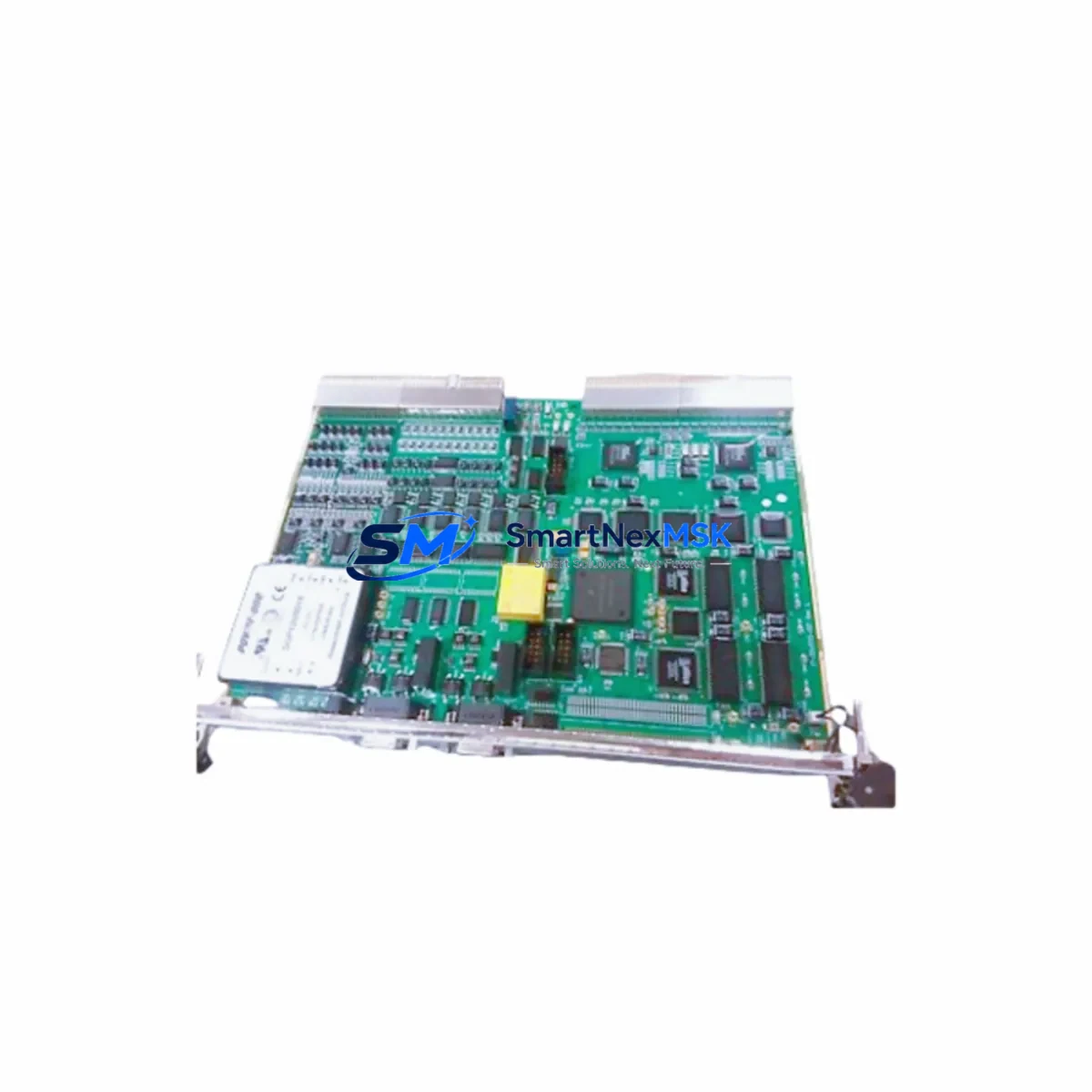
The CCC CPCI AC-6U-500 PSMU-350-3 is a CompactPCI-format Power Supply and Management Unit manufactured by Compressor Controls Corporation (CCC), designed for integration into the CPCI AC-6U-500 chassis platform used in turbomachinery surge control and anti-surge control (ASC) systems. As original equipment reaches end-of-life and spare parts become increasingly scarce, this module serves as a critical retrofit and replacement component for plants operating legacy CCC Turbotronic, Speedtronic, or equivalent surge control architectures.
Our stock of the PSMU-350-3 is sourced from verified industrial surplus channels, inspected prior to shipment, and backed by a 12-month warranty. Whether you are executing a planned control system upgrade, responding to an unplanned failure, or building a strategic spare parts inventory, this unit is available for immediate dispatch with full documentation support.
Upgrade Compatibility Table
| Parameter | Details |
|---|---|
| Part Number | CPCI AC-6U-500 PSMU-350-3 |
| Manufacturer | Compressor Controls Corporation (CCC) |
| Form Factor | CompactPCI (CPCI), 6U chassis |
| Power Output | 350 W (nominal) |
| Input Voltage | AC input, verify site supply voltage before installation |
| Chassis Compatibility | CCC CPCI AC-6U-500 series backplane |
| Backplane Interface | CompactPCI J1/J2 connector standard |
| Communication Compatibility | Compatible with CCC Modbus RTU, PROFIBUS DP, and OPC-DA linked control loops |
| Replacement Recommendation | Direct slot-for-slot replacement; verify firmware revision on host controller |
| Commissioning Notes | Confirm module address assignment and power sequencing with CCC engineering documentation |
| Warranty | 12 months from date of shipment |
| Condition | Tested, inspected surplus; full functional verification prior to dispatch |
Retrofit Planning for Existing Automation Systems
Replacing the PSMU-350-3 in an operational compressor control system requires careful pre-engineering to avoid unplanned shutdowns and protect existing program logic. The CPCI AC-6U-500 chassis typically houses a combination of the CCC CPCI CPU module, CPCI I/O expansion boards, and dedicated CPCI communication interface cards supporting PROFIBUS DP or Modbus RTU field networks. Before removing the failed or aging PSMU-350-3, engineers should document the current power rail voltages on the backplane using a calibrated multimeter and confirm that the replacement unit’s output ratings match the load profile of all installed modules.
Terminal wiring on the AC input side must be verified against the site’s electrical single-line diagram. Many older CCC installations use dedicated isolation transformers feeding the CPCI chassis; confirm transformer tap settings and breaker ratings before energizing the replacement module. The CCC CPCI backplane itself should be inspected for oxidation on the J1/J2 connector pins, as corrosion at these interfaces is a common cause of intermittent power faults in long-running systems.
For plants running CCC’s proprietary surge control software on the CPCI CPU-7 or CPU-8 processor module, the module address map stored in non-volatile memory must be preserved during the power supply swap. It is strongly recommended to perform a full program backup via the CCC engineering workstation and the associated CCC programming cable before beginning any hardware replacement. If the site uses a CCC HMI panel or third-party SCADA linked via OPC-DA, confirm that the HMI tag database reflects the correct I/O addresses after the module is reseated and powered.
In systems where the CPCI chassis is integrated with CCC analog I/O modules for 4–20 mA speed and pressure signals, verify that signal loop power is maintained through the transition. Some configurations route loop power through the PSMU; a temporary external 24 VDC supply may be required to keep field instruments live during the swap. Similarly, if CCC digital I/O modules are used for ESD interlock signals, coordinate with the safety system engineer to confirm bypass procedures are in place before de-energizing the chassis.
Plants migrating from older CCC Turbotronic 4 platforms to current-generation CCC 5000 series controllers may find the PSMU-350-3 useful as an interim bridge component, maintaining the existing CPCI chassis while new CCC 5000 I/O marshalling panels and CCC 5000 communication gateways are staged for cutover. This phased approach minimizes capital expenditure and allows engineering teams to validate new control logic in parallel with continued production.
Downtime Control During System Migration
Minimizing compressor downtime during a PSMU replacement requires a structured hot-swap or fast-swap procedure. Where the CPCI chassis design permits, confirm whether the PSMU-350-3 slot supports live insertion; most CCC CPCI implementations require a controlled chassis power-down sequence to avoid transient voltage spikes on the backplane. Coordinate the outage window with operations to align with a scheduled maintenance period or a planned process hold.
Prior to shutdown, capture a full snapshot of the running control program using the CCC engineering workstation. Export all tuning parameters, setpoints, and alarm limits to a secure backup file. If the compressor is part of a multi-train configuration, confirm that adjacent trains can absorb the load during the outage window. After installing the replacement PSMU-350-3, perform a staged power-up: energize the chassis, verify backplane voltages, confirm CPU module boot sequence, and validate I/O module status before releasing the compressor to automatic surge control mode.
Field commissioning should include a bump test of the anti-surge valve response and a verification of the surge detection algorithm setpoints against the original performance curve data. Document all as-found and as-left conditions in the site maintenance management system to support future audits and warranty claims.
Retrofit Support FAQ
Q1: Is the PSMU-350-3 a direct drop-in replacement for the original CCC CPCI AC-6U-500 power supply?
A: Yes, the PSMU-350-3 is designed for the CCC CPCI AC-6U-500 chassis and occupies the same slot position with the same J1/J2 backplane connector. Verify that your chassis revision and firmware version are compatible before installation. Our technical team can assist with cross-referencing your existing unit’s label data.
Q2: What commissioning steps are required after installing the replacement module?
A: After seating the PSMU-350-3 and restoring AC input power, confirm backplane rail voltages (+5 V, ±12 V as applicable), verify CPU module boot and program load, check I/O module status LEDs, and validate communication link status on all PROFIBUS DP or Modbus RTU segments. A functional test of the anti-surge control loop should be performed before returning the compressor to service.
Q3: How should I verify wiring compatibility between the old and new power supply units?
A: Compare the AC input terminal block wiring on the existing unit against the replacement unit’s installation drawing. Confirm wire gauge, torque specifications, and ground bonding. If the original unit used a specific AC input filter or surge suppressor, retain those components and reconnect them to the replacement unit in the same configuration.
Q4: What does the 12-month warranty cover, and what pre-shipment testing is performed?
A: Every PSMU-350-3 unit is functionally tested under load prior to shipment, including output voltage regulation, overcurrent protection, and power-good signal verification. The 12-month warranty covers manufacturing defects and functional failures under normal operating conditions. Units are shipped with an inspection report. Contact [email protected] for warranty claims or technical support.
© 2026 SMARTNEXMSK. All rights reserved.
Original Source: https://smartnexmsk.com
Contact: [email protected] | +86 18259474341