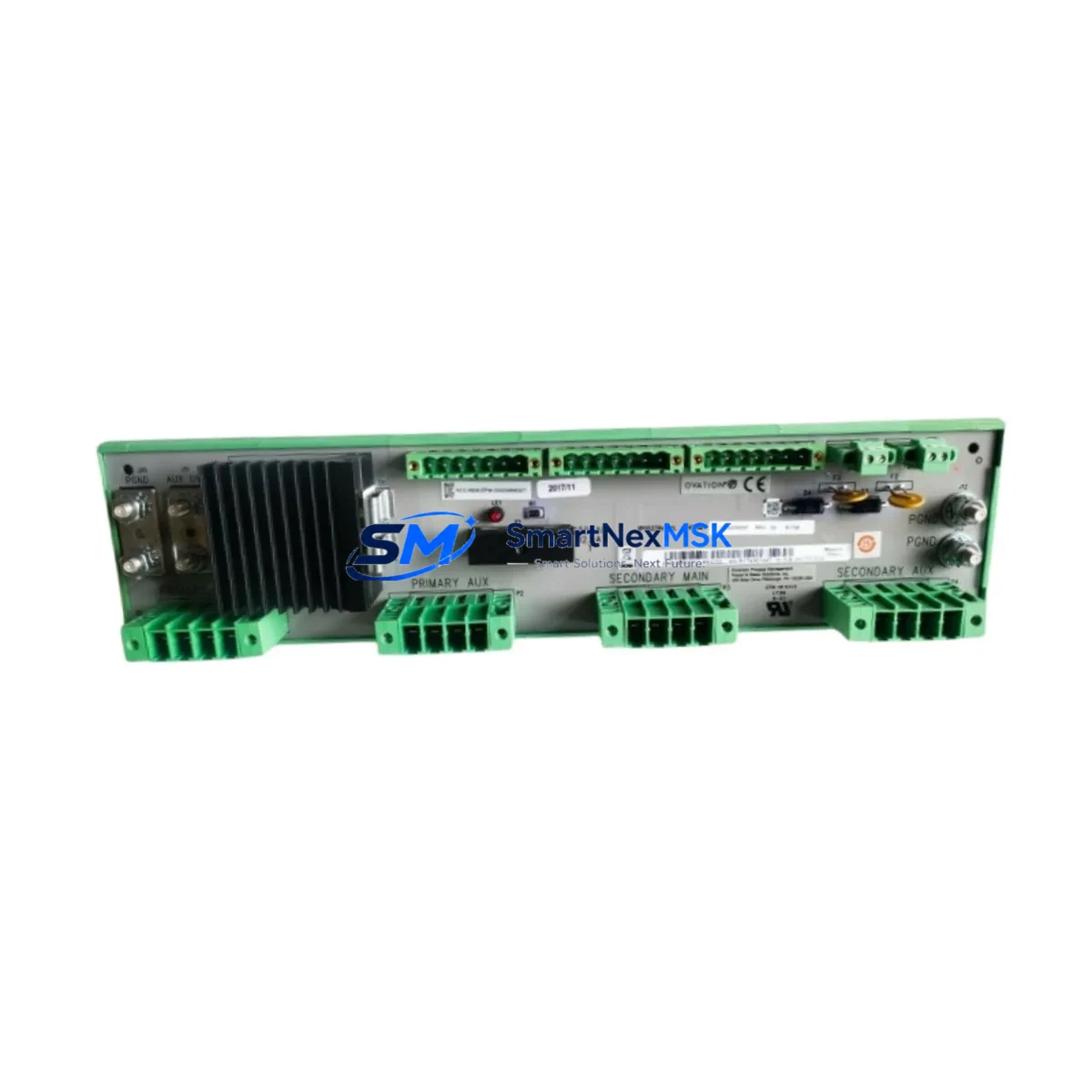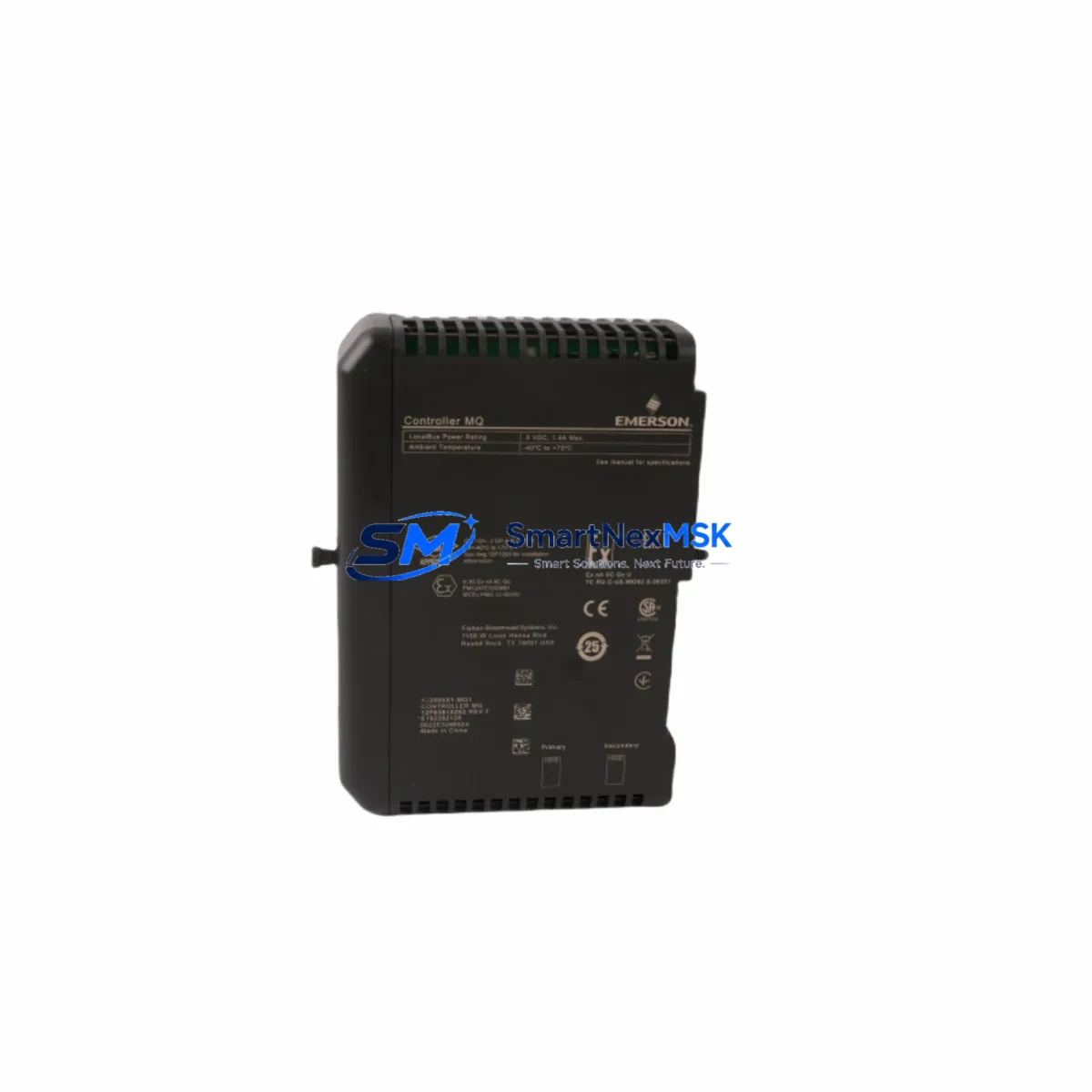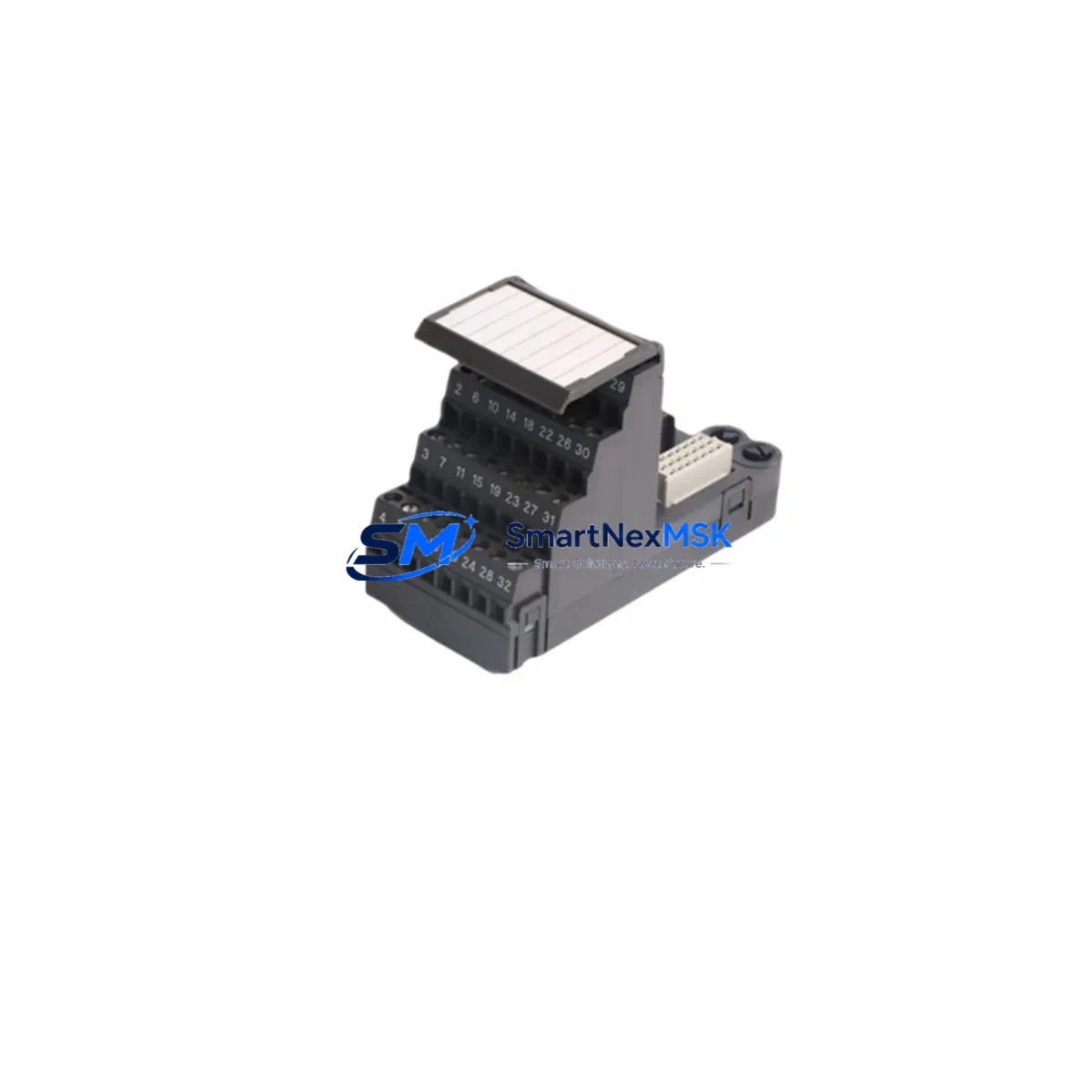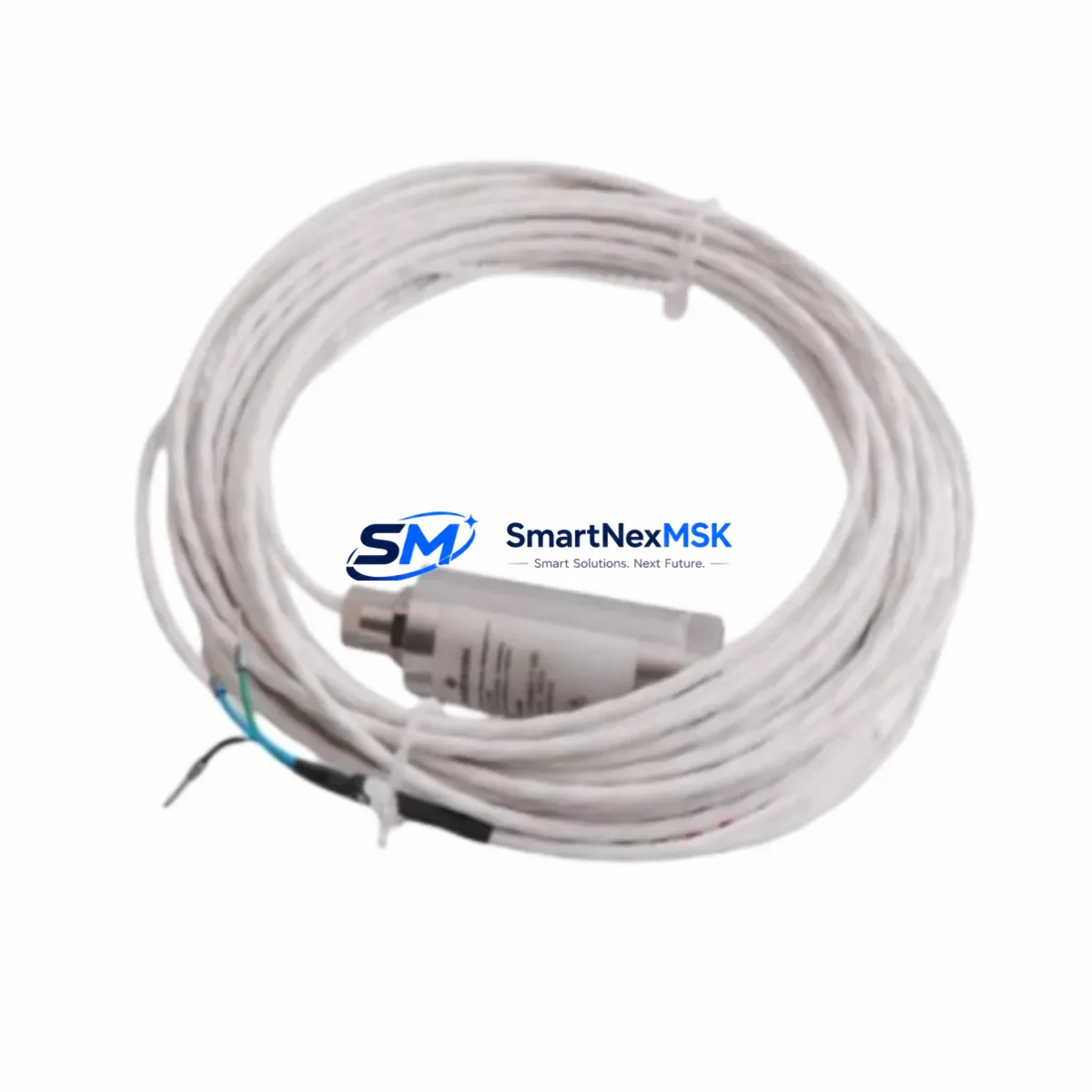
EMERSON PR9268/017-100 Retrofit-Ready Servo Motor for Precision Drive Control Systems
The EMERSON PR9268/017-100 is a precision-engineered servo motor designed for seamless integration into legacy Precision Drive Series control architectures. As industrial facilities face increasing pressure to modernize aging automation infrastructure without full system overhauls, the PR9268/017-100 has become a critical component in retrofit projects across process manufacturing, packaging lines, and motion-critical production environments. Whether you are replacing a discontinued unit, upgrading a degraded drive train, or migrating from an obsolete control platform, this servo motor delivers the electrical and mechanical compatibility required to restore full system performance with minimal disruption.
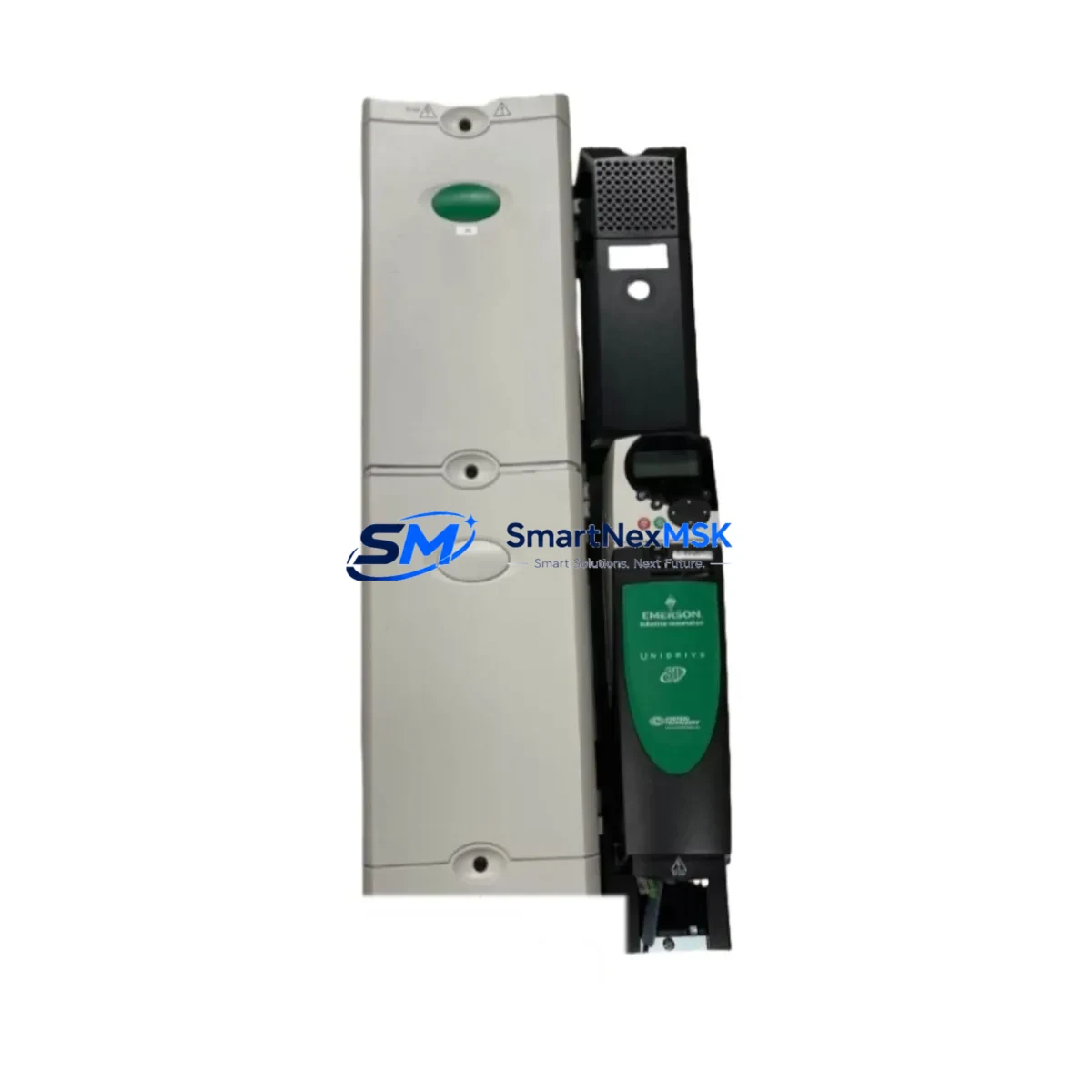
The PR9268/017-100 is engineered to interface directly with EMERSON Precision Drive Series servo amplifiers and drive controllers, maintaining the original feedback loop integrity and torque response characteristics expected by the host PLC or motion controller. Engineers undertaking a retrofit must verify power supply capacity at the control cabinet level — the PR9268/017-100 operates within the standard Precision Drive voltage envelope, but aging power modules such as the EMERSON Unidrive SP or legacy Commander SK series may require capacity assessment before commissioning. Terminal block wiring should be mapped against the original motor’s pinout documentation, paying particular attention to encoder feedback cable shielding and resolver signal integrity to avoid noise-induced faults during initial run-up.
Backplane and rack compatibility is a key consideration when the PR9268/017-100 is deployed as part of a broader control cabinet upgrade. In systems where the servo drive is mounted alongside I/O expansion modules, communication gateways, or safety relay modules, the physical installation envelope and DIN rail spacing must be confirmed prior to ordering. Module addressing — particularly in multi-axis configurations managed by a Unidrive M or Control Techniques drive coordinator — must be re-established in the motion program after hardware replacement to prevent axis conflict errors at startup.
Upgrade Compatibility Table
| Parameter | Details |
|---|---|
| SKU / Part Number | PR9268/017-100 |
| Brand | EMERSON |
| Series | Precision Drive |
| Product Type | Servo Motor |
| Country of Origin | Germany |
| Interface Compatibility | Compatible with Precision Drive Series servo amplifiers and Unidrive M/SP drive platforms |
| Feedback Interface | Encoder / Resolver (verify against original wiring diagram) |
| Installation Requirement | DIN rail or panel mount; confirm cabinet clearance and thermal derating |
| Communication Compatibility | Supports CANopen, EtherCAT, and Modbus RTU via compatible drive controller |
| Replacement Recommendation | Direct drop-in for discontinued PR9268 series variants; verify encoder resolution match |
| Commissioning Focus | Axis address re-mapping, encoder calibration, torque limit verification, HMI tag update |
| Warranty | 12-Month Warranty — all units tested before shipment |
Retrofit Planning for Existing Automation Systems
A successful retrofit using the PR9268/017-100 requires a structured approach that accounts for every layer of the existing control architecture. Begin with a full audit of the control cabinet: document the existing servo drive model (typically a Unidrive SP, Unidrive M200, or equivalent Precision Drive amplifier), the power distribution rail, and the 24 VDC auxiliary supply feeding the I/O and communication modules. If the cabinet also houses a Control Techniques CTNet communication module or a Modbus gateway, confirm that the new motor’s encoder feedback does not introduce ground loop interference on the shared signal bus.
For multi-axis systems, the PR9268/017-100 must be assigned the correct axis node address within the motion controller — typically configured via the drive’s front panel keypad or through the SyPTPro or Powerdrive Studio commissioning software. In systems where the host controller is a Mitsubishi MELSEC Q-series or Siemens S7-300 PLC communicating over PROFIBUS-DP, the GSD file for the drive module must be updated in the hardware configuration to reflect the replacement unit’s parameter set.
Terminal wiring adaptation is frequently required when replacing older PR9268 variants. The motor power connector (U, V, W, PE) and the feedback connector (encoder A/B/Z channels or resolver sin/cos signals) must be verified against the original cable harness. In many retrofit scenarios, the existing cable is retained and only the motor end connector is re-terminated — a process that should be performed with the drive in a safe torque-off state, confirmed via the STO input on the drive’s safety terminal block.
HMI screen updates are often overlooked during servo motor replacements. If the original system uses a Weintek, Proface, or Siemens TP series HMI with motor status tags mapped to the drive’s parameter registers, the tag addresses must be verified after the replacement drive is commissioned. Similarly, if the system uses a SCADA platform polling motor speed, torque, or fault codes via OPC-UA or Modbus TCP, the data map should be validated against the new drive’s register layout before returning the line to production.
For systems incorporating safety PLCs or safety-rated I/O modules monitoring motor over-temperature, brake release, or position limits, the PR9268/017-100’s digital output signals must be wired and tested against the safety logic before the machine is declared ready for operation. This is particularly important in applications where the servo axis controls a vertical load or a clamping mechanism, where an undetected wiring fault could result in an unsafe machine state.
Downtime Control During System Migration
Minimizing production downtime during a servo motor replacement is achievable with disciplined pre-commissioning preparation. Before the maintenance window begins, back up the existing drive parameter set using Powerdrive Studio or the drive’s internal parameter copy function — most Unidrive M and Unidrive SP models support parameter cloning to a keypad or USB memory device. This backup preserves motor nameplate data, PID tuning values, speed reference scaling, and fault response configurations that would otherwise require manual re-entry after the hardware swap.
During the physical replacement, use a structured lockout/tagout procedure and confirm STO activation before disconnecting the motor power cables. The PR9268/017-100 can typically be mechanically installed and electrically connected within a two-hour window by a qualified technician familiar with the Precision Drive platform. After reconnection, restore the parameter backup to the new drive, then perform a static motor identification routine (auto-tune) to calibrate the current controller to the replacement motor’s actual electrical characteristics — even if the nameplate data is identical to the original unit.
Functional testing should follow a defined sequence: jog at low speed to verify encoder direction and feedback signal integrity, then ramp to operating speed under no-load conditions before reconnecting the mechanical load. If the system uses a gearbox, coupling, or ball screw driven by the servo axis, inspect these mechanical components for wear before re-engaging the load — a retrofit is an ideal opportunity to address mechanical degradation that may have contributed to the original motor failure. Document all commissioning steps, parameter values, and test results for the maintenance record, and retain the original motor for failure analysis if the root cause has not been identified.
Retrofit Support FAQ
Q1: Is the PR9268/017-100 a direct replacement for discontinued PR9268 series servo motors?
Yes. The PR9268/017-100 is designed as a retrofit-compatible replacement for discontinued variants within the EMERSON PR9268 family. Customers should verify the encoder resolution (lines per revolution) and shaft dimensions against the original motor specification sheet to confirm mechanical and electrical compatibility before installation.
Q2: What commissioning steps are required after installing the PR9268/017-100?
After physical installation and wiring, restore the drive parameter backup from the original unit, then run the drive’s auto-tune (static or rotating) to calibrate the current controller to the new motor. Verify encoder feedback direction, confirm axis address assignment in multi-axis systems, and perform a low-speed jog test before returning the machine to full production speed.
Q3: Can the PR9268/017-100 be used with communication protocols other than the original system’s protocol?
The PR9268/017-100 is compatible with Precision Drive Series amplifiers that support CANopen, EtherCAT, Modbus RTU, and PROFIBUS-DP via the appropriate option module. Protocol migration — for example, from PROFIBUS-DP to EtherCAT — requires installing the corresponding communication option card in the drive and updating the host PLC’s hardware configuration and network scan list.
Q4: What does the 12-month warranty cover, and how are units tested before shipment?
All PR9268/017-100 units are functionally tested prior to shipment, including insulation resistance verification, encoder signal integrity check, and no-load run test. The 12-month warranty covers manufacturing defects and component failures under normal operating conditions. Units showing evidence of incorrect wiring, overvoltage, or mechanical damage from improper installation are excluded from warranty coverage. Contact [email protected] for warranty claims and RMA procedures.
© 2026 SMARTNEXMSK. All rights reserved.
Original Source: https://smartnexmsk.com
Contact: [email protected] | +86 18259474341