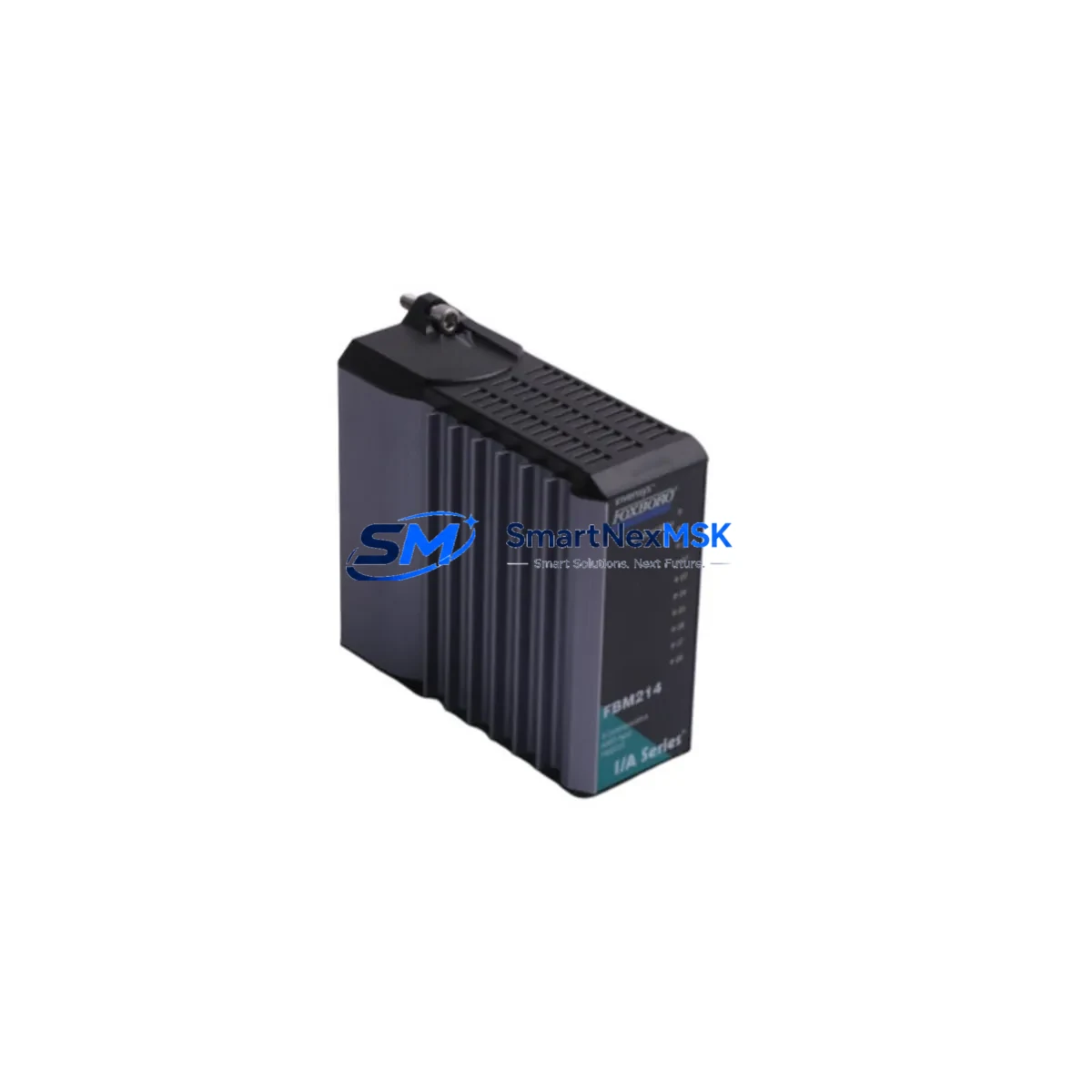
Foxboro FBM214 P0922V Maintenance-Ready Spare for FBM200 Automation
The Foxboro FBM214 P0922V is an original HART communication input module designed for the Foxboro IA Series Distributed Control System (DCS). As a critical field bus interface component within the FBM200 series I/O subsystem, this module handles HART protocol signal acquisition from field transmitters — pressure, temperature, flow, and level instruments — and delivers conditioned data to the DCS controller over the FBM200 fieldbus. For maintenance engineers managing aging process control infrastructure, having a verified, tested spare of the FBM214 P0922V on the shelf is a fundamental risk-reduction strategy.
Unplanned downtime caused by a failed HART input module can halt an entire process loop. In refinery, chemical, power generation, and water treatment environments, a single failed FBM214 can cascade into loss of measurement visibility across multiple field devices. Sourcing a pre-tested, original replacement unit — rather than waiting weeks for OEM lead times — is the difference between a two-hour recovery and a two-week production loss. This listing provides exactly that: an original Foxboro FBM214 P0922V, inspected, function-tested, and ready for immediate site deployment.
Spare Maintenance Table
| Parameter | Specification |
|---|---|
| Part Number | FBM214 / P0922V |
| Brand | Foxboro (Schneider Electric) |
| Series | FBM200 I/O Series — Foxboro IA DCS |
| Module Type | HART Communication Input Module |
| Protocol | HART (Highway Addressable Remote Transducer) |
| Signal Type | 4–20 mA analog with HART digital overlay |
| Channel Count | 8 channels (typical FBM200 HART input configuration) |
| Fieldbus Interface | FBM200 Series Fieldbus (proprietary Foxboro backplane) |
| Power Supply | Supplied via FBM200 baseplate / carrier |
| Operating Temperature | 0°C to 60°C (32°F to 140°F) |
| Mounting | FBM200 Series baseplate / module carrier |
| Country of Origin | United States |
| Compatibility | Foxboro IA Series DCS; FBM200 baseplate; I/A Series Workstation |
| Condition | Original, tested, function-verified |
| Warranty | 12 Months |
| Shipping | Worldwide; EMS / DHL / FedEx; export documentation available |
Maintenance Planning for Continuous Operation
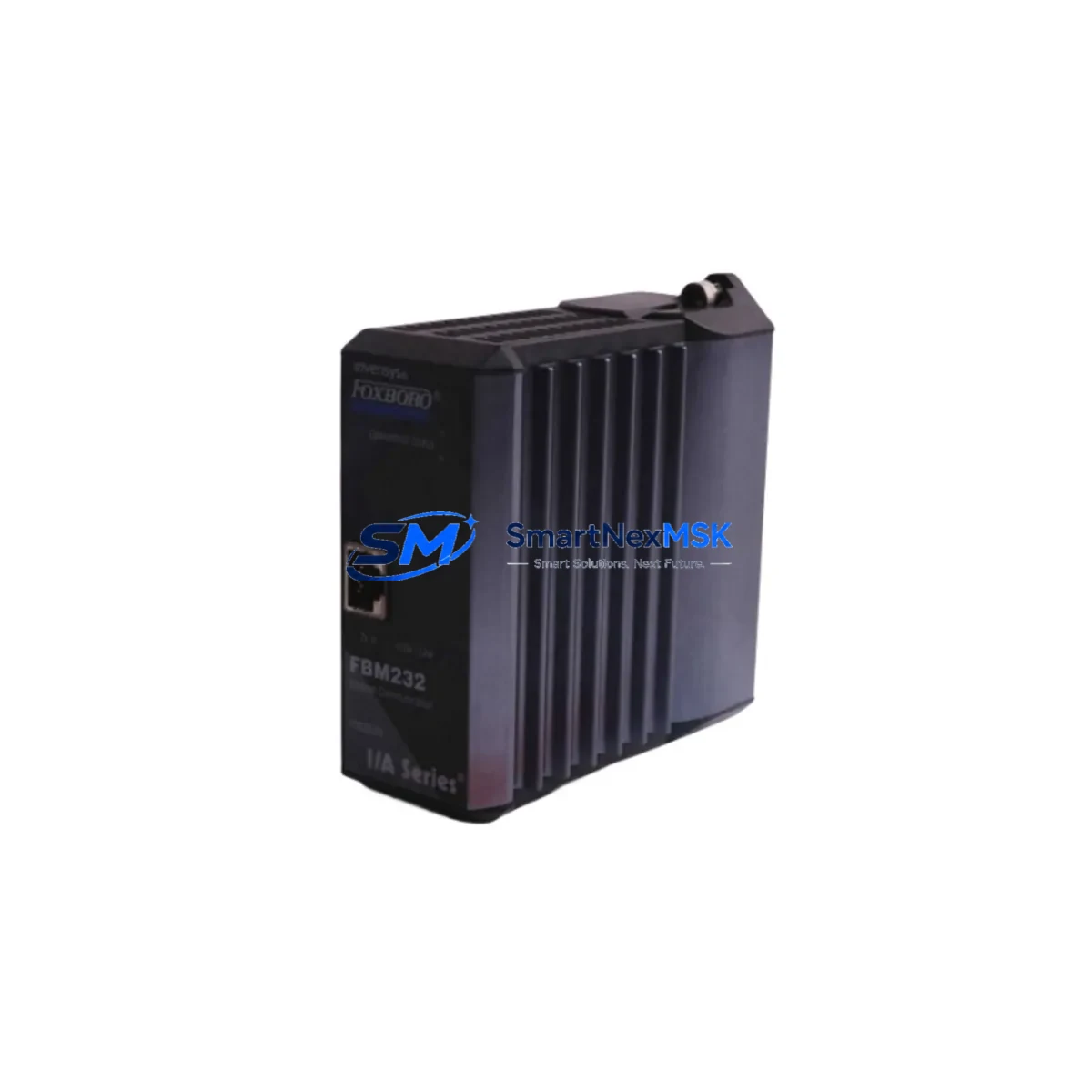
When a maintenance or reliability engineer schedules a planned inspection or responds to a HART communication fault alarm in the Foxboro IA Series DCS, the FBM214 P0922V is rarely the only component that warrants attention. A thorough control cabinet inspection and fault isolation procedure should encompass the full signal chain and power distribution architecture.
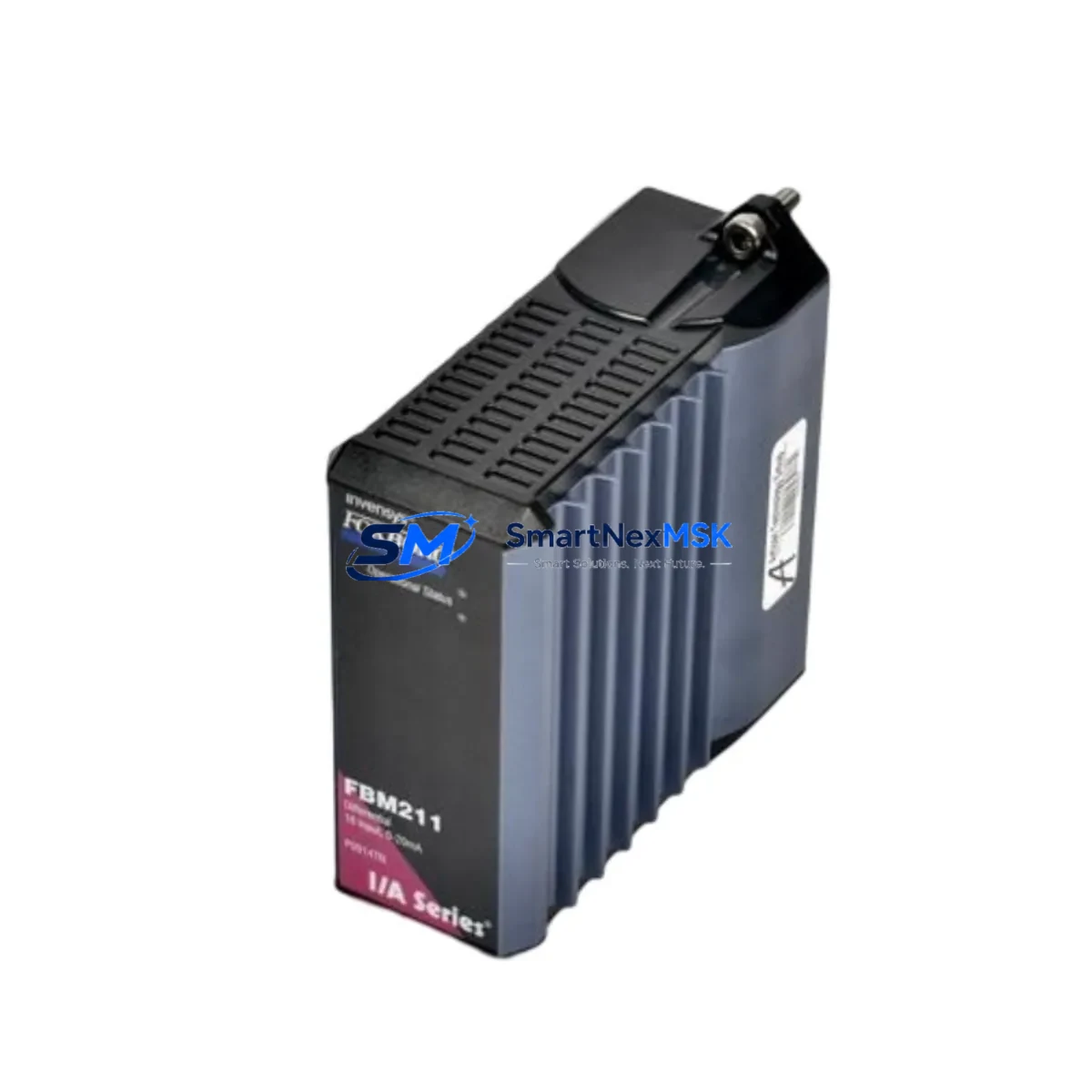
Begin with the FBM200 baseplate (carrier assembly) that houses the FBM214. Baseplates accumulate connector wear over years of module hot-swap cycles; inspect for bent pins, oxidation, and secure seating. Adjacent to the FBM214, the FBM201 or FBM202 analog input modules may share the same baseplate segment — if one module shows communication degradation, neighboring modules should be tested under load before the cabinet is closed.
The FPS (Field Power Supply) unit feeding the FBM200 enclosure is a frequent root cause of intermittent HART communication errors. Verify output voltage stability under full channel load; a sagging 24 VDC rail will cause HART modems within the FBM214 to drop out sporadically. Cross-check with the FBM207 or FBM208 power distribution modules if your system uses distributed power architecture.
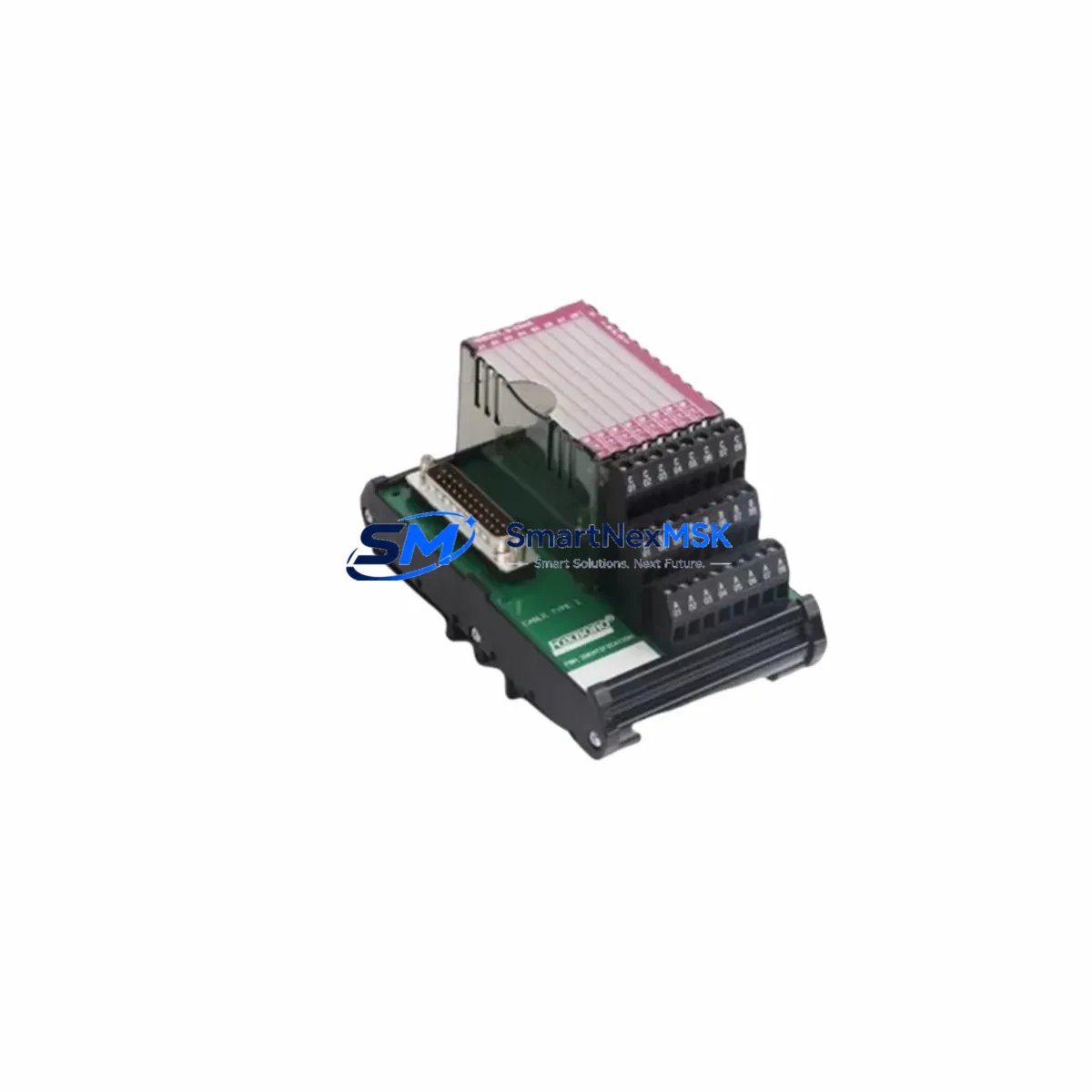
On the field wiring side, inspect the terminal blocks and marshalling panels connecting field transmitters to the FBM214 input channels. Loose terminations, corroded screw terminals, and shield grounding faults are the leading causes of HART communication noise. If the site uses HART multiplexers or signal isolators (such as MTL or P+F HART isolators) in the loop, verify that isolator pass-through bandwidth is adequate for HART FSK signals — some older isolators attenuate the 1200/2200 Hz HART carrier.
For sites running Foxboro IA Series with FCP270 or CP60 controllers, confirm that the controller firmware revision supports the FBM214 module descriptor file (MDD). Mismatched MDD versions can cause the controller to misidentify the module type after replacement, resulting in I/O configuration errors that mimic hardware faults. Keep a copy of the applicable FoxView or I/A Series System Configuration backup before swapping the module.
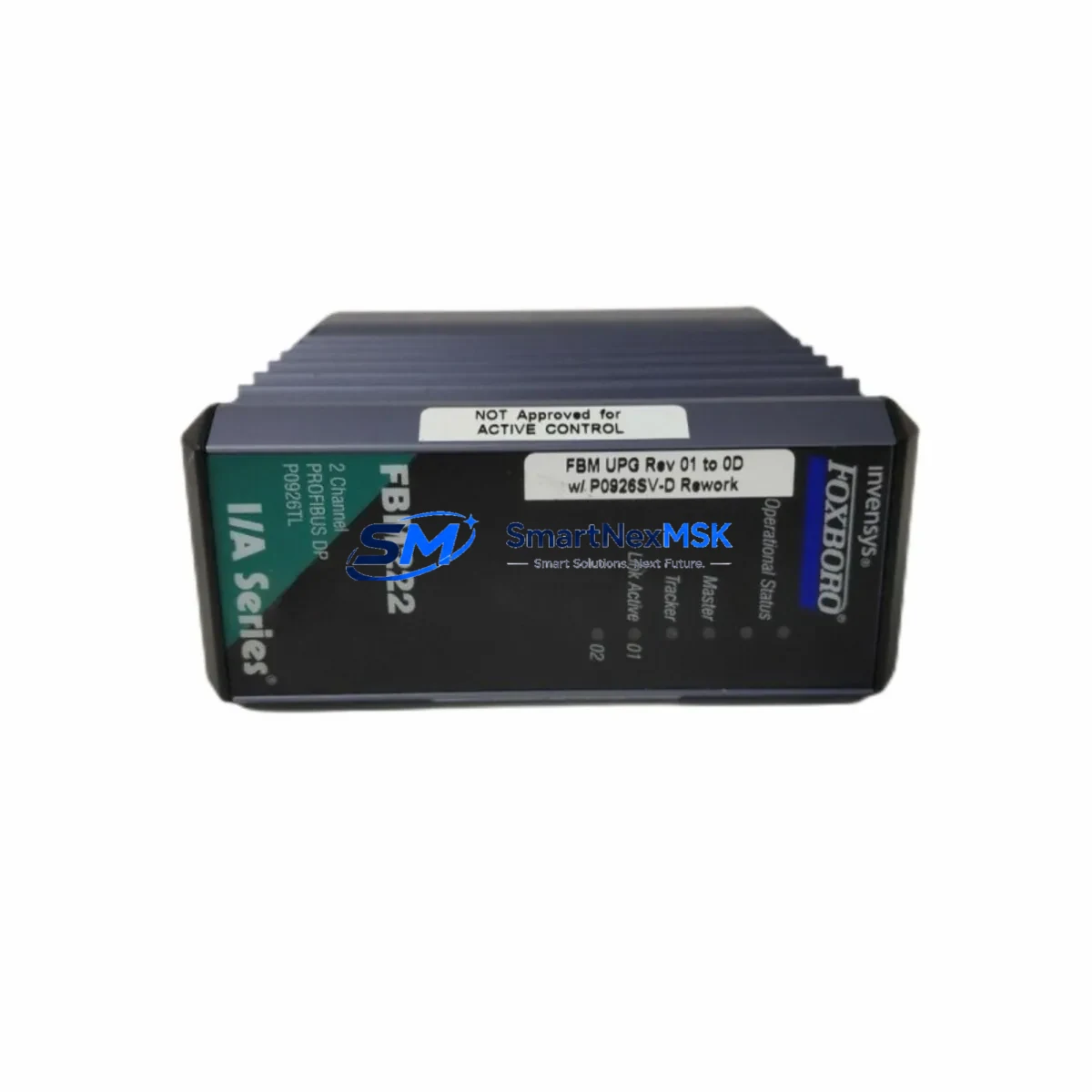
Finally, if the FBM214 replacement is part of a broader system life-extension project, consider auditing the FBM237 (DeviceNet interface) or FBM220 (Profibus DP) modules in the same cabinet — these communication-intensive modules share similar ASIC-level failure modes and benefit from proactive spare stocking alongside the FBM214 P0922V.
Site Replacement Workflow
Step 1 — Pre-replacement verification: Confirm the failed module part number (FBM214 / P0922V) against the baseplate label and the DCS hardware configuration database. Do not rely solely on the alarm description — verify physically.
Step 2 — System backup: Export the current I/A Series hardware configuration and tag database before any module swap. This ensures rapid restoration if the replacement module triggers a configuration mismatch.
Step 3 — Safe module removal: The FBM200 series supports hot-swap in most configurations, but confirm with your site safety procedure. Place the module locking lever in the unlocked position, extract the FBM214 smoothly, and inspect the baseplate connector for damage before inserting the replacement unit.
Step 4 — Replacement insertion and recognition: Insert the new FBM214 P0922V firmly until the locking lever engages. The DCS should recognize the module within 30–60 seconds. Monitor the module status LED and the DCS alarm console for successful initialization.
Step 5 — HART loop verification: Using a HART communicator (e.g., Emerson 475 or equivalent), poll each of the 8 input channels to confirm HART device recognition. Verify that primary variable (PV) readings match field transmitter local displays within calibration tolerance.
Step 6 — Documentation: Record the replacement in the site maintenance management system (CMMS), including the old module serial number, new module serial number, date, technician ID, and post-replacement loop test results. Update the spare parts inventory to trigger reorder of a replacement FBM214 P0922V for the next event.
Spare Parts Support FAQ
Q1: Is this FBM214 P0922V an original Foxboro module or a third-party compatible?
This is an original Foxboro (Schneider Electric) FBM214 P0922V module — not a clone, aftermarket reproduction, or third-party compatible. All units are sourced from verified industrial channels and undergo function testing prior to shipment. Original firmware and hardware revision are preserved.
Q2: How is the module tested before shipment?
Each FBM214 P0922V is bench-tested for power-on initialization, HART communication channel continuity, and fieldbus interface response prior to packaging. A test report is available upon request. Units that fail any test parameter are quarantined and not listed for sale.
Q3: What is the warranty coverage and what does it include?
All units carry a 12-month warranty from the date of shipment. The warranty covers hardware defects and functional failure under normal operating conditions. It does not cover damage caused by incorrect installation, overvoltage, or physical mishandling. Warranty claims are processed with a replacement unit dispatched within 5 business days of fault confirmation.
Q4: Can you supply multiple units for a spare parts program or MRO inventory build?
Yes. We support bulk spare parts procurement for maintenance, repair, and operations (MRO) programs. Volume pricing is available for orders of 3 or more units. Long-term supply agreements with reserved stock allocation are available for customers managing large Foxboro IA Series installations. Contact us to discuss your inventory strategy.
© 2026 SMARTNEXMSK. All rights reserved.
Original Source: https://smartnexmsk.com
Contact: [email protected] | +86 18259474341