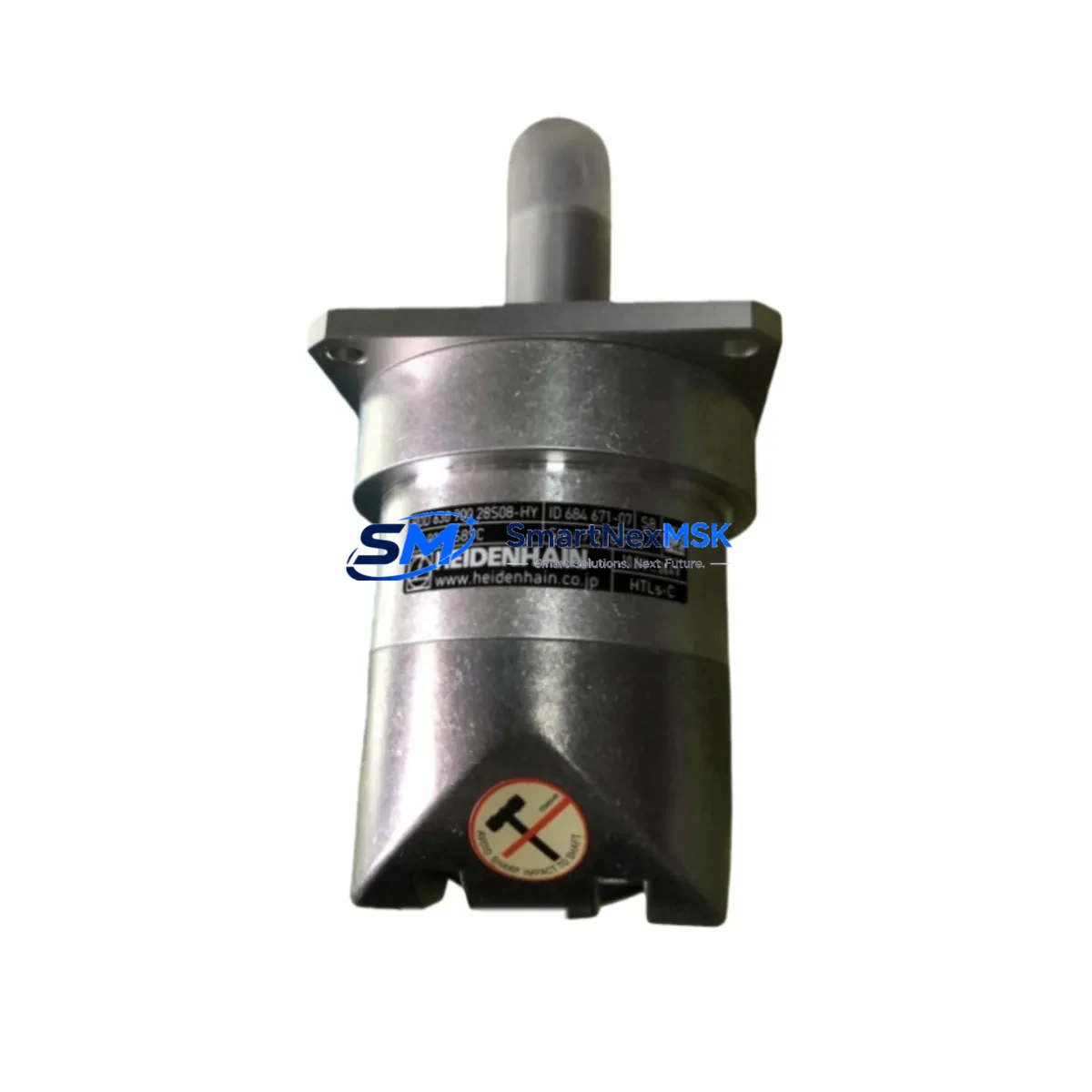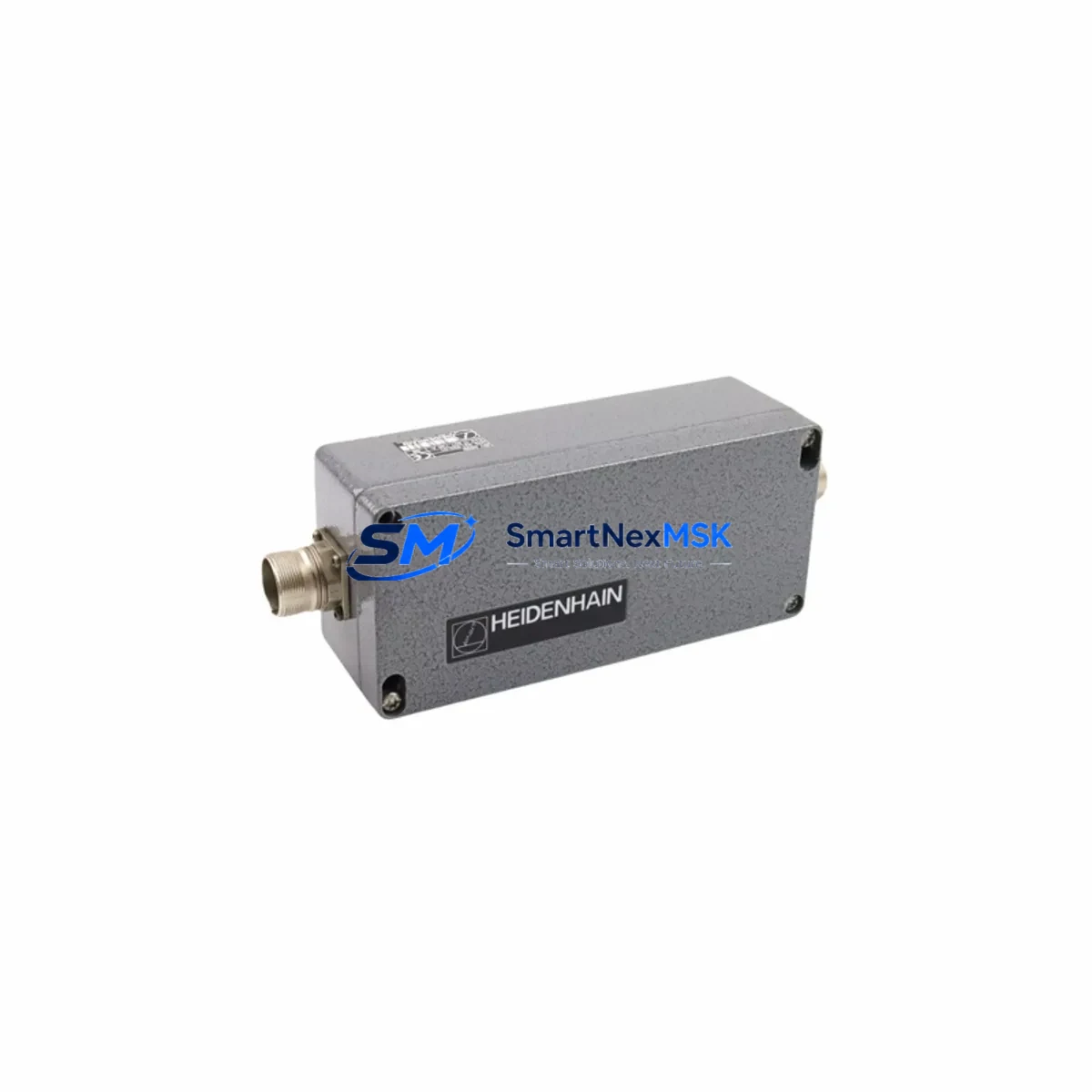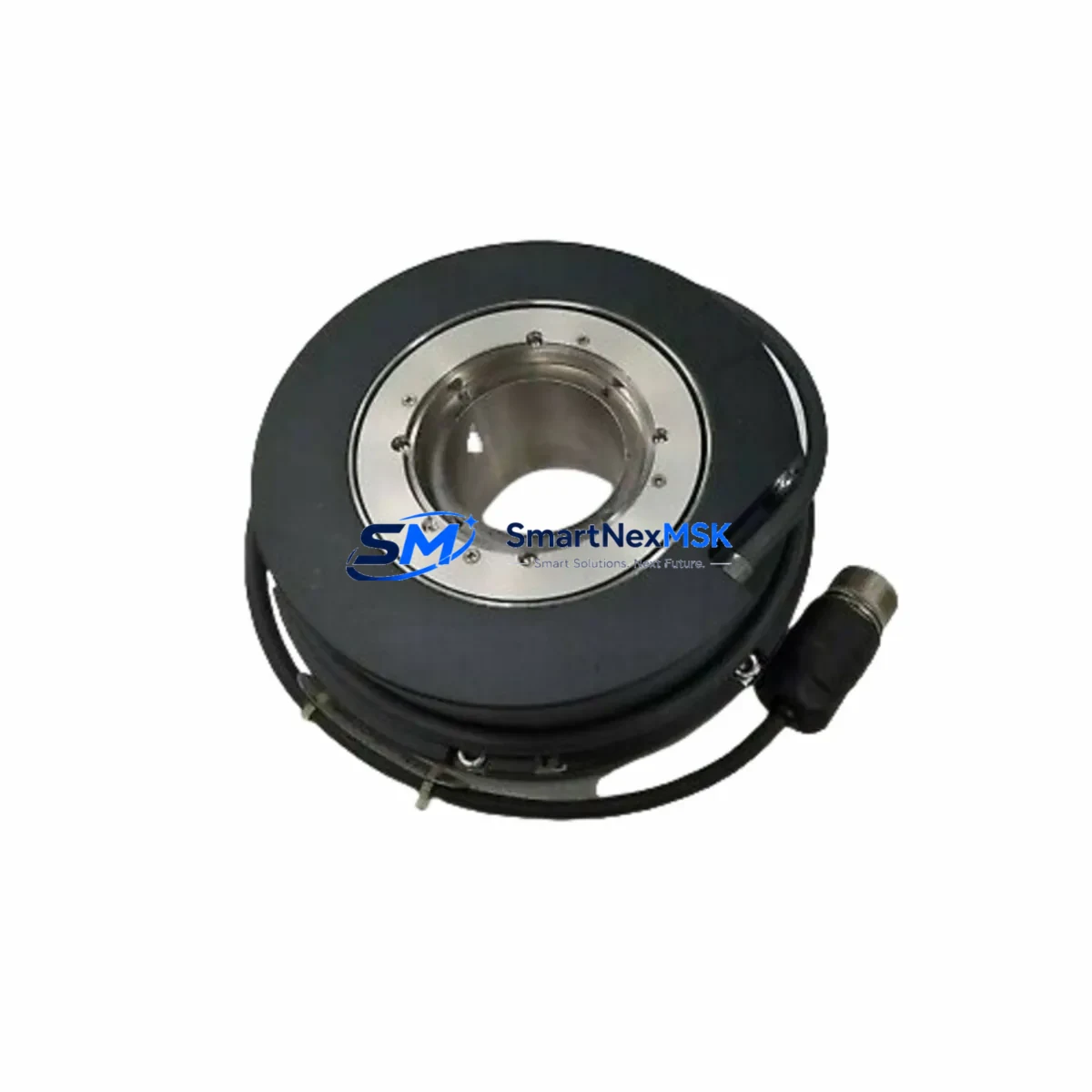
Heidenhain 785C.0003-18000 Maintenance-Ready Spare 785C: Spare Replacement & Industrial Downtime Risk Control
The Heidenhain 785C.0003-18000 (Part No. 311262-01) is a high-resolution incremental rotary encoder from the 785C Series, engineered for precision position and speed feedback in demanding industrial automation environments. With a resolution of 18,000 PPR (pulses per revolution), this encoder delivers the signal accuracy required by CNC machine tools, servo drive systems, and closed-loop motion control platforms. Sourced as an original spare, each unit is tested prior to dispatch and backed by a 12-month warranty, making it a reliable choice for maintenance engineers managing planned shutdowns, emergency replacements, and long-term spare parts inventory.
For maintenance and procurement engineers operating Heidenhain-equipped machinery, having a verified replacement for the 785C.0003-18000 on the shelf is a critical element of any downtime reduction strategy. Encoder failure is one of the leading causes of unplanned machine stops in servo-driven systems. A pre-stocked, tested spare eliminates the lead time risk associated with OEM procurement channels and keeps production lines running with minimal interruption.
Spare Maintenance Table
| Parameter | Specification |
|---|---|
| Part Number | 785C.0003-18000 / 311262-01 |
| Brand | Heidenhain |
| Series | 785C Series |
| Type | Incremental Rotary Encoder |
| Resolution | 18,000 PPR (Pulses Per Revolution) |
| Output Signal | TTL / RS-422 differential (A, B, R tracks) |
| Supply Voltage | 5 V DC (±5%) |
| Operating Temperature | 0 °C to +70 °C |
| Protection Rating | IP64 (shaft side) |
| Shaft Diameter | 3 mm (hollow or solid, per variant) |
| Origin | Germany (DE) |
| Compatibility | Heidenhain 785C Series; compatible with SIMODRIVE, FANUC, and Mitsubishi servo amplifier feedback inputs |
| Application Environment | CNC machining centers, grinding machines, servo axes, rotary tables |
| Maintenance Recommendation | Replace at first sign of signal degradation, bearing noise, or position drift; inspect cable and connector annually |
| Warranty | 12 Months |
| Condition | Original spare, pre-shipment tested |
Maintenance Planning for Continuous Operation
When replacing the Heidenhain 785C.0003-18000 encoder in a servo axis or spindle feedback loop, a thorough inspection of the surrounding electrical and mechanical components is essential to prevent repeat failures and ensure system stability. Maintenance engineers should treat this replacement as an opportunity for a broader control cabinet and drive system audit.
Begin by inspecting the encoder cable and mating connector — the Heidenhain PUR-sheathed feedback cable (typically 17-pin or sub-D connector) is a common wear item and should be replaced if any insulation cracking, pin corrosion, or intermittent signal loss is observed. Next, verify the integrity of the servo drive’s encoder input card; on SIEMENS SIMODRIVE 611 or 840D systems, the encoder evaluation module (e.g., EXE 610 or equivalent signal conditioning board) should be checked for contamination or capacitor aging.
For systems using Heidenhain IK 220 counter cards or PWM 9 power supply modules, confirm that the 5 V encoder supply rail is within tolerance — voltage sag below 4.75 V is a frequent cause of premature encoder failure and position error alarms. A bench-calibrated multimeter or oscilloscope check at the encoder connector is recommended before installing the replacement unit.
In multi-axis CNC environments, it is good practice to simultaneously inspect adjacent axis encoders of the same 785C Series family, as units installed at the same time tend to reach end-of-life within similar timeframes. Spare inventory should ideally include at least one additional 785C.0003-18000 or a compatible 785C variant to cover the next unplanned failure without delay.
Other components that should be reviewed during this maintenance window include: terminal blocks and shielding clamps in the feedback cable routing channel, the servo motor’s bearing condition (encoder misalignment due to bearing wear is a leading cause of signal noise), any signal isolators or repeaters in the feedback path, and the machine’s reference point switch or home sensor, which interacts directly with the encoder’s reference pulse (R track) during homing cycles. For systems with Heidenhain TNC controllers, the diagnostic screen should be used to verify encoder signal quality (A, B, R amplitudes) before returning the axis to production.
Site Replacement Workflow
Step 1 — Isolation & Lockout: De-energize the servo drive and apply LOTO (Lockout/Tagout) to the axis. Allow the motor to cool if recently operated at high duty cycle.
Step 2 — Cable Disconnection: Photograph the existing cable routing and connector orientation before removal. Disconnect the Heidenhain feedback cable at the encoder end. Inspect the connector pins for corrosion or mechanical damage.
Step 3 — Encoder Removal: Loosen the clamping ring or mounting screws securing the 785C encoder to the motor shaft or coupling. Slide the encoder off carefully to avoid shaft damage. Note the angular position of the encoder body relative to the motor housing for reference during reinstallation.
Step 4 — Replacement Installation: Mount the new Heidenhain 785C.0003-18000 unit, ensuring the coupling is concentric and the clamping torque matches the manufacturer’s specification (typically 1.0–1.5 Nm for M3 screws). Reconnect the feedback cable and verify shield grounding at the drive end.
Step 5 — Power-Up & Signal Verification: Re-energize the drive and use the controller’s diagnostic interface to confirm encoder signal presence (A+/A−, B+/B−, R+/R−). On FANUC or Mitsubishi systems, check the servo parameter screen for encoder feedback status before enabling the axis.
Step 6 — Reference Point Re-establishment: Execute a machine reference (homing) cycle to re-establish the axis zero point. Verify that the machine’s position display matches the expected mechanical reference within tolerance.
Step 7 — Test Run: Run the axis through its full travel range at low feed rate, monitoring for position error alarms, following error spikes, or abnormal drive current. Log the result in the maintenance record before returning the machine to production.
This workflow is applicable to legacy CNC systems where the 785C Series encoder is used as a direct OEM replacement, as well as retrofit scenarios where the 785C.0003-18000 is substituted for an obsolete or discontinued encoder model with equivalent PPR and interface specifications.
Spare Parts Support FAQ
Q1: Is the Heidenhain 785C.0003-18000 (311262-01) still available as a new original spare?
A: Yes. We maintain stock of original Heidenhain 785C.0003-18000 units sourced through authorized industrial supply channels. Each unit is individually tested for signal output integrity before shipment. For high-volume or long-term supply requirements, contact our sales team to discuss blanket order arrangements and lead time commitments.
Q2: How do I verify compatibility before ordering?
A: Compatibility is confirmed by matching the encoder’s PPR (18,000), output interface (TTL/RS-422), shaft diameter, and mounting flange dimensions to your existing installation. If you have the original Heidenhain encoder label or the machine’s electrical schematic, our technical team can cross-reference the part number and confirm a direct fit. We also accept sample units for dimensional verification prior to bulk orders.
Q3: What does the 12-month warranty cover?
A: The 12-month warranty covers manufacturing defects, signal output failures, and premature bearing failure under normal operating conditions. It does not cover damage resulting from incorrect installation, overvoltage, mechanical impact, or contamination beyond the encoder’s rated IP protection. Warranty claims are processed with return shipping support and replacement dispatch within 5 business days of fault confirmation.
Q4: How should I manage spare encoder inventory for a multi-machine facility?
A: For facilities operating three or more machines with 785C Series encoders, we recommend maintaining a minimum of two replacement units per encoder model in your on-site spare parts store. Encoders should be stored in their original packaging in a dry, temperature-controlled environment (10–40 °C, <75% RH). Annual inventory audits should cross-reference installed encoder age against the manufacturer’s recommended service life to proactively schedule replacements before failure occurs.
© 2026 SMARTNEXMSK. All rights reserved.
Original Source: https://smartnexmsk.com
Contact: [email protected] | +86 18259474341