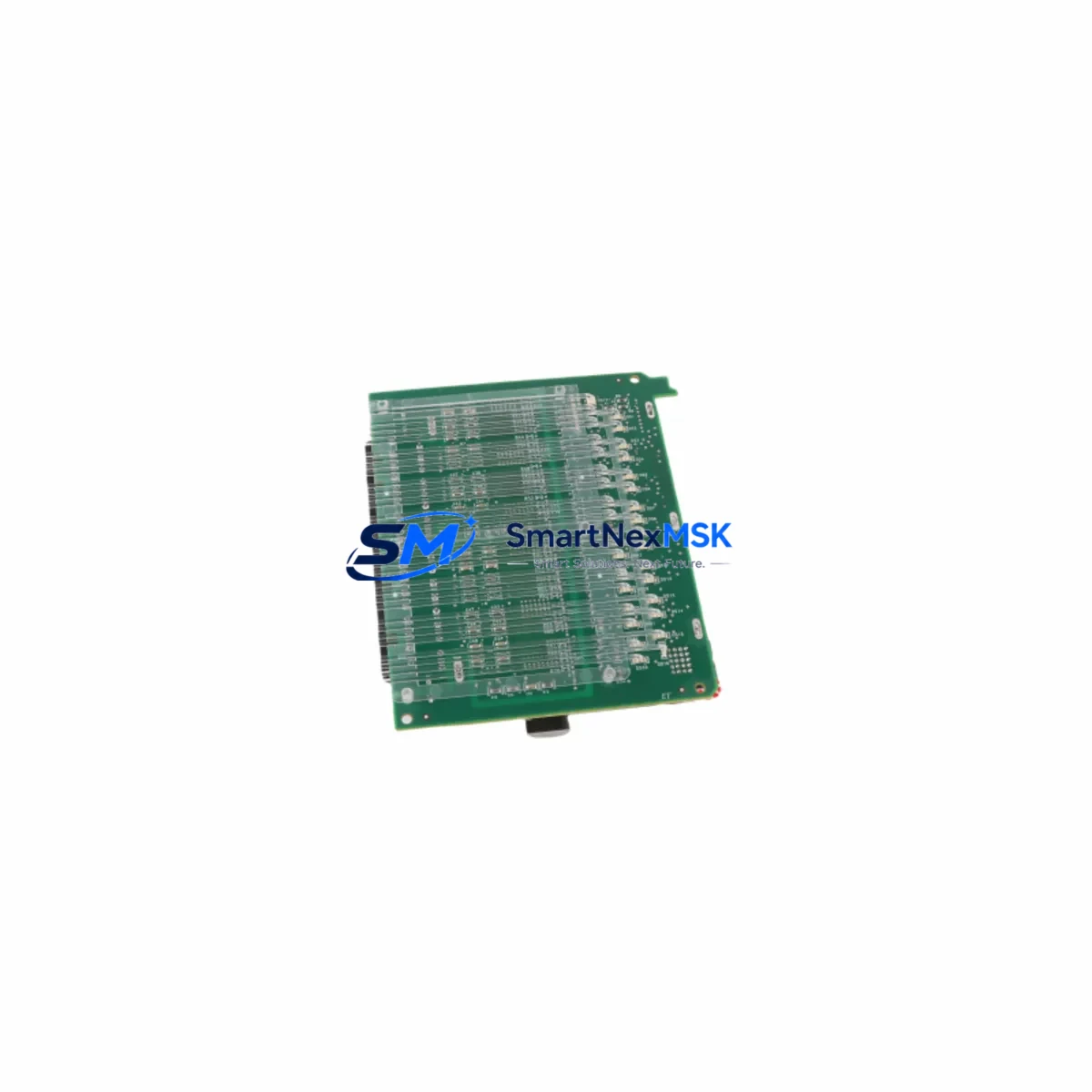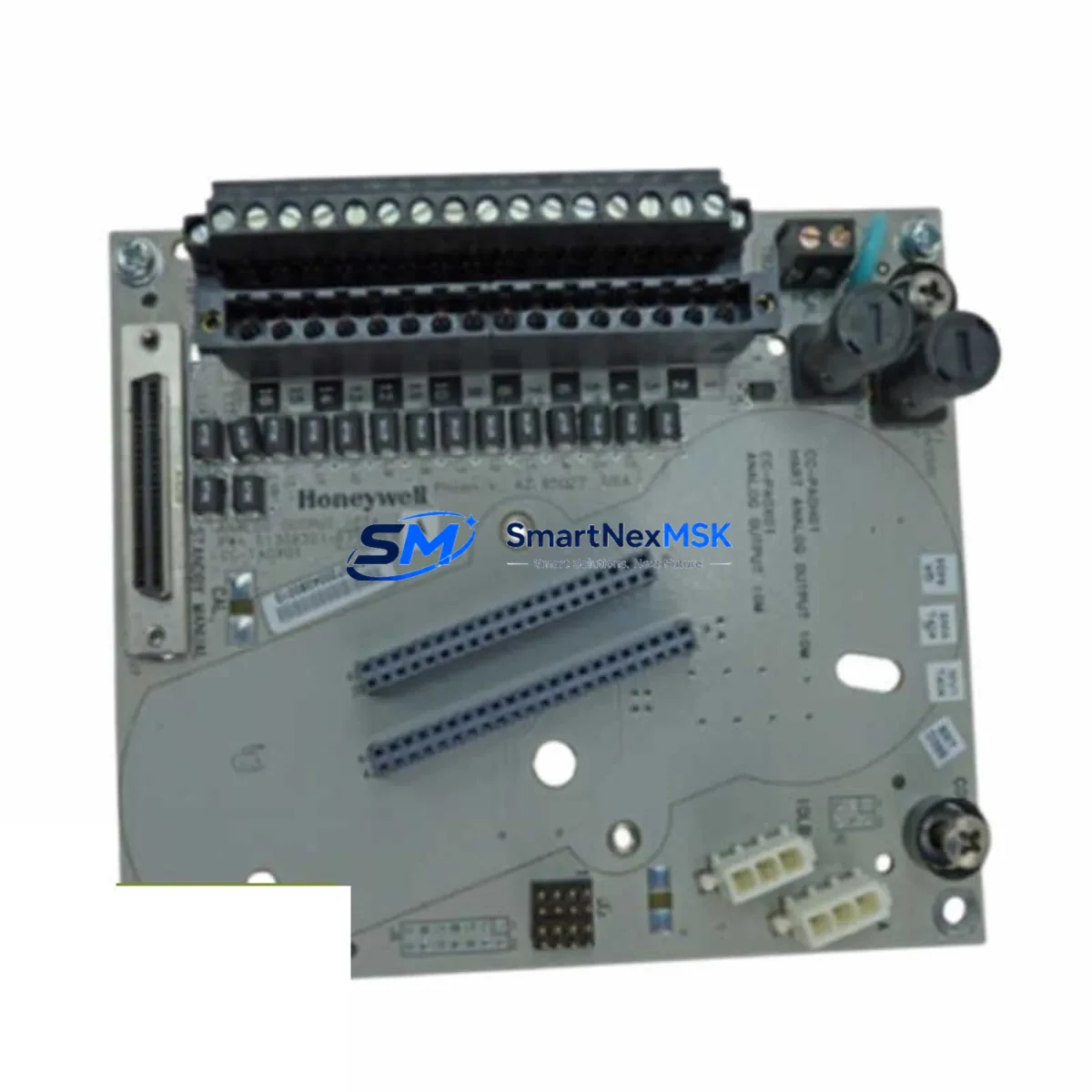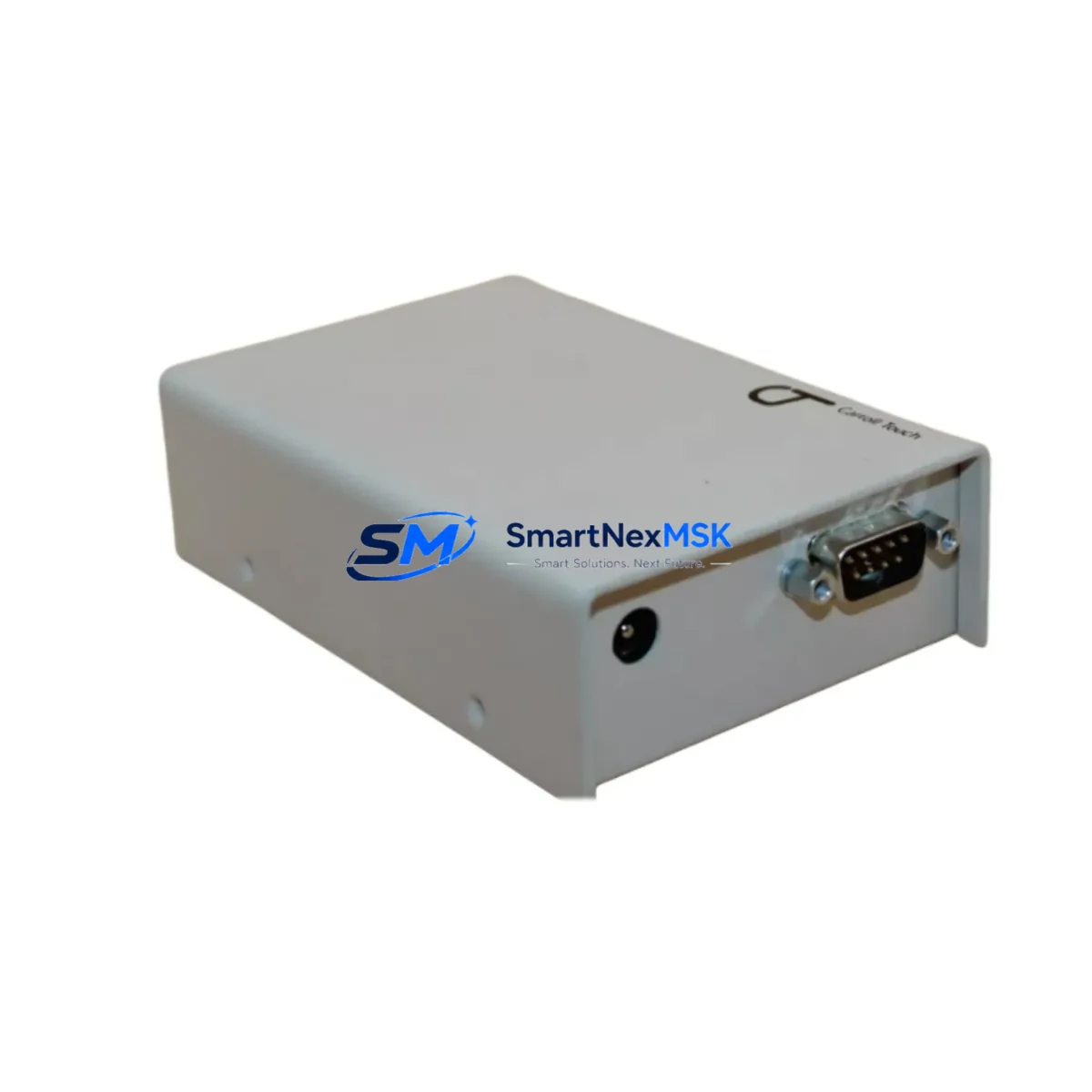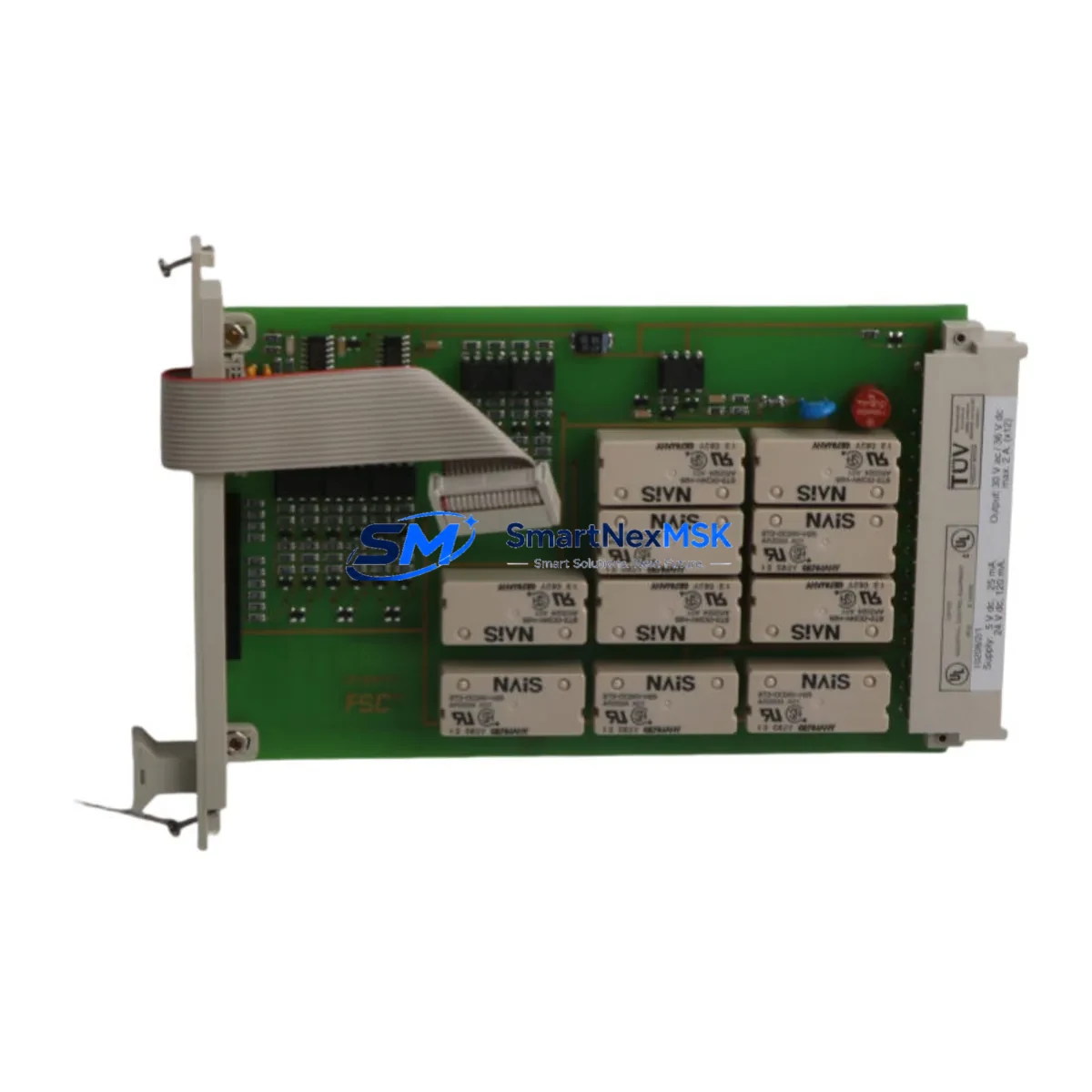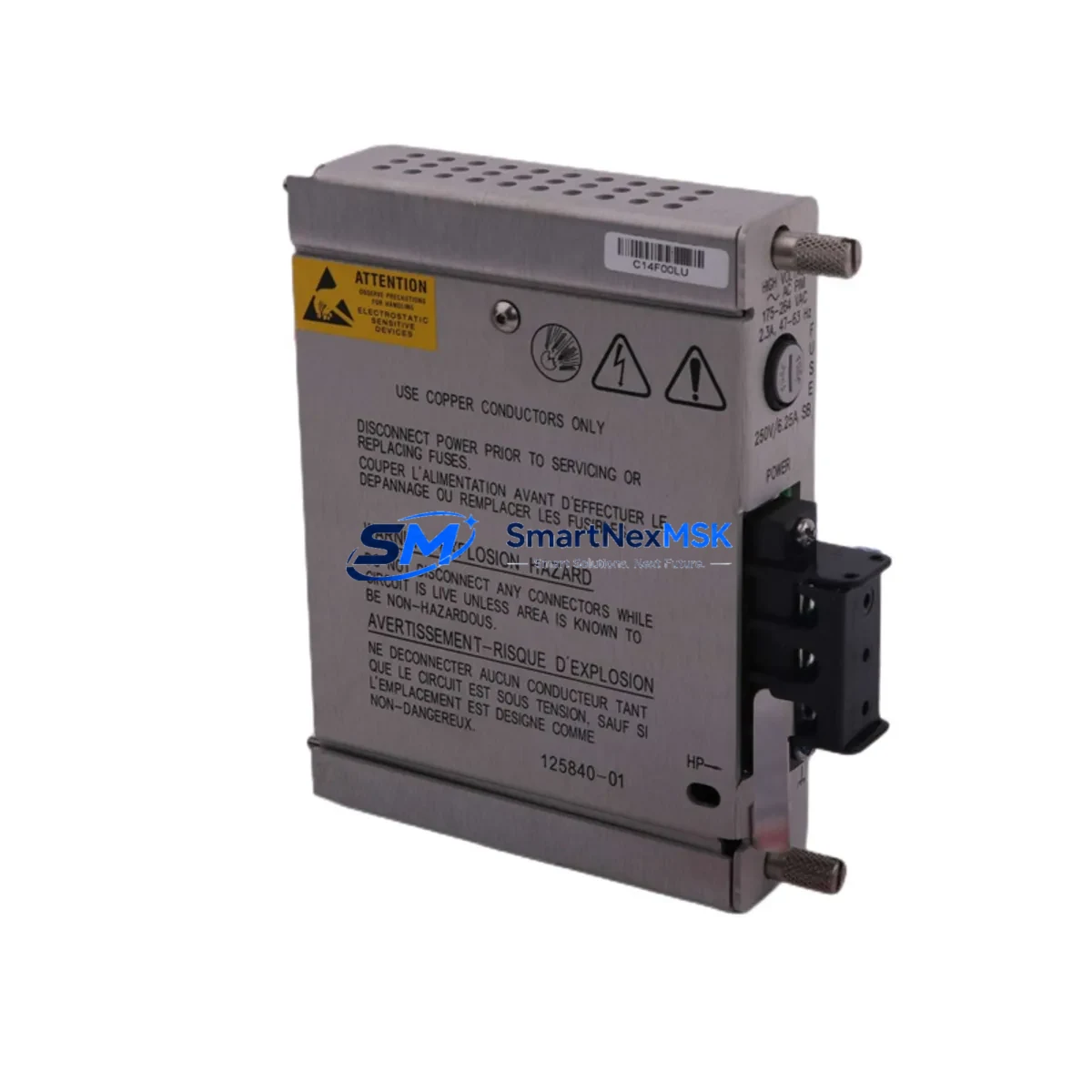
Honeywell 125840-01 Retrofit-Ready AC Power Supply for TDC 3000 Control Systems
The Honeywell 125840-01 is an AC power supply module engineered for the TDC 3000 Distributed Control System platform — one of the most widely deployed process automation architectures in refining, petrochemical, and continuous manufacturing industries. As legacy TDC 3000 installations approach end-of-support milestones, the 125840-01 remains a critical retrofit component for engineers tasked with extending system life, replacing failed power infrastructure, or executing phased DCS modernization programs without full platform migration.
SMARTNEXMSK maintains verified stock of the 125840-01 with full functional testing prior to shipment, backed by a 12-month warranty covering manufacturing defects and operational failures under normal service conditions.
Upgrade Compatibility Table
| Parameter | Details |
|---|---|
| Compatible Platform | Honeywell TDC 3000 DCS |
| Module Function | AC Power Supply for UCN / LCN / HPM subsystems |
| Input Voltage | 100–240 VAC, 50/60 Hz (verify against site nominal) |
| Backplane Interface | Standard TDC 3000 card cage backplane connector |
| Installation Format | Direct card-slot insertion; no bracket modification required |
| Communication Compatibility | Compatible with UCN, LCN, and HPM communication architectures |
| Replacement Scope | Drop-in replacement for failed or end-of-life 125840-01 units |
| Commissioning Requirement | No firmware re-flash required; verify address jumpers before insertion |
| Pre-Shipment Testing | Full functional load test performed on every unit |
| Warranty | 12 Months — covers manufacturing defects and operational failure |
Retrofit Planning for Existing Automation Systems
Replacing the 125840-01 in an active TDC 3000 installation requires careful coordination across multiple subsystem layers. The power supply feeds regulated DC rails to co-located I/O modules and communication cards within the same card cage. Before removal, engineers should document the current load profile of the cage — particularly if the cage hosts a mix of analog input modules, digital output modules, and a UCN Interface Module (UCNIM) or LCN Node, all of which draw from the shared power bus.
Terminal wiring on the AC input side must be verified against the site’s electrical single-line diagram. In older installations, the AC feed may share a distribution panel with other critical loads including the Hiway Gateway Module (HGM) and the Application Module (AM) chassis. Isolating the correct breaker and confirming phase labeling before disconnecting the 125840-01 prevents inadvertent de-energization of adjacent control loops.
For sites running the TDC 3000 alongside a Honeywell Experion PKS migration path, the 125840-01 replacement is often part of a broader effort to stabilize the legacy layer while the new Experion C300 controllers and Series C I/O modules are commissioned in parallel. In these hybrid architectures, maintaining power integrity in the TDC 3000 card cages is essential to preserving UCN communication continuity during the transition window.
Backplane slot addressing should be confirmed using the TDC 3000 Engineering Reference before reinsertion. If the cage also houses a Data Hiway Interface (DHI) card or a Redundant Controller Module (RCM), the power sequencing order matters — the 125840-01 should be the last module removed and the first reinserted to maintain bus stability. After reinsertion, verify that the Power OK LED illuminates and that all downstream modules return to their pre-maintenance states within the expected scan cycle.
Sites that have integrated third-party SCADA overlays or Modbus RTU gateways into the TDC 3000 architecture should also confirm that communication links to the HMI layer — whether running on a legacy Universal Station (US) or a modern Honeywell FTE-connected console — remain stable throughout the power module swap. Brief interruptions to the UCN segment can trigger alarm floods on the operator station; coordinating with the control room operator before the swap and suppressing non-critical alarms during the maintenance window is standard practice.
Downtime Control During System Migration
Minimizing unplanned downtime during a 125840-01 replacement begins with pre-staging. SMARTNEXMSK ships units with pre-tested functionality, allowing site engineers to confirm the replacement module is operational before scheduling the maintenance window. For continuous-process facilities where even brief interruptions carry significant production cost, the recommended approach is to schedule the swap during a planned turnaround or a low-demand shift window.
Where the TDC 3000 architecture supports redundant power configurations, the failed or degraded 125840-01 can often be swapped while the redundant supply maintains cage power — eliminating the need for a full controller shutdown. Engineers should verify the redundancy status in the system’s Power Management display on the Universal Station before proceeding with a hot-swap sequence.
Program logic resident in the Application Module (AM) or the High-Performance Process Manager (HPM) is not affected by a power supply swap at the card cage level, provided the swap is completed within the module’s hold-up time specification. Backing up the current database to the History Module (HM) or an external engineering workstation before the swap is nonetheless recommended as a precautionary measure. After reinsertion and power restoration, confirm that all control loops return to AUTO mode and that no spurious outputs were generated during the transition.
Retrofit Support FAQ
Q1: Is the 125840-01 a direct drop-in replacement for all TDC 3000 card cage configurations?
The 125840-01 is designed for standard TDC 3000 card cage backplane slots. It is compatible with UCN, LCN, and HPM subsystem cages. However, engineers should verify the cage’s power budget — if the cage is fully populated with high-draw modules such as analog output cards or communication interface modules, confirm that the 125840-01’s rated output capacity meets the aggregate load before installation.
Q2: What commissioning steps are required after installing the replacement unit?
No firmware programming is required. After physical insertion, verify that address jumpers match the original module’s configuration, confirm the Power OK indicator is active, and check that all downstream I/O modules and communication cards have resumed normal operation. If the cage hosts a UCN Interface Module, confirm UCN segment status on the operator station before returning loops to AUTO.
Q3: How does SMARTNEXMSK verify the unit before shipment?
Every 125840-01 unit undergoes a full functional load test simulating operational power draw conditions. Units that fail any parameter of the test are quarantined and not shipped. A test record is available upon request. All shipped units are covered by a 12-month warranty from the date of delivery.
Q4: Can this module be used in a Honeywell Experion PKS migration architecture?
Yes. In hybrid TDC 3000 / Experion PKS environments where legacy TDC 3000 card cages remain active during phased migration, the 125840-01 continues to serve its original function. It does not interface directly with Experion C300 controllers or Series C I/O, but it maintains power integrity for the legacy subsystem layer throughout the migration period.
© 2026 SMARTNEXMSK. All rights reserved.
Original Source: https://smartnexmsk.com
Contact: [email protected] | +86 18259474341