
Honeywell TDC 3000 Spare Boards: Lifecycle Risk Checks
Practical checks for Honeywell TDC 3000 spare boards, revision matching, migration risk, DCS downtime planning, and RFQ evidence.
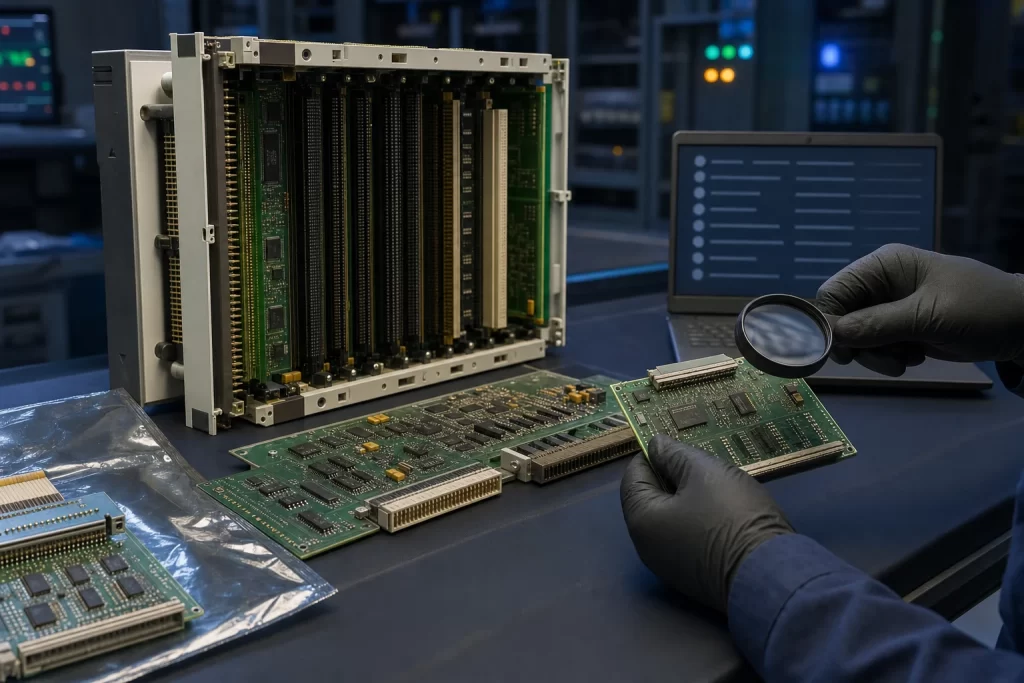
Honeywell TDC 3000 systems remain part of the installed base in many process plants because they are stable, familiar, and tightly connected to production history. That strength also creates a lifecycle problem. When a Honeywell TDC 3000 spare board, I/O board, power module, interface board, or cabinet component fails, the replacement decision is no longer a simple purchase. The buyer has to consider revision matching, firmware or software context, cabinet condition, available spares, migration plans, and the risk of restarting a critical unit with the wrong board.
Honeywell’s public TDC/TPS lifecycle materials discuss migration paths for legacy TDC/TPS environments toward newer Experion-based architectures. For maintenance teams, the immediate question is often more practical: how do we keep a legacy DCS running safely while migration is planned, funded, staged, or delayed? Spare boards are part of that bridge. They buy time, but only when they are identified, tested, packed, and matched correctly.
The real problem is not only availability
With legacy DCS hardware, availability is only the first filter. A board may be physically available but still unsuitable for the installed cabinet. Revision code, connector style, board population, firmware expectations, power conditions, and previous repair history can all matter. A visually similar spare can create commissioning delays if the installed system expects a specific revision or if the spare was removed from a different configuration without documentation.
This is why Honeywell automation parts sourcing should start with evidence rather than a short part number. The strongest RFQ includes front and back photos, model number, revision markings, cabinet location, current fault symptoms, quantity needed, destination, and whether the part is for emergency restoration, shelf spare replenishment, or a planned migration window.
Revision matching should be treated as engineering work
Maintenance teams sometimes describe a DCS spare as “same board, old system.” That is not enough. A TDC 3000 environment may include long-running cabinet modifications, previous repairs, mixed revision levels, field wiring assumptions, and undocumented substitutions. Before buying or installing a spare, engineers should record what is actually installed, not just what the original bill of materials says.
A structured replacement risk review for obsolete automation parts helps prevent false confidence. The review should ask whether the spare is exact, functionally compatible, repaired, surplus, or substitute; whether it has been tested; whether the site has the configuration and backup evidence needed to commission it; and whether the plant has a rollback plan if the replacement fails.
Legacy DCS spares need better storage discipline
Many plants own TDC 3000 spare boards but cannot trust them. They may have been stored without anti-static protection, moved between warehouses, exposed to humidity, pulled from unknown systems, or labeled only by memory. A spare that cannot be trusted during a shutdown has limited value. Storage, inspection, and documentation are therefore part of the spare strategy.
For broader industrial controller sourcing, the same rule applies: the value of a spare depends on readiness. For DCS boards, readiness means clean labeling, proper packaging, revision documentation, test status if available, and a clear link between the spare and the process unit it is intended to protect.
Migration plans do not remove the need for spares
Plants planning a DCS migration still need legacy support. Migration schedules can stretch across years because unit shutdowns, validation, operator training, safety reviews, and capital approvals take time. During that period, the legacy DCS is still responsible for production. A lack of spare boards can force a plant into emergency sourcing at exactly the wrong moment.
When legacy cabinets include communications, gateways, or interface paths to modern systems, include communication modules and I/O hardware in the same review. The failure may appear to be a controller board problem, but the actual recovery path may depend on interface hardware, cable assemblies, or I/O communication assumptions.
What buyers should verify before ordering
Before sending an RFQ, collect the exact part number, revision, board photos, installed cabinet photos, fault description, quantity, urgency, delivery country, and whether the request is for exact replacement or compatible spare planning. Add any available maintenance notes: prior repair history, module swap attempts, diagnostic alarms, and whether the affected unit can wait for verification or needs emergency shipment.
For plants with weak documentation, a photo workflow such as sending product label photos for model verification is the minimum starting point. For DCS boards, add connector photos, backplane position, and visible revision marks. These details reduce the risk of buying a board that looks right but does not match the installed environment.
Procurement checklist
Use this checklist before ordering: exact model and revision, board side photos, cabinet slot or role, related system name, failure symptom, current spare stock, test status, anti-static packing requirement, destination, lead-time target, and migration context. If the board is for a planned outage, state the outage date. If it is for emergency restoration, state whether the plant can accept a tested repaired unit, new surplus, or only an exact unused spare.
FAQ
Is a visually identical TDC 3000 board always safe to install?
No. Visual similarity is not enough. Revision, component population, firmware expectations, connector condition, repair history, and cabinet role can affect whether the spare is suitable.
Should a plant keep buying legacy boards if migration is planned?
Usually yes, within reason. Migration can take years, and the legacy DCS still has to run until cutover. A controlled spare plan reduces emergency sourcing risk during that transition.
What photos are most useful for a DCS board RFQ?
Send front and back board photos, close-ups of part number and revision marks, connector edges, cabinet slot, faulted module location, and any existing spare labels or test tags.
How should repaired or refurbished boards be handled?
Ask for test evidence, repair scope, warranty terms, packing method, and compatibility notes. A repaired board can be useful, but it should not be treated the same as a verified unused spare without evidence.
What is the main risk of waiting until failure?
The plant may discover that the part number is incomplete, the installed revision is unclear, the only available spare is untested, or delivery time is longer than the shutdown window allows.
Practical next step
If your plant is reviewing Honeywell TDC 3000 spare boards, prepare the part number, revision photos, cabinet location, fault symptoms, current spare status, quantity, destination, and migration timeline before sourcing. SmartNexMSK can help route the request as exact DCS spare sourcing, revision matching, or legacy control system lifecycle planning. Send details to [email protected] or WhatsApp/Phone +86 18259474341.
Source checked: Honeywell TDC/TPS Systems lifecycle and migration resources.
Route this topic into a sourcing request
Connect the article topic to a model number, category, brand, quantity, and destination before opening the RFQ.
Related Insights
Continue with sourcing and model matching guides
 Sep 8, 2026
SANYO DENKI QS1E Spares: Save Parameters First
When a SANMOTION Q axis stops, the purchasing request often becomes a model number: “Please quote QS1E01AA0H4A3P1T.” That is a useful starting point, but…
Read guide Sep 6, 2026
Yaskawa SGDH-05DE-OY Spares: Check the Servo Chain
A servo drive fault often produces a deceptively simple purchasing request: “Replace the SGDH-05DE-OY.” In a running machine, however, the amplifier is only one…
Read guide Sep 5, 2026
GE IS220PCLAH1A Spares: Check Mark VIe Fit
When a Mark VIe cabinet develops an intermittent control fault, the urgent request often becomes a single line: “Please quote IS220PCLAH1A.” That is understandable…
Read guide