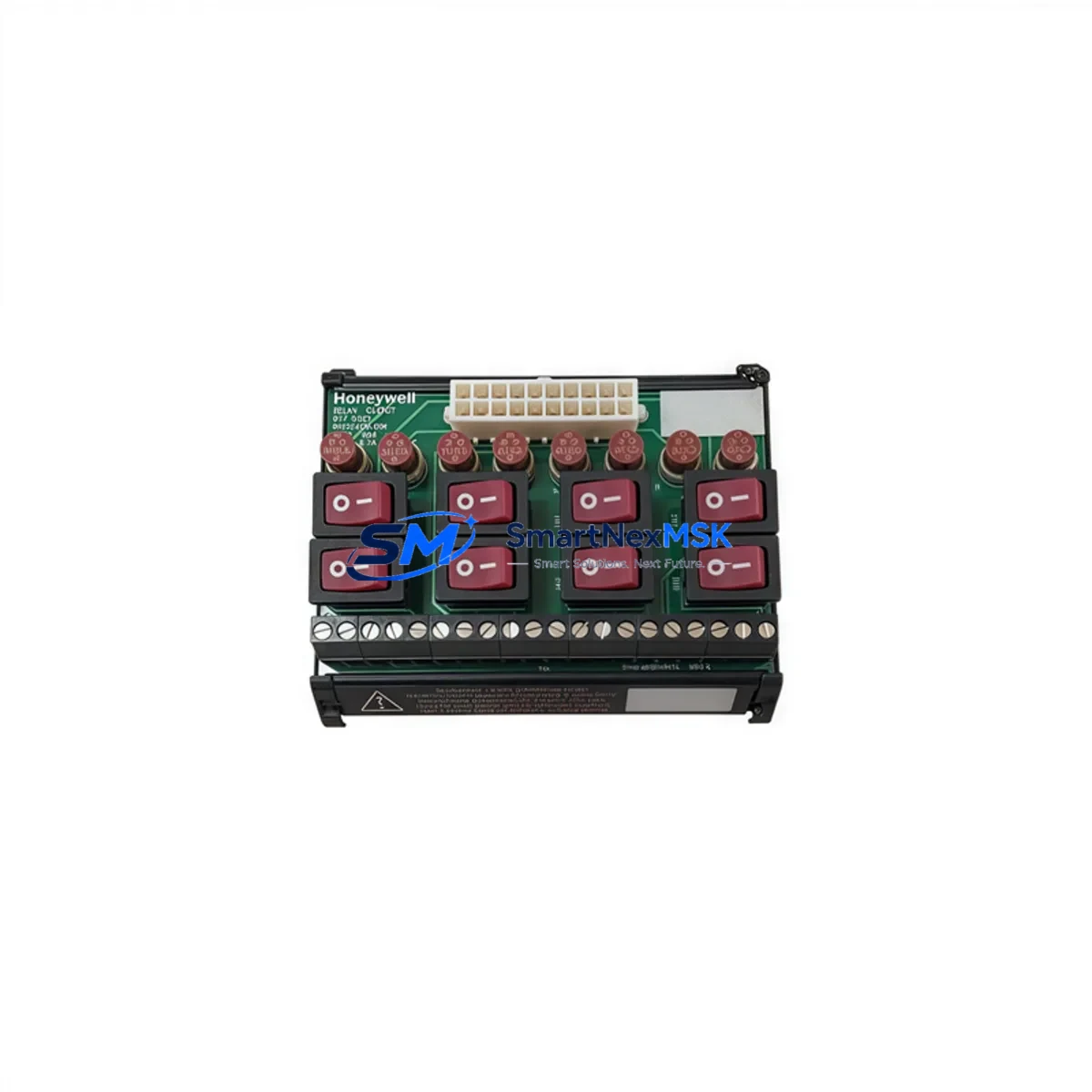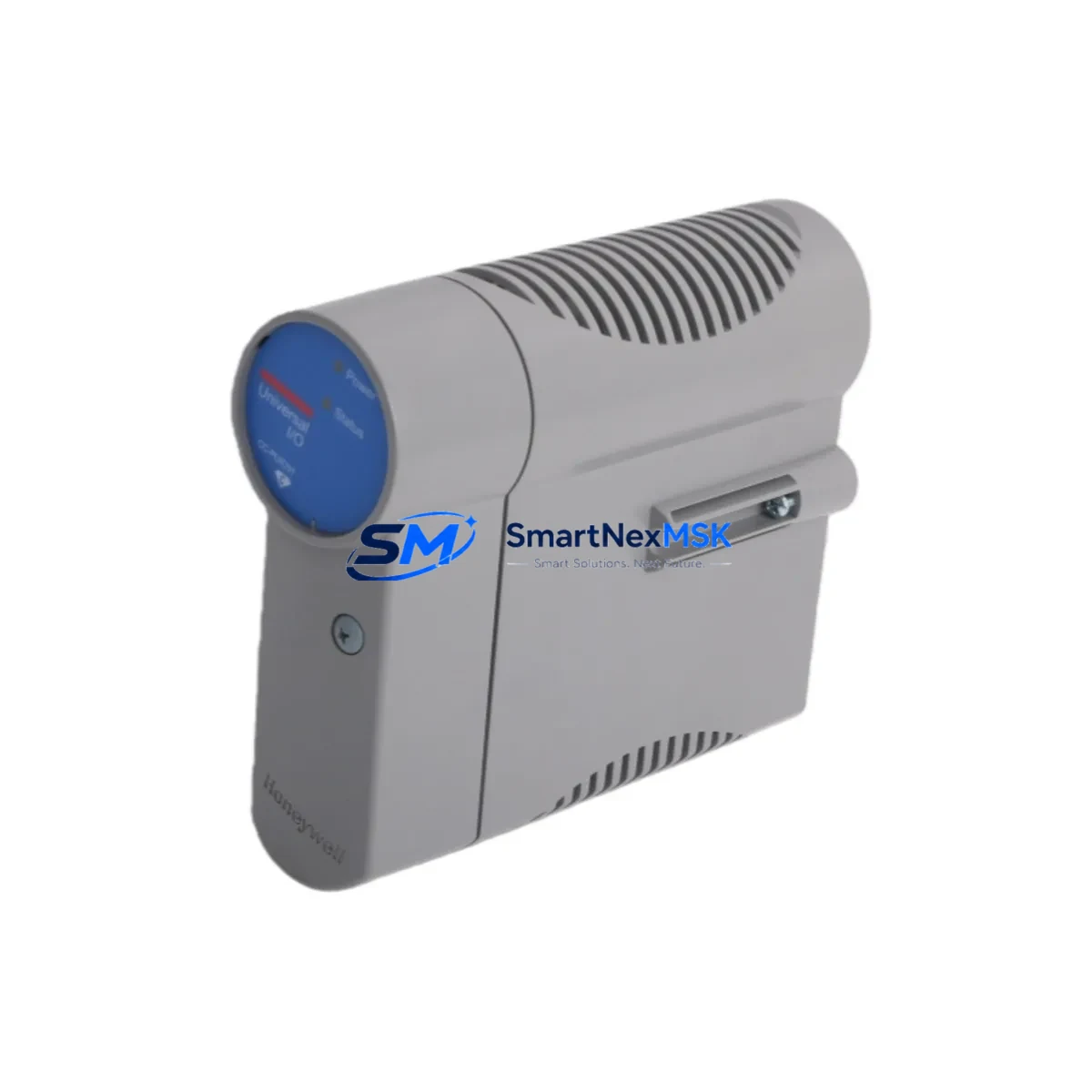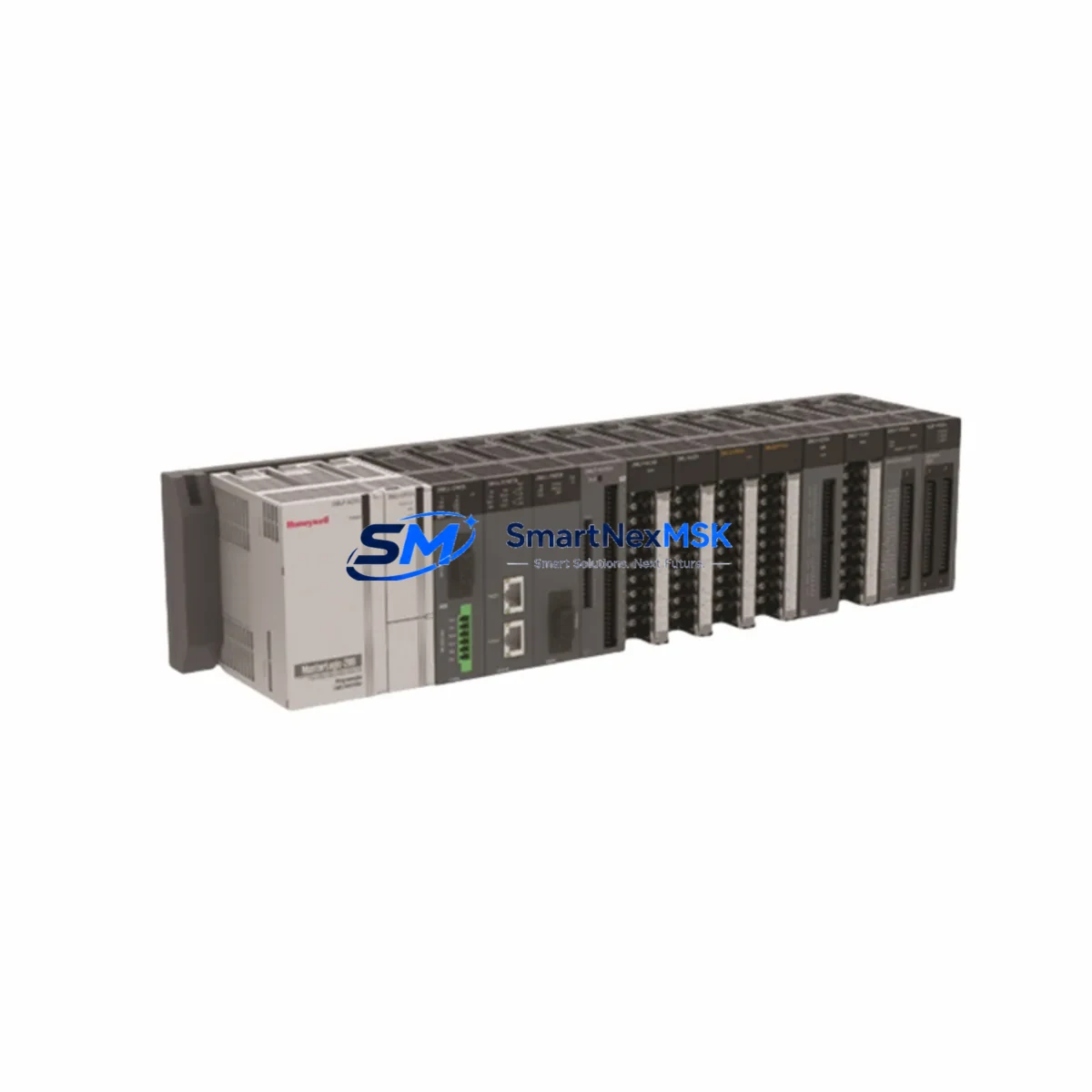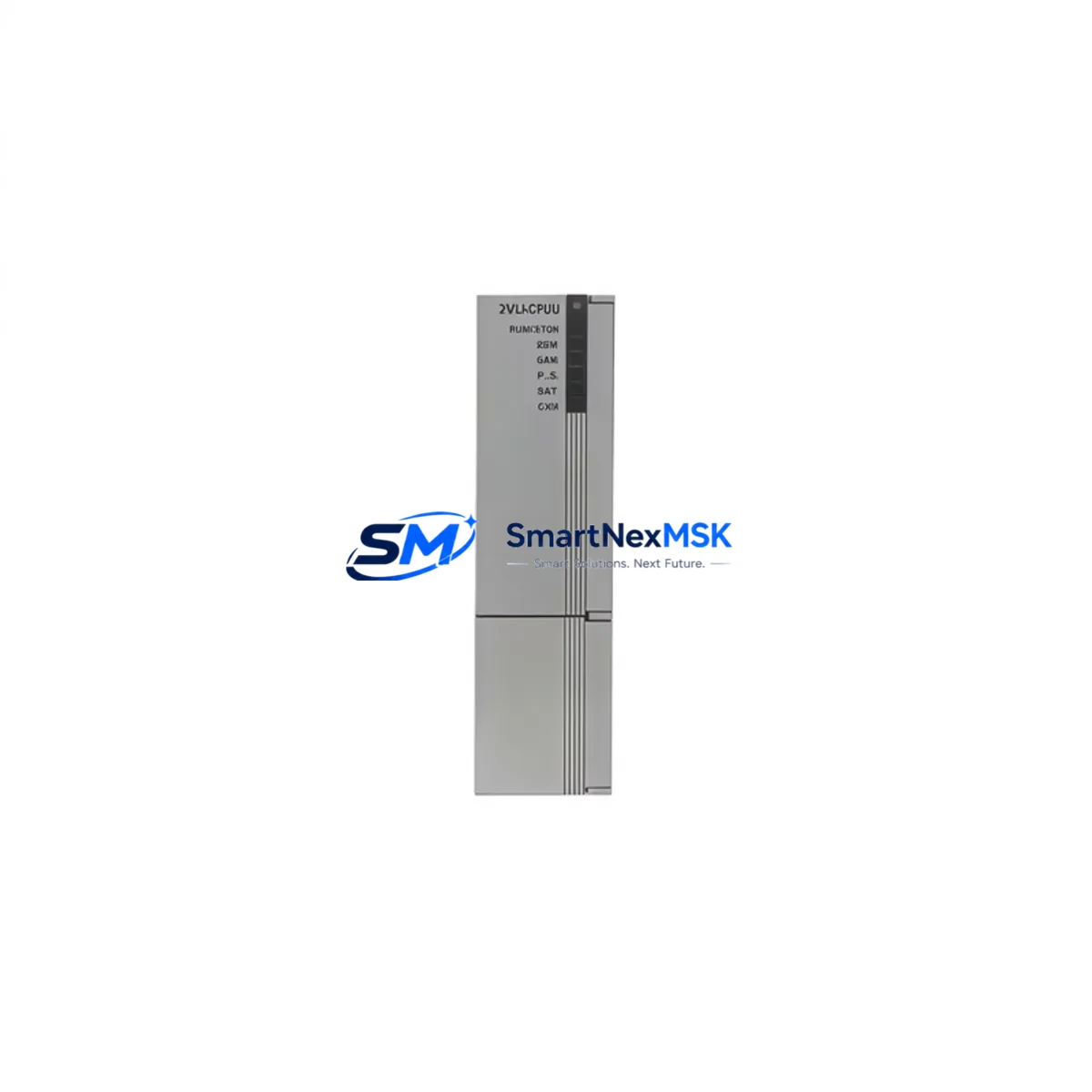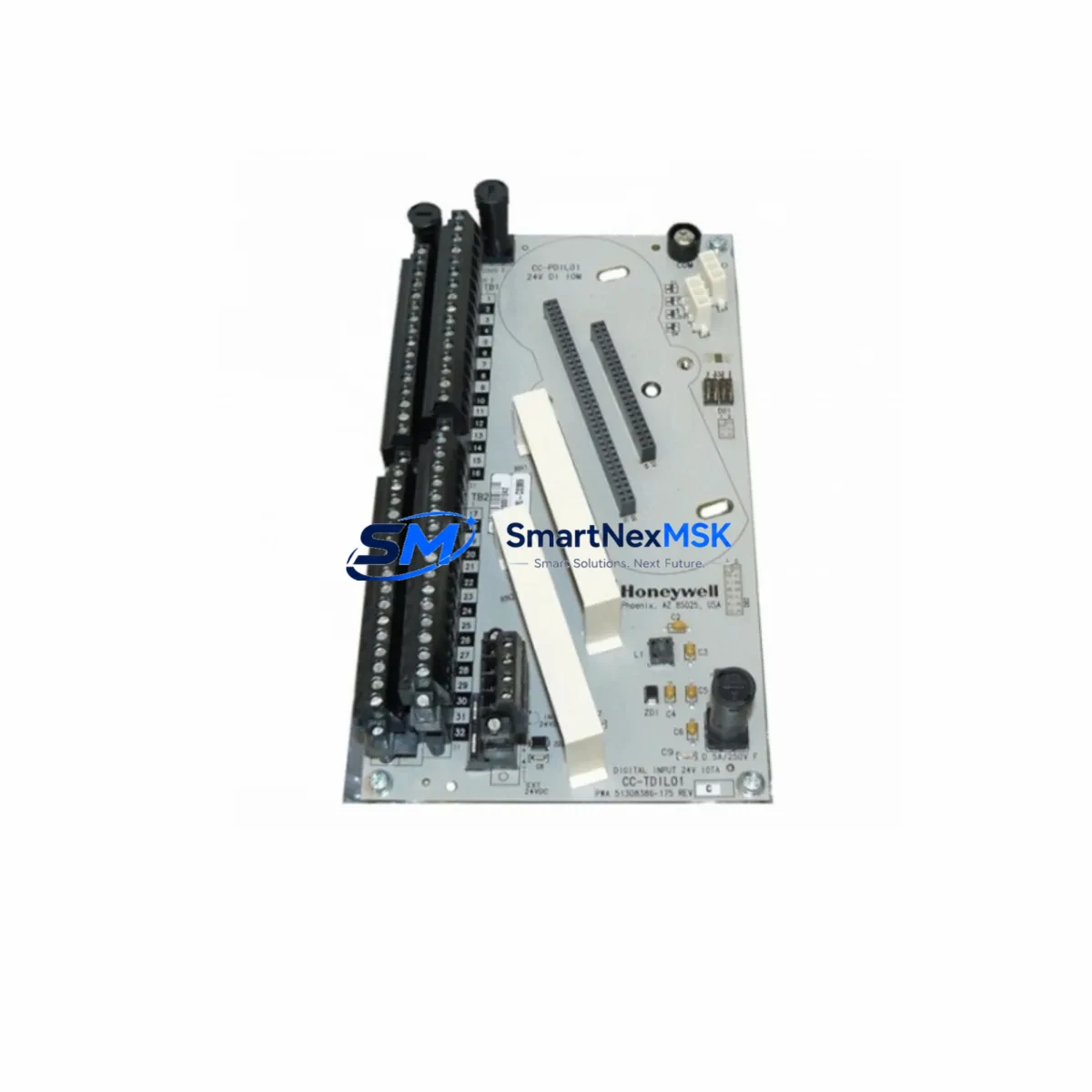
Honeywell CC-TDOB01 CC-TDIL01 Retrofit-Ready Digital I/O for Experion PKS C300 Control Systems
The Honeywell CC-TDOB01 (16-Channel Digital Output Module) and CC-TDIL01 (16-Channel Digital Input Module) are field-proven I/O modules designed for the Experion PKS C300 Controller platform. As legacy DCS installations age and original spare parts become increasingly scarce, these modules serve as the cornerstone of any structured retrofit or system modernization program. SMARTNEXMSK maintains verified in-stock inventory of both modules, fully tested, with a 12-month warranty and rapid global dispatch.
Whether you are replacing a failed module on an active production line, upgrading an aging Honeywell TDC 3000 or PlantScape system to the Experion PKS architecture, or expanding I/O capacity within an existing C300 control cabinet, the CC-TDOB01 and CC-TDIL01 deliver the electrical compatibility, backplane interface integrity, and firmware recognition required for a smooth, low-risk transition.
Upgrade Compatibility Table
| Parameter | CC-TDOB01 (Digital Output) | CC-TDIL01 (Digital Input) |
|---|---|---|
| Channel Count | 16 Channels DO | 16 Channels DI |
| Backplane Interface | Experion PKS EUCN / FTE Backplane | Experion PKS EUCN / FTE Backplane |
| Compatible Controller | C300 Process Controller | C300 Process Controller |
| Installation Form Factor | Standard IOTA Terminal Assembly | Standard IOTA Terminal Assembly |
| Communication Protocol | FTE (Fault Tolerant Ethernet) | FTE (Fault Tolerant Ethernet) |
| Replacement Compatibility | Direct drop-in for CC-TDOB01 variants | Direct drop-in for CC-TDIL01 variants |
| Retrofit Recommendation | Verify IOTA wiring and module address assignment before hot-swap | Confirm DI signal type (dry contact / wet contact) before installation |
| Commissioning Focus | Output channel forcing, loop-back test, HMI tag verification | Input signal scan rate, filter time constant, alarm threshold check |
| Warranty | 12 Months — Covers manufacturing defects and functional failure under normal operating conditions | |
Retrofit Planning for Existing Automation Systems
A successful retrofit begins well before the replacement module arrives on site. Engineers working within the Experion PKS environment must first audit the existing C300 Controller configuration to confirm the current module slot assignments, EUCN node addresses, and FTE network topology. The CC-TDOB01 and CC-TDIL01 are installed into IOTA terminal assemblies — the field wiring remains connected to the IOTA, and only the module itself is swapped, which dramatically reduces rewiring risk and downtime exposure.
Before removal of the legacy module, engineers should export the current Control Builder project and create a full backup of the C300 controller database. This ensures that if any unexpected firmware mismatch or address conflict arises during the swap, the system can be restored to its last known good state within minutes. The CC-PAIH02 Analog Input Module and CC-PAOH01 Analog Output Module, often installed in adjacent slots within the same I/O chassis, should also be inspected for firmware currency during the same maintenance window to avoid repeat outages.
For plants migrating from the older Honeywell TDC 3000 or HPM (High-Performance Process Manager) architecture, the transition to Experion PKS typically involves replacing legacy FTA (Field Termination Assembly) panels with modern IOTA assemblies, re-mapping I/O tags in the Experion configuration database, and updating HMI display graphics in the Station or Experion Operator Station environment. During this process, the CC-TCNT01 Communication Interface Module and CC-PCF901 Power Filter Module are frequently replaced in parallel to ensure the new I/O modules receive clean, stable power and maintain uninterrupted FTE communication.
Plants operating mixed-generation control cabinets — where Experion PKS C300 controllers coexist with legacy Honeywell UDC 3500 Loop Controllers or standalone HC900 Hybrid Controllers — should pay particular attention to grounding continuity and shield termination practices when installing the CC-TDOB01 and CC-TDIL01. Improper shielding in high-noise industrial environments can introduce spurious digital transitions that trigger nuisance alarms or, in worst cases, unintended output activations. A pre-commissioning insulation resistance test on all field cables connected to the IOTA is strongly recommended.
For I/O expansion projects — where additional digital points are being added to an existing C300 node rather than replacing failed hardware — the CC-TDOB01 and CC-TDIL01 can be installed into previously unused IOTA slots without requiring a controller restart, provided the C300 firmware version supports online I/O addition. Consult the Experion PKS R500 or later release notes to confirm this capability for your specific controller revision. The CC-SCMB02 System Cabinet Module Bus and associated backplane ribbon cables should be inspected for wear before adding new modules to an aging chassis.
Downtime Control During System Migration
Minimizing production downtime during a DCS I/O module replacement is a primary concern for plant operations teams. The CC-TDOB01 and CC-TDIL01 support a structured hot-standby swap procedure when the C300 controller is operating in redundant mode. In this configuration, the standby controller continues to execute the control strategy while the primary controller’s I/O module is replaced, allowing field outputs to remain in their last commanded state throughout the swap window.
Prior to initiating the swap, the control engineer should place all affected loops into manual mode at the Experion Operator Station, document the current output values, and notify field operators to monitor the process manually during the transition. The Control Builder application should remain open and connected to the C300 during the swap to allow immediate verification of module recognition and channel status upon reinsertion.
Once the new CC-TDOB01 or CC-TDIL01 is seated in the IOTA assembly and the module status LED confirms normal operation, the engineer should perform a channel-by-channel force test — activating each digital output individually and confirming field device response before returning loops to automatic control. For the CC-TDIL01, each input channel should be exercised by toggling the associated field device and verifying that the Experion tag updates correctly in the operator display. This structured commissioning sequence, typically completable within 30–60 minutes per module, ensures that no latent wiring or configuration issues are carried forward into normal operation.
Original program logic, including PID tuning parameters, interlock conditions, sequence logic, and alarm setpoints, is preserved in the C300 controller memory and is unaffected by the physical module swap. No re-download of the control strategy is required unless a firmware upgrade is performed simultaneously. This is a key advantage of the Experion PKS modular architecture and a primary reason why the CC-TDOB01 and CC-TDIL01 remain the preferred replacement choice for maintenance teams seeking to protect years of accumulated control system tuning investment.
Retrofit Support FAQ
Q1: Are the CC-TDOB01 and CC-TDIL01 direct drop-in replacements for the original Honeywell modules?
Yes. Both modules are designed to the original Honeywell Experion PKS specification and install directly into the existing IOTA terminal assembly without any field wiring changes. Module address assignment is retained from the IOTA slot position, so no configuration changes are required in Control Builder for a like-for-like replacement.
Q2: What commissioning steps are required after installation?
After seating the module, confirm the status LED shows normal operation, then perform a channel-by-channel force test for outputs (CC-TDOB01) or a signal injection/toggle test for inputs (CC-TDIL01). Verify all associated Experion tags update correctly at the Operator Station before returning loops to automatic mode. Total commissioning time is typically 30–60 minutes per module.
Q3: How is wiring compatibility verified before installation?
The IOTA terminal assembly retains all field wiring during the module swap, so wiring compatibility is inherently maintained. However, engineers should verify that the field device signal type (dry contact, wet contact, or sourcing/sinking for DO) matches the module’s channel configuration in Control Builder. For the CC-TDOB01, confirm output load current does not exceed the module’s per-channel rating.
Q4: What does the 12-month warranty cover, and how is it claimed?
The 12-month warranty covers manufacturing defects and functional failure under normal operating conditions from the date of shipment. Each module is tested prior to dispatch. To initiate a warranty claim, contact SMARTNEXMSK at [email protected] with the order reference, module serial number, and a description of the observed fault. Replacement or repair will be arranged within the warranty period at no additional cost.
© 2026 SMARTNEXMSK. All rights reserved.
Original Source: https://smartnexmsk.com
Contact: [email protected] | +86 18259474341