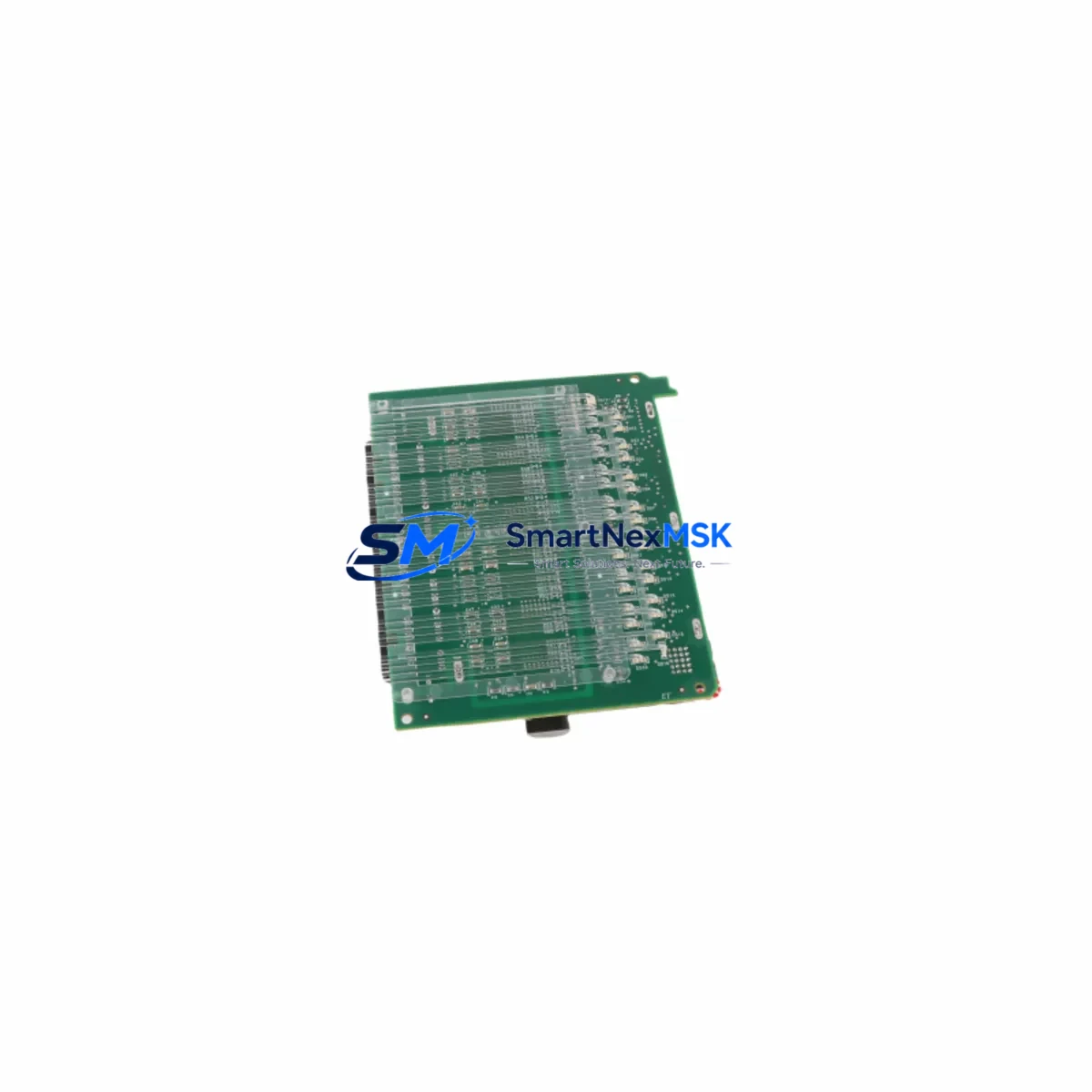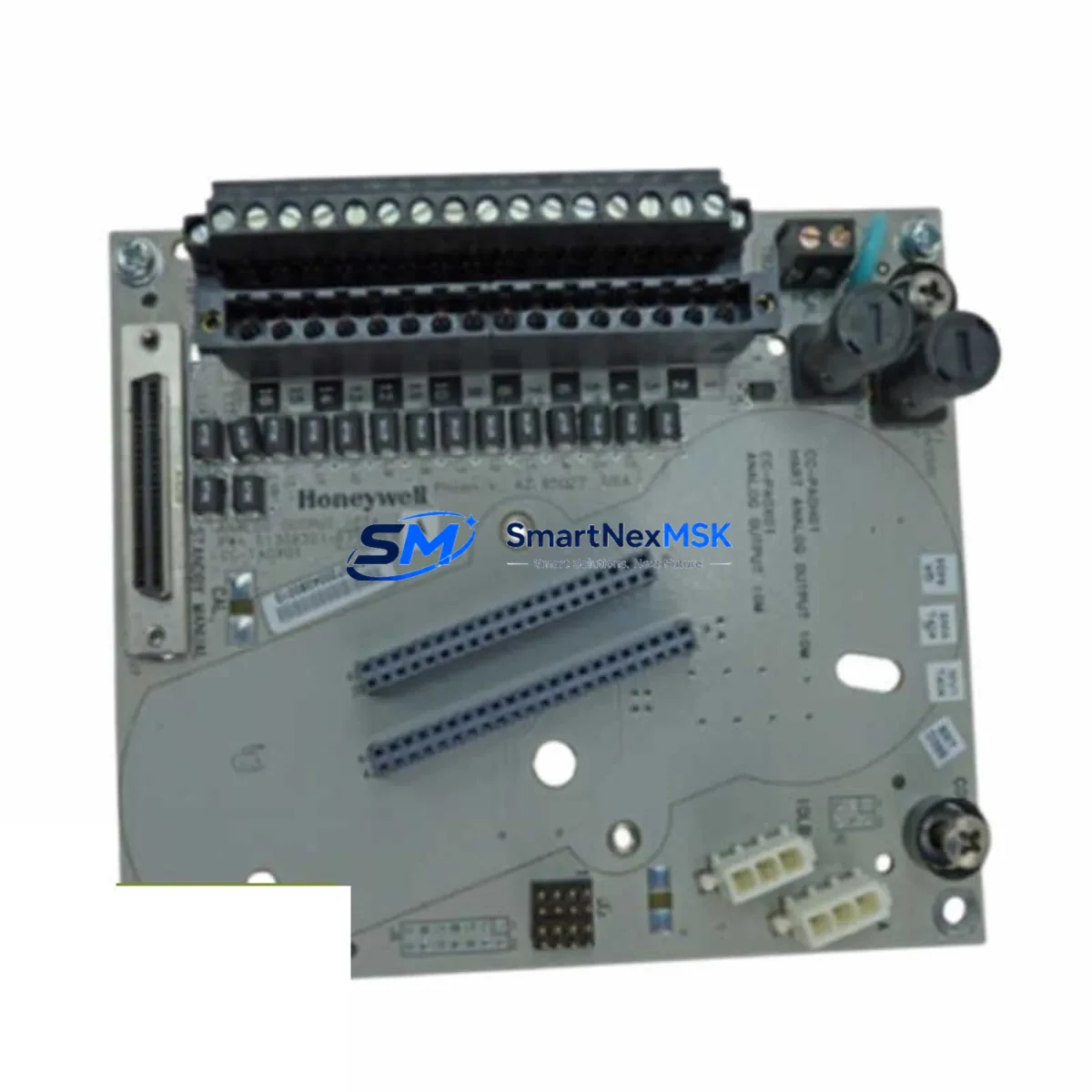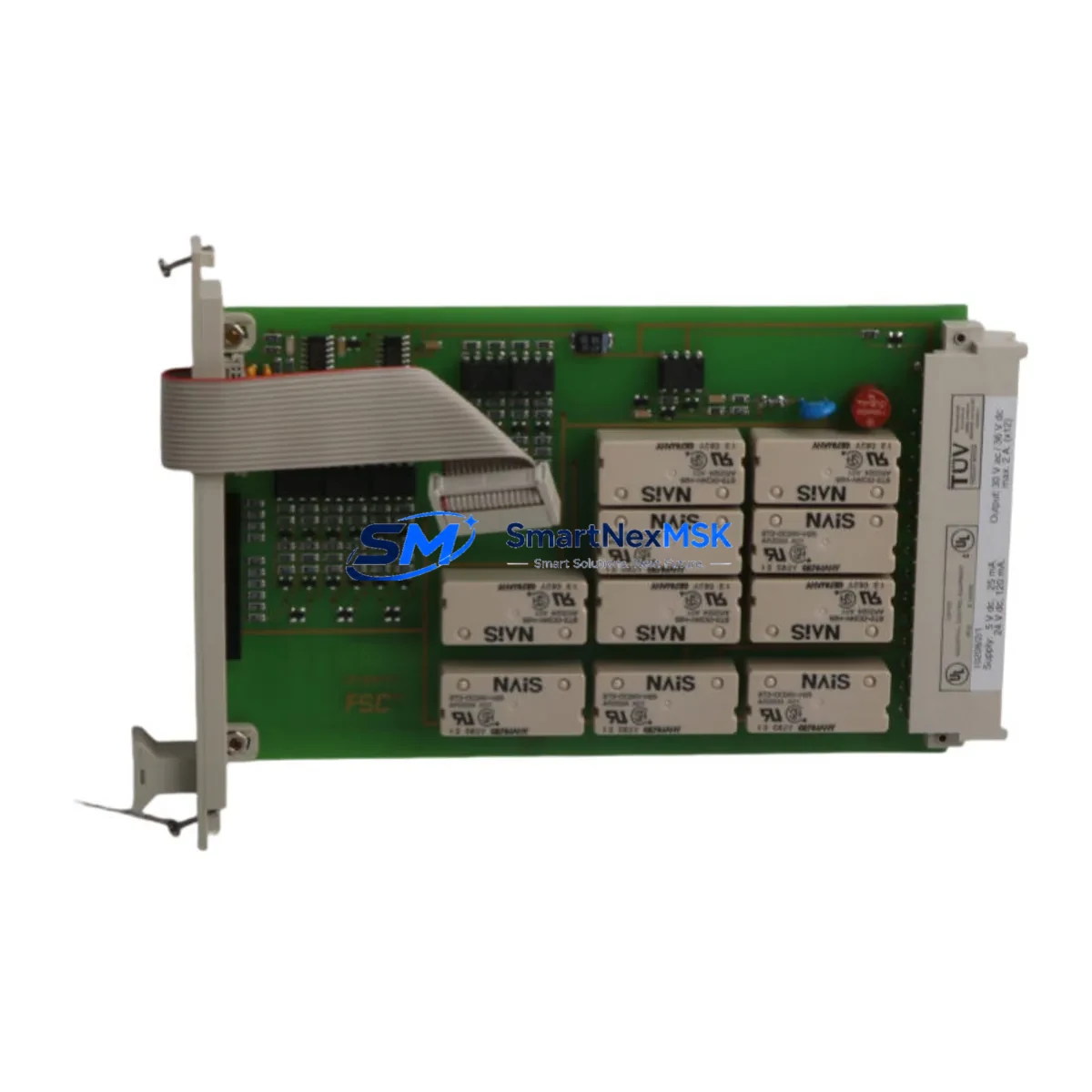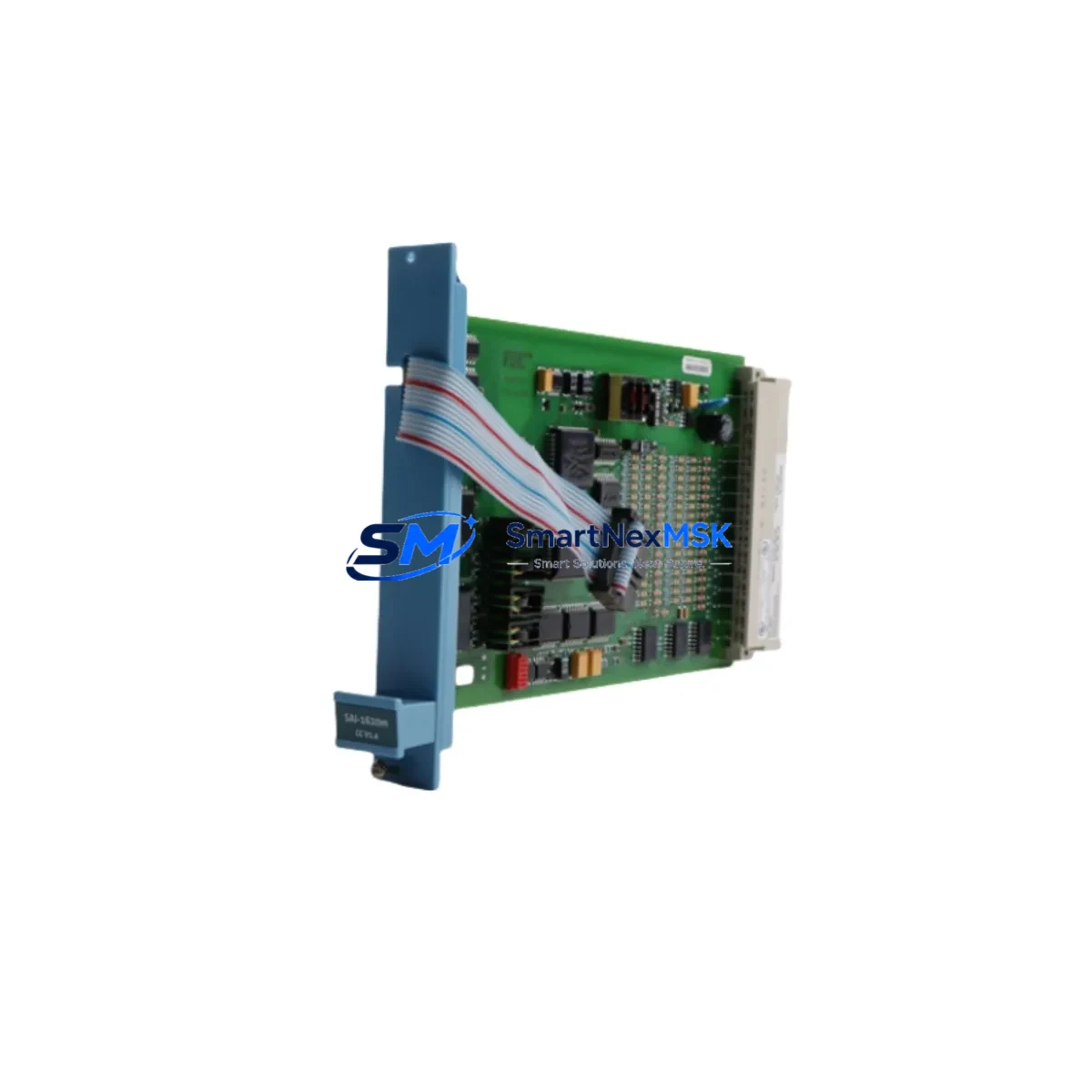
Honeywell FS-IOBUS-CPIO3 Maintenance-Ready Spare for Safety Manager Automation
The Honeywell FS-IOBUS-CPIO3 is an original OEM IO Bus Module designed for the Safety Manager Safety Instrumented System (SIS) platform. In safety-critical process environments — including oil & gas, petrochemical, power generation, and chemical processing — the IO Bus is the communication backbone between the Safety Manager controller and its field I/O modules. A failed or degraded IO Bus module can trigger a full SIS shutdown, resulting in unplanned downtime, production loss, and potential safety incidents. Maintaining a certified spare of the FS-IOBUS-CPIO3 in your on-site inventory is a fundamental element of any robust maintenance strategy.
This unit is sourced as a genuine Honeywell spare, pre-shipment tested for electrical integrity and communication function, and supplied with a 12-month warranty. It is fully compatible with the Safety Manager SM series controller chassis and is designed for direct drop-in replacement without firmware reconfiguration in most standard configurations.
Spare Maintenance Table
| Parameter | Specification / Detail |
|---|---|
| SKU / Part Number | FS-IOBUS-CPIO3 |
| Brand | Honeywell |
| Series | Safety Manager (SM Series) |
| Module Type | IO Bus Communication Module |
| Product Type | IO Bus Module |
| Compatibility | Honeywell Safety Manager SM controller chassis; compatible with FS-IOBUS-CPIO2 predecessor installations in most configurations |
| Communication Protocol | Proprietary Honeywell IO Bus (SIL-rated) |
| Installation | Direct module slot insertion; no special tooling required |
| Operating Environment | Industrial control cabinet; standard DIN-rail or chassis-mount SIS enclosure |
| Origin | United States |
| Weight | 1,100 g (approx.) |
| Maintenance Recommendation | Inspect bus connectors and backplane contacts during scheduled SIS proof tests; replace if communication errors or CRC faults are logged |
| Warranty | 12 Months — covers manufacturing defects and functional failure under normal operating conditions |
| Pre-Shipment Testing | Yes — electrical continuity, communication handshake, and functional verification |
Maintenance Planning for Continuous Operation
When a maintenance or reliability engineer schedules a proof test or responds to a Safety Manager fault alarm, the FS-IOBUS-CPIO3 is rarely the only component under review. The IO Bus module sits at the intersection of the controller logic and the field I/O layer, meaning its health directly affects every downstream signal path. A disciplined maintenance plan should treat the FS-IOBUS-CPIO3 replacement as a trigger for a broader cabinet inspection.
During the same maintenance window, engineers should verify the condition of the FS-SDO-0824 digital output modules and FS-SDI-1624 digital input modules that communicate over the IO Bus. Degraded I/O modules can mask intermittent bus errors and lead to misdiagnosis. The FS-TAI-1620 analog input module should also be checked for signal drift, particularly in temperature and pressure measurement loops tied to safety functions.
Power integrity is equally critical. The FS-PSU-2410 power supply module feeding the Safety Manager chassis should be load-tested and its output voltage verified within specification. A marginal power supply is a common root cause of IO Bus communication instability. If the installation uses a redundant power architecture, both the primary and secondary FS-PSU units should be inspected simultaneously.
The backplane and chassis interconnects — including the FS-CHASSIS-08 or FS-CHASSIS-16 expansion chassis — should be visually inspected for oxidation, mechanical damage, or loose seating. The FS-IOBUS-CPIO3 relies on clean backplane contacts for reliable data transfer; any contamination or mechanical wear at the chassis slot will cause recurring faults even after module replacement.
For sites running the Safety Manager alongside a Honeywell Experion PKS DCS, the FS-SCMB-2100 Safety Communication Module and associated Ethernet communication cables (shielded, industrial-grade Cat6 or equivalent) should be inspected for continuity and proper grounding. Communication faults between the SIS and DCS layers are frequently misattributed to the IO Bus when the actual fault lies in the network interface or cabling.
Finally, the FS-FTA field termination assemblies and associated marshalling terminal blocks connected to the I/O modules should be checked for loose wiring, corrosion, and correct labeling. In aging installations, terminal block degradation is a leading cause of spurious trips that are incorrectly logged as IO Bus failures.
Site Replacement Workflow
Replacing the FS-IOBUS-CPIO3 on a live Safety Manager system requires careful coordination with the site safety management of change (MOC) process. The following workflow is recommended for maintenance engineers performing a planned or emergency replacement:
1. Pre-Replacement Verification: Confirm the replacement unit’s part number matches FS-IOBUS-CPIO3 exactly. Cross-reference with the Safety Manager system documentation to verify chassis slot assignment and bus address configuration. If replacing a predecessor model such as the FS-IOBUS-CPIO2, confirm firmware compatibility with the site’s Safety Manager controller version before proceeding.
2. System State Assessment: Review the Safety Manager fault log for any pre-existing IO Bus errors, CRC faults, or communication timeouts. Document all active alarms. If the system is in a degraded or bypassed state, coordinate with the control room before initiating the replacement.
3. Safe Module Extraction: Follow the Honeywell Safety Manager hardware manual for hot-swap or cold-swap procedures as applicable to your system configuration. Remove the faulty FS-IOBUS-CPIO3 module carefully, avoiding contact with backplane connectors. Inspect the vacated slot for debris or damage before inserting the replacement.
4. Replacement and Verification: Insert the new FS-IOBUS-CPIO3 module firmly into the chassis slot. Power up and monitor the Safety Manager diagnostic display for bus initialization confirmation. Verify that all downstream I/O modules re-establish communication within the expected timeout window. Clear any latched faults and confirm system status returns to normal.
5. Post-Replacement Documentation: Record the replacement in the site maintenance log, including the old module’s serial number, fault history, and the new module’s serial number and warranty start date. Update the spare parts inventory to trigger reorder of a replacement spare unit, ensuring continuous coverage.
This workflow minimizes downtime, maintains SIS integrity, and ensures full traceability for functional safety audits.
Spare Parts Support FAQ
Q1: Is the FS-IOBUS-CPIO3 a direct replacement for the FS-IOBUS-CPIO2?
In most Safety Manager installations, the FS-IOBUS-CPIO3 is backward-compatible with FS-IOBUS-CPIO2 chassis slots. However, compatibility depends on the Safety Manager controller firmware version and chassis hardware revision. We recommend verifying your system’s hardware compatibility matrix or contacting our technical team before ordering if you are replacing a CPIO2 unit.
Q2: What pre-shipment testing is performed on each unit?
Every FS-IOBUS-CPIO3 unit we supply undergoes electrical continuity testing, backplane connector inspection, and a functional communication handshake test prior to shipment. Units that do not pass all test criteria are not shipped. A test report is available upon request for quality-critical procurement processes.
Q3: What does the 12-month warranty cover?
The 12-month warranty covers manufacturing defects and functional failure under normal operating conditions from the date of shipment. It does not cover damage resulting from incorrect installation, overvoltage events, or physical mishandling. Warranty claims are processed with priority turnaround to minimize site downtime.
Q4: Can you support long-term or blanket spare parts orders for aging Safety Manager installations?
Yes. We specialize in long-term supply support for legacy and end-of-life Honeywell Safety Manager components. We can hold allocated stock under a blanket purchase order arrangement, provide lead-time commitments, and support multi-site procurement programs. Contact our team to discuss your site’s specific lifecycle and inventory requirements.
© 2026 SMARTNEXMSK. All rights reserved.
Original Source: https://smartnexmsk.com
Contact: [email protected] | +86 18259474341