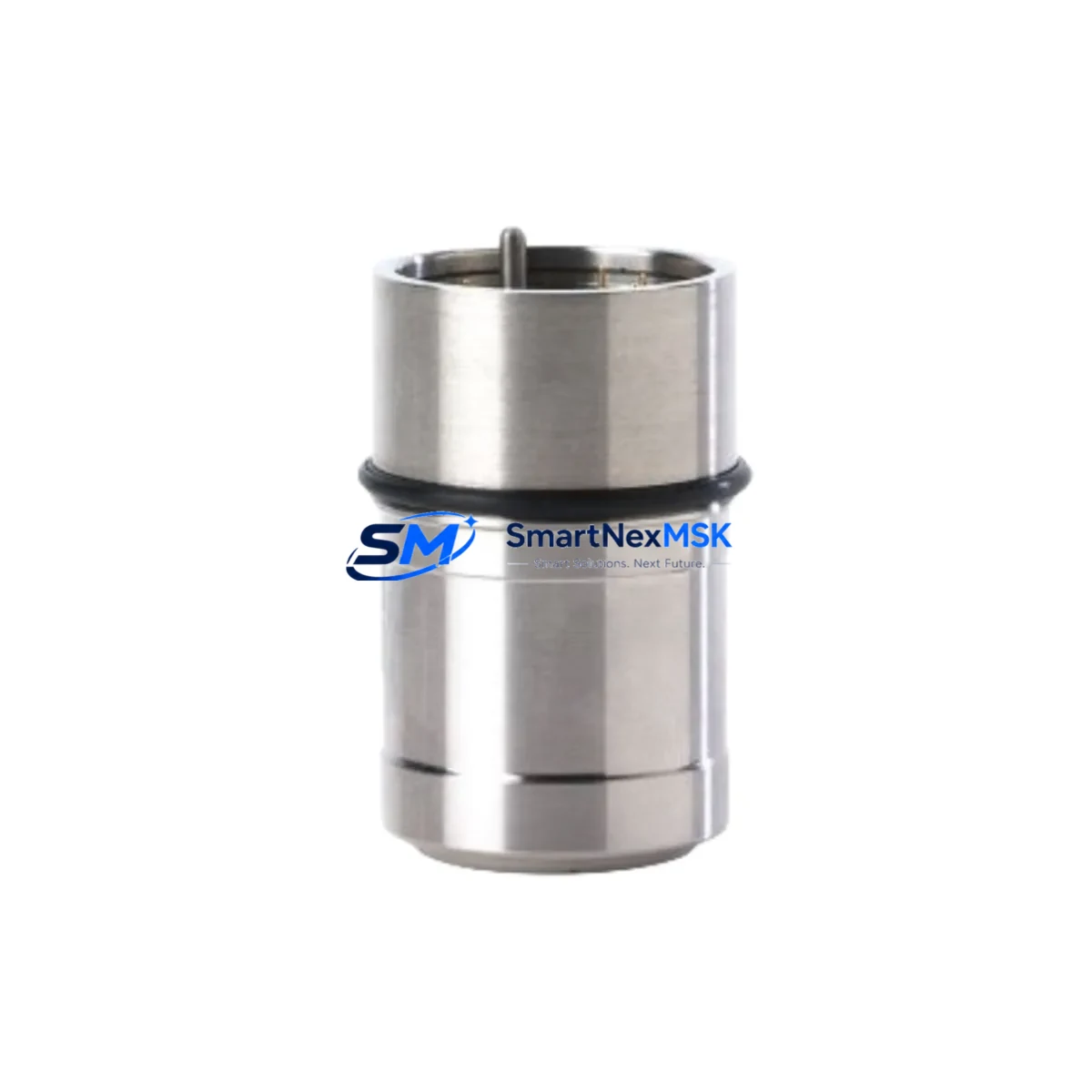
Honeywell SPXCDXSFXSS Safety-Enhanced LEL Sensor for Harsh Industrial Sites
The Honeywell SPXCDXSFXSS is a catalytic bead Lower Explosive Limit (LEL) sensor cartridge engineered for deployment in the most demanding industrial environments. Designed as a direct replacement cartridge for the Honeywell XCD fixed gas detection system, this sensor delivers continuous, safety-grade combustible gas monitoring in high-load, high-interference, and hazardous-classified areas where control interruption is not an option.
In petrochemical plants, offshore platforms, mining headings, water treatment facilities, metallurgical furnace areas, and port terminal loading zones, the SPXCDXSFXSS provides the front-line detection layer that protects personnel, equipment, and production continuity. Its catalytic bead sensing element responds rapidly to combustible gas concentrations, triggering alarm outputs before explosive thresholds are reached — giving control systems and safety interlocks the time needed to execute protective actions.
The sensor cartridge integrates directly into the Honeywell XCD Series transmitter housing, maintaining the IP66/IP67-rated enclosure integrity of the overall detector assembly. This plug-and-play replacement design eliminates the need for full detector replacement during scheduled maintenance cycles, reducing both downtime and total cost of ownership in continuous-production facilities.
Safety Reliability Table
| Parameter | Specification |
|---|---|
| Part Number / SKU | SPXCDXSFXSS |
| Brand | Honeywell Analytics |
| Compatible Platform | Honeywell XCD Fixed Gas Detector Series |
| Sensing Technology | Catalytic Bead (Pellistor) |
| Target Gas Type | Combustible Gases (LEL — Lower Explosive Limit) |
| Measurement Range | 0–100% LEL |
| Response Time (T90) | ≤ 10 seconds (typical, gas dependent) |
| Operating Temperature | -40°C to +65°C |
| Ingress Protection | IP66 / IP67 (within XCD housing) |
| Hazardous Area Classification | ATEX / IECEx Zone 1 & Zone 2 (via XCD transmitter) |
| Signal Output | 4–20 mA analog (via XCD transmitter) |
| Alarm Relay Compatibility | Compatible with XCD dual-relay output for safety interlock circuits |
| EMI / RFI Resistance | Designed for high-interference industrial environments |
| Replacement Type | Field-replaceable cartridge — no tools required |
| Calibration | Factory pre-calibrated; field calibration supported via XCD interface |
| Country of Origin | United States |
| Warranty | 12 Months from date of shipment |
| Pre-Shipment Testing | Full functional and response verification before dispatch |
| Stock Status | In Stock — Ready to Ship |
Control Cabinet Protection Strategy
In a well-engineered industrial safety architecture, the SPXCDXSFXSS does not operate in isolation. It functions as the sensing front-end of a layered protection system that spans field detection, signal transmission, control logic, and alarm annunciation. When integrated with the Honeywell XCD Series transmitter, the sensor feeds a 4–20 mA signal into the plant’s safety instrumented system (SIS) or distributed control system (DCS), where it interfaces with modules such as the Honeywell HC900 Hybrid Controller or third-party SIS platforms.
To protect signal integrity between the sensor and the control cabinet, installers commonly deploy Pepperl+Fuchs WB series Zener barriers or galvanic isolators in the field junction box, preventing surge currents and ground loops from corrupting the 4–20 mA loop. In high-EMI environments — such as those near variable frequency drives (VFDs), large motor starters, or arc furnaces — shielded twisted-pair cable with proper grounding at a single point is essential to prevent signal drift that could cause nuisance alarms or, worse, missed detections.
The XCD transmitter’s dual-relay output connects directly to the facility’s safety interlock relay panel or a Pilz PNOZ safety relay module, enabling hardwired shutdown commands to ventilation fans, solenoid valves, or process isolation valves when LEL thresholds are breached. For facilities operating under IEC 61511 functional safety requirements, the SPXCDXSFXSS within the XCD platform supports SIL 1 loop architectures when properly validated and documented.
Power supply stability is equally critical. The XCD transmitter requires a stable 18–30 VDC supply, and in facilities with frequent voltage fluctuations, a dedicated Phoenix Contact QUINT Power 24VDC DIN-rail power supply with built-in buffer capacitance is recommended to prevent transmitter resets during momentary power dips. Pairing this with a Schneider Electric Acti9 surge protection device (SPD) at the panel entry point guards against transient overvoltages that could damage sensor electronics or cause false alarm events.
For multi-point gas detection networks, the XCD transmitters can be networked via Modbus RTU over RS-485 to a central Honeywell Multipoint Controller or a SCADA gateway, enabling centralized alarm management, trend logging, and predictive maintenance scheduling — all without compromising the hardwired safety relay outputs that remain active regardless of communication bus status.
Critical Industrial Safety Applications
Petrochemical & Refinery Facilities: In hydrocarbon processing plants, the SPXCDXSFXSS is deployed in compressor houses, pump skids, flare header areas, and storage tank bunds where methane, propane, butane, and hydrogen concentrations must be continuously monitored. A single undetected gas release in these environments can escalate to a catastrophic explosion; the rapid T90 response of the catalytic bead element ensures alarm activation well before the Lower Explosive Limit is reached at the ignition source.
Mining Operations: Underground coal and hard-rock mines present extreme challenges for gas detection equipment — high humidity, dust loading, mechanical vibration, and temperature cycling. The SPXCDXSFXSS, housed within the robust XCD enclosure, maintains reliable methane detection in these conditions, supporting compliance with mine safety regulations and protecting personnel in headings and return airways.
Power Generation & Utilities: Gas turbine enclosures, hydrogen-cooled generator buildings, and battery energy storage system (BESS) rooms require continuous LEL monitoring to detect fuel gas leaks or hydrogen off-gassing before concentrations reach dangerous levels. The sensor’s compatibility with plant DCS and SIS architectures allows seamless integration into existing safety shutdown sequences.
Water & Wastewater Treatment: Pump stations, digester buildings, and sludge processing areas generate methane and hydrogen sulfide as byproducts of biological treatment processes. Continuous LEL monitoring with the SPXCDXSFXSS protects maintenance personnel entering confined spaces and prevents accumulation of explosive atmospheres in enclosed structures.
Metallurgy & Steel Production: Blast furnace gas, coke oven gas, and natural gas used in reheating furnaces create persistent LEL hazards in steel mill environments. The sensor’s high-temperature operating range and resistance to particulate contamination make it suitable for deployment near furnace areas and gas distribution headers.
Port Terminals & LNG Facilities: LNG loading arms, vapor recovery units, and tank farm manifold areas require certified LEL detection to meet international maritime and terminal safety standards. The SPXCDXSFXSS within the ATEX/IECEx-certified XCD platform meets the certification requirements for Zone 1 hazardous area installation in these facilities.
Safety and Quality FAQ
Q1: What warranty coverage is provided for the SPXCDXSFXSS?
All SPXCDXSFXSS sensor cartridges supplied by SMARTNEXMSK carry a 12-month warranty from the date of shipment. This covers manufacturing defects and functional failures under normal operating conditions. Warranty claims are supported with direct technical assistance and replacement dispatch to minimize site downtime.
Q2: What pre-shipment testing is performed on each unit?
Every SPXCDXSFXSS unit undergoes a full functional verification prior to dispatch, including response confirmation to a calibration gas challenge, output signal integrity check, and physical inspection for connector and housing condition. Units that do not pass all test criteria are quarantined and not shipped.
Q3: Is the SPXCDXSFXSS compatible with existing XCD installations, and can it be replaced in the field without specialist tools?
Yes. The SPXCDXSFXSS is a direct OEM-equivalent replacement cartridge for the Honeywell XCD fixed gas detector series. It is designed for field replacement without specialist tools, allowing maintenance technicians to swap the sensor cartridge during scheduled maintenance windows without removing the transmitter from its mounting or breaking the conduit seal. Post-replacement calibration is performed via the XCD’s front-panel interface or remotely via the Modbus communication link.
Q4: Can long-term supply continuity be guaranteed for critical safety applications?
SMARTNEXMSK maintains dedicated stock of the SPXCDXSFXSS to support customers with ongoing maintenance programs and critical spare parts requirements. For facilities operating under planned maintenance schedules, we recommend establishing a standing order or blanket purchase agreement to ensure sensor cartridge availability aligns with your planned replacement intervals — typically every 12–24 months depending on environmental conditions and gas exposure history.
© 2026 SMARTNEXMSK. All rights reserved.
Original Source: https://smartnexmsk.com
Contact: [email protected] | +86 18259474341