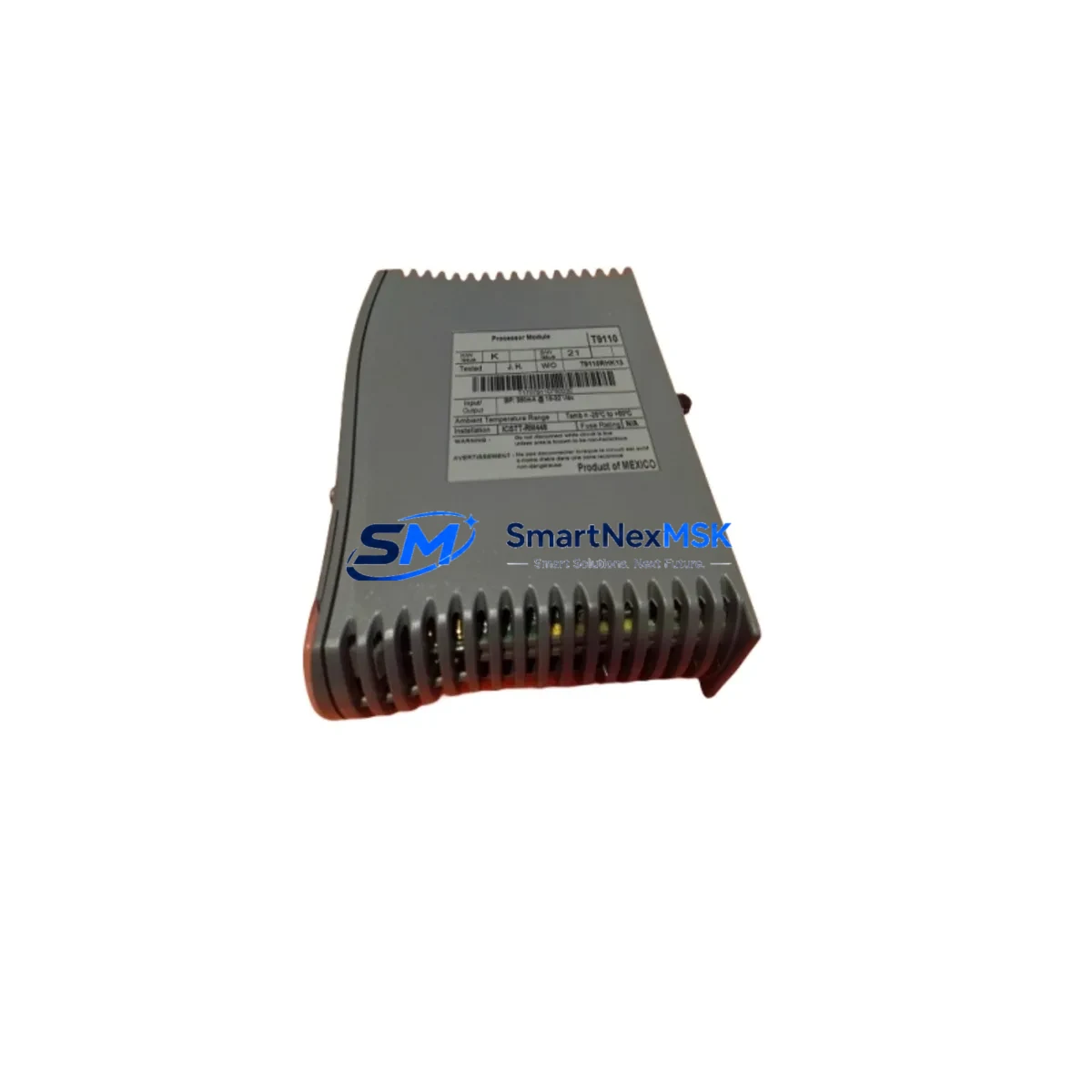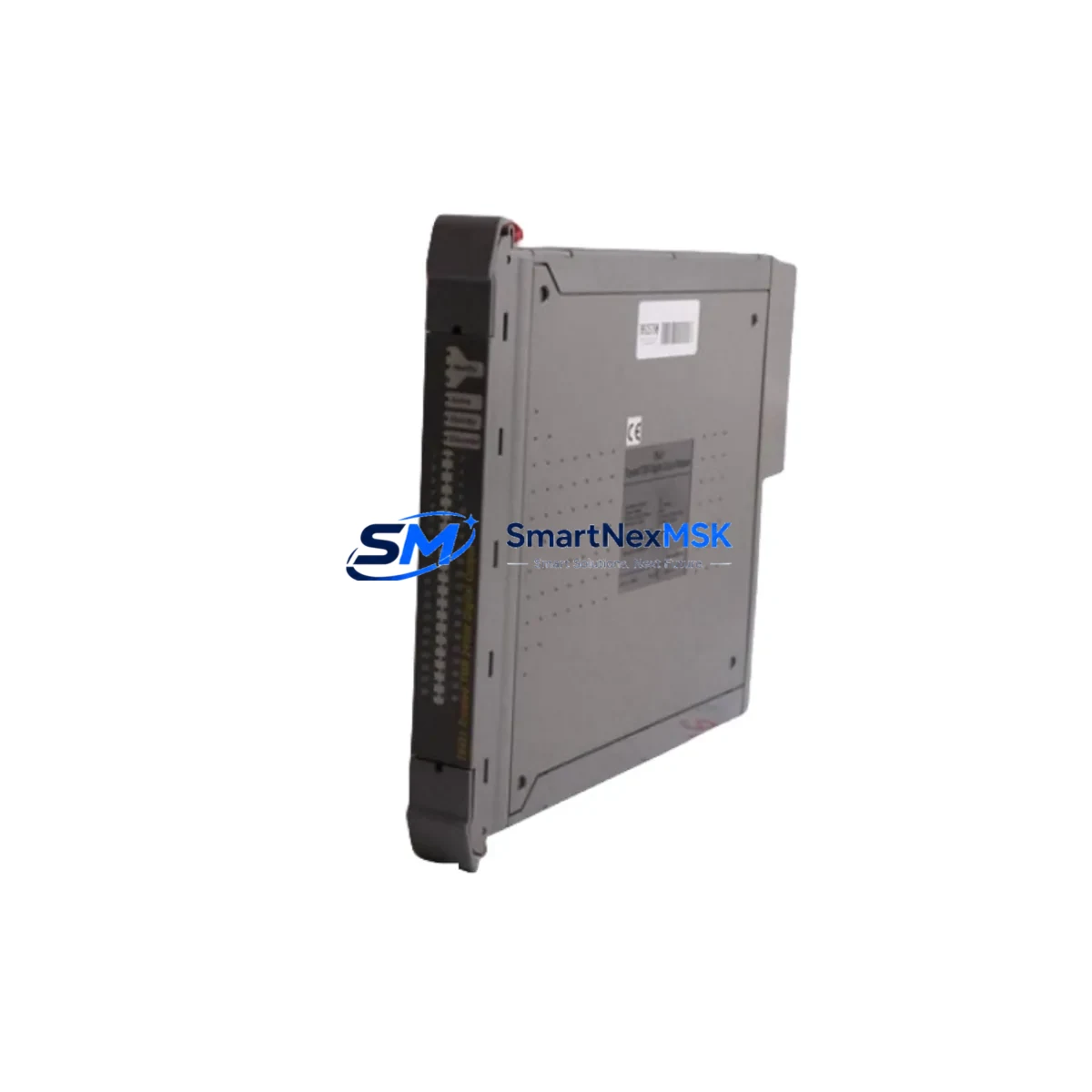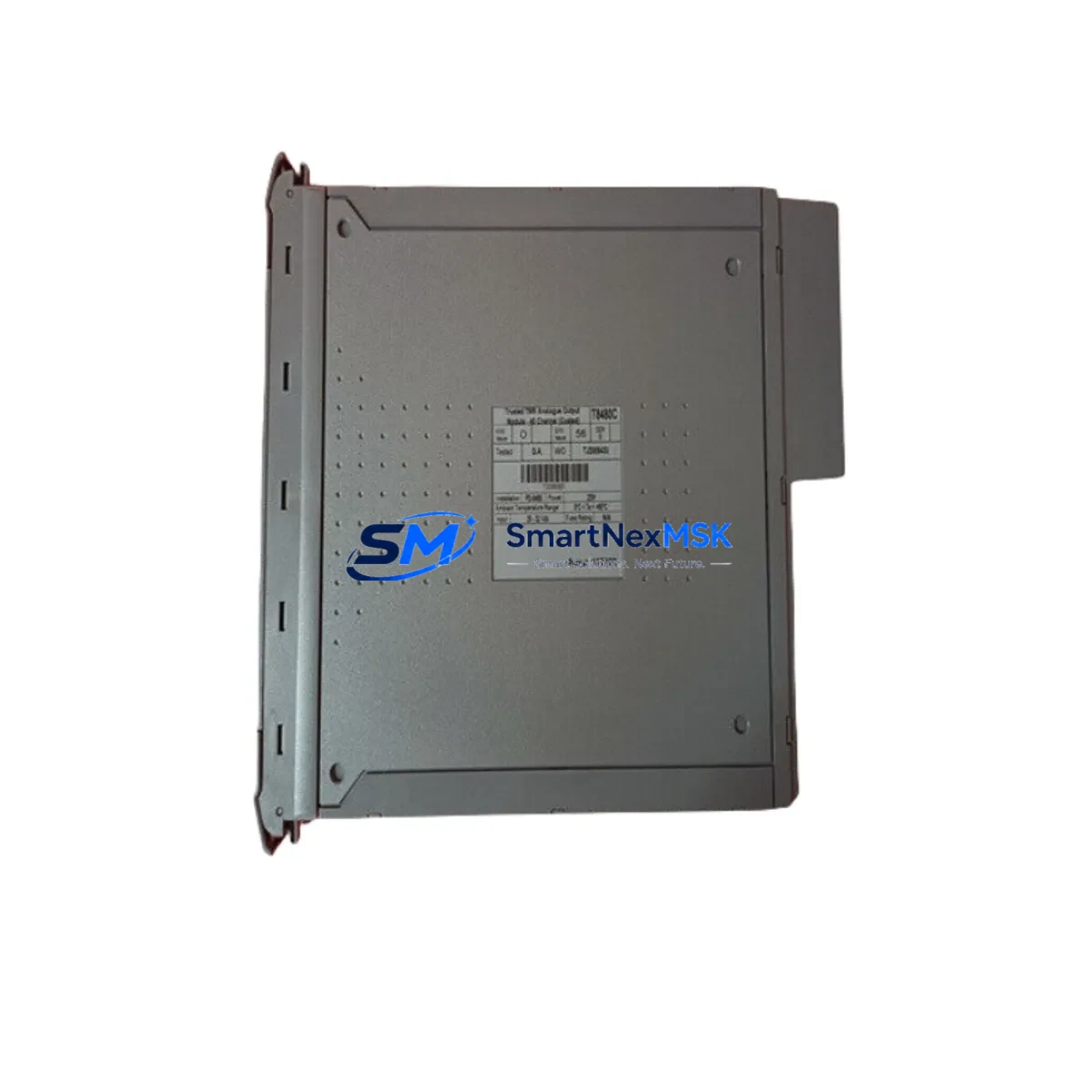
ICS Triplex T8480C Retrofit-Ready TMR Digital Input Module for Trusted SIS Control Systems
The ICS Triplex T8480C is a Triple Modular Redundancy (TMR) Digital Input Module engineered for the Trusted SIS Safety Instrumented System platform. As legacy Trusted SIS installations approach end-of-life or require capacity expansion, the T8480C serves as a direct retrofit replacement for discontinued input modules within the same chassis family. Whether you are upgrading a brownfield refinery control cabinet, restoring a decommissioned safety loop, or migrating from an older Trusted T8100-series configuration, the T8480C provides the electrical and logical compatibility required to minimize engineering rework and reduce total downtime.
Each T8480C unit is sourced from verified supply channels, undergoes pre-shipment functional testing, and ships with a 12-month warranty covering manufacturing defects and operational failures under normal SIS service conditions. Stock availability is maintained to support urgent MRO procurement and planned turnaround schedules.
Upgrade Compatibility Table
| Parameter | Detail |
|---|---|
| Module Model | ICS Triplex T8480C |
| Platform | Trusted SIS Safety Instrumented System |
| Architecture | Triple Modular Redundancy (TMR) |
| Function | Digital Input (DI) — field signal acquisition |
| Safety Integrity Level | SIL 3 (IEC 61511 compliant) |
| Backplane Interface | Trusted SIS standard backplane connector — compatible with T8100-series chassis |
| Installation Requirement | Hot-swap capable; no chassis power-down required in redundant configurations |
| Communication Compatibility | Trusted SIS internal TMR voting bus; compatible with T8310 / T8311 communication modules |
| Replacement Recommendation | Direct replacement for T8480, T8481 series DI modules; verify terminal wiring map before swap |
| Commissioning Notes | Module address must be confirmed in Trusted SIS configuration tool; I/O map re-validation required post-swap |
| Warranty | 12 months from shipment date — covers manufacturing defects and operational failure under rated conditions |
Retrofit Planning for Existing Automation Systems
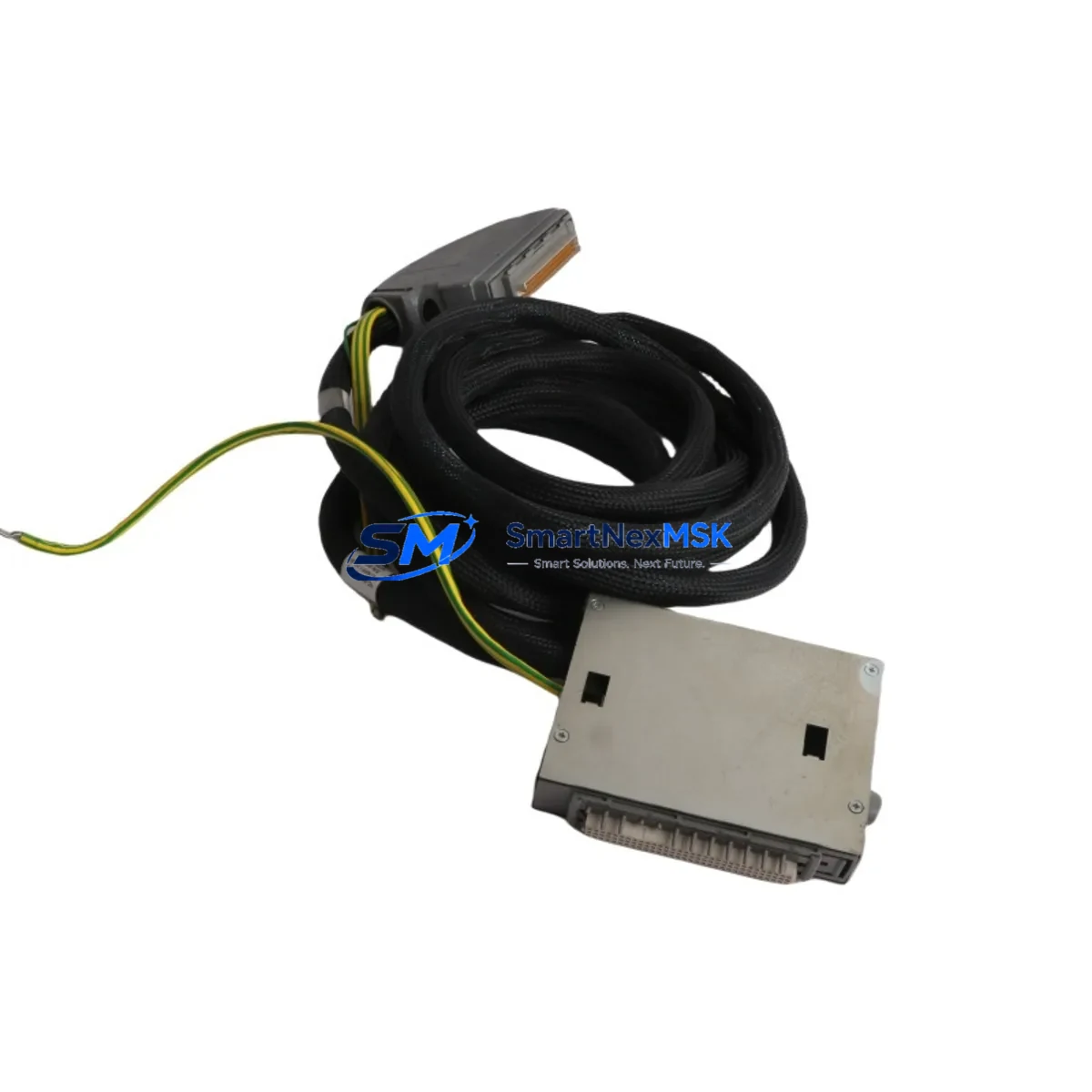
Retrofitting a Trusted SIS installation requires a structured approach that accounts for every layer of the control architecture. Before removing the legacy module, engineers should document the existing terminal wiring assignments on the T8480C field terminal assembly, noting signal type (dry contact, NAMUR, or voltage input), common return routing, and any intrinsic safety barriers installed upstream. The T8480C shares the same 40-way field terminal block footprint as earlier Trusted DI modules, which eliminates the need to re-terminate field cables in most retrofit scenarios.
Power budget verification is a critical pre-installation step. The Trusted SIS chassis — typically a T8100 or T8110 mainframe — distributes 24 VDC across the backplane to all installed modules. When adding or replacing a T8480C, confirm that the T8150 or T8151 power supply module has sufficient headroom to support the additional load. In high-density cabinets where multiple T8480C, T8431C analog input, and T8451C analog output modules are installed simultaneously, a power audit using the Trusted SIS power calculation worksheet is strongly recommended before energizing the new configuration.
Module addressing in the Trusted SIS environment is slot-based. After physical installation, the T8480C slot address must be confirmed within the Trusted SIS configuration database using the Trusted SIS Engineering Workstation software. If the replacement module occupies the same chassis slot as the removed unit, the address assignment is typically preserved automatically. However, if the module is relocated to a different slot — for example, during a rack consolidation or I/O expansion project — the address must be manually reassigned and the associated safety function logic re-validated before the loop is returned to service.
For installations that also involve communication infrastructure upgrades, the T8480C integrates seamlessly with the T8310 Trusted SIS communication module and the T8311 redundant communication module, both of which support Modbus RTU and proprietary Trusted SIS protocols. If the retrofit scope includes migrating from a serial Modbus link to an Ethernet-based supervisory connection, the T8830 Ethernet communication module should be evaluated as part of the same project phase to avoid a second outage window.
HMI screen validation is often overlooked during module swaps. After the T8480C is commissioned, verify that all associated faceplates in the DCS or safety HMI — whether running on a Yokogawa CENTUM VP, Honeywell Experion, or third-party SCADA — correctly reflect the new I/O tag assignments. Any tag renaming or address offset changes introduced during the retrofit must be propagated to the HMI graphics, alarm setpoints, and historian tags before the system is handed back to operations.
For sites performing a broader platform migration — for example, transitioning from a legacy Trusted SIS T8100-series chassis to a newer safety controller — the T8480C can serve as an interim solution, maintaining existing field wiring while the new controller platform is staged and tested in parallel. This parallel-run approach, combined with a structured cutover plan, is the most effective method for achieving a zero-unplanned-downtime migration on a live process unit.
Downtime Control During System Migration
Minimizing unplanned downtime during a Trusted SIS module replacement begins with pre-staging. The replacement T8480C should be bench-tested against a known-good Trusted SIS chassis before it is brought to site, confirming that the module powers up correctly, passes internal TMR self-diagnostics, and communicates with the engineering workstation. This pre-commissioning step, which typically takes less than two hours, eliminates the most common cause of extended outages: discovering a configuration or hardware issue only after the legacy module has already been removed from the live system.
Where the process permits, the T8480C swap should be performed during a planned maintenance window with the associated safety function in bypass mode, following the site’s Management of Change (MOC) and Safety Instrumented Function (SIF) bypass procedures. The Trusted SIS platform supports hot-swap of individual modules in a redundant TMR configuration, meaning that in many cases the digital input channels can remain operational on the surviving two legs of the TMR triad while the third module is replaced — effectively reducing the safety system exposure time to the duration of the physical swap rather than the full commissioning cycle.
Original program logic stored in the Trusted SIS safety controller — including cause-and-effect matrices, trip setpoints, and interlock sequences — is not affected by a module-level swap. The safety application program resides in the T8110 controller module, not in the T8480C input module itself. This architecture ensures that replacing a field I/O module does not require a full program download or re-validation of the safety application, significantly reducing the engineering effort and documentation burden associated with the change.
Post-swap, a structured loop check should be performed for each digital input channel on the replaced T8480C, confirming end-to-end signal continuity from the field device through the terminal block, module, backplane, and into the safety controller logic. Loop check records should be retained as part of the as-built documentation package for the retrofit, supporting future audits and functional safety assessments.
Retrofit Support FAQ
Q1: Is the T8480C a direct drop-in replacement for the T8480 and T8481?
In most installations, yes. The T8480C uses the same backplane connector, field terminal block footprint, and slot addressing scheme as the T8480 and T8481. However, you should verify the revision level of your Trusted SIS chassis firmware and confirm that the T8480C is listed as a compatible replacement in your site’s Trusted SIS hardware compatibility matrix before proceeding with the swap.
Q2: Do I need to re-download the safety application after replacing the T8480C?
No. The safety application program resides in the T8110 controller module. Replacing a T8480C digital input module does not alter the program memory. A module address confirmation and loop check are required, but a full program download and re-validation cycle is not triggered by a module-level replacement in a same-slot swap scenario.
Q3: What wiring checks are required before installing the T8480C?
Before installation, verify the field terminal wiring map against the original as-built drawings: confirm signal type (dry contact, NAMUR, or voltage), common return routing, cable screen earthing, and the presence of any intrinsic safety barriers or Zener diode barriers in the field loop. Ensure that the terminal block screws are torqued to specification and that no field wiring has been disturbed during the module removal process.
Q4: What does the 12-month warranty cover?
The 12-month warranty covers manufacturing defects and operational failures occurring under normal Trusted SIS service conditions within 12 months of the shipment date. Each unit undergoes pre-shipment functional testing prior to dispatch. Warranty claims are supported by our technical team; contact [email protected] with your order reference and a description of the observed fault for rapid resolution.
© 2026 SMARTNEXMSK. All rights reserved.
Original Source: https://smartnexmsk.com
Contact: [email protected] | +86 18259474341