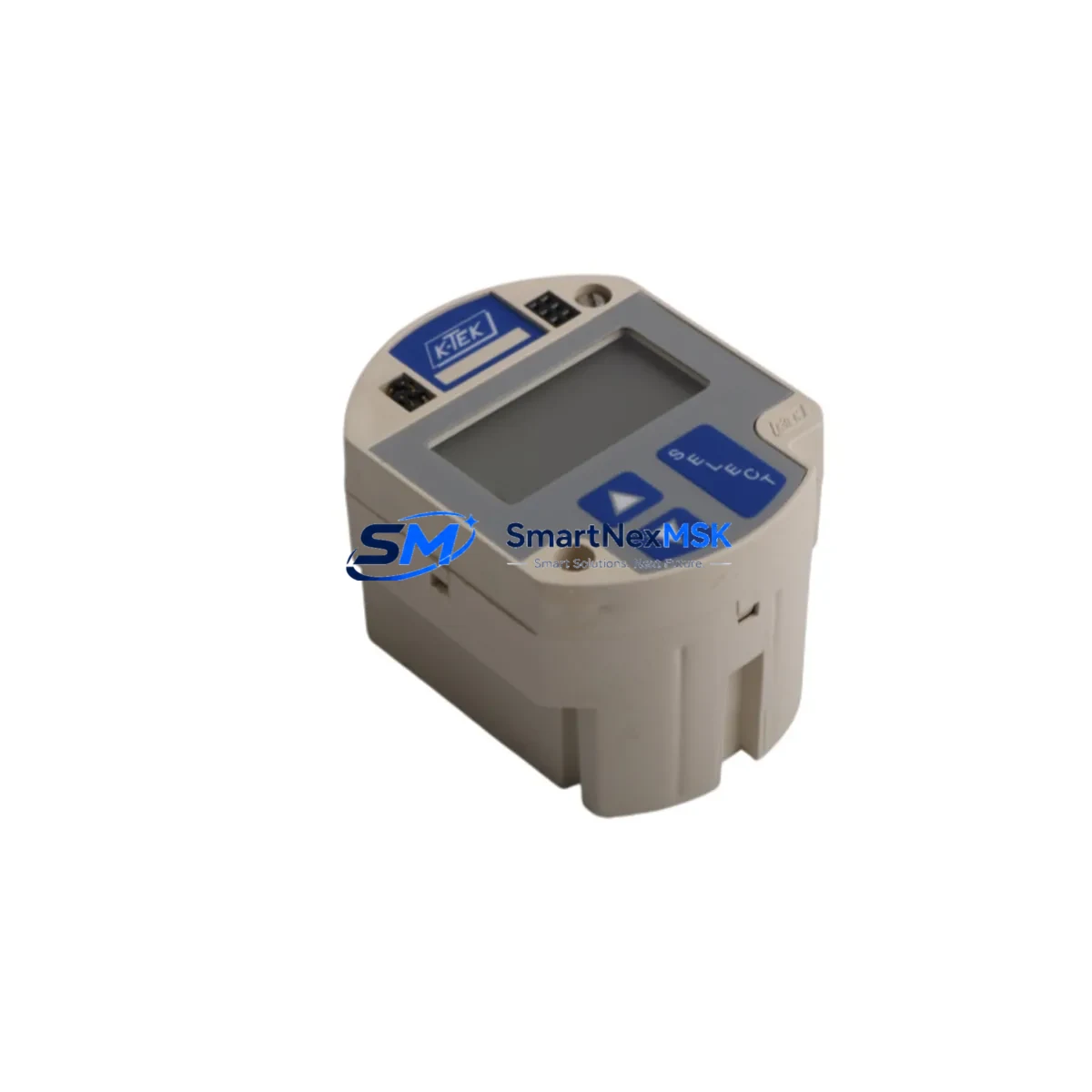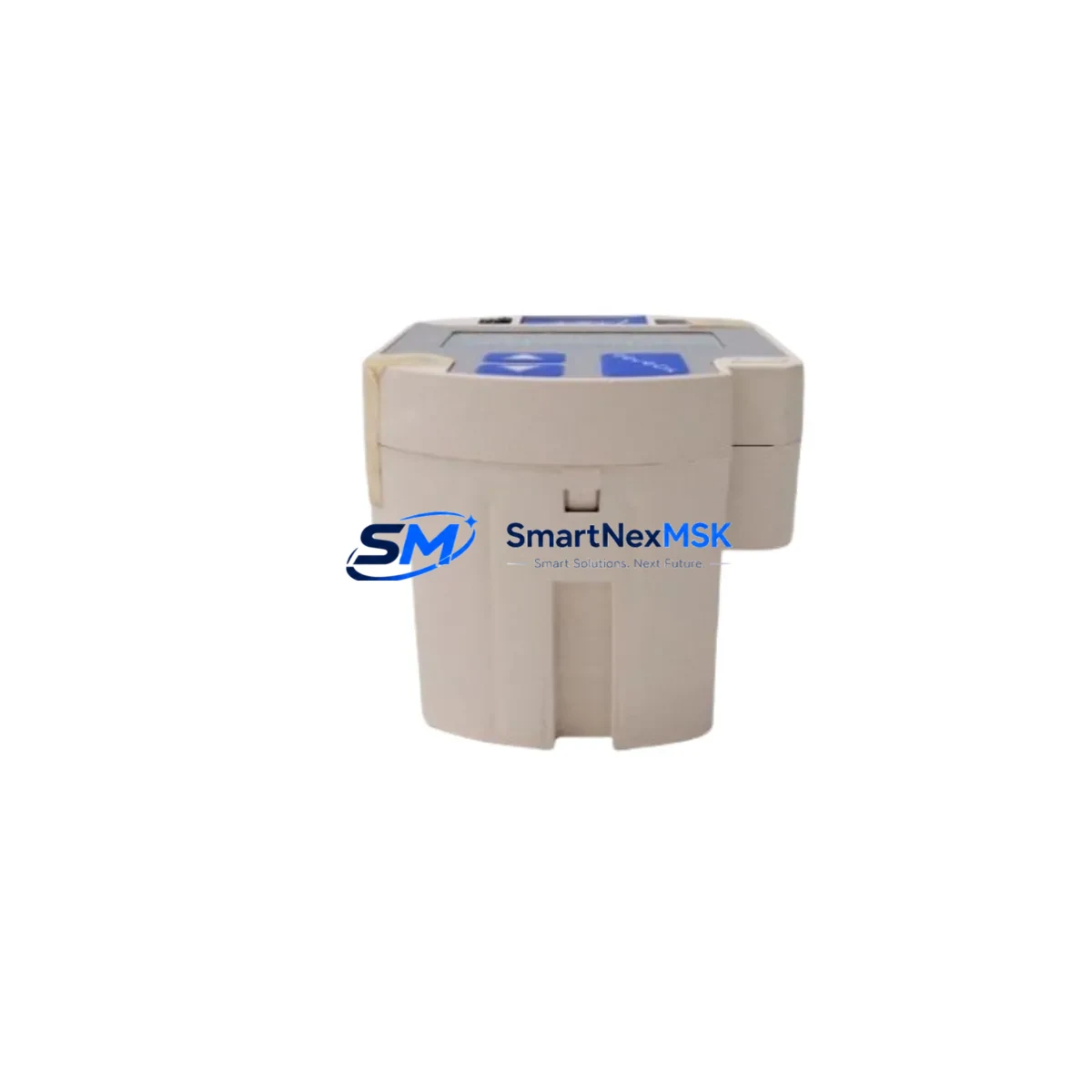
K-TEK M7A-MT5 Retrofit-Ready HART Module for MT5 Series: Seamless Compatibility Upgrade for Legacy Control Systems
The K-TEK M7A-MT5 is a retrofit-ready HART Communication Module engineered specifically for MT5 Series magnetostrictive level transmitters. As aging field instruments reach end-of-life and OEM spare parts become increasingly scarce, the M7A-MT5 provides a verified drop-in replacement path that preserves existing wiring infrastructure, maintains HART 5/6/7 protocol compatibility, and eliminates the need for full transmitter replacement. Whether you are managing a planned turnaround, responding to an unplanned failure, or executing a phased control system modernization, the M7A-MT5 is designed to minimize engineering rework and reduce total downtime exposure.
Industrial facilities operating legacy MT5 Series transmitters on magnetostrictive level measurement applications — including storage tanks, separator vessels, and process columns — frequently encounter obsolescence challenges when sourcing original K-TEK electronics modules. The M7A-MT5 addresses this directly by offering a functionally equivalent replacement that retains the original 4–20 mA output signal, HART digital communication overlay, and standard M12 or terminal block field wiring connections. No re-ranging, no re-calibration of the float assembly, and no changes to the existing conduit entry are required in the majority of retrofit installations.
Upgrade Compatibility Table
| Parameter | Legacy MT5 Module | M7A-MT5 Replacement |
|---|---|---|
| Communication Protocol | HART 5 / HART 6 | HART 5 / HART 6 / HART 7 (backward compatible) |
| Output Signal | 4–20 mA analog | 4–20 mA analog + HART digital overlay |
| Supply Voltage | 12–36 VDC (loop-powered) | 12–36 VDC (loop-powered) |
| Field Wiring Terminals | 2-wire terminal block | 2-wire terminal block (direct fit) |
| Mounting / Housing | MT5 Series head housing | MT5 Series head housing (direct fit) |
| Backplane / Connector Interface | Proprietary MT5 board connector | Compatible MT5 board connector |
| Installation Requirement | Original K-TEK tooling | Standard screwdriver; no special tooling |
| Commissioning Tool | HART Communicator 375/475 | HART Communicator 375/475 / AMS Device Manager |
| Replacement Recommendation | — | Direct drop-in; verify float assembly continuity before power-up |
| Warranty | OEM (expired / discontinued) | 12-Month Warranty from SMARTNEXMSK |
Retrofit Planning for Existing Automation Systems
A successful M7A-MT5 retrofit begins well before the module arrives on site. Engineers should start by auditing the existing MT5 transmitter loop: confirm the loop supply voltage at the field junction box, verify that the existing two-wire cable meets the minimum conductor cross-section for the loop length, and document the current HART device address and tag name as configured in the host system — typically a DCS such as a Honeywell Experion PKS, Emerson DeltaV, or Yokogawa CENTUM VP. This information is critical because the M7A-MT5 will need to be re-addressed to match the original device tag if the host system uses fixed HART polling addresses.
In installations where the MT5 transmitter communicates through a HART multiplexer — such as a Pepperl+Fuchs KFD2-HMM or a Yokogawa HART I/O card — the multiplexer channel assignment must be preserved. After module swap, use a HART Field Communicator 375 or 475 to confirm that the new M7A-MT5 responds on the correct address and that the primary variable (PV), secondary variable (SV), and device status are correctly mapped to the DCS historian tag. If the facility uses an AMS Device Manager or FieldCare asset management platform, update the device descriptor (DD) file to reflect the M7A-MT5 device type to ensure full parameter visibility.
For facilities running a Siemens SIMATIC PCS 7 or Rockwell Automation PlantPAx environment with HART pass-through enabled on the analog input cards, the retrofit procedure is equally straightforward: isolate the loop at the marshalling cabinet, remove the legacy module from the MT5 head housing, seat the M7A-MT5 onto the float assembly connector, re-terminate the two field wires to the terminal block, and restore loop power. The 4–20 mA signal should stabilize within seconds. Verify the live reading against a portable level gauge or sight glass before returning the loop to automatic control.
Where the MT5 transmitter feeds a safety instrumented function (SIF) — for example, a high-high level interlock on a separator vessel — coordinate the retrofit with the SIS engineer and follow the site Management of Change (MOC) procedure. Confirm that the M7A-MT5 SIL capability documentation is on file and that the proof test interval is updated in the SIS maintenance management system. In most cases, the M7A-MT5 can be installed during a short planned outage without triggering a full SIL re-validation, provided the functional specification of the loop is unchanged.
Beyond the HART module itself, a complete retrofit kit for an MT5 Series transmitter typically includes a replacement float assembly O-ring set, a terminal block cover gasket, and — where the original housing shows corrosion — a stainless steel conduit entry adapter. If the control cabinet also houses a K-TEK AT100 or AT200 Series guided wave radar transmitter on adjacent nozzles, this is an opportune time to audit those instruments as well, as they share similar HART loop architecture and may benefit from the same commissioning workflow.
Downtime Control During System Migration
Minimizing process downtime during an M7A-MT5 swap requires a structured pre-outage checklist. Before isolating the loop, export the current device configuration from the HART communicator or asset management system — this creates a backup of all trim values, damping settings, and alarm setpoints that can be restored to the new module in under five minutes if needed. If the process cannot be taken offline, arrange for a temporary portable level measurement (ultrasonic clip-on or dip tape) to provide operator visibility during the swap window.
The physical module exchange typically takes 15–20 minutes for a trained instrument technician. The majority of the outage time is consumed by loop isolation, permit-to-work administration, and post-installation verification — not the module swap itself. To protect the original program logic in the DCS, place the affected analog input tag in manual mode and hold the last good value before breaking the loop. This prevents nuisance alarms and avoids triggering interlock logic during the brief period when the 4–20 mA signal is open-circuit.
After restoring loop power, perform a live zero and span check using the HART communicator: command the M7A-MT5 to output a fixed 4 mA signal and verify the DCS reads 0% level, then command 20 mA and verify 100% level. This two-point check confirms both the analog signal path and the DCS scaling are intact before returning the loop to automatic. Document the as-found and as-left readings in the site calibration management system to satisfy audit requirements and support the 12-month warranty claim process if needed.
All M7A-MT5 units supplied by SMARTNEXMSK are function-tested prior to shipment. Each unit undergoes a bench-level HART communication verification, a 4–20 mA output linearity check, and a power-on self-test to confirm internal diagnostics are clear. A test certificate is included with each shipment. This pre-shipment testing protocol is designed to eliminate the risk of receiving a non-functional module on a critical turnaround, where procurement lead time for a second unit could extend the outage by days.
Retrofit Support FAQ
Q1: Is the M7A-MT5 a direct drop-in replacement for the original K-TEK MT5 electronics module?
Yes. The M7A-MT5 is designed to fit directly into the MT5 Series transmitter head housing using the original board connector and terminal block. No mechanical modification to the housing or float assembly is required. Wiring polarity and terminal numbering are identical to the original module.
Q2: Will I need to re-calibrate the transmitter after installing the M7A-MT5?
In most cases, no. The M7A-MT5 reads the magnetostrictive position signal from the existing float assembly without requiring a new float calibration. However, we recommend performing a live zero and span verification using a HART communicator after installation to confirm the output scaling matches the DCS tag range. If the original module’s trim values are available from a prior export, they can be re-applied to the M7A-MT5 in under five minutes.
Q3: What communications protocols and host systems are compatible with the M7A-MT5?
The M7A-MT5 supports HART 5, HART 6, and HART 7 protocols, making it compatible with the full range of HART-enabled DCS and PLC platforms, including Emerson DeltaV, Honeywell Experion, Yokogawa CENTUM VP, Siemens SIMATIC PCS 7, and Rockwell Automation PlantPAx. It is also compatible with HART multiplexers, handheld HART communicators (375/475), and PC-based asset management tools such as AMS Device Manager and FieldCare.
Q4: What warranty and post-shipment support does SMARTNEXMSK provide for the M7A-MT5?
Every M7A-MT5 unit is covered by a 12-month warranty from the date of shipment. Each unit is function-tested and ships with a test certificate. If a unit fails within the warranty period under normal operating conditions, SMARTNEXMSK will arrange a replacement shipment. For commissioning support, technical questions, or compatibility verification for your specific installation, contact our engineering team directly before placing your order.
© 2026 SMARTNEXMSK. All rights reserved.
Original Source: https://smartnexmsk.com
Contact: [email protected] | +86 18259474341