
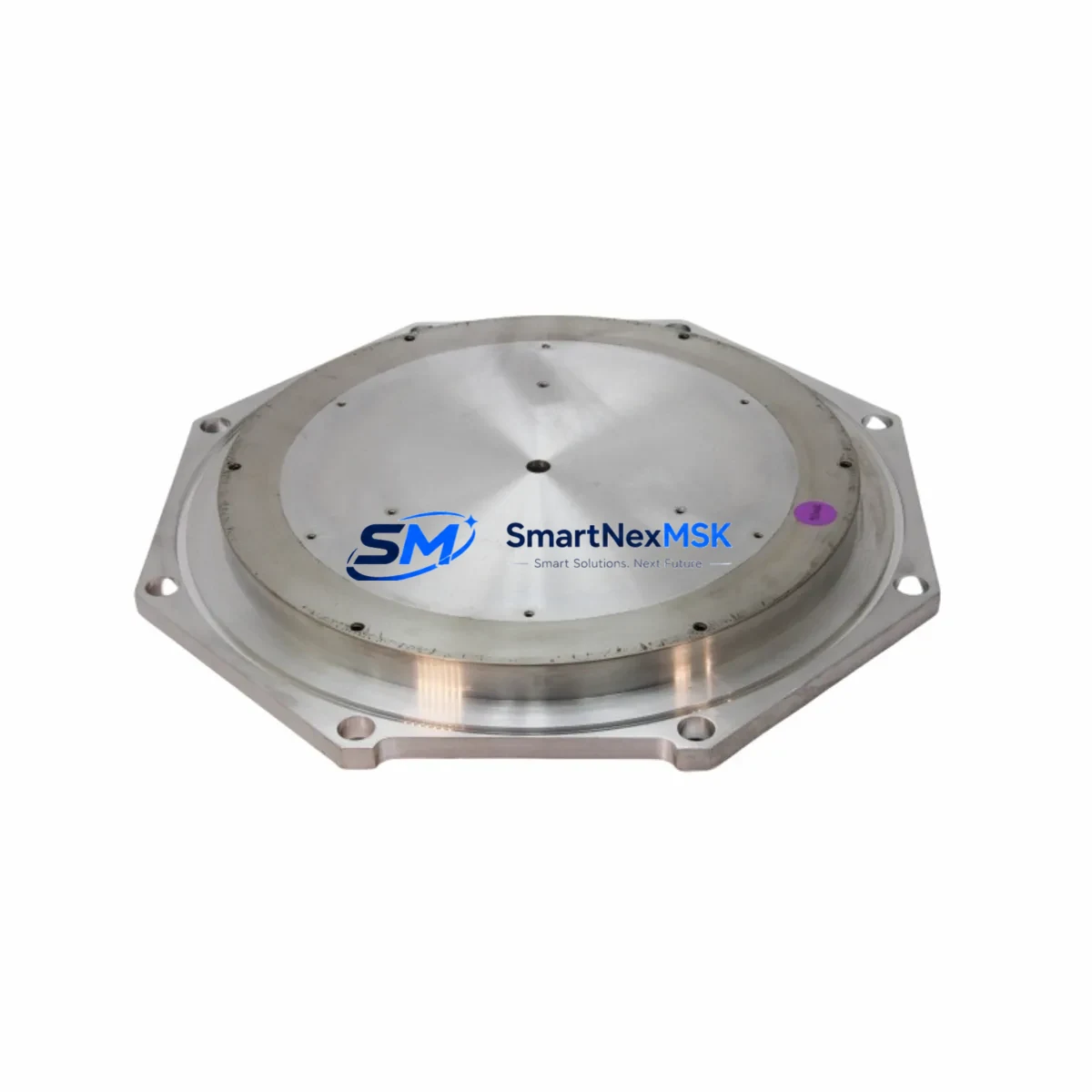
LEM LF1005-S/SP16 Retrofit-Ready Current Transducer for LF Series Control Systems
The LEM LF1005-S/SP16 is a closed-loop Hall-Effect current transducer rated at 1000A nominal with an SP16 connector interface, engineered for seamless integration into LF Series measurement and control architectures. As legacy LF Series installations approach end-of-service milestones, the LF1005-S/SP16 serves as the primary retrofit-ready replacement for discontinued variants such as the LF 1005-S and earlier SP-connector models, enabling engineers to restore measurement accuracy without redesigning the control cabinet or rewriting PLC logic.
Industrial facilities operating drive systems, UPS infrastructure, renewable energy inverters, and traction control panels rely on the LF Series transducer family for high-bandwidth current feedback. When an original transducer fails or reaches its calibration limit, sourcing a verified replacement with matched electrical characteristics — including primary nominal current (IPN = 1000A), supply voltage (±15V or ±12V/15V), and output signal range — is critical to maintaining loop stability and avoiding nuisance trips in the downstream controller.
Upgrade Compatibility Table
| Parameter | LF1005-S/SP16 (This Unit) | Retrofit Notes |
|---|---|---|
| Primary Nominal Current (IPN) | 1000 A RMS | Direct match for LF 1005-S legacy installations |
| Connector Interface | SP16 (16-pin) | Verify harness pinout against original wiring diagram before swap |
| Supply Voltage | ±15 VDC (±12V/15V compatible) | Confirm PSU rail tolerance; LEM PS 15/5 or equivalent recommended |
| Output Signal | ±4V (voltage output) | Match AI card input range on PLC or DCS analog input module |
| Measurement Bandwidth | DC to 200 kHz | Suitable for VFD and inverter feedback loops |
| Mounting / Form Factor | Panel-mount, PCB-compatible base | Check DIN rail adapter bracket if replacing in existing enclosure |
| Communication Compatibility | Analog signal (no fieldbus) | Interfaces with PROFIBUS DP, PROFINET, EtherNet/IP AI modules via analog input |
| Replacement Scope | Drop-in for LF 1005-S, LF 1010-S variants | Confirm SP connector variant before ordering |
| Commissioning Requirement | Zero-offset calibration recommended post-install | Use PLC analog scaling block or DCS faceplate to re-zero output |
| Warranty | 12 Months | Covers manufacturing defects; includes pre-shipment functional test |
Retrofit Planning for Existing Automation Systems
A successful LF1005-S/SP16 retrofit begins well before the transducer arrives on site. Engineers should pull the original cabinet drawings and cross-reference the SP16 harness pinout against the replacement unit’s datasheet. In many LF Series installations, the transducer feeds directly into a Siemens S7-300 or S7-400 analog input module — such as the SM 331 or SM 334 — where the ±4V output is scaled within the CPU’s OB1 or a dedicated FC block. Confirming that the AI card’s input range is set to ±10V or ±5V and adjusting the scaling parameters in STEP 7 or TIA Portal before the physical swap prevents measurement offset errors from propagating into the control loop.
For installations built around ABB AC500 or Schneider Electric Modicon M340 platforms, the analog input channel configuration in Unity Pro or Automation Builder must be reviewed. The LF1005-S/SP16’s output impedance and signal range are compatible with standard ±10V AI channels, but the channel gain and filter time constant should be verified against the original transducer’s specification to maintain identical loop response. If the original system used a LEM LT 1000-S or LEM LA 1005-S in a different topology, the wiring adaptation will require a terminal block remap — typically straightforward on a Phoenix Contact or Weidmüller terminal strip already present in the cabinet.
Power supply integrity is a frequent oversight during transducer retrofits. The LF1005-S/SP16 requires a stable ±15VDC auxiliary supply. If the existing cabinet uses a LEM PS 15/5 or a Puls ML60 dual-rail PSU, verify that the additional load from the replacement transducer does not push the supply beyond 80% of rated capacity. In high-density control cabinets where multiple LEM transducers share a common PSU rail alongside communication modules and I/O expansion racks, a current audit of the ±15V bus is recommended before commissioning.
Backplane and rack considerations apply when the transducer signal feeds into a distributed I/O node. In Siemens ET 200M or ET 200S configurations, the IM 153-x interface module routes analog signals back to the CPU over PROFIBUS DP. After replacing the transducer, the DP slave address and GSD configuration should be verified in HW Config to ensure the AI channel mapping remains consistent. Similarly, in Rockwell ControlLogix or CompactLogix systems using 1756-IF16 or 1769-IF4 analog input cards, the channel tag scaling in Studio 5000 must be confirmed against the new transducer’s output range before going live.
HMI screen updates are often overlooked during hardware retrofits. If the original LF Series transducer was mapped to a Siemens TP700 Comfort, a Weintek MT8000, or a Proface GP4000 panel, the engineering unit display and alarm limits on the current measurement faceplate should be reviewed. A zero-offset or gain change introduced by the replacement transducer can cause false high-current alarms or inaccurate trend displays if the HMI tag scaling is not updated to match.
Downtime Control During System Migration
Minimizing production downtime during a transducer swap requires a structured hot-swap protocol. Before de-energizing the primary conductor, document the current PLC program version and back up the project file — including all analog scaling blocks, alarm setpoints, and historian tags — to a secure engineering workstation. If the system supports online program modification, prepare the updated scaling parameters in offline mode so they can be downloaded immediately after the hardware swap without a full CPU restart.
Where process continuity is critical, coordinate the transducer replacement during a scheduled maintenance window and arrange for a bypass measurement using a clamp-on current probe to maintain monitoring capability during the swap interval. After installing the LF1005-S/SP16, perform a zero-current offset check with the primary conductor de-energized: the output should read within the specified offset tolerance (typically ±0.5V at zero primary current). Apply the offset correction in the PLC analog input scaling block before re-energizing the primary circuit.
Each LF1005-S/SP16 unit shipped by SMARTNEXMSK undergoes a pre-shipment functional test covering output linearity, offset voltage, and supply current draw. The test report is available upon request and supports incoming inspection without requiring additional bench testing, reducing the time between receipt and installation. With verified stock on hand and a structured swap procedure, most LF Series transducer replacements can be completed within a single 4-hour maintenance window, preserving control system continuity and avoiding extended production losses.
Retrofit Support FAQ
Q1: Is the LF1005-S/SP16 a direct drop-in replacement for the discontinued LF 1005-S?
Yes. The LF1005-S/SP16 shares the same primary nominal current rating (1000A), SP16 connector interface, and ±15VDC supply requirement as the original LF 1005-S. Minor differences in output offset tolerance may require a one-time zero calibration in the PLC analog scaling block after installation.
Q2: What wiring checks are required before installation?
Verify the SP16 harness pinout against the replacement unit’s datasheet — pin assignments for supply voltage, output signal, and shield ground must match. Confirm the ±15VDC supply rail is within tolerance (typically ±5%) and that the AI card input range is configured to accept the ±4V output signal. Use a multimeter to check supply voltage at the connector before inserting the transducer.
Q3: How do I confirm compatibility with my existing PLC or DCS analog input module?
The LF1005-S/SP16 outputs a voltage signal (±4V at IPN) compatible with standard ±10V or ±5V analog input channels on Siemens S7, ABB AC500, Schneider Modicon, and Rockwell ControlLogix platforms. Check the AI module’s input impedance specification — it should be ≥10kΩ to avoid loading the transducer output. Update the channel scaling parameters in your engineering software to reflect the new transducer’s sensitivity (V/A ratio) before commissioning.
Q4: What does the 12-month warranty cover, and is a test report included?
The 12-month warranty covers manufacturing defects in materials and workmanship from the date of shipment. Each unit is functionally tested prior to dispatch, covering output linearity, offset voltage, and supply current. A test report is available upon request. Warranty claims are processed through SMARTNEXMSK’s after-sales team; contact [email protected] with the order reference and a description of the fault.
© 2026 SMARTNEXMSK. All rights reserved.
Original Source: https://smartnexmsk.com
Contact: [email protected] | +86 18259474341