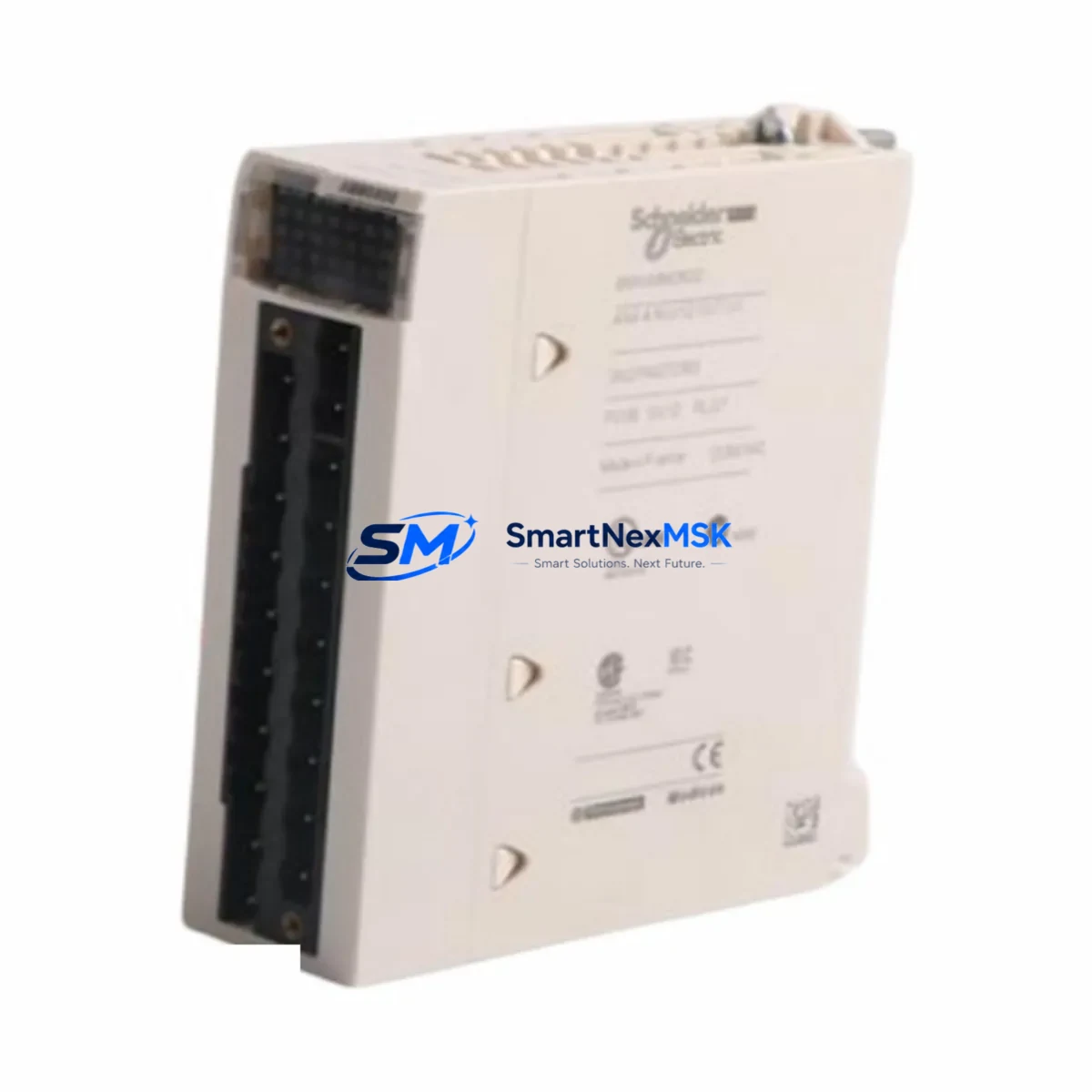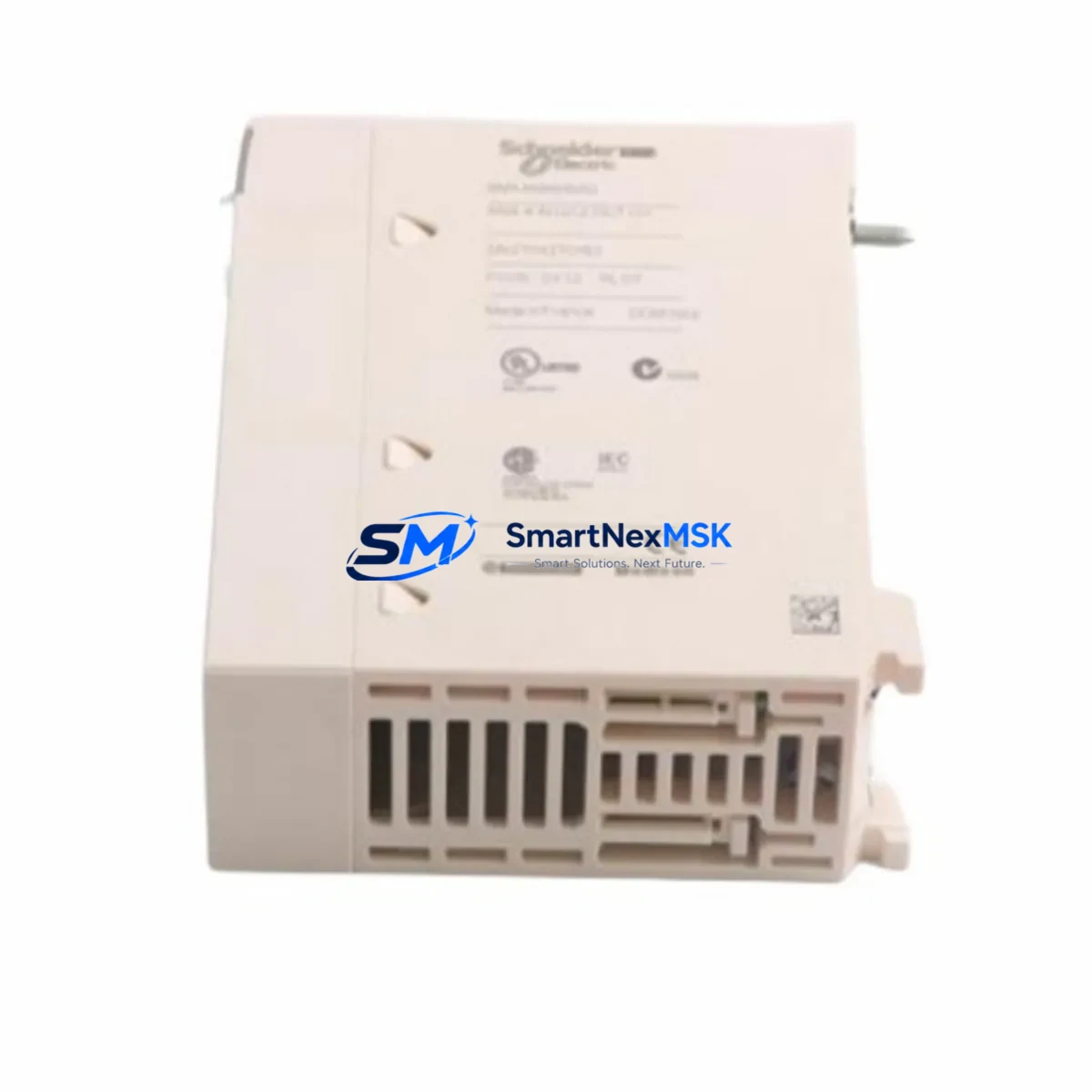
SCHLEICHER USP2I Retrofit-Ready Positioning Module for XCx Control Systems
When aging XCx-series control systems require modernization without full platform replacement, the SCHLEICHER USP2I Positioning Module delivers a proven, retrofit-ready solution that preserves existing control logic, minimizes rewiring, and dramatically reduces commissioning time. Designed as a direct functional replacement for legacy positioning modules within the SCHLEICHER XCx control architecture, the USP2I supports smooth migration from end-of-life hardware while maintaining full compatibility with the surrounding automation ecosystem.
Industrial facilities operating continuous production lines — including automotive assembly, paper and packaging, metal forming, and precision machining — cannot afford extended downtime during control system upgrades. The USP2I addresses this challenge by offering a form-fit-function replacement path that allows engineers to swap out the failed or obsolete module, restore axis positioning functions, and return the line to production with minimal intervention. Its standardized backplane interface aligns with the XCx rack architecture, eliminating the need for custom adapter brackets or signal conditioning hardware.
Before installation, engineers should verify the power budget of the existing XCx rack. The USP2I draws its supply from the shared backplane rail, and in multi-axis configurations — particularly where the XCx CPU module and multiple I/O expansion modules are co-installed — confirming available headroom prevents nuisance trips during startup. Terminal wiring for encoder feedback, drive enable signals, and reference inputs follows the original USP2I pinout, so existing field cables can typically be reused without modification, provided cable condition and shielding integrity are confirmed.
Module addressing must be verified against the original hardware configuration. In XCx systems, slot-based addressing means the replacement USP2I must occupy the same physical rack position as the original to avoid address conflicts with the XCx CPU and adjacent communication modules. If the rack layout has changed, the application program stored in the CPU must be updated to reflect the new module address before the first power-on cycle.
Upgrade Compatibility Table
| Parameter | Detail |
|---|---|
| SKU | USP2I |
| Brand | SCHLEICHER |
| Series | XCx |
| Module Type | Positioning Module |
| Backplane Interface | XCx rack-compatible, slot-based addressing |
| Encoder Input | Incremental encoder, differential RS-422 compatible |
| Drive Interface | Analog ±10 V reference output, digital enable/fault signals |
| Power Supply | Supplied via XCx backplane rail (verify rack power budget) |
| Communication Compatibility | Compatible with XCx CPU communication protocols (PROFIBUS, serial) |
| Replacement Fit | Direct drop-in for original USP2I; same slot position required |
| Program Compatibility | Existing XCx application logic compatible; address verification required |
| Operating Temperature | 0 °C to +55 °C |
| Origin | Germany |
| Warranty | 12-Month Warranty — tested before shipment |
Retrofit Planning for Existing Automation Systems
A successful USP2I retrofit begins well before the module arrives on site. Engineers should pull the existing XCx rack configuration file from the programming software — typically SCHLEICHER’s XCx Programming Suite or compatible IEC 61131-3 environment — and document the current module map, including the CPU module slot, all I/O expansion modules, and any installed communication modules such as PROFIBUS DP master or CANopen interface cards. This baseline ensures the replacement USP2I is inserted into the correct slot and that no address conflicts arise.
Terminal block wiring should be photographed and labeled before removal. The USP2I connects to servo drives or stepper drives via analog reference signals and digital I/O; in many XCx installations, these signals are routed through marshalling terminal strips before reaching the drive cabinet. Confirming that the existing XCx terminal modules and signal cables are in good condition avoids introducing new faults during the swap.
Power supply integrity is a critical pre-check. The XCx rack’s 24 VDC power supply module must deliver stable voltage under full load. If the existing power supply is aging or undersized for the current rack population, replacing it alongside the USP2I prevents post-retrofit instability. Similarly, the rack’s backplane bus connector should be inspected for oxidation or mechanical damage before the new module is seated.
For systems where the XCx communicates with an HMI — such as a SCHLEICHER XCx operator panel or a third-party SCADA terminal connected via serial or PROFIBUS — the HMI configuration should be reviewed to confirm that axis status tags, position feedback variables, and fault codes map correctly to the replacement module’s data structure. In most direct USP2I replacements, HMI tag mapping remains unchanged, but this should be verified in the offline project before live commissioning.
Where the XCx system includes a PROFIBUS DP communication module linking the positioning axis to a supervisory PLC or DCS, the GSD file and network configuration should be confirmed as compatible with the replacement USP2I firmware version. Mismatched firmware can cause the PROFIBUS master to report configuration errors even when the physical module is correctly installed.
Finally, if the retrofit involves upgrading from an older USP2I hardware revision to a current production unit, engineers should review the SCHLEICHER revision history for any parameter or function block changes. Updated XCx function block libraries may be required to access new features, while legacy programs typically run without modification on the updated hardware.
Downtime Control During System Migration
Minimizing production downtime during a USP2I replacement requires a structured, pre-planned approach. The most effective strategy is to complete all preparatory work — program backup, wiring documentation, spare parts staging, and HMI review — during scheduled maintenance windows before the actual swap begins. When the replacement window opens, the physical module exchange, address verification, and initial power-on sequence can typically be completed within one to two hours for a single-axis system.
Before removing the original module, the existing XCx application program should be uploaded from the CPU and saved to a secure backup location. This preserves the last known-good configuration and provides a recovery baseline if the new module requires parameter adjustment. The backup should include all motion profiles, cam tables, and axis parameter sets stored in the CPU’s non-volatile memory.
During the swap, the XCx CPU should be placed in STOP mode to prevent spurious axis commands from reaching the drive. After the USP2I is seated and secured, the CPU is powered on in a controlled sequence: rack power first, then CPU boot, followed by a manual program download if required. The axis should be jogged at low speed in both directions to confirm encoder feedback, drive response, and limit switch operation before returning to automatic mode.
For critical production lines where even brief unplanned stops carry significant cost, maintaining a pre-tested spare USP2I module in stock — alongside a current backup of the XCx program — is the most reliable downtime mitigation strategy. SMARTNEXMSK maintains verified stock of the USP2I with pre-shipment functional testing, supporting rapid deployment when an emergency replacement is needed.
Retrofit Support FAQ
Q1: Is the USP2I a direct drop-in replacement for the original SCHLEICHER USP2I in XCx systems?
Yes. The USP2I is a direct functional replacement for the original module within the XCx rack architecture. It uses the same backplane interface, the same slot-based addressing scheme, and the same terminal pinout for encoder and drive connections. In most cases, existing field wiring can be reused without modification. Address verification and a controlled power-on sequence are recommended before returning the axis to automatic operation.
Q2: What pre-shipment testing is performed on the USP2I?
Every USP2I unit shipped by SMARTNEXMSK undergoes functional verification prior to dispatch, including power-on self-test, backplane communication check, and encoder interface validation. Units are supplied with a 12-month warranty covering manufacturing defects and functional failures under normal operating conditions. Test records are available upon request.
Q3: Can the USP2I be used with a different XCx CPU or rack configuration than the original installation?
Yes, with appropriate configuration steps. The USP2I is compatible with the XCx rack family and can be used with different CPU variants within the series. When changing the rack layout or CPU type, the application program must be reviewed and the module address updated to match the new slot position. SCHLEICHER’s programming environment supports offline configuration validation before live deployment.
Q4: What is the long-term supply outlook for the USP2I?
SMARTNEXMSK maintains ongoing inventory of the USP2I to support customers operating legacy XCx systems. We provide sourcing support for associated XCx components including CPU modules, I/O expansion modules, power supply units, and communication modules, enabling customers to maintain and extend the service life of existing installations without full platform replacement.
—
© 2026 SMARTNEXMSK. All rights reserved.
Original Source: https://smartnexmsk.com
Contact: [email protected] | +86 18259474341