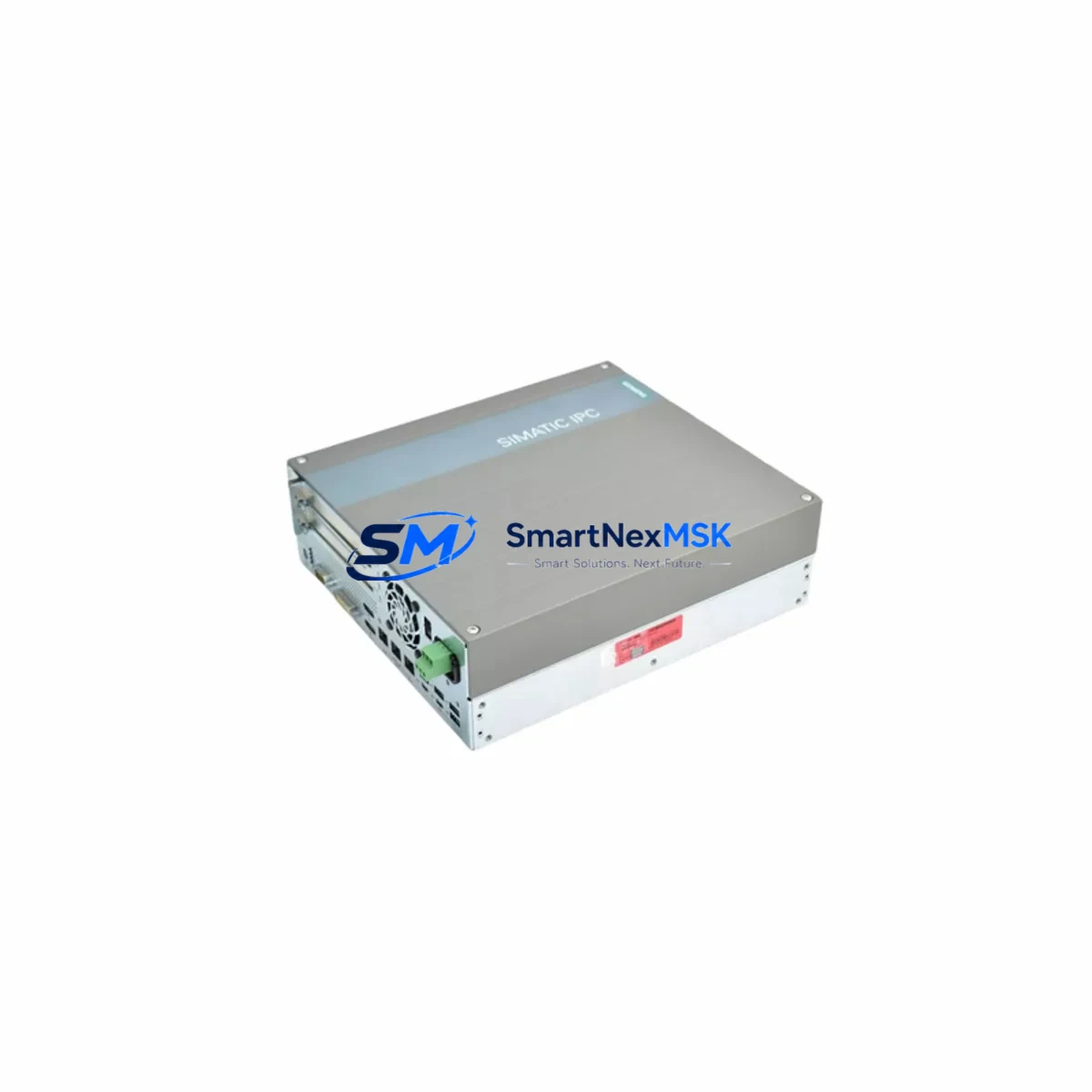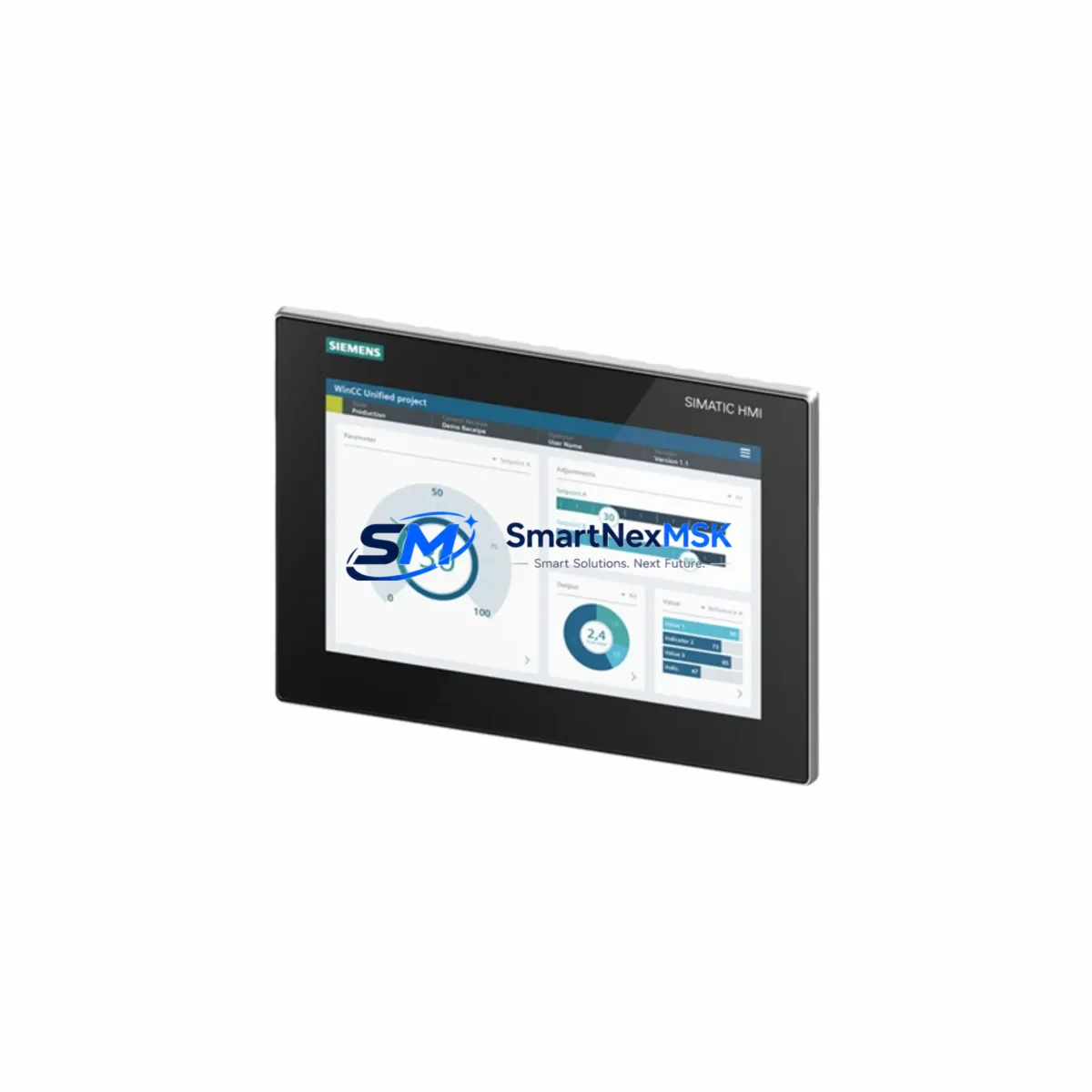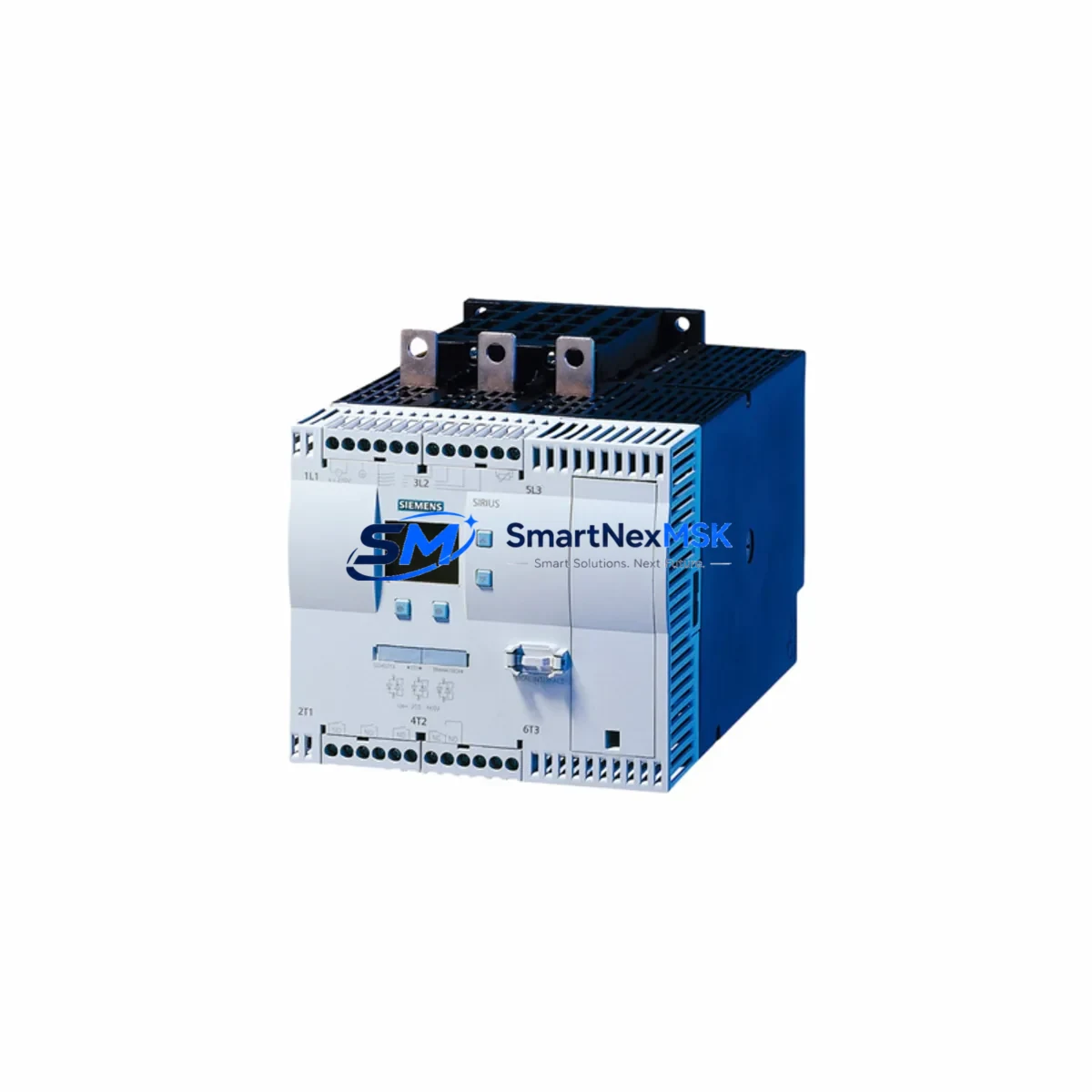
Siemens 3RW4434-6BC44 Retrofit-Ready Soft Starter for SIRIUS 3RW44 Control Systems
The Siemens 3RW4434-6BC44 is a high-performance soft starter from the SIRIUS 3RW44 series, rated at 132 kW / 400 V, designed for smooth motor starting and stopping in demanding industrial environments. As legacy motor control centers and MCC panels age out of manufacturer support cycles, the 3RW4434-6BC44 has become one of the most sought-after retrofit and replacement components for engineers modernizing existing automation infrastructure without full system overhauls.
Whether you are replacing a failed unit in a running production line, upgrading from an older 3RW40 or 3RW41 series soft starter, or migrating a control cabinet from relay-based motor protection to intelligent soft-start technology, the 3RW4434-6BC44 provides a reliable, specification-matched solution with minimal re-engineering effort.
Upgrade Compatibility Table
| Parameter | 3RW4434-6BC44 (This Unit) | Retrofit Notes |
|---|---|---|
| Rated Power | 132 kW | Verify motor nameplate; derate for altitude >1000 m |
| Supply Voltage | 400 V AC, 3-phase | Confirm bus voltage before wiring |
| Control Voltage | 110–230 V AC | Check existing control transformer output |
| Mounting / Installation | DIN rail or panel mount | Matches 3RW40/3RW41 footprint with adapter plate |
| Communication Interface | PROFIBUS DP (optional module) | Retain existing DP address; re-map I/O in Step 7 / TIA Portal |
| Bypass Contactor | Internal bypass integrated | Remove external bypass contactor if previously installed |
| Replacement Recommendation | Direct replacement for 3RW4434 variants | Confirm suffix (-6BC44) for control voltage compatibility |
| Commissioning Focus | Ramp time, current limit, motor thermistor | Re-enter parameters via keypad or STARTER software |
| Warranty | 12 Months | Covers manufacturing defects; includes pre-shipment functional test |
Retrofit Planning for Existing Automation Systems
Successful integration of the 3RW4434-6BC44 into an existing control system requires a structured pre-installation review. Begin by auditing the power supply capacity of the control cabinet — the 3RW44 series draws inrush current during initial energization, and the upstream circuit breaker or 3RV2 motor protection circuit breaker must be sized accordingly. Verify that the existing terminal block layout (typically Phoenix Contact or Weidmüller style) accommodates the input/output wiring gauge specified in the 3RW44 operating manual.
For systems previously using a 3RW3 or older 3RW40 soft starter, the backplane wiring and terminal assignments differ. A wiring adapter or re-termination at the control cabinet’s marshalling terminals will be required. If the cabinet includes a 3RT2 contactor for main circuit isolation, confirm that the contactor coil voltage matches the new control circuit. In multi-motor applications sharing a common S7-300 or S7-400 PLC rack, update the hardware configuration in STEP 7 or TIA Portal to reflect the new device address and parameter set.
Where PROFIBUS DP communication is used, retain the existing DP node address assigned to the outgoing soft starter. The 3RW4434-6BC44 with the optional PROFIBUS module accepts the same GSD file structure, minimizing changes to the master PLC program. For systems using PROFINET IO instead, a 3RW49 communication module may be required — plan this as part of the migration scope. HMI screens built on SIMATIC WinCC or TP700 Comfort panels referencing motor status tags should be validated after parameter re-entry to ensure run/fault/ready signals map correctly to the new device.
I/O expansion cards such as the 3RW4900-0AC00 parameter module or external thermistor evaluation units should be retained where motor thermal protection is critical. In conveyor, pump, and compressor applications, the existing 3SK1 safety relay wiring for emergency stop circuits must be verified against the new unit’s safe-stop input terminals before energization.
Downtime Control During System Migration
Minimizing production downtime during a soft starter replacement is a primary concern for plant engineers. The recommended approach is to pre-configure the 3RW4434-6BC44 off-line using the STARTER commissioning tool or the front-panel keypad before the scheduled maintenance window. Document all existing parameter values from the outgoing unit — ramp-up time, ramp-down time, current limiting factor, and motor thermistor response — and replicate them on the new unit prior to installation.
During the swap, label all control wiring before disconnection and photograph the terminal layout. Use a structured wiring checklist to verify L1/L2/L3 power input, T1/T2/T3 motor output, control voltage supply, thermistor input, and communication bus connections. After mechanical installation, perform a no-load test by running the motor uncoupled from the driven load to confirm ramp behavior and fault-free operation before reconnecting the mechanical drive train.
Where the process cannot tolerate even a brief interruption, coordinate the replacement during a planned shutdown or shift changeover. Pre-stage the 3RW4434-6BC44 in the cabinet with all wiring connected but the main isolator open, then perform a rapid cutover by closing the isolator and verifying motor start sequence within the first production cycle. This approach typically limits unplanned downtime to under 30 minutes for experienced maintenance teams.
Retrofit Support FAQ
Q1: Is the 3RW4434-6BC44 a direct drop-in replacement for the 3RW4434-6BC35?
A: The core power ratings are identical (132 kW / 400 V), but the suffix difference indicates a control voltage variation. The -6BC44 is rated for 110–230 V AC control voltage. Verify your existing control transformer output before ordering to confirm compatibility.
Q2: Do I need to re-program the PLC after replacing the soft starter?
A: In most cases, no. If the PROFIBUS DP address and GSD file remain unchanged, the PLC program continues to communicate with the new unit without modification. Parameter re-entry on the soft starter itself (ramp times, current limits) is required and should be completed during commissioning.
Q3: What pre-shipment testing is performed on this unit?
A: Each 3RW4434-6BC44 undergoes a functional energization test prior to dispatch, verifying control voltage response, communication interface handshake (where applicable), and absence of internal fault codes. A test report is available upon request.
Q4: What does the 12-month warranty cover?
A: The warranty covers manufacturing defects and component failures under normal operating conditions for 12 months from the date of shipment. It does not cover damage resulting from incorrect wiring, overvoltage events, or installation outside the rated specifications. Warranty claims are processed through our sales team with a fault description and photographic evidence.
© 2026 SMARTNEXMSK. All rights reserved.
Original Source: https://smartnexmsk.com
Contact: [email protected] | +86 18259474341