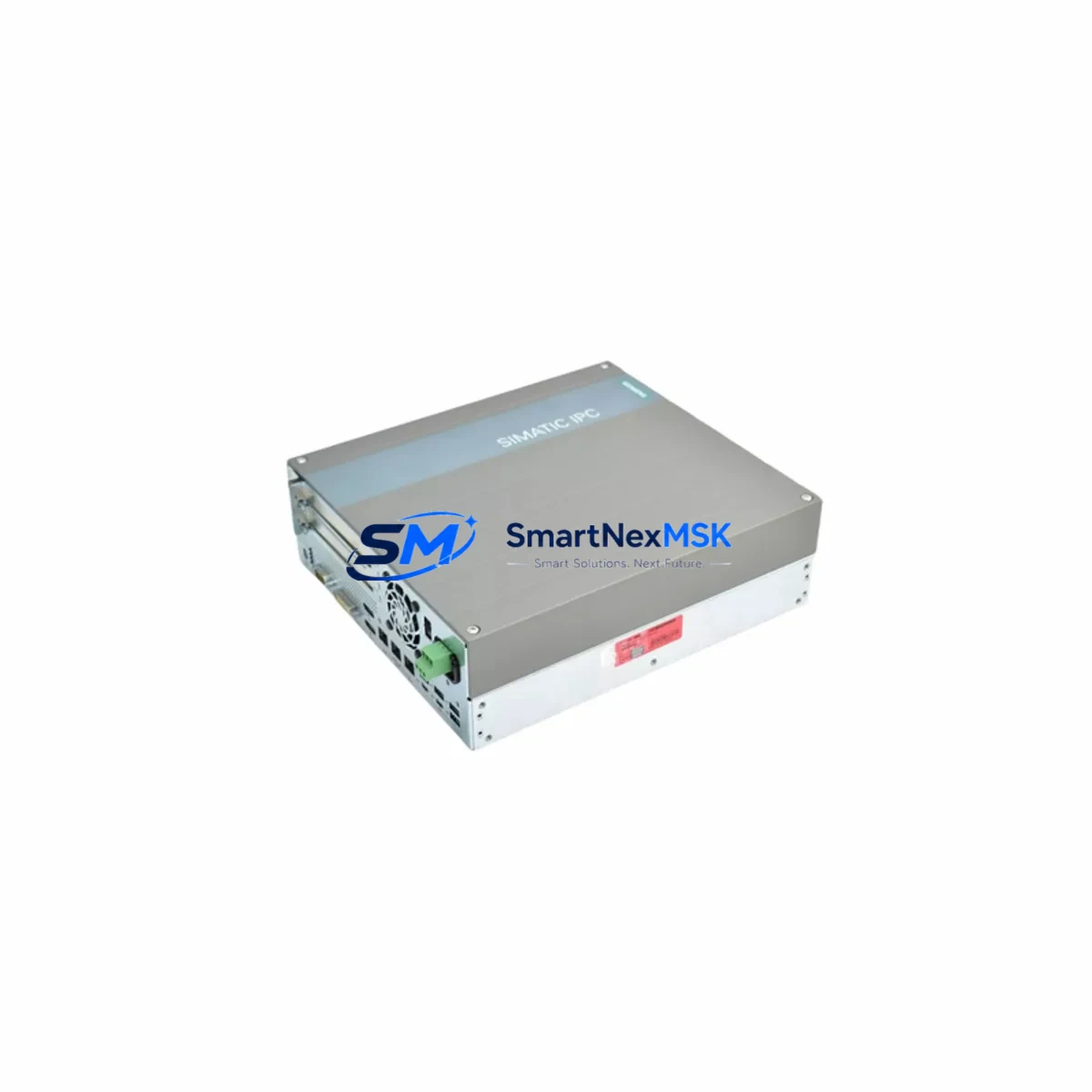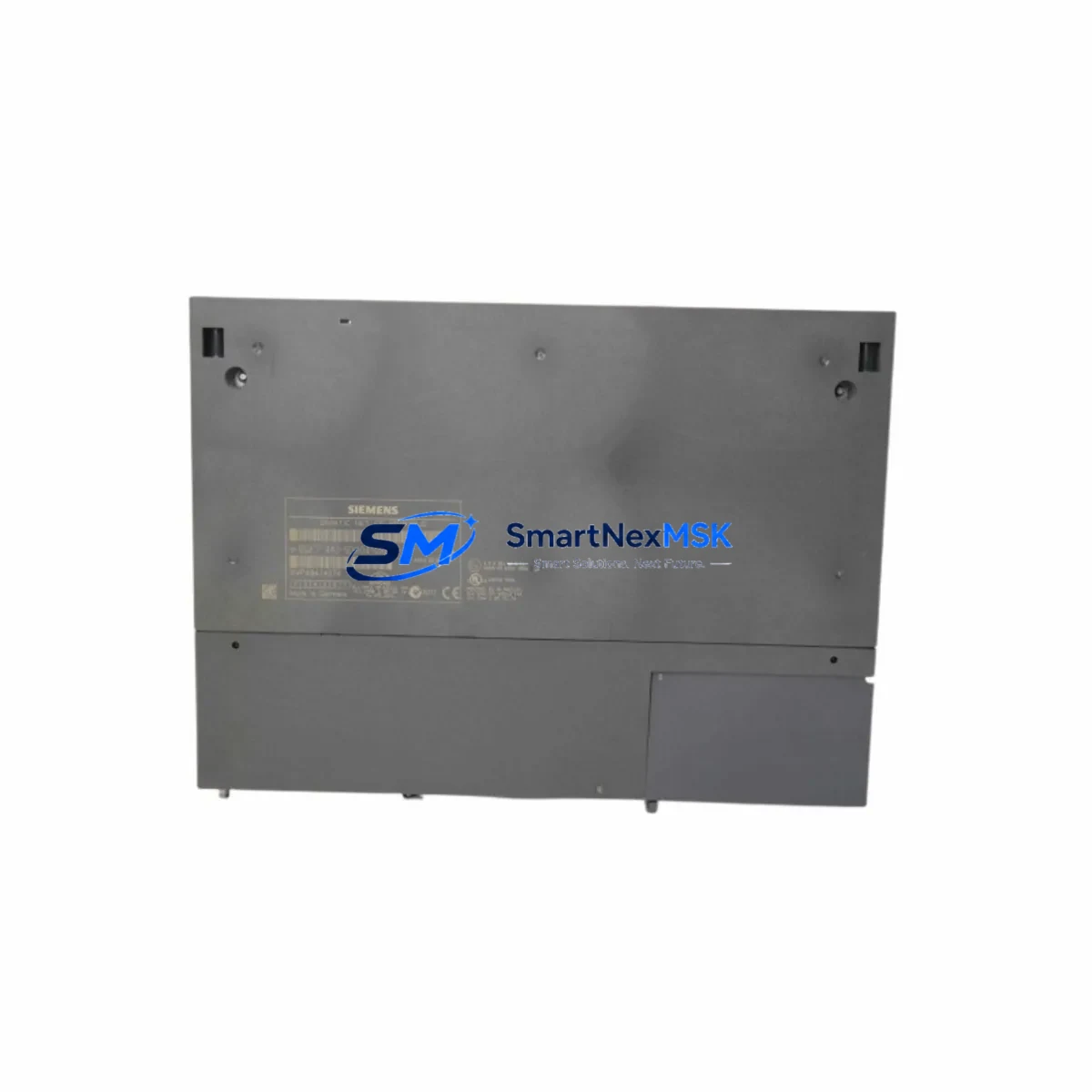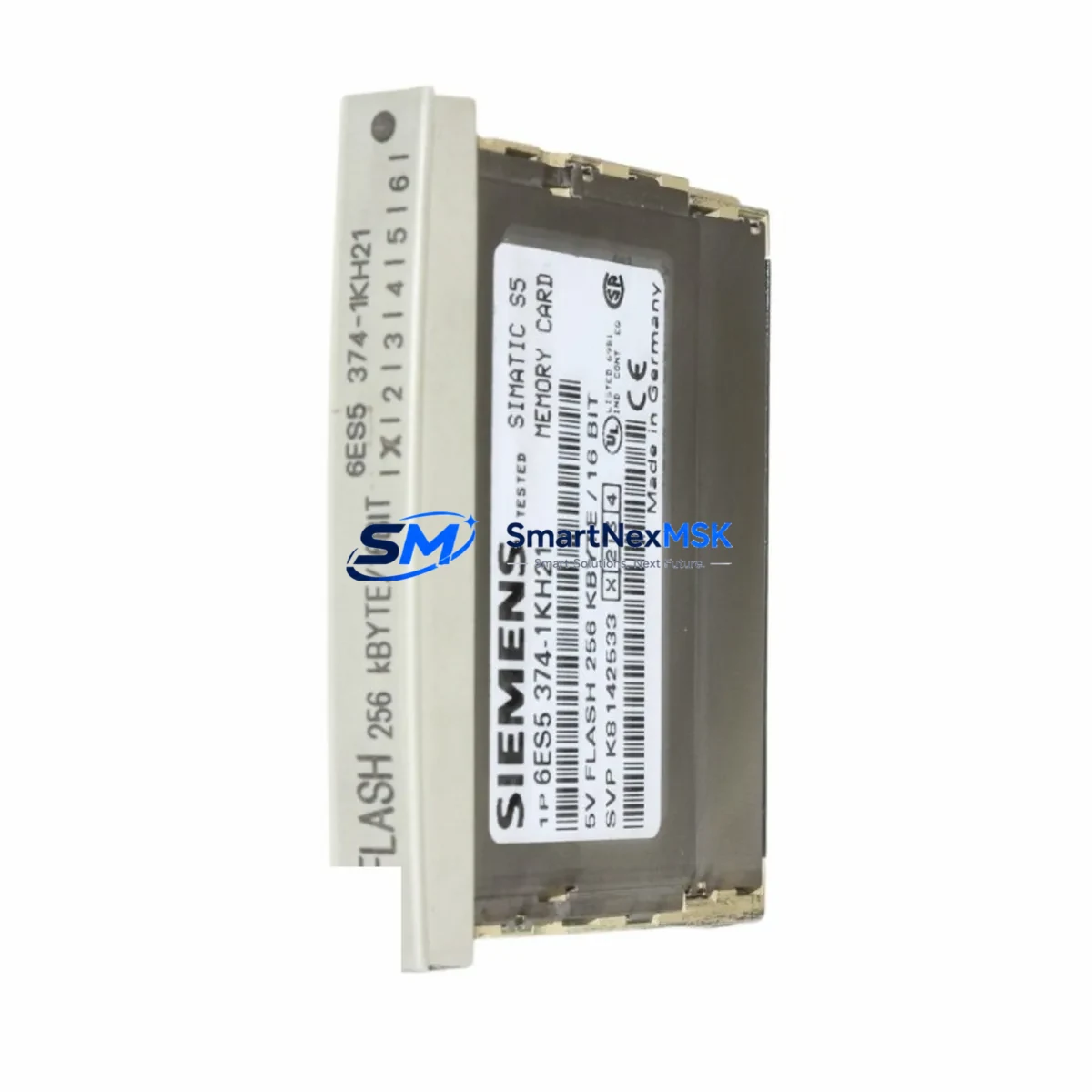
Siemens 6ES5374-1KH21 Retrofit-Ready Flash EPROM for S5 Control Systems
The Siemens 6ES5374-1KH21 is a 256KB Flash EPROM memory module designed for the SIMATIC S5 programmable controller family. As legacy S5 systems continue to operate across manufacturing, utilities, and process industries, sourcing a verified replacement for this discontinued module is critical to maintaining program integrity and avoiding unplanned downtime. Whether you are executing a planned retrofit, responding to a memory module failure, or building a long-term spare parts strategy for aging S5 infrastructure, the 6ES5374-1KH21 provides a direct, compatible solution backed by 12 months of warranty coverage and pre-shipment functional testing.
The SIMATIC S5 platform — including the S5-115U, S5-135U, and S5-155U controller families — relies on EPROM and Flash EPROM modules to store user programs, data blocks, and system parameters. When a 6ES5374-1KH21 module fails or becomes unreadable, the CPU halts program execution, triggering a full production stop. Rapid replacement with a verified, pre-programmed or blank module is the fastest path to system recovery. Our stock is sourced from original production runs, inspected for physical integrity, and tested for read/write compatibility before dispatch.
Upgrade Compatibility Table
| Parameter | Specification / Recommendation |
|---|---|
| SKU / Part Number | 6ES5374-1KH21 |
| Memory Type | Flash EPROM, 256KB |
| Compatible Controllers | SIMATIC S5-115U, S5-135U, S5-155U |
| Compatible Memory Submodule Slots | S5 CPU memory expansion slots (EPROM/Flash type) |
| Replaces / Upgrades From | 6ES5374-1KH11 (128KB), 6ES5373-series EPROM modules |
| Interface | Direct plug-in to S5 CPU memory slot, no adapter required |
| Installation Requirement | CPU must be in STOP mode; ESD precautions required |
| Programming Compatibility | Compatible with STEP 5 programming software (S5 DOS/Windows) |
| Communication Impact | No change to CP modules or MPI/PROFIBUS configuration |
| Commissioning Note | Verify program checksum after insertion; reload from PG if blank |
| Origin | Germany (DE) |
| Warranty | 12-Month Warranty — tested and verified before shipment |
Retrofit Planning for Existing Automation Systems
A successful retrofit of the 6ES5374-1KH21 within an existing S5 control system requires a structured review of the surrounding hardware and software environment. Maintenance and procurement engineers should treat this memory module replacement as an opportunity to audit the broader control cabinet for aging components that may be approaching end-of-life.
Begin with the CPU itself — the S5-115U CPU 941, CPU 942, or CPU 945 units that host this memory module should be inspected for battery backup status. The S5 CPU backup battery (typically a 3.6V lithium cell) maintains RAM data blocks and retentive flags; a depleted battery alongside a failed EPROM module can result in total program loss. Replacing the 6ES5374-1KH21 without verifying battery health is a common oversight that leads to repeat callouts.
Next, review the power supply module — the S5 PS 951 or PS 955 power supply units that feed the S5 rack. Voltage instability is a leading cause of EPROM corruption and memory module failure. Confirm that the 24VDC and 5VDC rails are within tolerance before reinserting the new module. If the power supply is original equipment from the 1990s or early 2000s, consider stocking a replacement unit alongside the memory module.
For systems using the S5 IM 308-C or IM 314 interface modules to connect distributed I/O racks, verify that the ET 200 remote I/O stations and their associated SM 321/SM 322 digital I/O modules are communicating correctly after the CPU restart. A memory module swap that triggers a cold restart can reset I/O configuration parameters if they were stored in volatile RAM rather than the EPROM itself.
Communication modules such as the CP 5431 FMS/DP or CP 5412 A2 should also be checked for firmware version compatibility with the restored program. In systems where PROFIBUS DP is used for field device communication — including drives, valve positioners, and remote HMI panels — confirm that the GSD files and bus parameters are intact in the CPU program after the EPROM replacement.
For facilities running SIMATIC WinCC or OP/TP operator panels connected to the S5 via a serial PG/PC interface or MPI adapter, verify that the HMI tag addresses and screen navigation logic remain consistent with the restored program version. A mismatch between the HMI configuration and the CPU program can cause alarm suppression or incorrect process visualization after a memory module change.
Finally, inspect the S5 rack backplane connectors and the module slot contacts for oxidation or mechanical wear. Intermittent contact in the memory slot is a frequent cause of apparent module failure that is misdiagnosed as a defective EPROM. Cleaning the slot contacts and reseating the module resolves a significant proportion of S5 memory-related faults before a full module replacement is necessary.
Downtime Control During System Migration
When replacing the 6ES5374-1KH21 in a live production environment, downtime control begins before the maintenance window opens. The most effective approach is to create a verified backup of the existing EPROM content using a STEP 5 programming device or a compatible PG 740/PG 760 programmer before removing the module. This backup should be stored on both the programming device and an external archive, ensuring that the program can be reloaded to a blank 6ES5374-1KH21 if the original module is unreadable.
During the replacement window, place the CPU in STOP mode and remove power from the rack before extracting the memory module. Insert the replacement 6ES5374-1KH21, restore power, and perform a program transfer from the PG if the module is supplied blank. If the module is pre-programmed to the customer’s specification, a direct CPU restart in RUN mode is possible after confirming the program checksum via STEP 5 online diagnostics.
For systems where the S5 CPU controls safety-critical outputs — such as emergency stop relays, motor protection circuits, or process interlocks — coordinate the restart sequence with the site safety officer and confirm that all field devices are in a safe state before returning the CPU to RUN mode. Document the replacement in the site maintenance log, including the module serial number, program version, and post-replacement test results, to support future audits and warranty claims.
Stocking a pre-programmed spare 6ES5374-1KH21 at the site reduces the replacement window from hours to minutes. For facilities with multiple S5 systems, a centralized spare parts cabinet containing memory modules, CPU batteries, and power supply fuses significantly reduces the risk of extended downtime from a single component failure.
Retrofit Support FAQ
Q1: Is the 6ES5374-1KH21 a direct replacement for the 6ES5374-1KH11?
The 6ES5374-1KH21 (256KB) is an upward-compatible replacement for the 6ES5374-1KH11 (128KB) in most S5 CPU configurations. The larger capacity is fully backward compatible, and no hardware modification is required. Confirm that your STEP 5 program size does not exceed the original 128KB allocation if you intend to use the module as a direct swap without reprogramming.
Q2: Can you supply the module pre-programmed with our existing STEP 5 code?
Yes. Provide your verified STEP 5 program file (.S5D or block export) and we will program the 6ES5374-1KH21 to your specification before shipment. Pre-programmed modules are tested for read-back integrity and shipped with a programming certificate. Contact [email protected] with your program file and CPU type for a lead time confirmation.
Q3: What testing is performed before shipment?
Every 6ES5374-1KH21 unit undergoes electrical continuity testing, slot interface verification, and — for pre-programmed units — full read/write cycle validation using compatible S5 programming hardware. Units that fail any test stage are quarantined and not dispatched. A test report is available on request for quality-critical applications.
Q4: What does the 12-month warranty cover?
The 12-month warranty covers manufacturing defects, read/write failures, and interface faults under normal operating conditions. It does not cover damage resulting from incorrect installation, ESD mishandling, overvoltage events, or physical impact. Warranty claims are processed within 5 business days of receipt of the returned unit, with replacement dispatch on the same day as claim approval.
© 2026 SMARTNEXMSK. All rights reserved.
Original Source: https://smartnexmsk.com
Contact: [email protected] | +86 18259474341