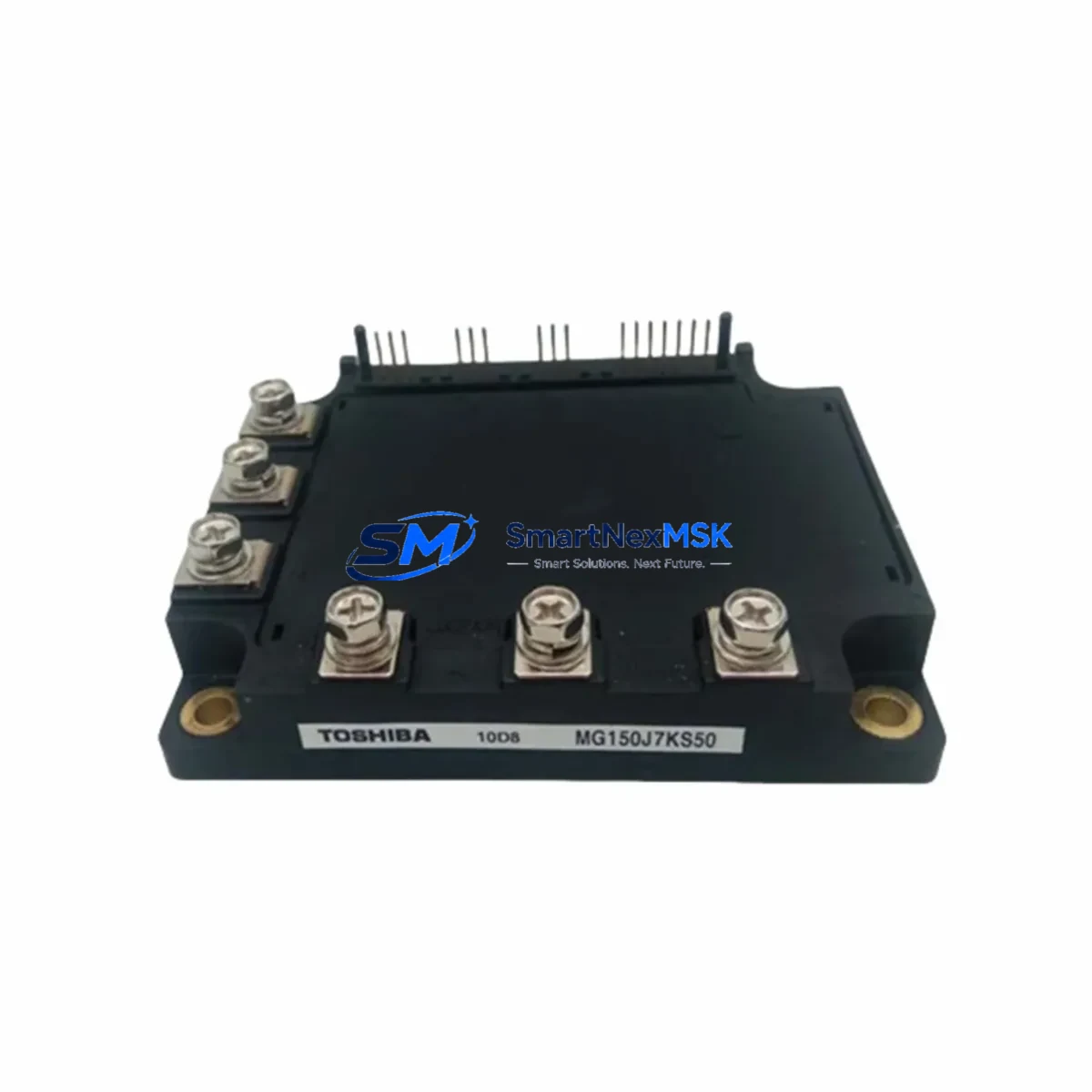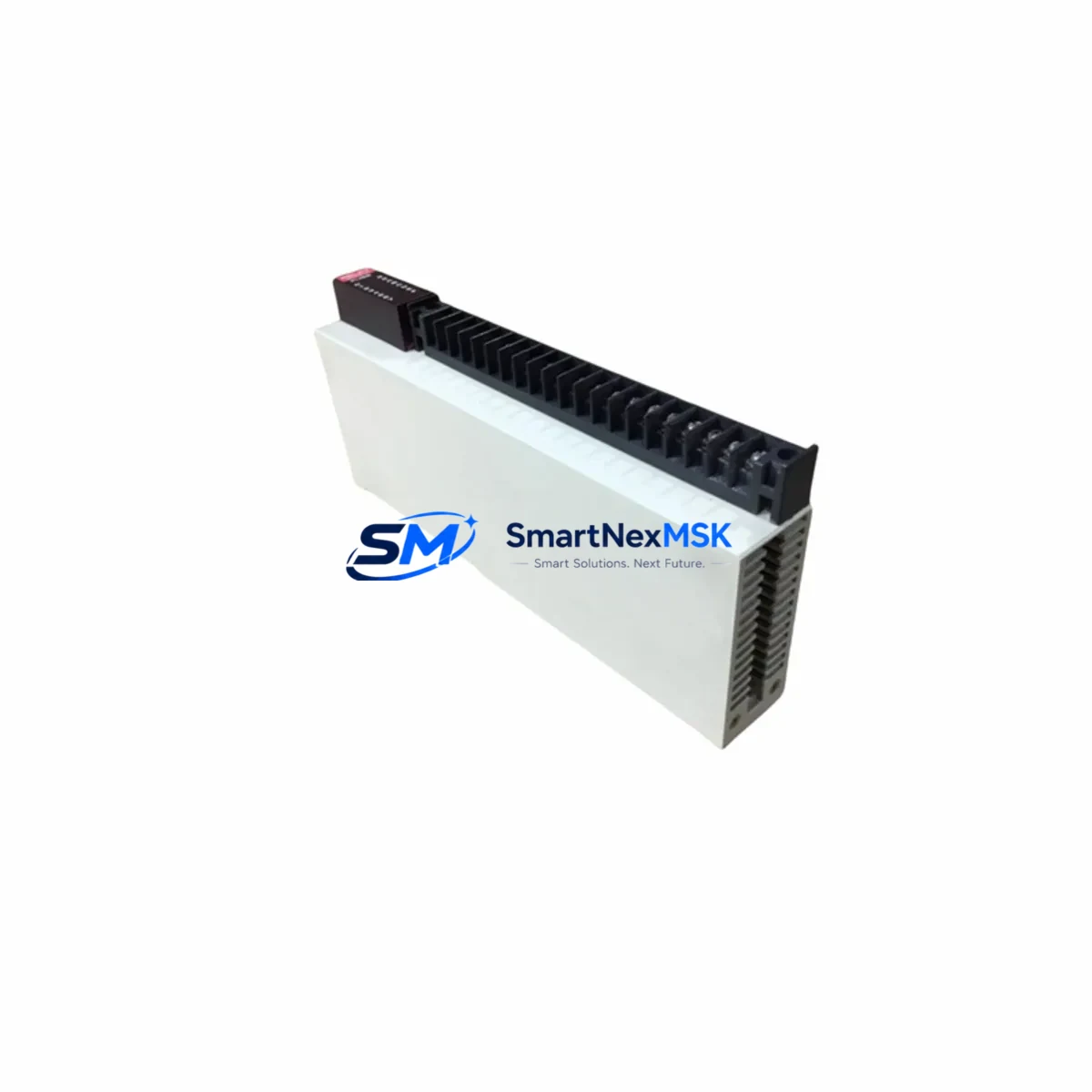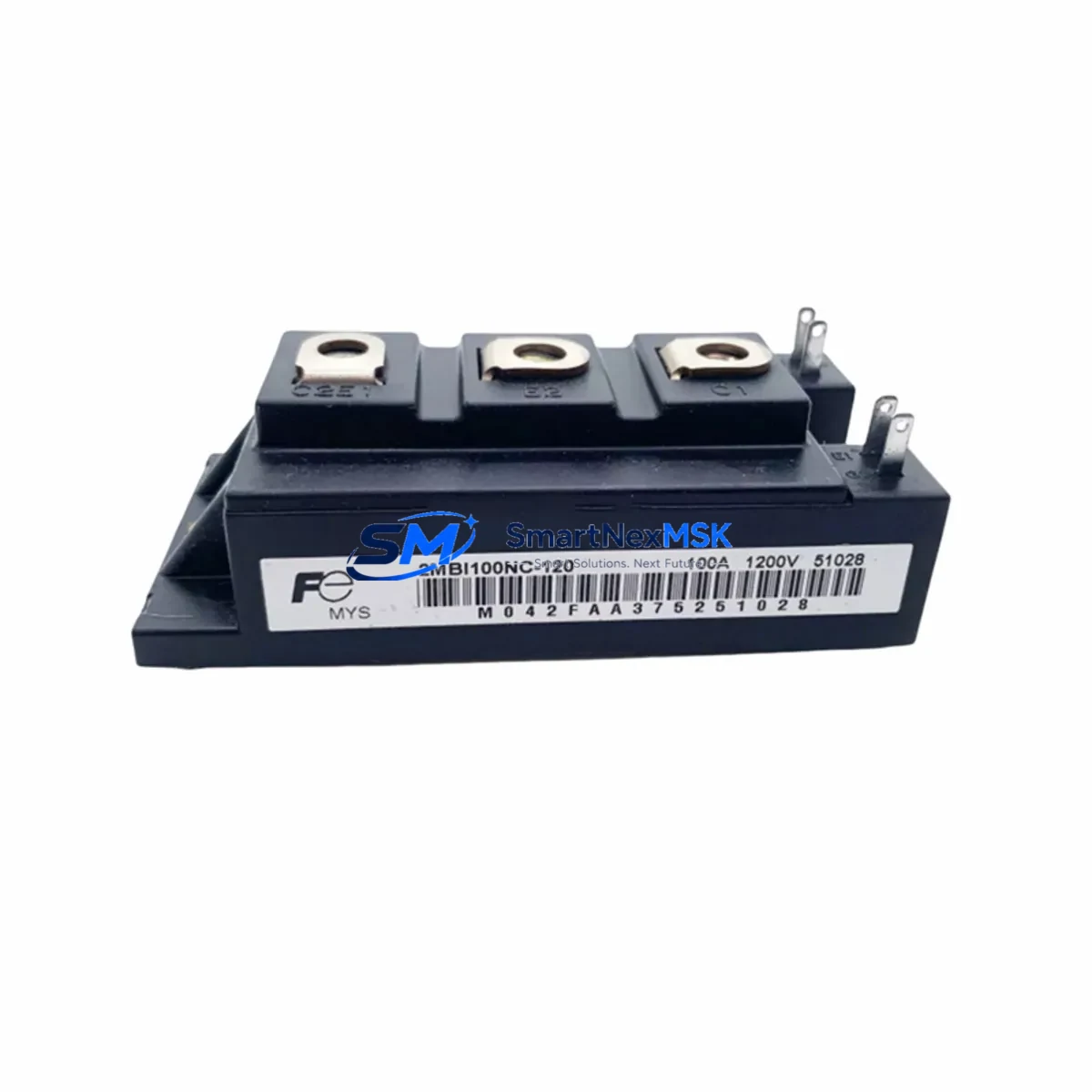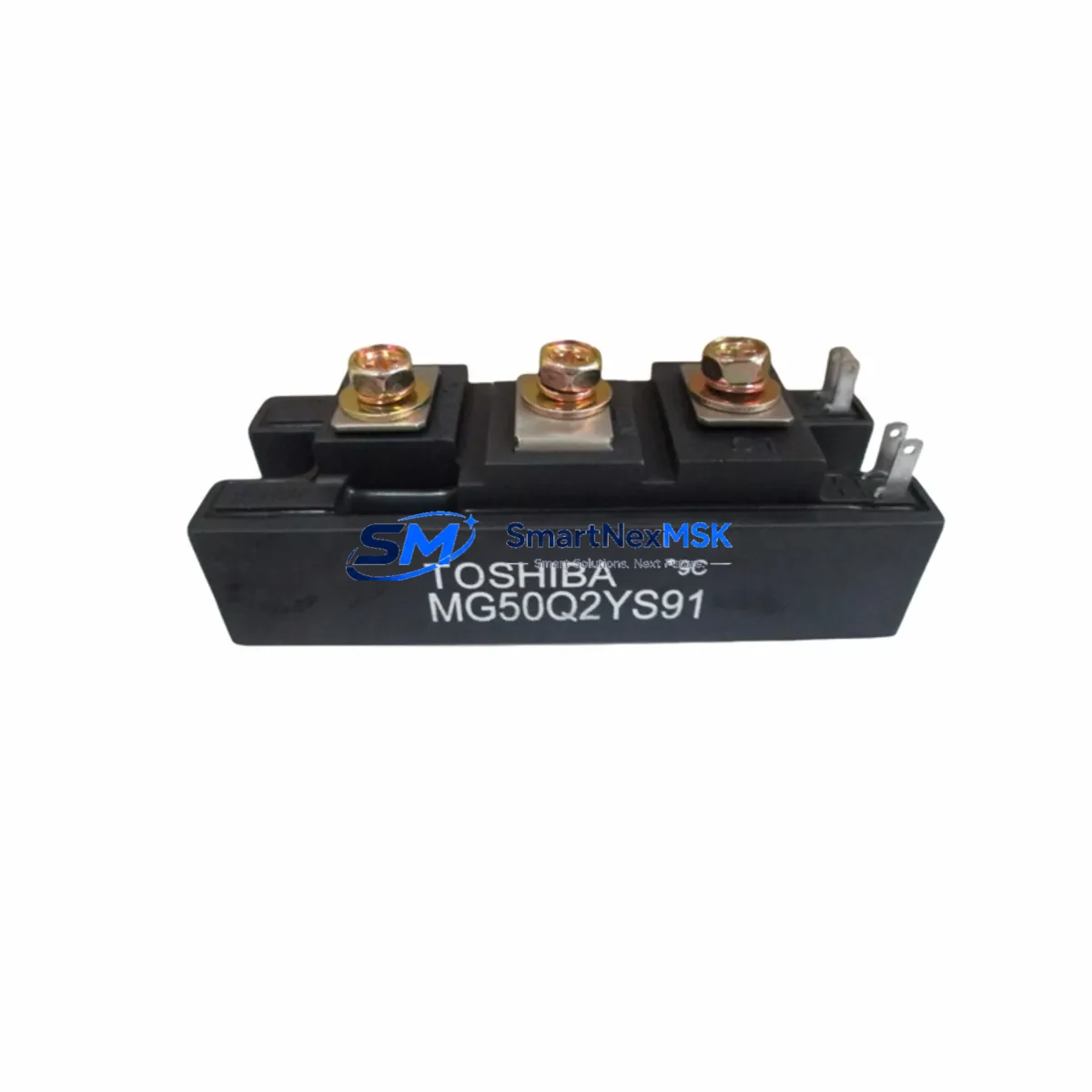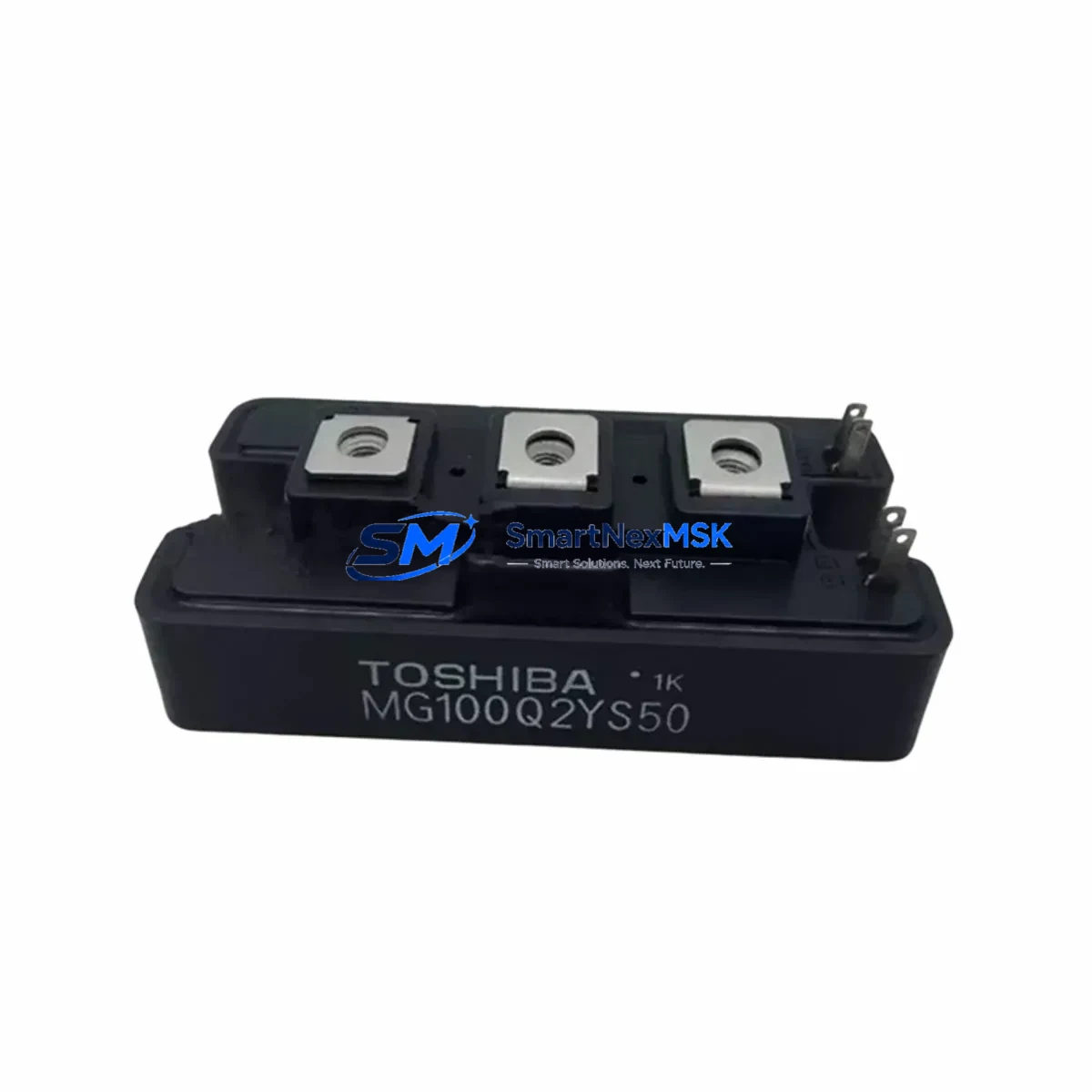
TOSHIBA MG100Q2YS50: Retrofit-Ready IGBT Module for Legacy MG-Q2YS Control Systems
The TOSHIBA MG100Q2YS50 is a 100A / 500V IGBT power module engineered for high-reliability switching applications in industrial drive systems, servo amplifiers, and inverter-based motor control platforms. As a direct retrofit replacement within the MG-Q2YS series, this module addresses the growing demand for compatible spare parts in aging automation infrastructure — particularly in production lines where the original TOSHIBA power stage components have reached end-of-life or are no longer available through standard distribution channels.
For engineers and maintenance teams managing legacy control cabinets, the MG100Q2YS50 provides a technically validated path to restore full drive functionality without requiring a complete system redesign. Its dual-switch IGBT topology, integrated freewheeling diodes, and isolated baseplate construction make it a direct mechanical and electrical substitute for worn or failed modules in the MG-Q2YS family — reducing both procurement lead time and on-site retrofit complexity.
Upgrade Compatibility Table
| Parameter | Specification / Requirement |
|---|---|
| SKU / Part Number | MG100Q2YS50 |
| Collector Current (IC) | 100A |
| Collector-Emitter Voltage (VCES) | 500V |
| Module Topology | Dual (2-in-1) IGBT with freewheeling diodes |
| Gate Drive Voltage (VGE) | ±15V recommended |
| Baseplate Isolation | Isolated copper baseplate (Al₂O₃ substrate) |
| Mounting Interface | Standard MG-series footprint; compatible with existing heatsink and busbar layout |
| Terminal Configuration | Screw-type main terminals; compatible with original MG-Q2YS wiring harness |
| Communication Compatibility | No onboard communication; interfaces with existing gate driver boards (e.g., TOSHIBA VF-S15, VF-nC3 series driver PCBs) |
| Replacement Recommendation | Direct drop-in for MG100Q2YS50 in MG-Q2YS series drives; verify gate resistor values before power-on |
| Commissioning Notes | Confirm thermal paste application, torque spec on mounting screws, and gate signal integrity before energizing |
| Warranty | 12 months from date of shipment; covers manufacturing defects under normal operating conditions |
Retrofit Planning for Existing Automation Systems
Replacing the MG100Q2YS50 in a live production environment requires a structured approach that accounts for both electrical compatibility and mechanical fit within the existing control cabinet. In most retrofit scenarios, the module is housed in a TOSHIBA VF-series inverter drive — such as the VF-S15 or VF-nC3 — where it forms the core of the output power stage. Before removal, technicians should document the existing gate driver board configuration, including the gate resistor values (typically Rg = 10–33Ω) and the isolated power supply rails feeding the driver circuit.
The DC bus capacitor bank — often a series of 450V / 2200µF electrolytic capacitors mounted on the same power board — should be inspected and discharged fully before module extraction. In older drives, these capacitors may themselves require replacement as part of the same maintenance window, since capacitor degradation is a common co-failure mode alongside IGBT module aging.
On the control side, the TOSHIBA VF-series control PCB communicates with the power stage via an isolated gate driver interface. When swapping the MG100Q2YS50, it is critical to verify that the gate driver output voltage levels remain within the ±15V specification and that the dead-time settings in the drive firmware are not altered. If the drive uses a TOSHIBA TP-G1 or TP-G2 series gate driver board, these boards are typically reusable and do not require replacement alongside the IGBT module.
For systems that include an external braking resistor unit or a dynamic braking IGBT module (such as the MG50Q2YS50 or MG150Q2YS50 in adjacent power ratings), the braking circuit should also be tested for continuity and switching integrity during the same retrofit session. This avoids a secondary unplanned shutdown caused by a latent fault in the braking path.
I/O expansion modules connected to the drive — including TOSHIBA DEV002Z or DEV004Z option cards for encoder feedback, analog I/O, or fieldbus communication — should remain powered down during the module swap and re-initialized after the new module is installed and the drive has completed its self-diagnostic routine. If the drive is integrated into a broader PLC-controlled system using a MELSEC Q-series or FX5U controller via PROFIBUS or Modbus RTU, the communication link should be verified at the network level before returning the axis to automatic mode.
HMI screens linked to the drive — whether a standalone TOSHIBA TP-M40 operator panel or a SCADA terminal — should display normal drive status (no fault codes) before the retrofit is considered complete. Pay particular attention to fault history logs: residual fault codes from the previous module failure (e.g., OC1, OC2, or GF faults) should be cleared manually after the new module passes its initial power-on test.
Downtime Control During System Migration
Minimizing unplanned downtime during an IGBT module replacement is a primary concern for any maintenance team operating in a continuous-process or just-in-time manufacturing environment. The MG100Q2YS50 retrofit can typically be completed within a planned 4–8 hour maintenance window when all replacement components and tools are staged in advance.
The recommended sequence is: (1) initiate a controlled drive shutdown and isolate the AC input breaker; (2) discharge the DC bus and verify zero voltage with a calibrated meter; (3) photograph the existing wiring and terminal layout before disconnection; (4) remove the failed module and clean the heatsink surface; (5) apply fresh thermal compound and install the new MG100Q2YS50 to the specified torque (typically 2.5–3.0 N·m for M6 mounting screws); (6) reconnect all terminals per the original wiring diagram; (7) perform a gate signal check with the drive in test mode before applying full load.
To protect the original PLC program logic, ensure that the upstream controller — whether a SIEMENS S7-300, Mitsubishi MELSEC iQ-R, or Omron NJ-series — remains in STOP mode throughout the drive replacement. This prevents the controller from issuing run commands to the drive before the new module has been verified. Once the drive passes its self-test and the gate driver confirms normal switching waveforms (verifiable with an oscilloscope on the gate-emitter terminals), the controller can be returned to RUN mode and the axis re-enabled under manual jog before resuming automatic cycle.
All SMARTNEXMSK shipments of the MG100Q2YS50 include a pre-shipment functional test report confirming switching performance, leakage current, and isolation resistance. This documentation supports incoming inspection and reduces the time required for on-site acceptance testing.
Retrofit Support FAQ
Q1: Is the MG100Q2YS50 a direct drop-in replacement for the original TOSHIBA module of the same part number?
Yes. The MG100Q2YS50 supplied by SMARTNEXMSK matches the original TOSHIBA specifications in terms of electrical ratings (100A / 500V), physical footprint, terminal layout, and baseplate isolation. No mechanical modifications to the heatsink or busbar are required. We recommend verifying gate resistor values and thermal interface material before power-on.
Q2: What commissioning steps are required after installing the new module?
After mechanical installation, perform a DC bus pre-charge test, verify gate driver output levels (±15V), and run the drive in no-load test mode before applying motor load. Clear any residual fault codes from the drive’s fault history. If the drive includes an auto-tuning function, re-run the motor parameter identification routine to ensure optimal switching performance with the new module.
Q3: Can this module be used in drives other than the TOSHIBA VF series?
The MG100Q2YS50 is compatible with any inverter or servo drive platform that accepts a standard MG-series dual IGBT module with 100A / 500V ratings and the corresponding MG-series footprint. Compatibility with third-party drives (e.g., Yaskawa, Fuji Electric, or Hitachi inverters using the same module format) should be confirmed against the OEM’s module specification sheet before installation.
Q4: What does the 12-month warranty cover?
The 12-month warranty covers manufacturing defects, premature failure under normal operating conditions, and any discrepancy between the supplied module and its published electrical specifications. It does not cover damage resulting from incorrect installation, overvoltage events, or operation outside the rated parameters. SMARTNEXMSK provides a pre-shipment test report with every unit to support warranty claims and incoming inspection.
© 2026 SMARTNEXMSK. All rights reserved.
Original Source: https://smartnexmsk.com
Contact: [email protected] | +86 18259474341