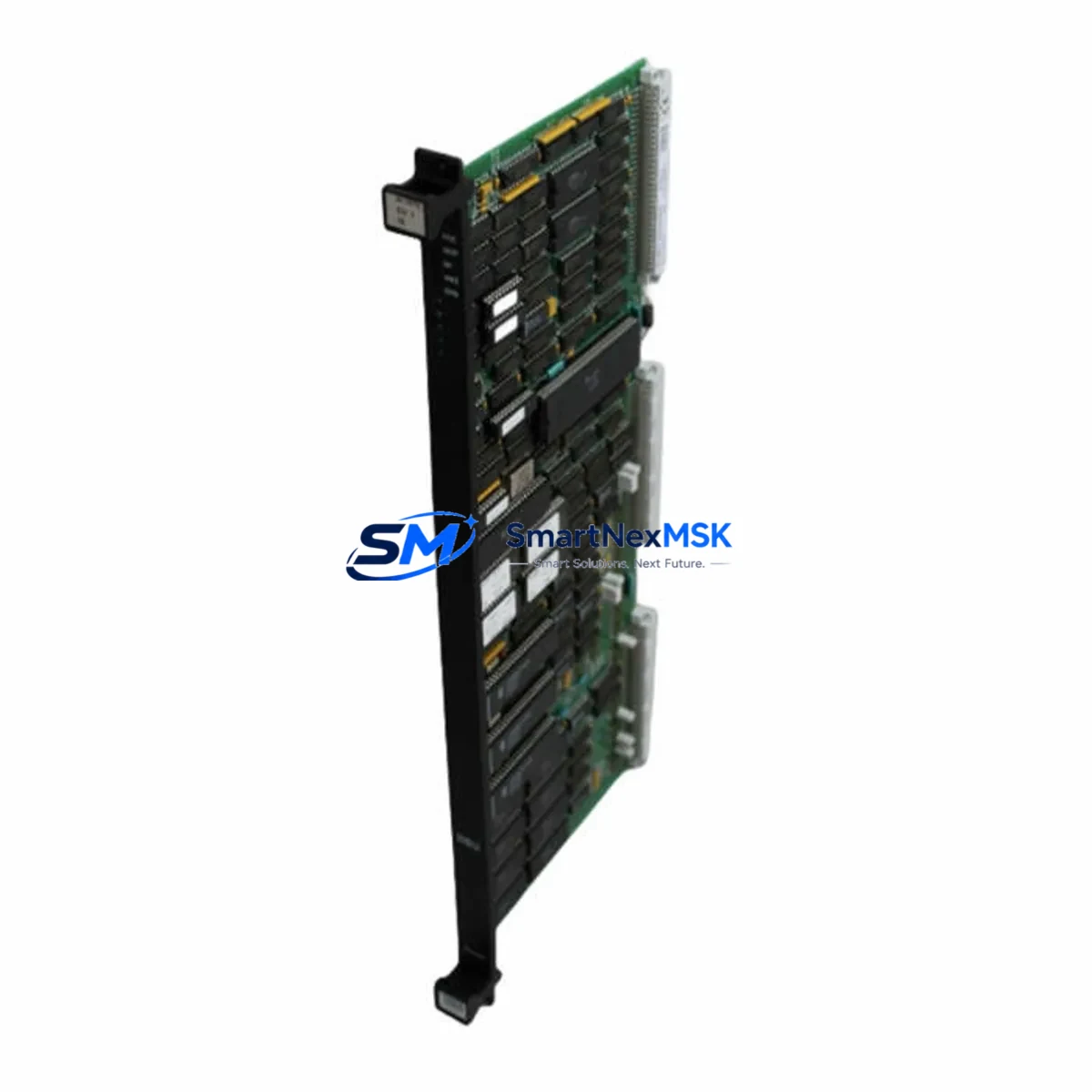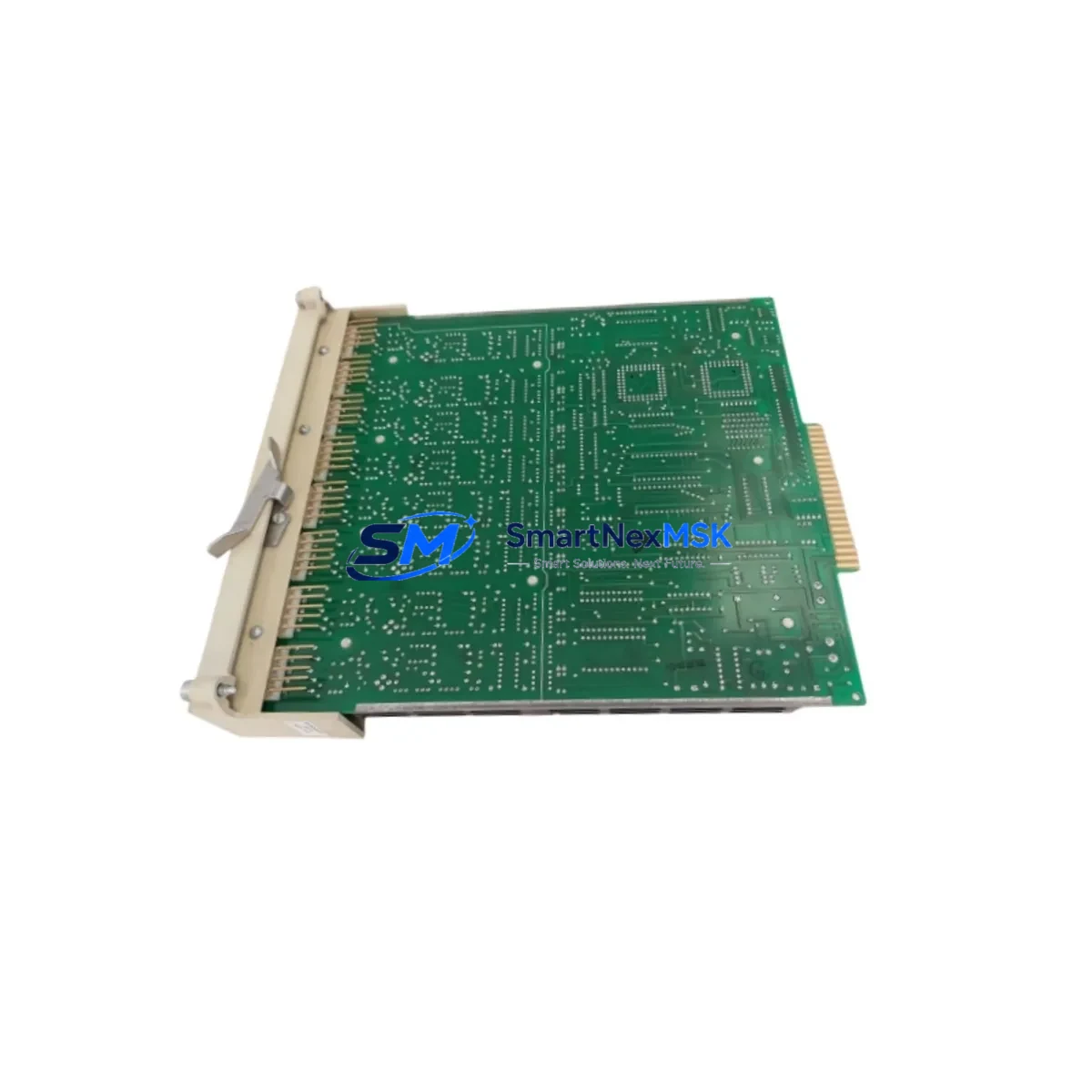
Valmet IOP116 Retrofit-Ready Output Driver for IOP-Series Control Systems
The Valmet IOP116 is a high-reliability DCS output driver module engineered for seamless integration into Metso DNA and Valmet DNA distributed control system architectures. As aging IOP-series hardware reaches end-of-life, plant engineers and automation teams increasingly rely on the IOP116 as a proven, drop-in compatible replacement that eliminates the need for costly full-system overhauls. Whether you are managing a pulp and paper production line, a power generation facility, or a chemical processing plant, the IOP116 delivers the signal conditioning, output isolation, and field interface performance required to maintain continuous process control without disrupting existing wiring infrastructure or PLC/DCS program logic.
Sourced directly from verified supply channels and fully tested prior to shipment, each IOP116 unit is backed by a 12-month warranty and is available from stock for immediate dispatch. Our team supports customers through the full retrofit lifecycle — from pre-shipment compatibility verification to on-site commissioning guidance — ensuring that your migration from legacy IOP-series hardware is completed with minimal downtime and maximum confidence.
Upgrade Compatibility Table
| Parameter | IOP116 Specification | Retrofit Notes |
|---|---|---|
| Module Type | DCS Output Driver Module | Direct replacement for IOP-series output slots |
| Series Compatibility | Metso DNA / Valmet DNA IOP-Series | Compatible with IOP100, IOP108, IOP112, IOP120 rack positions |
| Backplane Interface | IOP-series standard backplane connector | No backplane modification required |
| Terminal Wiring | Standard IOP field terminal block | Existing field wiring reusable without re-termination |
| Communication Protocol | Metso DNA internal bus | Compatible with existing DNA controller communication links |
| Power Supply Requirement | 24 VDC (supplied via backplane) | Verify PSU capacity before adding modules to existing rack |
| Module Address | Configured via DNA Engineering Tool | Address must match original module slot assignment in application |
| Program Compatibility | Full compatibility with existing DNA application logic | No function block modification required in most cases |
| HMI Integration | Compatible with Metso DNA Operate / Valmet DNA Operate | HMI faceplates and alarm configurations remain unchanged |
| Commissioning | Online hot-swap supported (rack-dependent) | Confirm rack type supports live insertion before field swap |
| Warranty | 12 Months | Covers manufacturing defects; includes pre-shipment functional test |
Retrofit Planning for Existing Automation Systems
Successful IOP116 integration begins well before the module arrives on-site. During the planning phase, engineers should audit the existing Metso DNA controller cabinet to confirm available rack slots, backplane revision, and power supply headroom. The IOP-series rack — typically a Valmet DNA I/O rack housing multiple IOP modules — must be assessed for total current draw, particularly when replacing multiple failed output drivers simultaneously. An undersized Valmet DNA power supply module is one of the most common causes of instability after a retrofit, and verifying PSU capacity against the updated module load is a mandatory pre-commissioning step.
Field terminal blocks connected to the IOP116 carry analog output signals to final control elements such as control valves, variable speed drives, and positioners. In most IOP-series installations, the Valmet IOP field terminal unit (FTU) remains fully reusable, meaning existing 4–20 mA wiring loops can be reconnected to the replacement module without modification. Engineers should document all terminal assignments from the original module label or as-built drawings before removal to ensure accurate reconnection.
On the software side, the Metso DNA Engineering Tool is used to verify module type assignment, I/O channel configuration, and signal scaling parameters. If the original IOP116 was configured with custom linearization tables or output clamping limits, these parameters must be exported from the DNA database before the swap and re-verified after the new module is online. In parallel, the Valmet DNA Operate HMI should be monitored during commissioning to confirm that output signals are tracking setpoints correctly and that no spurious alarms are generated by the replacement module.
For sites running older Metso Automation MAX DNA or early-generation DNA systems, communication link integrity between the IOP116 and the Valmet DNA controller module should be validated using the DNA System Monitor tool. Any communication errors logged during the first 30 minutes of operation should be investigated before returning the loop to automatic control. Where the retrofit involves migrating from a discontinued Metso IOP-series analog output module to the IOP116, a side-by-side signal comparison using a calibrated loop calibrator is recommended to confirm output accuracy before handover.
Sites that require I/O expansion alongside the replacement — for example, adding new measurement points to an upgraded control loop — may also consider installing a Valmet DNA I/O expansion module in an adjacent rack slot. This approach allows the retrofit to serve as a platform for incremental system modernization without requiring a full controller migration.
Downtime Control During System Migration
Minimizing process interruption is the primary operational concern during any IOP116 replacement. Where the existing Valmet DNA rack supports hot-swap insertion, the module can be replaced while the rack remains energized, provided the associated output channel is placed in manual mode at the DNA Operate HMI before removal. This procedure isolates the field output signal, preventing uncontrolled movement of the final control element during the swap interval.
For racks that do not support live insertion, a planned shutdown window should be coordinated with the operations team. During this window, the Metso DNA controller should be placed in a safe state with all critical outputs held at their last known good values using the DNA application’s output tracking and bumpless transfer functions. The original IOP116 application logic — including PID tuning parameters, output limits, and interlock conditions — should be backed up to the DNA Engineering Tool database before any hardware is disturbed.
After the replacement module is seated and the rack is re-energized, a structured commissioning sequence should be followed: confirm module status in the DNA System Monitor, verify channel-by-channel output signal integrity using a loop calibrator, and perform a bumpless transfer from manual to automatic control at each affected loop. Total swap time for a single IOP116 in a hot-swap-capable rack is typically under 15 minutes for an experienced technician, making it feasible to complete multiple replacements within a single planned maintenance window without extended process downtime.
Maintaining a small buffer stock of IOP116 modules on-site is strongly recommended for facilities with aging IOP-series infrastructure. Unplanned module failures in critical control loops can result in process shutdowns that far exceed the cost of a spare module. Our team can assist with stocking recommendations based on your installed base and criticality classification.
Retrofit Support FAQ
Q1: Is the IOP116 a direct drop-in replacement for other IOP-series output modules?
The IOP116 is designed as a compatible replacement within the Valmet/Metso DNA IOP-series output module family. In most installations, it can be installed in the same rack slot as the original module without backplane or wiring modifications. However, customers should confirm the specific IOP module variant being replaced and verify channel count and signal type compatibility before ordering. Our technical team can assist with cross-reference validation prior to shipment.
Q2: What commissioning steps are required after installing the IOP116?
After physical installation, the module address must be confirmed in the DNA Engineering Tool to match the original slot assignment. Channel signal scaling, output limits, and any custom linearization parameters should be verified against the original configuration. A loop-by-loop output signal check using a calibrated instrument is recommended before returning loops to automatic control. The DNA System Monitor should show the module as healthy with no communication faults before handover.
Q3: Can the IOP116 be used with existing field wiring and terminal blocks?
Yes. The IOP116 is compatible with the standard Valmet IOP field terminal unit (FTU) used across the IOP-series platform. Existing 4–20 mA field wiring can be reconnected to the replacement module without modification in the vast majority of installations. Customers should verify terminal block revision compatibility if the installation involves early-generation IOP racks.
Q4: What does the 12-month warranty cover, and is pre-shipment testing included?
Every IOP116 unit undergoes functional testing prior to shipment to verify output signal accuracy, communication interface integrity, and power supply compatibility. The 12-month warranty covers manufacturing defects and functional failures under normal operating conditions. Warranty claims are supported by our technical team, and replacement units can be dispatched from stock to minimize any impact on production continuity.
© 2026 SMARTNEXMSK. All rights reserved.
Original Source: https://smartnexmsk.com
Contact: [email protected] | +86 18259474341