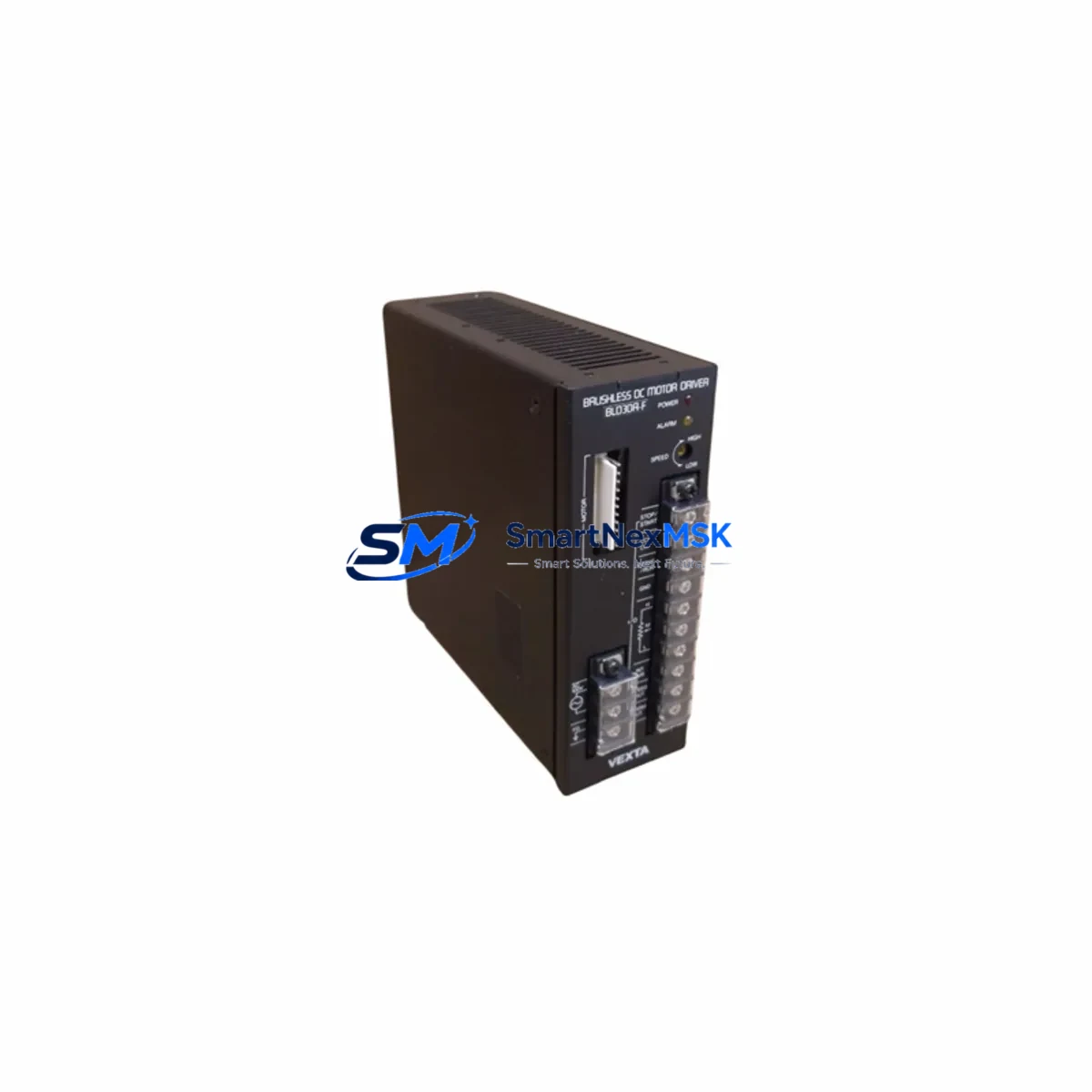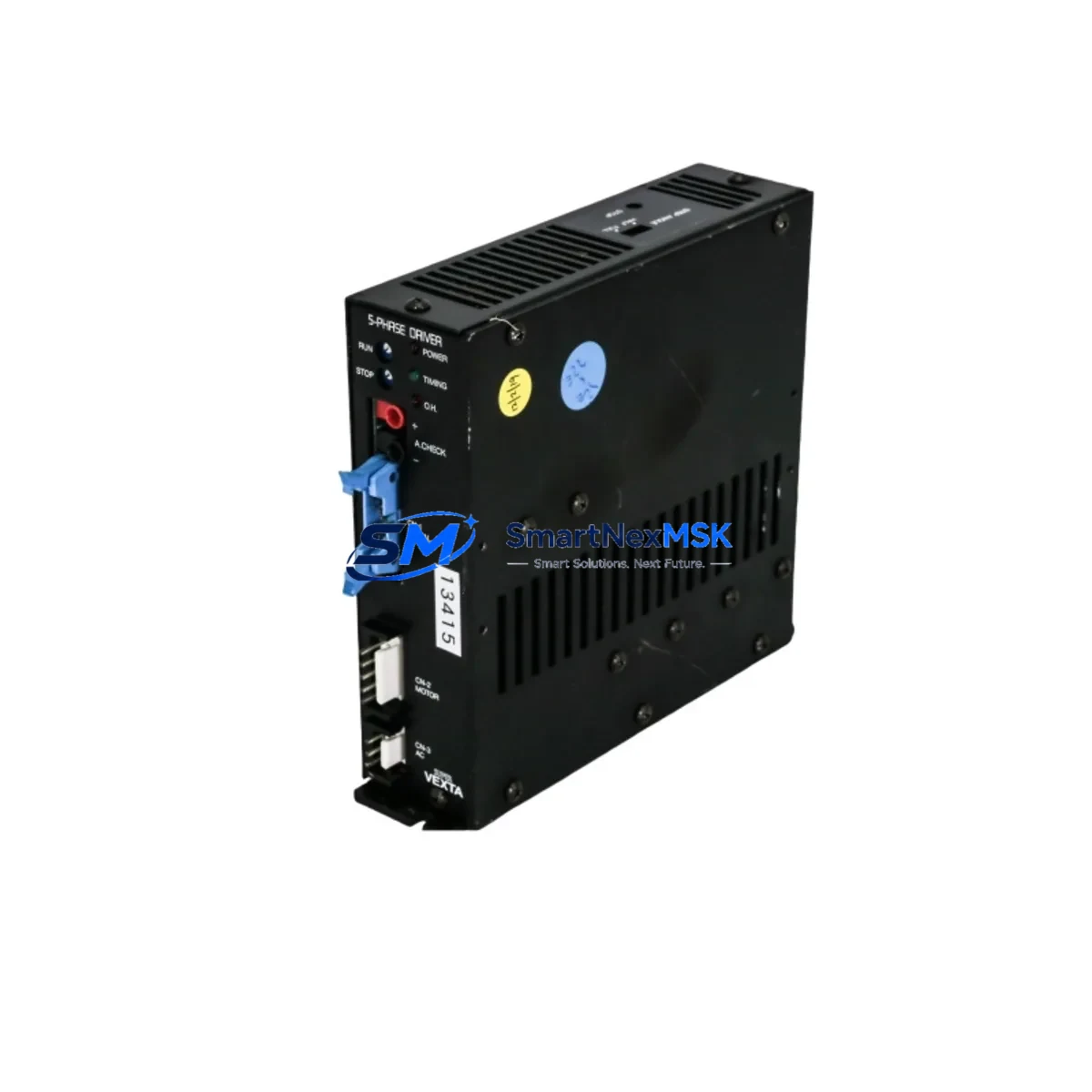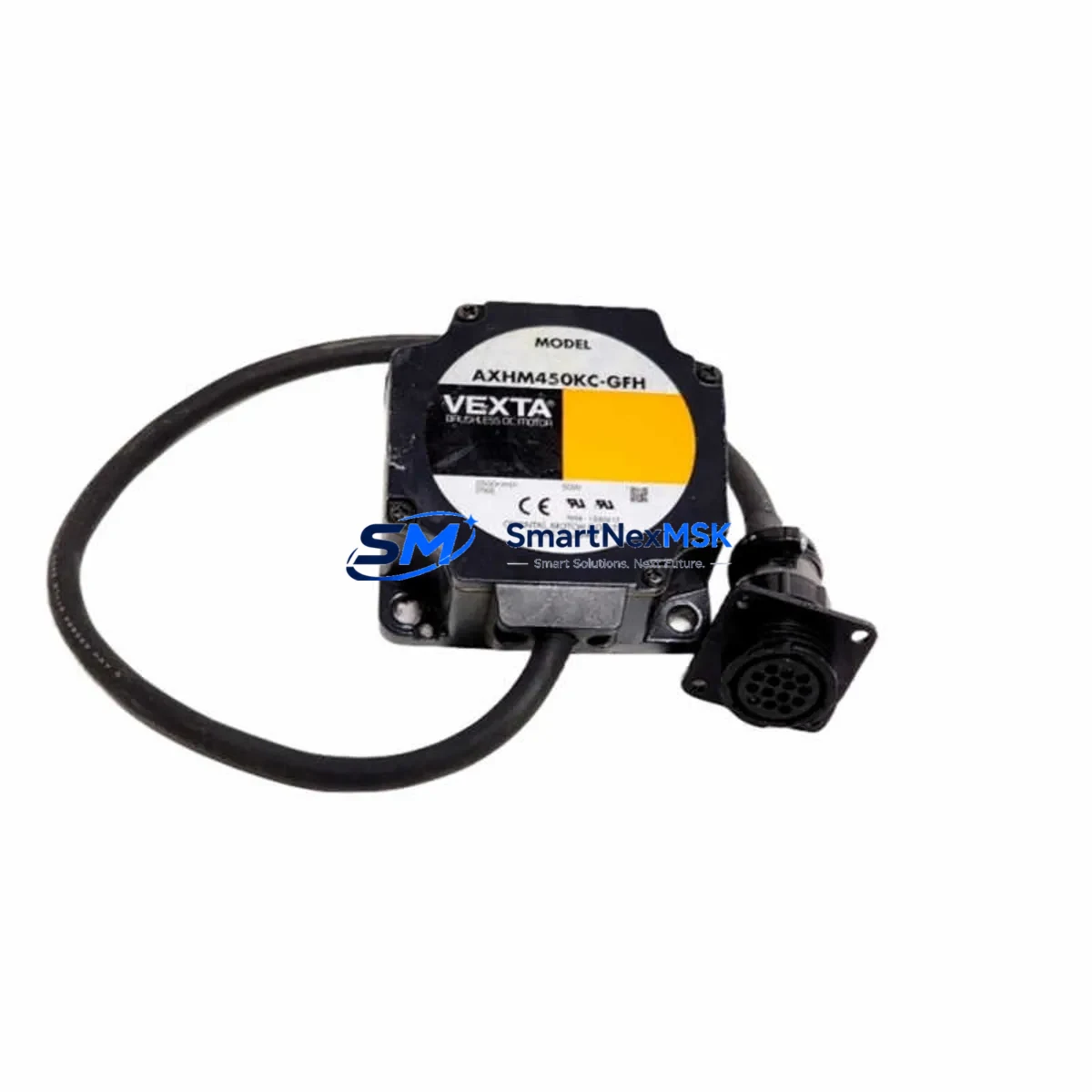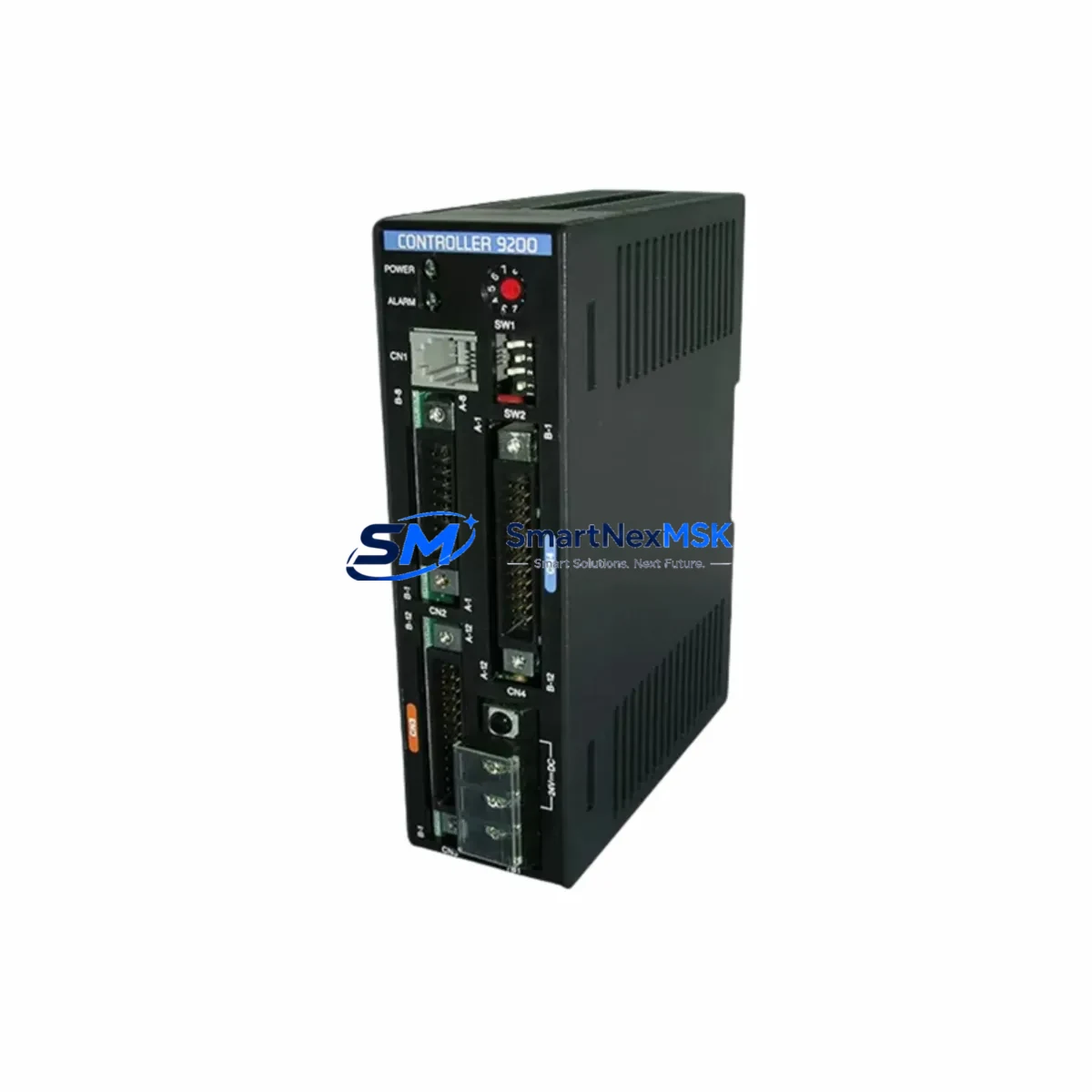
VEXTA XG9200T-G Retrofit-Ready AC Servo Amplifier for XG Series: Compatible Modernization & Smooth Legacy System Upgrade
The VEXTA XG9200T-G is a high-performance AC servo amplifier engineered for seamless integration into existing XG Series control architectures. As legacy servo systems reach end-of-life and original spare parts become increasingly scarce, the XG9200T-G provides a verified, drop-in retrofit path that preserves your existing wiring topology, rack geometry, and motion control logic — minimizing engineering rework and unplanned downtime.
Designed for industrial environments where continuity of operation is non-negotiable, the XG9200T-G supports the full range of XG Series servo motor pairings and is compatible with the standard backplane connector pinout used across the XG platform. Whether you are replacing a failed unit on a production line, upgrading a control cabinet as part of a planned modernization project, or restoring a discontinued model in a legacy system, the XG9200T-G delivers the performance, reliability, and compatibility your application demands.
Before installation, engineers should verify power supply capacity — the XG9200T-G requires a stable 200–230 V AC single-phase or three-phase input, and the existing power module (such as the VEXTA XG-PSU series or equivalent rack power supply) must be confirmed to meet the amplifier’s rated output current. Terminal block wiring should be cross-referenced against the XG9200T-G wiring diagram, particularly for the CN1 encoder feedback connector and CN2 I/O signal connector, to ensure pin-for-pin compatibility with the existing servo motor harness.
For systems using a VEXTA XG Series programmable controller or a third-party PLC communicating over RS-232C, RS-485, or MECHATROLINK-II, the XG9200T-G supports the same communication protocol stack as its predecessors, allowing existing ladder programs and motion profiles to be retained without modification. If the host controller is a newer platform — such as a Mitsubishi MELSEC iQ-R or Omron NJ/NX series — a protocol gateway or communication module may be required to bridge the interface, but the servo amplifier’s parameter set remains fully accessible via the front-panel keypad or the VEXTA setup software.
Backplane slot assignment and module address configuration should be confirmed prior to power-up. In multi-axis XG Series racks, each amplifier occupies a defined slot address that must match the axis assignment in the motion controller program. Swapping a failed amplifier without verifying the slot address is a common source of axis mismatch faults during commissioning. The XG9200T-G retains the same DIP switch and rotary address selector layout as the original XG Series amplifiers, simplifying address re-entry.
Upgrade Compatibility Table
| Parameter | XG9200T-G Specification | Retrofit Notes |
|---|---|---|
| Input Voltage | 200–230 V AC, 50/60 Hz | Verify existing power module rating before swap |
| Encoder Interface | Incremental / Absolute (CN1) | Pin-for-pin compatible with XG Series motor harness |
| I/O Connector | CN2 — 50-pin D-sub | Reuse existing cable; verify signal polarity |
| Communication Protocol | RS-232C / RS-485 / MECHATROLINK-II | No protocol migration required for XG Series hosts |
| Rack / Backplane | XG Series standard backplane | Slot address must match original axis assignment |
| Installation Format | DIN rail / rack-mount | Same mechanical footprint as legacy XG amplifiers |
| Parameter Backup | Front-panel keypad / PC software | Back up original parameters before replacement |
| Warranty | 12 Months | Covers manufacturing defects; includes pre-ship test |
Retrofit Planning for Existing Automation Systems
A successful XG9200T-G retrofit begins with a thorough audit of the existing control cabinet. In a typical XG Series installation, the servo amplifier shares a rack with the VEXTA XG Series rack power supply, one or more XG Series I/O expansion modules, and a VEXTA XG Series motion controller or compatible host PLC. Before removing the failed or obsolete amplifier, engineers should document all parameter settings using the VEXTA PC setup tool or photograph the front-panel display to capture gain, speed, and torque limit values.
Wiring adaptation is straightforward in most cases. The CN1 encoder feedback cable and CN2 I/O signal cable used with the original XG Series amplifier are directly reusable with the XG9200T-G, provided the motor model is within the compatible pairing range. For applications where the servo motor itself is also being replaced — for example, substituting a discontinued VEXTA XG Series AC servo motor with a current-production equivalent — the encoder cable pinout must be verified against the new motor’s specification sheet.
In control cabinets that also house a VEXTA UDX Series stepper driver, a VEXTA PK Series stepper motor driver, or a third-party Mitsubishi MR-J4 servo amplifier on an adjacent axis, the XG9200T-G can coexist without interference, provided each axis is assigned a unique slot address and the shared DC bus or power supply is sized for the combined peak current demand. Communication wiring between the host controller and the amplifier should be routed away from high-voltage power cables to prevent signal noise.
For systems migrating from an older VEXTA XG Series pulse-train interface to a network-based motion control architecture, the XG9200T-G’s MECHATROLINK-II port enables direct integration with compatible network masters, including the VEXTA XG Series network master module and select Yaskawa and Panasonic motion controllers. This migration path allows the servo amplifier to be upgraded without replacing the servo motor or rewiring the cabinet, significantly reducing retrofit cost and schedule risk.
HMI screen updates are typically limited to axis label changes and alarm code remapping. If the existing HMI — such as a Proface GP4000 series or Schneider Electric Magelis panel — displays axis-specific alarm codes from the servo amplifier, the alarm code table in the HMI project should be updated to reflect the XG9200T-G’s fault code definitions, which may differ slightly from the original amplifier’s documentation.
Downtime Control During System Migration
Minimizing production downtime during a servo amplifier replacement requires preparation before the maintenance window begins. The recommended sequence is: (1) back up all amplifier parameters to a PC or USB device using the VEXTA setup software; (2) photograph or document all terminal wiring before disconnection; (3) power down the control cabinet following the correct sequence — disable the servo enable signal, stop the motion program, then cut main power; (4) swap the amplifier and reconnect all cables; (5) restore parameters from backup; (6) perform a no-load jog test at low speed before resuming production.
For systems where the servo amplifier is integrated into a safety circuit — for example, where the STO (Safe Torque Off) input is wired to a safety relay or a Pilz PNOZ safety module — the safety function must be re-validated after the amplifier swap in accordance with the applicable machinery safety standard (ISO 13849 or IEC 62061). This validation step is often overlooked during emergency replacements and can result in a safety non-conformance finding during the next audit.
Original PLC ladder logic and motion profiles do not require modification when replacing a like-for-like XG Series amplifier. The host controller — whether a VEXTA XG Series motion controller, a Mitsubishi MELSEC Q Series PLC, or an Omron CJ2 Series PLC — will resume normal axis control after the amplifier parameters are restored and the servo enable signal is re-asserted. A brief auto-tuning cycle is recommended after replacement to compensate for any mechanical variation between the old and new amplifier units.
Retrofit Support FAQ
Q1: Is the XG9200T-G a direct drop-in replacement for all XG Series servo amplifiers?
The XG9200T-G is compatible with the XG Series backplane, encoder interface, and I/O connector standard. Compatibility with a specific predecessor model depends on the motor pairing and rated output current. Please provide your existing amplifier model number and motor model for a confirmed compatibility assessment before ordering.
Q2: Can I reuse my existing servo motor and encoder cable?
In most cases, yes. The CN1 encoder connector and CN2 I/O connector pinout of the XG9200T-G are consistent with the XG Series standard. If the servo motor is also being replaced, the encoder cable pinout must be verified against the new motor’s specification. We recommend a bench test before installation in the production cabinet.
Q3: What communication protocols does the XG9200T-G support, and do I need to update my PLC program?
The XG9200T-G supports RS-232C, RS-485, and MECHATROLINK-II. For existing XG Series installations, no PLC program changes are required. For integration with a new host controller platform, a communication module or gateway may be needed, but the servo amplifier’s parameter set and motion behavior remain unchanged.
Q4: What does the 12-month warranty cover, and is pre-shipment testing performed?
Every XG9200T-G unit undergoes functional testing prior to shipment, including power-on verification, encoder signal check, and communication port validation. The 12-month warranty covers manufacturing defects under normal operating conditions. Units are shipped with a test report. For warranty claims, contact our technical support team with the unit serial number and fault description.
© 2026 SMARTNEXMSK. All rights reserved.
Original Source: https://smartnexmsk.com
Contact: [email protected] | +86 18259474341