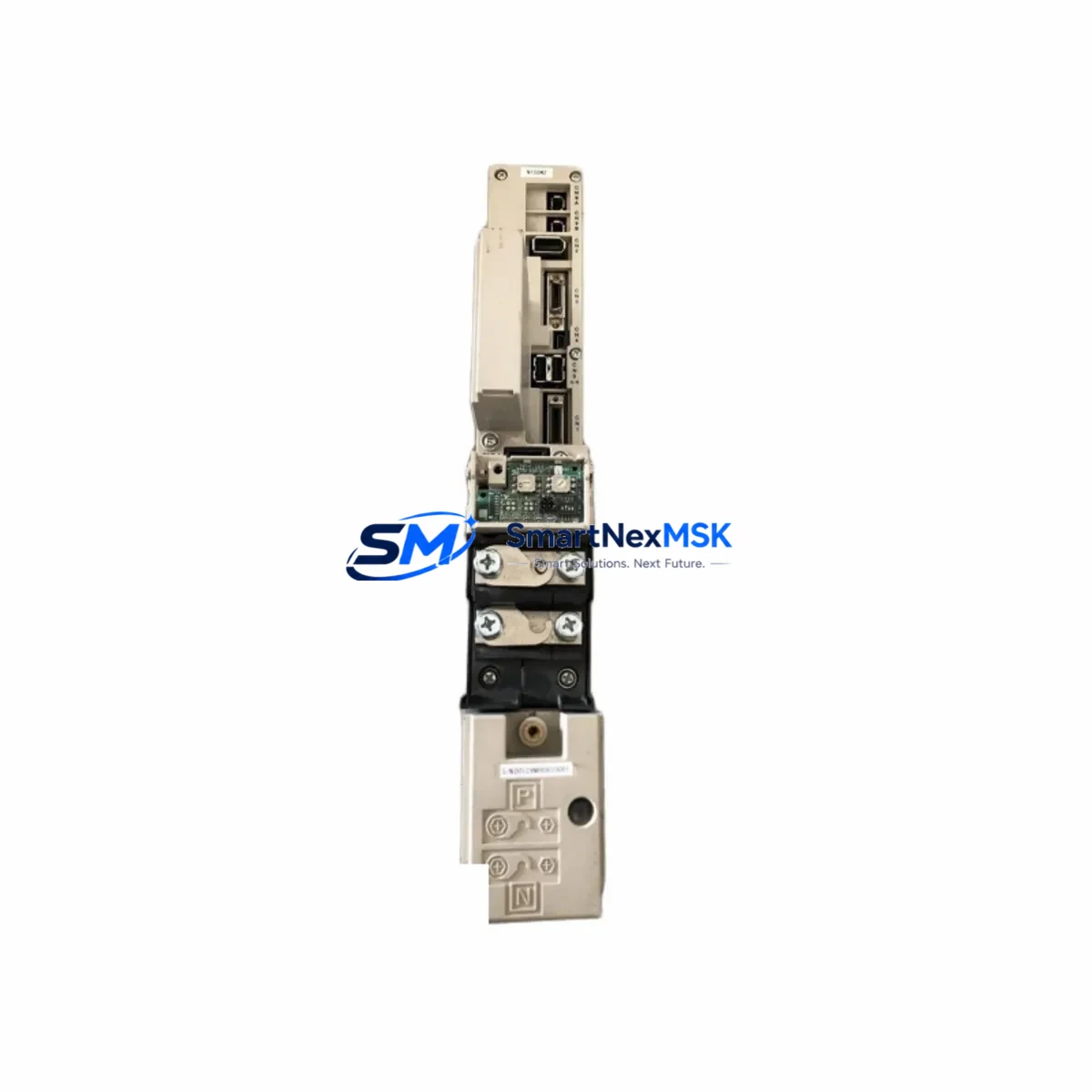
Yaskawa CACR-JU036A2A Spare for Sigma-II Automation: Spare Replacement & Industrial Downtime Risk Control
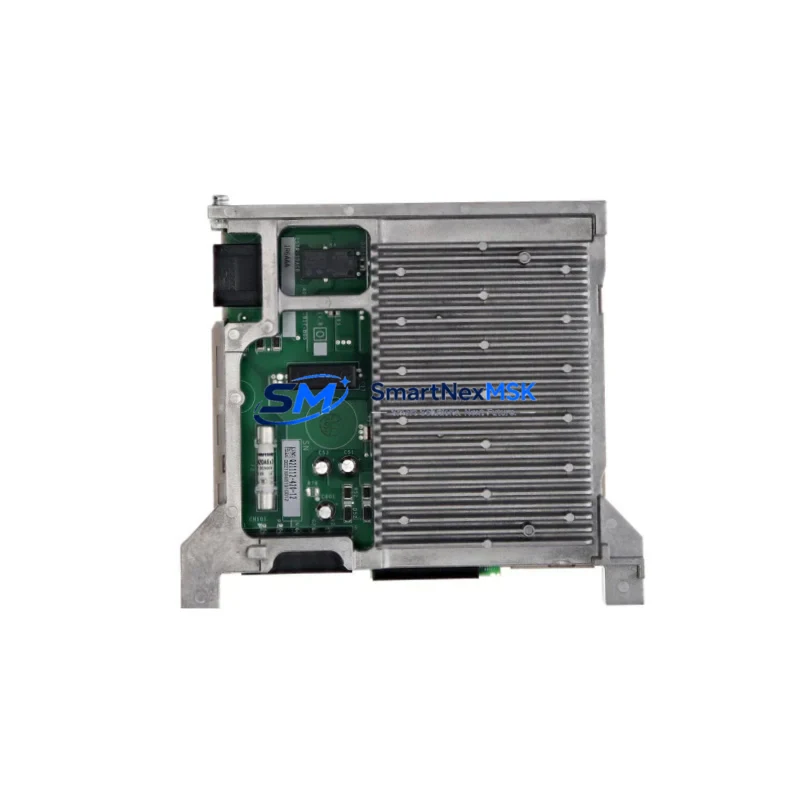
The Yaskawa CACR-JU036A2A is an original AC servo amplifier from the Sigma-II series, rated at 3.5 kW and designed for precision motion control in demanding industrial automation environments. For maintenance engineers managing aging servo systems, this unit represents a critical spare that directly impacts production continuity. Whether you are responding to an unplanned drive fault, executing a scheduled overhaul, or building a strategic spare parts inventory for a multi-axis Sigma-II installation, sourcing a verified original CACR-JU036A2A is the first step toward minimizing mean time to repair (MTTR) and protecting your facility’s uptime commitments.
At SMARTNEXMSK, every CACR-JU036A2A unit is individually inspected, function-tested, and verified for compatibility before shipment. Our supply chain covers both new-production and carefully sourced surplus stock, giving procurement engineers a reliable channel for both immediate emergency replacement and long-term blanket orders. All units ship with a 12-month warranty covering manufacturing defects and operational failures under normal industrial use conditions.
Spare Maintenance Table
| Parameter | Specification |
|---|---|
| SKU / Model | CACR-JU036A2A |
| Brand | Yaskawa Electric Corporation |
| Series | Sigma-II (SGDH / CACR-JU) |
| Product Type | AC Servo Amplifier (Drive) |
| Rated Output Power | 3.5 kW |
| Input Voltage | 200–230 V AC, 3-Phase, 50/60 Hz |
| Control Method | IGBT PWM Sinusoidal Current Control |
| Encoder Interface | Sigma-II incremental / absolute encoder compatible |
| Communication | MECHATROLINK-II (optional), analog / pulse reference |
| Regenerative Resistor | External regenerative resistor support |
| Protection Class | IP20 (panel-mount, control cabinet installation) |
| Operating Temperature | 0°C to +55°C (non-condensing) |
| Origin | Japan |
| Compatibility | Sigma-II series SGMGH / SGMSH / SGMPH servo motors |
| Warranty | 12 Months — covers manufacturing defects and operational failure under normal use |
| Pre-shipment Testing | Function test, parameter initialization, insulation check |
| Typical Application | CNC machine tools, packaging lines, semiconductor equipment, robotics, press feeders |
Maintenance Planning for Continuous Operation
Replacing a CACR-JU036A2A in the field is rarely an isolated task. Experienced maintenance engineers know that a servo amplifier fault is often a symptom of broader electrical stress within the control cabinet. Before returning the system to production, a thorough inspection of the surrounding components is strongly recommended to prevent repeat failures and ensure long-term stability.
Start with the power supply circuit: verify that the 200–230 V AC three-phase input is within tolerance and that the main circuit contactor and its associated surge suppressor are functioning correctly. A degraded contactor can cause inrush current spikes that stress the new amplifier’s rectifier stage. Check the 24 V DC control power supply — typically a dedicated DIN-rail switching power supply — for output ripple and voltage stability, as the CACR-JU036A2A’s control board is sensitive to supply noise.
Inspect all CN1 I/O signal wiring at the amplifier connector. Loose or corroded terminals on the servo enable (S-ON), alarm reset, and forward/reverse run prohibition inputs are a common source of intermittent faults that are misdiagnosed as amplifier failures. If the system uses a MECHATROLINK-II communication module or a dedicated motion controller card, verify the network termination resistor and cable shielding integrity before commissioning the replacement unit.
The encoder cable and connector between the CACR-JU036A2A and the paired Sigma-II servo motor (such as an SGMGH-44A or SGMSH-30D) should be inspected for insulation damage, bend radius violations, and connector pin corrosion. A faulty encoder signal will immediately trigger an encoder error on the new amplifier. Similarly, check the motor power cable (U/V/W phases) for insulation resistance to ground — values below 1 MΩ indicate motor winding degradation that will damage the replacement drive.
For installations where the CACR-JU036A2A operates alongside other Sigma-II axes in a shared control cabinet, inspect the shared regenerative resistor unit and its thermal fuse. Overloaded regenerative circuits are a leading cause of amplifier damage in multi-axis systems. Also verify the terminal block (TB) connections for the main circuit and control circuit — loose terminals cause voltage drops and intermittent alarms that are difficult to diagnose without a systematic inspection.
If the system includes a Yaskawa JEPMC or MP series motion controller, confirm that the axis parameters stored in the controller match the replacement amplifier’s capacity and motor combination. Parameter mismatches can cause overcurrent trips immediately after startup. For facilities running PROFIBUS-DP or DeviceNet gateway modules in the same cabinet, verify that the fieldbus communication is stable and that no address conflicts exist after the amplifier swap.
Finally, check the cabinet cooling system — fan units, filter mats, and heat exchanger condition — before closing the panel. Thermal management is the single most important factor in servo amplifier service life, and a replacement unit installed in an overheated cabinet will fail prematurely regardless of its quality.
Site Replacement Workflow
Step 1 — Fault Documentation: Record the alarm code displayed on the CACR-JU036A2A or the host controller before powering down. Common Sigma-II alarm codes (A.02, A.40, A.71, A.C1) indicate specific failure modes that help confirm whether the amplifier itself is the root cause or whether a peripheral component triggered the fault.
Step 2 — Safe Isolation: Isolate the main circuit power and wait a minimum of 5 minutes for the DC bus capacitors to discharge before opening the cabinet. Verify discharge with a calibrated DC voltmeter at the P/N terminals. Do not rely on indicator lights alone.
Step 3 — Parameter Backup: If the amplifier is still partially functional, use a Yaskawa Digital Operator (JUSP-OP05A) or the SigmaWin+ software to back up all user parameters (Pn group) before removal. This eliminates the need to re-enter parameters manually on the replacement unit.
Step 4 — Physical Replacement: Disconnect CN1 (I/O), CN2 (encoder), and the motor power terminals (U/V/W) in sequence. Remove the main circuit power terminals (L1/L2/L3, P/N, B1/B2). Mount the replacement CACR-JU036A2A, reconnect all terminals following the original wiring diagram, and torque all terminal screws to specification.
Step 5 — Parameter Restore and JOG Test: Restore backed-up parameters or enter the motor code and tuning parameters from the maintenance record. Perform a JOG test at low speed before enabling the full motion profile. Confirm that no alarms are present and that the encoder feedback is clean.
Step 6 — Return to Production: Enable the axis, run a full cycle at reduced speed, then at production speed. Monitor current, speed, and position error for the first 30 minutes of operation. Document the replacement in the equipment maintenance log.
This systematic workflow reduces average replacement time to under 2 hours for experienced technicians and eliminates the most common causes of repeat failures after servo amplifier replacement.
Spare Parts Support FAQ
Q1: Is the CACR-JU036A2A still available as a new unit, or only as surplus stock?
The Sigma-II series has been superseded by the Sigma-7 platform, and new production of CACR-JU036A2A units has been discontinued by Yaskawa. SMARTNEXMSK maintains a dedicated inventory of original surplus and refurbished units, each tested and warranted for 12 months. For facilities committed to long-term Sigma-II operation, we recommend securing a minimum of one spare amplifier per axis to protect against supply chain gaps.
Q2: How do I verify compatibility between the CACR-JU036A2A and my existing servo motor before ordering?
Compatibility is determined by the motor capacity (3.5 kW), voltage class (200 V), and encoder type. The CACR-JU036A2A is designed to pair with Sigma-II series motors in the SGMGH-44, SGMSH-30, and SGMPH-44 families. Provide your motor nameplate data and existing amplifier model to our technical team at [email protected] for a compatibility confirmation before purchase.
Q3: What does the 12-month warranty cover, and what is the replacement process?
The 12-month warranty covers all manufacturing defects and operational failures under normal industrial operating conditions (within rated voltage, current, and temperature specifications). It does not cover damage caused by incorrect wiring, overvoltage events, or physical impact. In the event of a warranty claim, contact our support team with the unit serial number and fault description. We will arrange a replacement shipment or repair within the agreed lead time, minimizing your downtime exposure.
Q4: Can SMARTNEXMSK support long-term supply agreements for Sigma-II spare parts?
Yes. We offer blanket purchase agreements and consignment stock programs for maintenance departments managing large Sigma-II installations. These programs guarantee price stability, priority allocation, and reduced lead times for critical spare parts including servo amplifiers, servo motors, encoder cables, and associated control components. Contact [email protected] or call +86 18259474341 to discuss your facility’s requirements.
—
© 2026 SMARTNEXMSK. All rights reserved.
Original Source: https://smartnexmsk.com
Contact: [email protected] | +86 18259474341