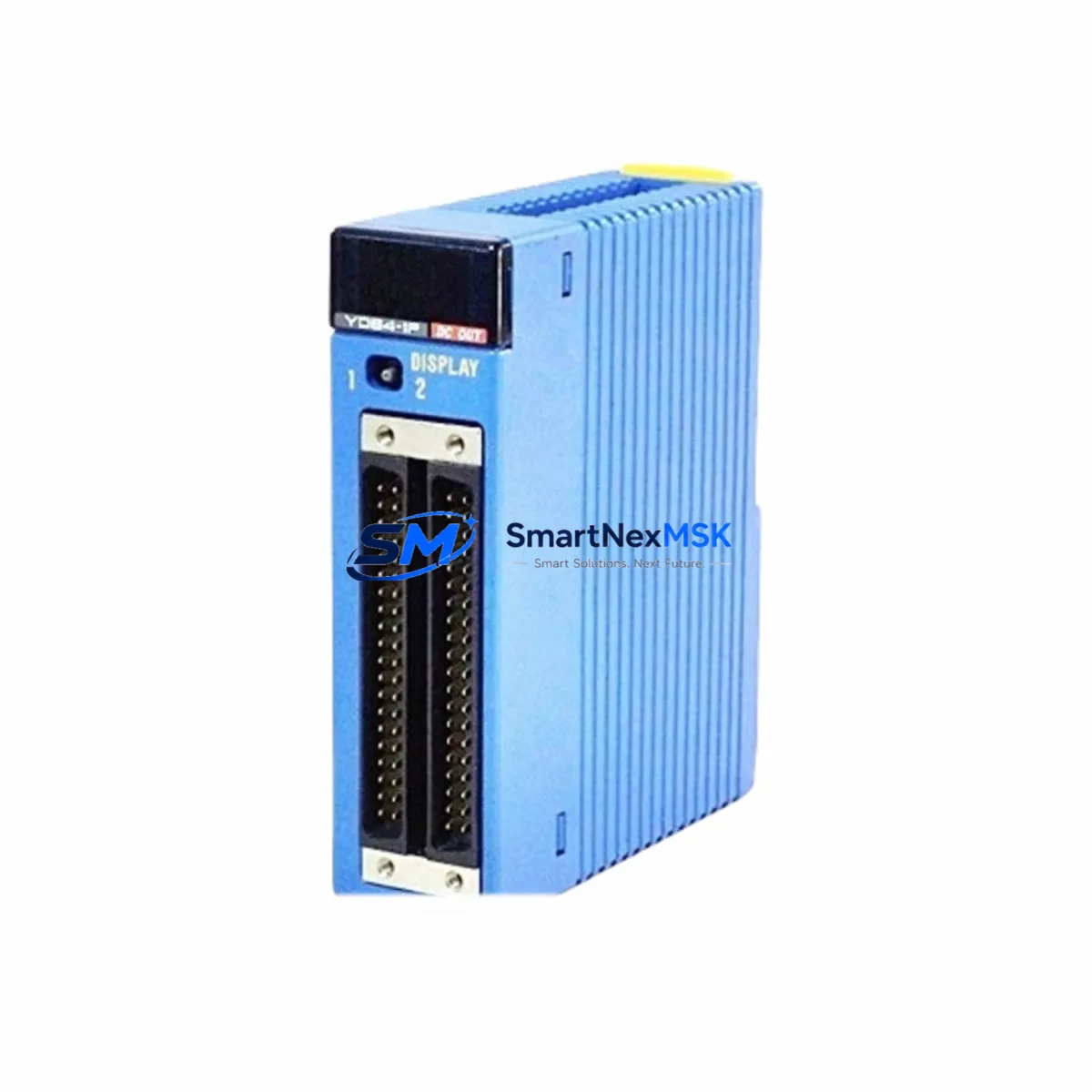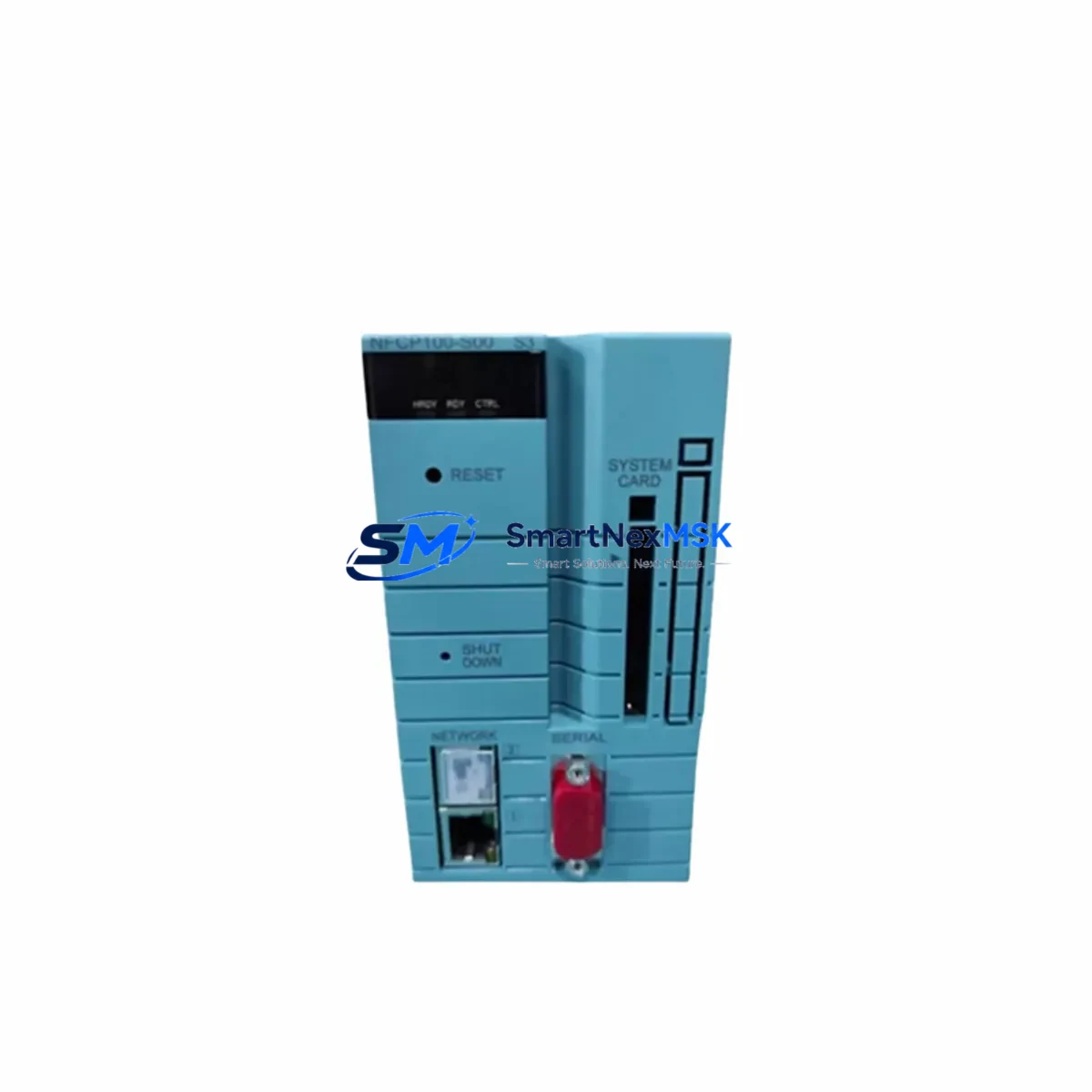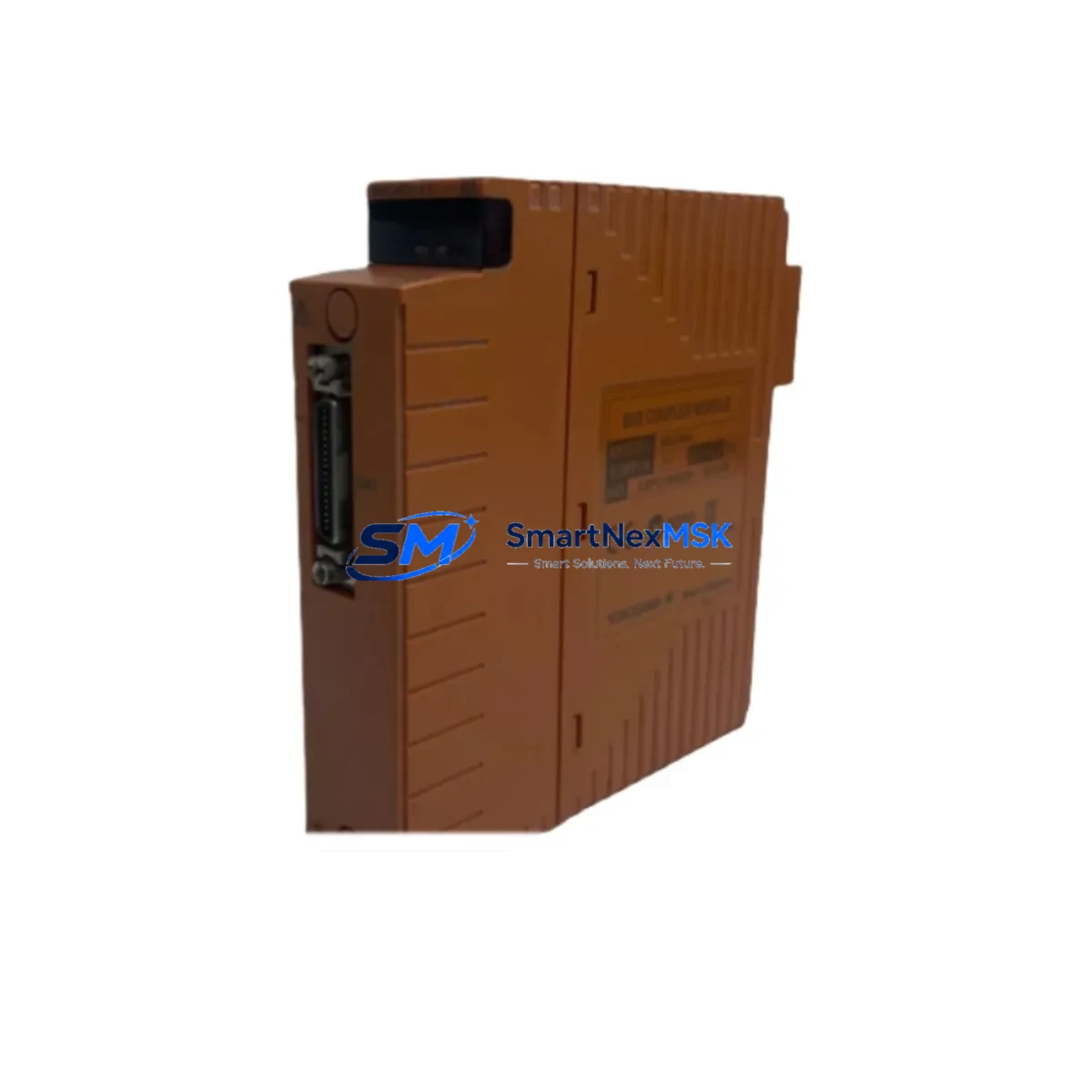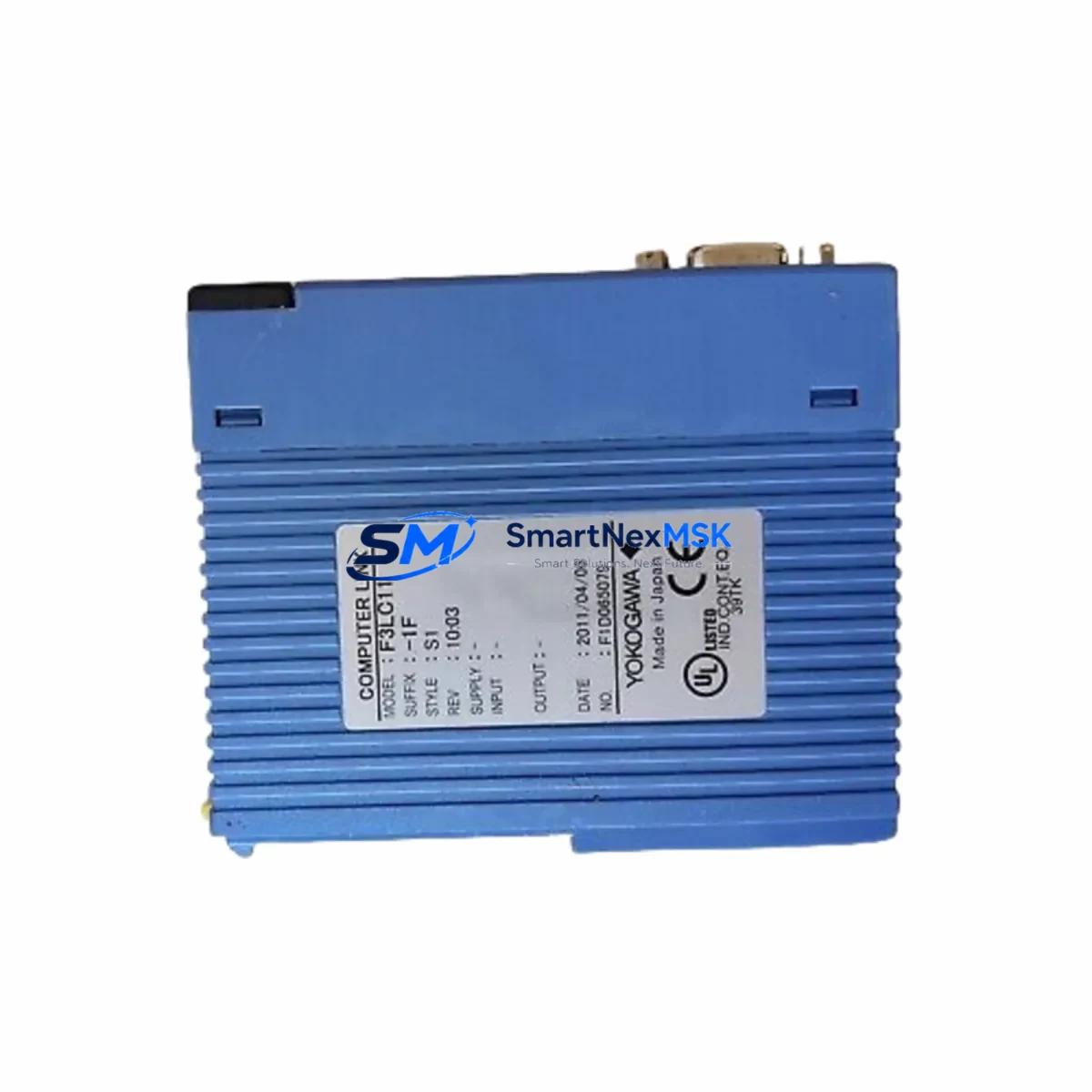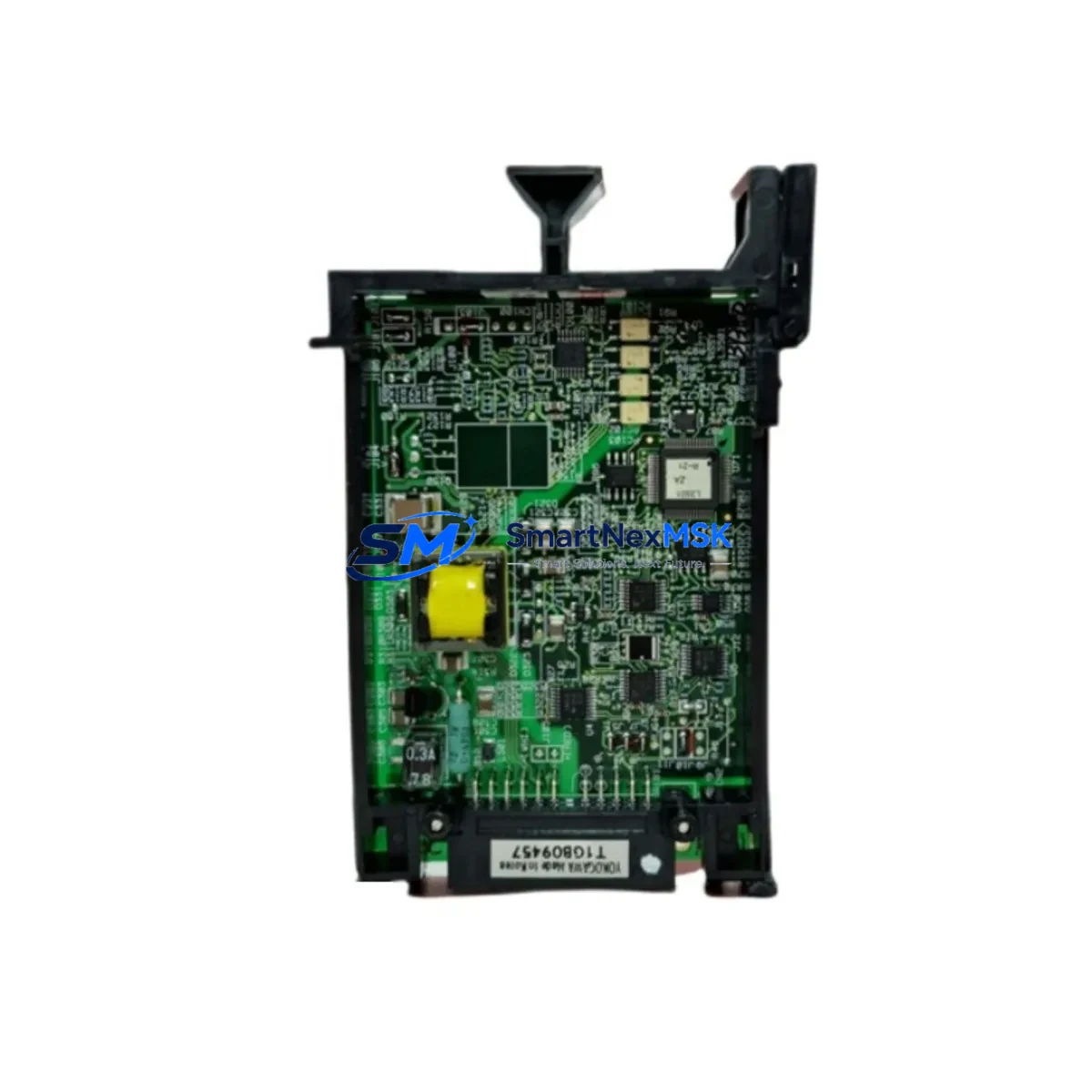
YOKOGAWA ET5*C Retrofit-Ready Signal Conditioner: Compatible Upgrade for ET Series Control Systems
The YOKOGAWA ET5*C is a thermocouple input signal conditioner engineered for seamless integration into existing ET Series distributed control and process automation systems. As legacy ET Series installations reach end-of-service milestones, the ET5*C provides a verified, wiring-compatible retrofit path that eliminates the need for full panel redesign or PLC program rewrite. SMARTNEXMSK maintains ready stock of the ET5*C to support planned maintenance windows, emergency spare replacements, and phased system modernization projects across process industries.
Whether you are replacing a failed unit in a running production line or executing a scheduled upgrade of an aging signal conditioning rack, the ET5*C is designed to minimize engineering rework. Its terminal block layout and signal range configuration align with the original ET Series field wiring standards, allowing technicians to transfer existing thermocouple leads directly without re-termination. Input type selection — covering Type K, J, T, E, R, S, and B thermocouples — is configurable via front-panel DIP switches, preserving compatibility with the sensor types already deployed in your process.
Upgrade Compatibility Table
| Parameter | Detail |
|---|---|
| Replaces / Compatible With | YOKOGAWA ET Series signal conditioners (ET5*A, ET5*B legacy variants) |
| Input Interface | Thermocouple (Type K, J, T, E, R, S, B) via screw terminal block |
| Output Signal | 4–20 mA DC analog output, isolated |
| Power Supply | 24 V DC loop-powered or external supply (verify existing PSU capacity before swap) |
| Mounting | DIN rail, compatible with standard ET Series mounting rails and enclosures |
| Communication Compatibility | Analog 4–20 mA; integrates with YOKOGAWA CENTUM VP, CS 3000, and third-party DCS/PLC analog input cards |
| Wiring Adaptation | Direct terminal-for-terminal replacement; no re-termination required in most installations |
| Commissioning Notes | Verify DIP switch input type selection; perform loop calibration check after installation |
| Warranty | 12 months from date of shipment — SMARTNEXMSK |
Retrofit Planning for Existing Automation Systems
A successful ET5*C retrofit begins with a thorough audit of the existing signal conditioning rack. Before removing the legacy unit, document the current DIP switch configuration, terminal wiring labels, and the analog input card address on the receiving DCS or PLC. In YOKOGAWA CENTUM CS 3000 and CENTUM VP environments, the analog input module — typically an AAI141 or AAI143 card installed in an KFCS or LFCS field control station — will continue to receive the 4–20 mA signal without any software modification, provided the ET5*C output range is set identically to the outgoing unit.
For installations where the ET5*C feeds into a third-party PLC platform, such as a Siemens S7-300 or Allen-Bradley ControlLogix analog input module, the same principle applies: the 4–20 mA output is hardware-standard and requires no driver change. However, engineers should confirm that the existing analog input card’s input impedance is within the ET5*C’s load driving specification before finalizing the swap.
Power supply capacity is a critical checkpoint. The ET5*C draws supply current from the 24 V DC bus shared with other field instruments. When replacing multiple signal conditioners in a single cabinet upgrade, calculate the aggregate current draw against the rated output of the existing YOKOGAWA PW481 or equivalent 24 V DC power supply module. If the margin is insufficient, a supplementary power supply should be added to the DIN rail before the new conditioners are energized.
In multi-drop signal conditioning racks, the ET5*C occupies the same physical footprint as its predecessors, making it compatible with standard ET Series DIN rail segments and terminal block carriers. When upgrading an entire rack, it is advisable to replace the associated terminal block assemblies and ferrule-terminated field cables simultaneously to eliminate latent wiring faults that may otherwise surface after the new modules are commissioned. Spare YOKOGAWA ET Series terminal block sets and DIN rail end brackets should be ordered alongside the ET5*C units to avoid secondary delays.
For systems that include a YOKOGAWA FieldMate or PRM (Plant Resource Manager) asset management platform, the ET5*C does not require device registration as it is a passive analog conditioner. However, the associated field transmitter — such as a YOKOGAWA EJA110E or EJA430A pressure transmitter connected upstream — should be verified in the asset database to confirm that its calibration record remains valid after the signal path change.
Where the control system includes a YOKOGAWA Exaopc OPC server or a third-party SCADA historian, no tag reconfiguration is required following an ET5*C swap, as the signal range and engineering unit scaling remain unchanged. This is a key advantage of the ET5*C retrofit approach: the HMI faceplate, trend displays, and alarm setpoints in the operator station require no modification, preserving the integrity of the existing process graphics and operator workflow.
Downtime Control During System Migration
Minimizing unplanned downtime is the primary engineering constraint in any live-system signal conditioner replacement. The ET5*C retrofit is designed to support a hot-swap procedure in installations where the process can tolerate a brief signal interruption. The recommended sequence is: place the associated control loop in manual mode at the DCS or PLC operator station, isolate the 24 V DC supply to the target conditioner using the individual channel fuse or circuit breaker, remove the legacy unit, install the ET5*C, verify DIP switch settings, restore power, and confirm the 4–20 mA output reading at the analog input card before returning the loop to automatic control.
For critical loops where even a momentary signal loss is unacceptable, a parallel installation approach is recommended: mount the ET5*C on an adjacent DIN rail position, wire a duplicate thermocouple lead or use a thermocouple signal splitter to feed both the old and new conditioners simultaneously, verify the ET5*C output against the legacy unit’s reading, then transfer the analog input wiring to the new module and remove the old unit. This approach preserves continuous 4–20 mA signal delivery to the DCS throughout the transition.
All ET5*C units shipped by SMARTNEXMSK undergo pre-shipment functional testing, including input simulation across the full thermocouple range and output verification at 4 mA, 12 mA, and 20 mA setpoints. A test report is available upon request. This factory-level verification reduces on-site commissioning time and supports the goal of completing the replacement within a single planned maintenance shift.
Original program logic stored in the CENTUM VP or CS 3000 field control station is not affected by the ET5*C swap. The function block configuration, PID tuning parameters, and interlock logic remain intact. Engineers should, however, perform a post-installation loop check — applying a known thermocouple millivolt signal using a calibrator such as a Fluke 714 or equivalent — to confirm end-to-end signal accuracy before releasing the loop to production.
Retrofit Support FAQ
Q1: Is the ET5*C a direct drop-in replacement for earlier ET Series signal conditioners?
In the majority of ET Series installations, yes. The ET5*C shares the same DIN rail footprint, terminal block layout, and 4–20 mA output standard as earlier ET5*A and ET5*B variants. The primary commissioning step is to verify and match the DIP switch input type selection to the thermocouple type in use. No mechanical modification to the mounting rail or enclosure is required.
Q2: What wiring checks should be performed before and after installation?
Before removal of the legacy unit, photograph or record the terminal wiring assignments and measure the existing 4–20 mA output value as a reference baseline. After installing the ET5*C, verify polarity of the thermocouple leads at the input terminals, confirm the 24 V DC supply voltage at the power terminals, and measure the output current at the analog input card terminals. The post-installation reading should match the pre-removal baseline within the specified accuracy tolerance.
Q3: How is compatibility with the receiving DCS or PLC analog input card confirmed?
The ET5*C outputs a standard 4–20 mA DC signal, which is universally accepted by analog input cards from YOKOGAWA, Siemens, Rockwell Automation, Honeywell, and other major DCS and PLC platforms. Confirm that the receiving card’s input impedance does not exceed the ET5*C’s maximum load resistance specification (typically 600 Ω). No software driver or firmware update is required on the receiving system.
Q4: What does the 12-month warranty cover, and what pre-shipment testing is performed?
Every ET5*C unit supplied by SMARTNEXMSK carries a 12-month warranty from the date of shipment, covering manufacturing defects and functional failures under normal operating conditions. Pre-shipment testing includes input simulation across all supported thermocouple types, output current verification at multiple setpoints, and isolation resistance check. Test documentation is available upon request. For warranty claims or technical support, contact [email protected].
© 2026 SMARTNEXMSK. All rights reserved.
Original Source: https://smartnexmsk.com
Contact: [email protected] | +86 18259474341