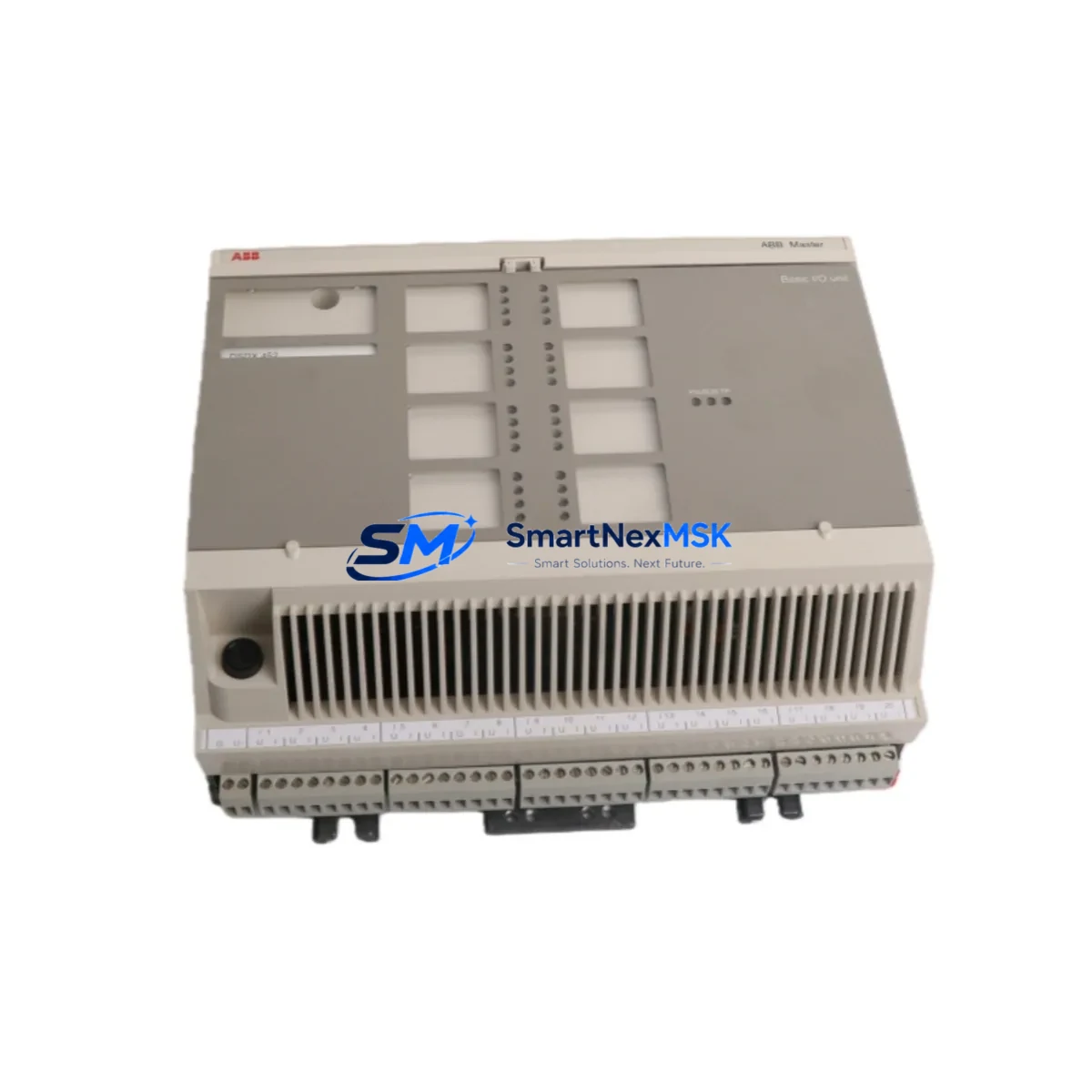
ABB DSDX452 5716075-P Retrofit-Ready Digital I/O for S800 Control Systems
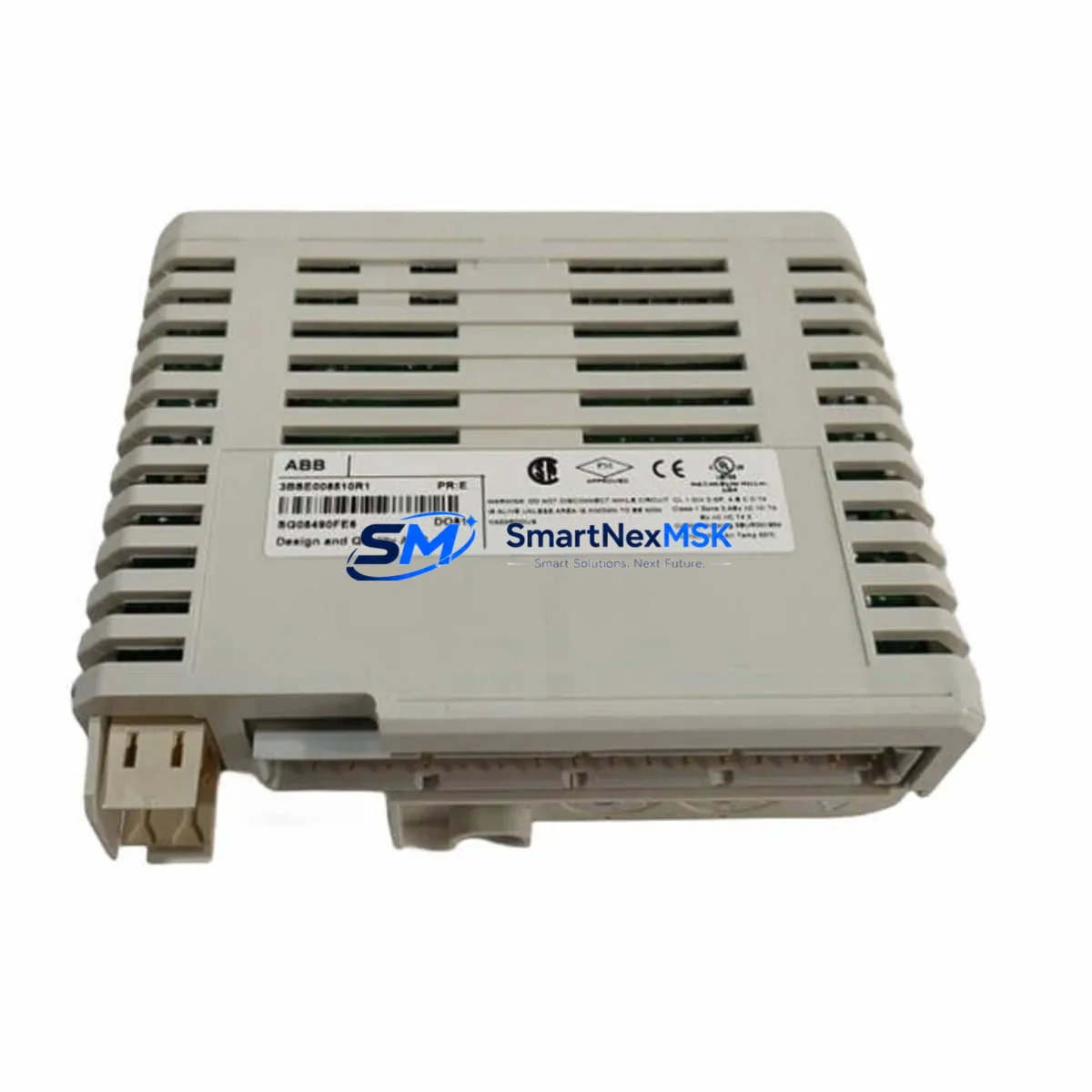
The ABB DSDX452 (part number 5716075-P) is a high-density digital input/output module engineered for the ABB S800 I/O series, one of the most widely deployed distributed I/O platforms in process automation and industrial control. As legacy S800 installations age and OEM support windows close, the DSDX452 has become a critical retrofit component for engineers tasked with extending the operational life of existing control architectures without committing to a full DCS migration. Whether you are replacing a failed unit on a live production line, upgrading a control cabinet to meet revised safety standards, or consolidating I/O channels during a partial system modernization, the DSDX452 delivers the electrical and protocol compatibility needed to keep your automation infrastructure running without rewriting control logic or retraining operators.
The module communicates over the ModuleBus backplane protocol, which is native to the ABB AC800M controller family. This means the DSDX452 integrates directly into existing AC800M CPU racks without requiring protocol converters or gateway devices. Engineers migrating from older S800 configurations built around the CI854 PROFIBUS interface module or the CI857 PROFINET interface module will find that the DSDX452 slots into the same TB820V2 or TB840A termination unit footprint, preserving existing field wiring and dramatically reducing retrofit labor hours. The module’s 24 VDC operating range and standard DIN-rail-compatible baseplate make it compatible with the majority of control cabinet layouts already in service across the petrochemical, pulp and paper, power generation, and water treatment sectors.
Upgrade Compatibility Table
| Parameter | DSDX452 5716075-P | Retrofit Notes |
|---|---|---|
| Series | ABB S800 I/O | Direct replacement for S800 digital I/O modules |
| Communication Protocol | ModuleBus (optical) | Compatible with CI854, CI857, CI858 interface modules |
| Termination Unit | TB820V2 / TB840A | No field wiring changes required in most installations |
| Supply Voltage | 24 VDC | Verify existing PSU capacity before hot-swap |
| Backplane Interface | S800 optical ModuleBus | Plug-and-play with AC800M CPU racks |
| Module Address | Configurable via Control Builder Plus | Re-use existing address; no program recompile needed |
| Installation | DIN-rail / baseplate mount | Matches original S800 mechanical footprint |
| Replacement Scope | Drop-in for discontinued S800 DX modules | Confirm firmware revision with AC800M CPU version |
| Warranty | 12 Months | Covers manufacturing defects; includes pre-shipment functional test |
Retrofit Planning for Existing Automation Systems
A successful DSDX452 retrofit begins well before the module arrives on site. The first step is a thorough audit of the existing S800 I/O station: document every module slot, record the current firmware version of the AC800M CPU, and photograph the termination unit wiring on the TB820V2 or TB840A baseplate. This baseline record protects you if a wiring discrepancy surfaces during commissioning. Next, verify that the 24 VDC power supply feeding the I/O station — typically an ABB SD831 or SD832 power supply unit — has sufficient headroom to support the DSDX452 alongside any other modules sharing the same rail. Overloaded power rails are a common and easily overlooked cause of intermittent faults after a module swap.
For sites running the ABB AC800M controller with Control Builder Plus, the DSDX452 module address is configured in software and stored in the controller project. In most retrofit scenarios, the replacement module inherits the same logical address as the unit it replaces, which means the existing application program — including all function block instances, signal lists, and alarm configurations — remains valid without recompilation. However, if the site is also upgrading from an older CI854 PROFIBUS interface module to a CI858 PROFINET interface module as part of a broader protocol migration, the I/O tree in Control Builder Plus will need to be restructured to reflect the new communication path. In this case, plan for a controlled download window and coordinate with the HMI team to verify that all S800 I/O signals mapped to the 800xA System operator station or the Panel 800 HMI display are correctly re-linked after the download.
Field wiring on the TB820V2 termination unit uses standard screw terminals, and the DSDX452 connects to the baseplate via the module’s optical ModuleBus connector — no special tools are required. Before powering up, confirm that the module’s DIP switch settings (where applicable) match the channel configuration expected by the control program. For installations that include an AI810 analog input module or an AO810V2 analog output module on the same I/O station, verify that the station’s total channel count does not exceed the CI interface module’s supported node limit. Mixed digital and analog I/O stations are common in retrofit projects, and the DSDX452 coexists cleanly with these analog modules on the same ModuleBus segment.
Sites that also need to extend I/O capacity during the retrofit should consider adding a second S800 I/O station connected via an additional CI854 or CI857 interface module. The AC800M controller supports multiple I/O stations per CPU, and the DSDX452 can be deployed across any of them. If the control cabinet layout requires a compact form factor, the TB811 or TB825 termination units offer a smaller footprint while maintaining full electrical compatibility with the DSDX452. For remote I/O applications where the S800 station is located away from the main control cabinet, the optical ModuleBus fiber link provides inherent noise immunity — a significant advantage in environments with heavy motor drives or variable frequency drives generating electrical interference.
Downtime Control During System Migration
Minimizing unplanned downtime is the primary engineering constraint in any live-system retrofit. For the DSDX452, the recommended approach is a staged hot-swap procedure: with the AC800M CPU in RUN mode and the affected I/O station powered, remove the failed or obsolete module from its baseplate slot and insert the replacement DSDX452. The AC800M’s redundant execution model allows the controller to continue executing the application program during the swap, provided the module address and channel configuration are identical. The controller will detect the new module, perform an automatic hardware handshake over the ModuleBus, and resume normal I/O scanning within seconds — typically without triggering a process alarm if the swap is completed within the controller’s configurable module-loss timeout window.
To protect the original program logic during the migration, export a full backup of the Control Builder Plus project — including all hardware configuration files, function block libraries, and signal lists — before beginning any physical work. Store this backup on an isolated engineering workstation, not on the live controller. If the retrofit also involves a firmware upgrade on the AC800M CPU, schedule this as a separate maintenance window after the DSDX452 swap has been verified stable. Attempting both changes simultaneously increases the risk of a configuration mismatch that is difficult to diagnose under time pressure. For sites with a Panel 800 or 800xA HMI, confirm that all process graphics referencing signals from the DSDX452 channels display correctly after the swap, and document any alarm suppression periods applied during the migration for the site’s change management records.
Retrofit Support FAQ
Q: Is the DSDX452 5716075-P a direct drop-in replacement for other discontinued S800 digital I/O modules?
A: Yes, in most cases. The DSDX452 is mechanically and electrically compatible with the S800 I/O baseplate and termination unit ecosystem. It is commonly used to replace discontinued DX-series digital modules on TB820V2 and TB840A termination units. Always verify the channel count and signal type (digital input vs. digital output) match your application before ordering.
Q: Do I need to modify my AC800M control program after installing the DSDX452?
A: In a like-for-like replacement scenario, no program changes are required. The DSDX452 inherits the module address and channel configuration of the unit it replaces. If you are also changing the CI interface module type (e.g., from CI854 PROFIBUS to CI857 PROFINET), a hardware configuration update in Control Builder Plus will be necessary, but the application logic itself remains unchanged.
Q: What pre-shipment testing is performed on the DSDX452 before delivery?
A: Every DSDX452 unit supplied by SMARTNEXMSK undergoes a functional power-on test and channel continuity verification before shipment. Units are shipped with original or equivalent protective packaging. A 12-month warranty covering manufacturing defects is included with every order. Warranty claims are processed directly through our technical support team at [email protected].
Q: What is the lead time, and do you maintain stock for urgent retrofit requirements?
A: SMARTNEXMSK maintains ready stock of the DSDX452 5716075-P to support urgent retrofit and emergency replacement requirements. Standard orders ship within 1–3 business days. For time-critical plant shutdowns or emergency breakdowns, contact our team directly at +86 18259474341 to confirm availability and arrange expedited dispatch.
© 2026 SMARTNEXMSK. All rights reserved.
Original Source: https://smartnexmsk.com
Contact: [email protected] | +86 18259474341