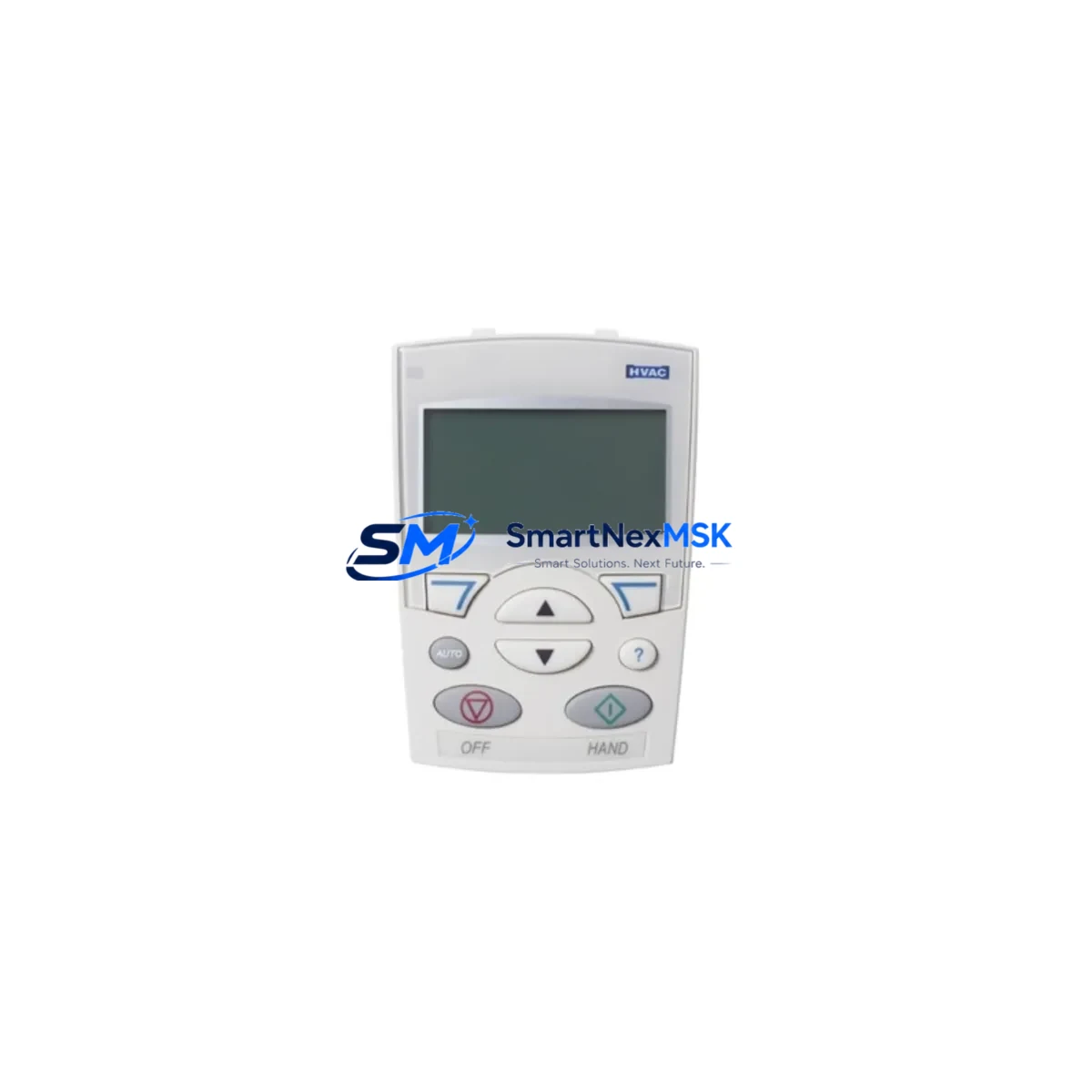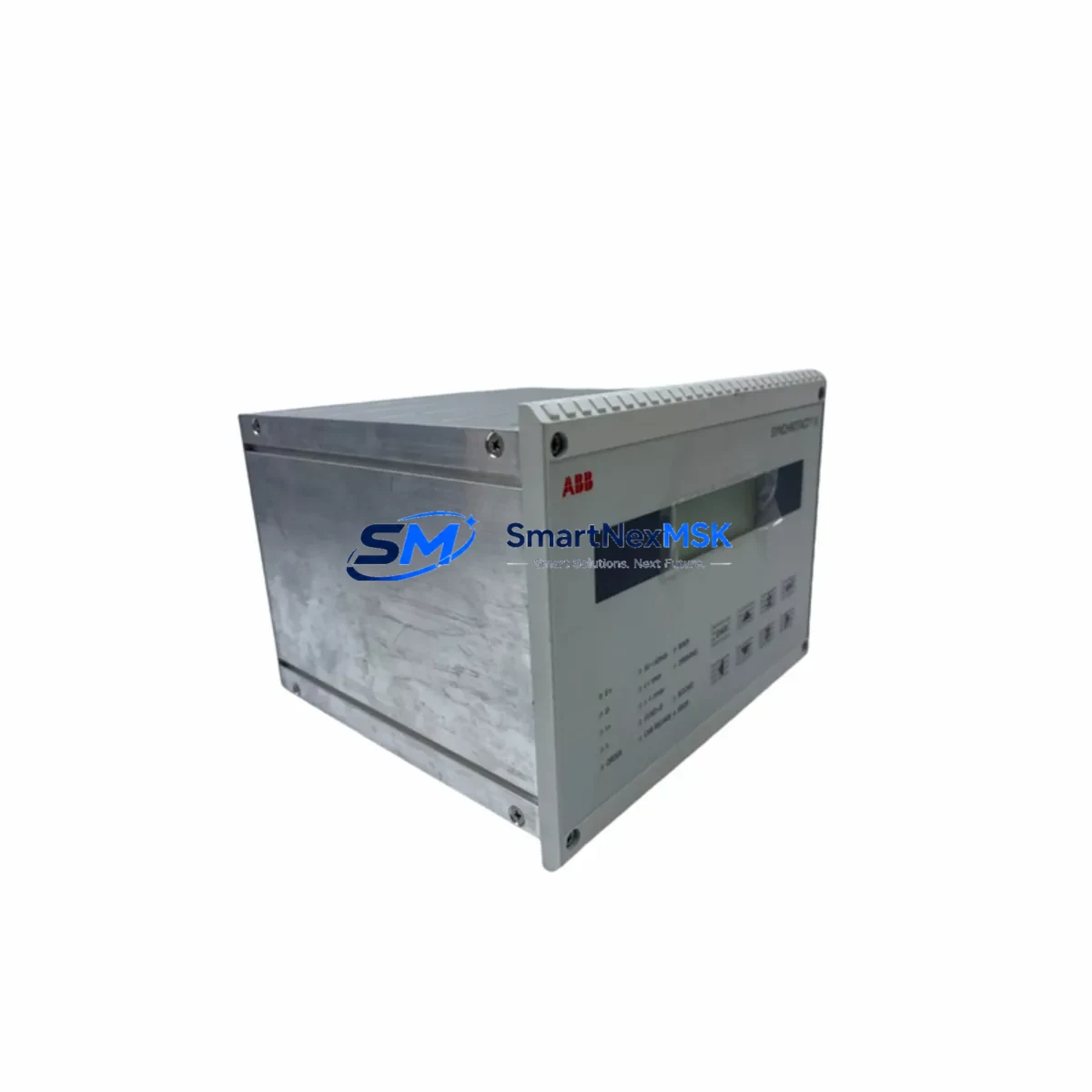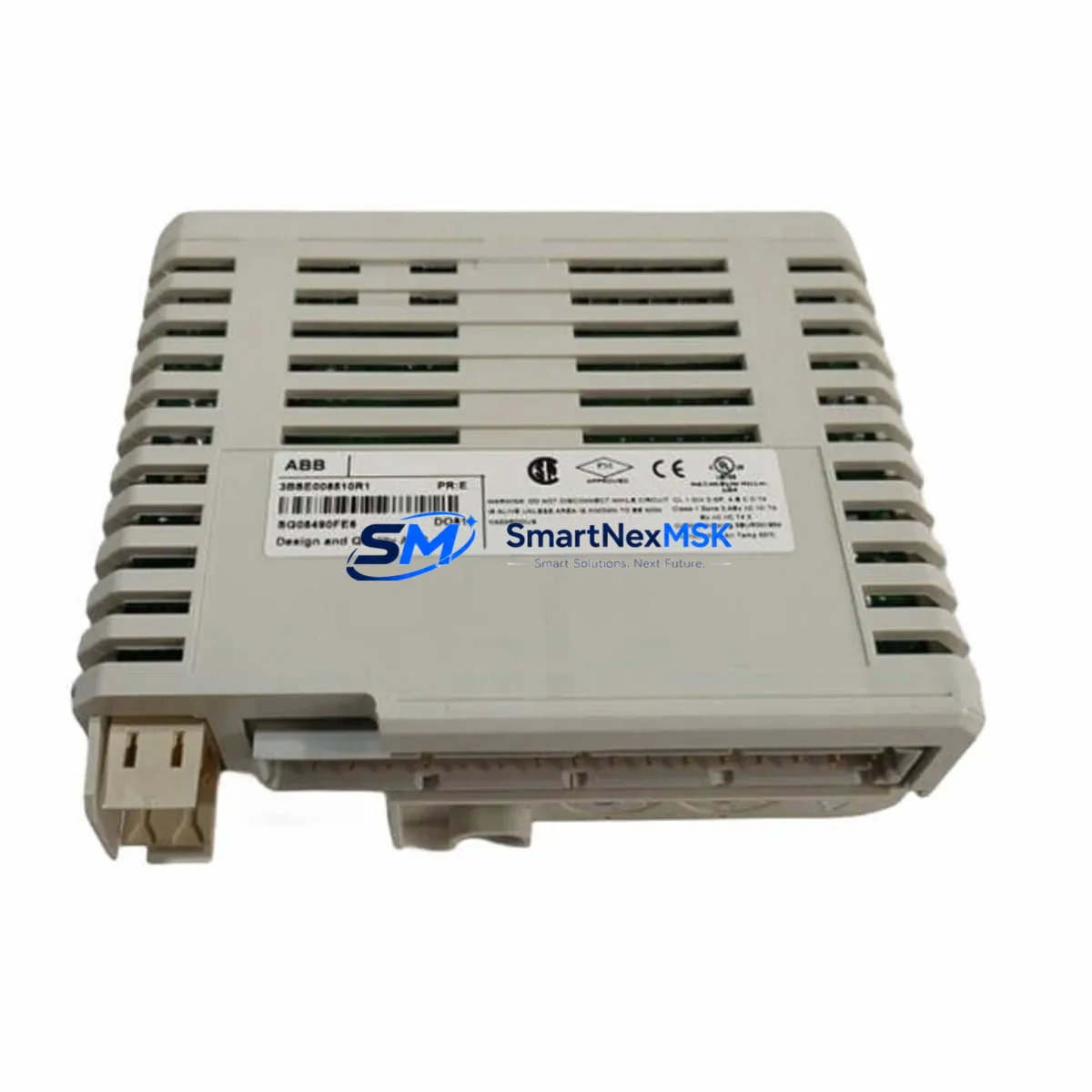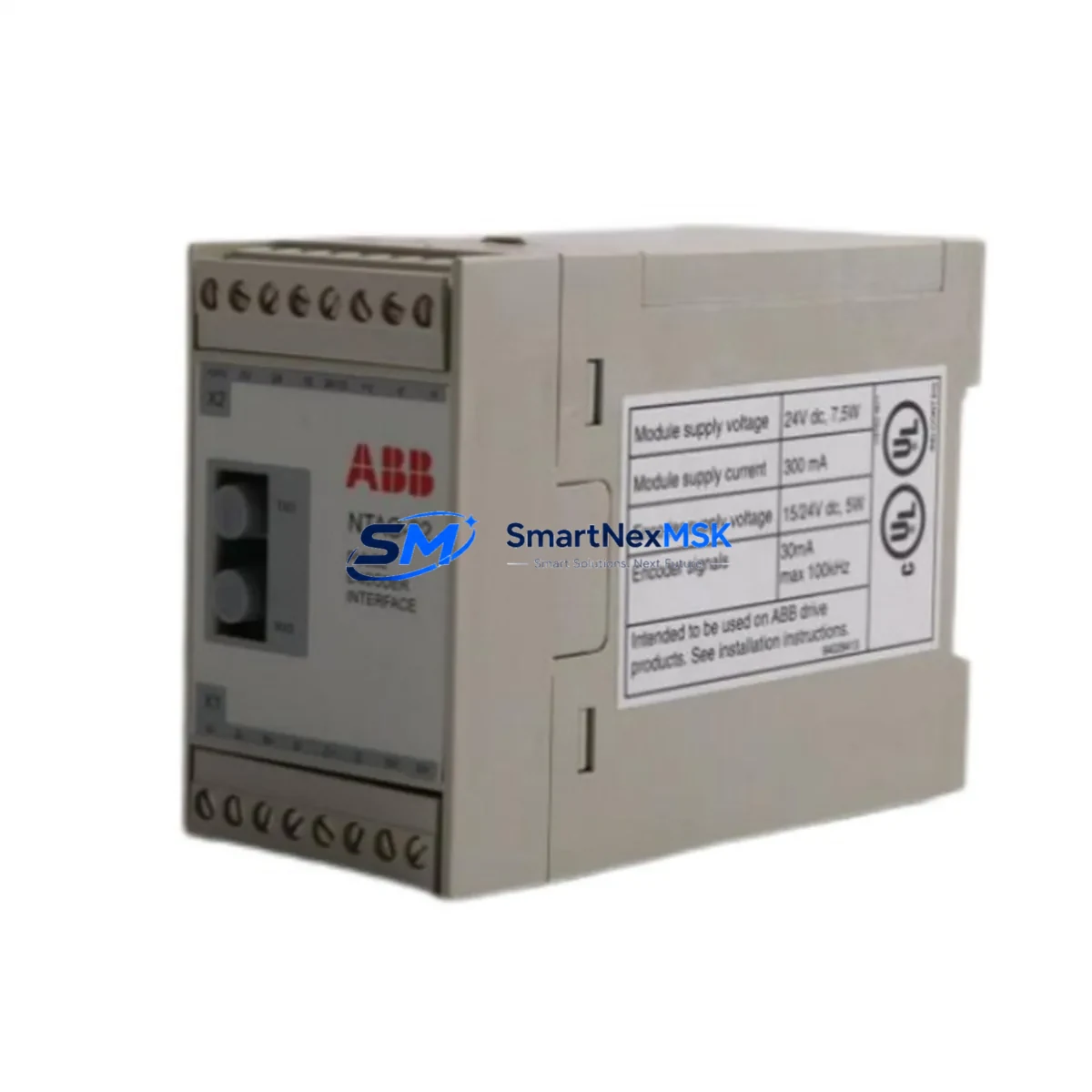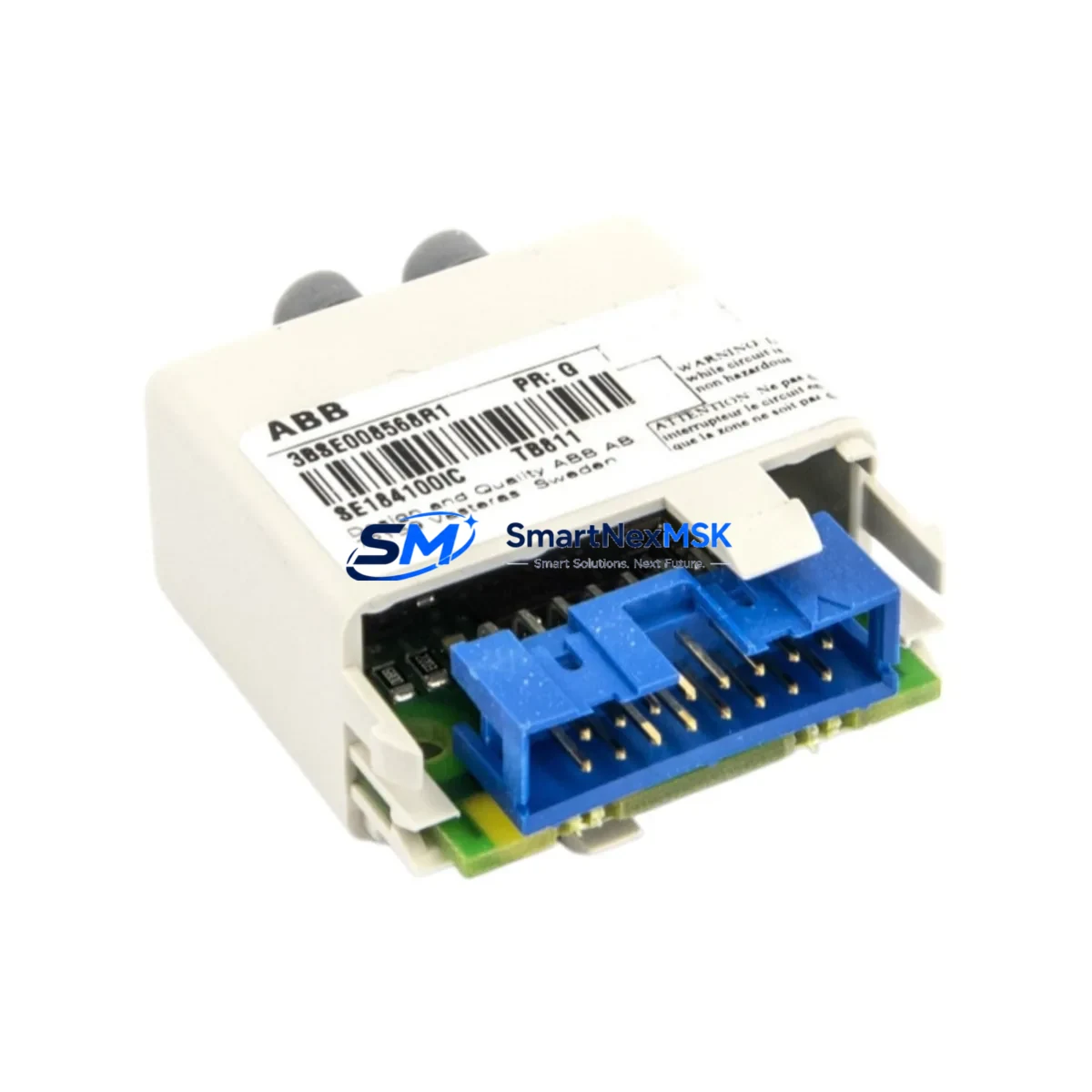
ABB TB811 3BSE008568R1 Spare for S800 Automation: Modulebus Optical Port Replacement & Downtime Risk Control
The ABB TB811 (3BSE008568R1) is an original OEM Modulebus Optical Communication Module designed for the ABB S800 I/O system and AC 800M Distributed Control System (DCS). In continuous-process industries — including oil & gas, power generation, pulp & paper, and chemical manufacturing — the TB811 serves as the optical backbone connecting S800 I/O stations to the AC 800M controller. A failed or degraded TB811 can isolate an entire I/O cluster, triggering unplanned shutdowns and costly production losses. Maintaining a verified spare in your parts inventory is the most effective strategy for rapid downtime recovery.
This listing supplies an original ABB TB811 3BSE008568R1 unit — not a third-party substitute — sourced through established industrial distribution channels. Each unit undergoes functional verification and communication link testing prior to shipment. A 12-month warranty covers manufacturing defects and operational failures under normal service conditions. Global logistics support ensures delivery to plant sites across Asia, Europe, the Middle East, and the Americas.
Spare Maintenance Table
| Parameter | Specification / Detail |
|---|---|
| Part Number | TB811 |
| Order Code | 3BSE008568R1 |
| Manufacturer | ABB (Germany) |
| Module Function | Modulebus Optical Communication Port for S800 I/O |
| Compatible Controller | AC 800M (PM851, PM856, PM860, PM861, PM864, PM866) |
| Compatible I/O System | ABB S800 I/O (AI810, AO810, DI810, DO810, DI811, DO811 series) |
| Communication Interface | Modulebus optical fiber (plastic optical fiber, POF) |
| Supply Voltage | 24 V DC (via S800 I/O backplane / TB820 bus terminator) |
| Operating Temperature | 0 °C to +55 °C |
| Storage Temperature | -40 °C to +70 °C |
| Humidity | 5–95% RH, non-condensing |
| Protection Class | IP20 (panel-mount, control cabinet installation) |
| Mounting | DIN rail via S800 I/O baseplate (TB820 / TB840 compatible) |
| Weight | Approx. 40 g |
| Origin | Germany |
| Condition | Original OEM — new or fully tested surplus |
| Pre-shipment Test | Communication link verification, optical port integrity check |
| Warranty | 12 Months — covers manufacturing defects and operational failure |
| Typical Application | AC 800M DCS I/O expansion, S800 remote I/O station communication |
Maintenance Planning for Continuous Operation
When a TB811 fault is detected — typically indicated by a Modulebus communication error on the AC 800M engineering station or a flashing red LED on the S800 I/O station — maintenance engineers should treat the event as a system-level diagnostic, not an isolated component failure. The TB811 operates within a tightly coupled communication chain, and adjacent components should be inspected concurrently to prevent repeat failures after replacement.
Begin by verifying the TB820 Modulebus Terminator or TB840 Modulebus Terminator with redundancy at the end of the optical fiber chain. A degraded terminator can cause intermittent communication errors that mimic a TB811 fault. Next, inspect the plastic optical fiber (POF) cables connecting the TB811 to the S800 I/O baseplates — fiber bends tighter than the minimum bend radius, contaminated connectors, or cracked fiber jackets are common root causes of Modulebus degradation in older installations.
On the power side, confirm that the SD821 or SD822 24 V DC Power Supply feeding the S800 I/O rail is within specification. Voltage sag or ripple on the 24 V bus can cause optical transceiver instability in the TB811. If the cabinet houses a redundant power configuration, verify that the SD831 or SD832 redundant power supply module is active and the diode ORing unit is functioning correctly.
For I/O integrity, inspect the AI810 Analog Input, AO810 Analog Output, DI810 Digital Input, and DO810 Digital Output modules seated on the S800 baseplates. A module with a failed internal bus interface can generate Modulebus errors that appear upstream at the TB811. Swap suspect I/O modules to a known-good baseplate slot to isolate the fault before condemning the TB811.
If the AC 800M controller itself is under review, check the PM856 or PM864 processor module firmware version for known Modulebus compatibility issues. Older firmware revisions may require an update to support TB811 hardware revisions introduced after 2015. The CI854 PROFIBUS DP communication interface or CI858 DNP3 interface, if present in the same controller rack, should also be verified for correct configuration — a misconfigured communication module can generate bus load that degrades Modulebus polling cycles.
For cabinets with signal conditioning requirements, inspect any signal isolators or loop-powered transmitter barriers on the analog input circuits connected to AI810 modules. Faulty isolation can introduce ground loops that corrupt analog signals and trigger false diagnostic alarms, complicating fault isolation during a TB811 replacement event.
Procurement engineers should note that the TB811 3BSE008568R1 is a long-lifecycle ABB spare with confirmed availability through authorized distribution. Stocking one or two units per AC 800M DCS cluster is a standard practice in facilities with mean-time-to-repair (MTTR) targets under four hours. Pairing TB811 stock with a spare TB820 terminator and a reel of replacement POF cable covers the majority of Modulebus communication failure scenarios without requiring emergency procurement.
Site Replacement Workflow
Step 1 — Fault Confirmation: On the AC 800M engineering station (Control Builder M), navigate to the hardware configuration tree and identify the S800 I/O station reporting a Modulebus communication fault. Note the station address and the physical cabinet location.
Step 2 — Safe Isolation: Follow your site’s lockout/tagout (LOTO) procedure for the affected I/O station. In redundant Modulebus configurations (TB840), the redundant path may allow continued operation during replacement — confirm with your DCS engineer before proceeding.
Step 3 — Physical Removal: Disconnect the POF fiber connectors from the TB811 optical ports. Note the fiber routing and port assignments (IN/OUT) before removal. Release the module from the S800 baseplate latch and slide it out.
Step 4 — Replacement Installation: Insert the new TB811 3BSE008568R1 into the baseplate slot. Reconnect POF fibers to the correct IN/OUT ports — reversed connections are a common commissioning error. Verify that the fiber connectors are fully seated and the dust caps are removed.
Step 5 — Communication Verification: Power up the I/O station and observe the TB811 LED indicators. A steady green RUN LED with no fault LED indicates successful Modulebus communication. Confirm on the AC 800M engineering station that all I/O modules in the station are online and reporting correctly.
Step 6 — Functional Test: Perform a loop check on critical I/O channels (at minimum, safety-related and process-critical signals) before returning the station to automatic control. Document the replacement in your CMMS with the new module serial number and installation date.
This workflow applies equally to planned maintenance replacements during scheduled shutdowns and to emergency replacements during unplanned outages. The TB811’s tool-free baseplate mounting and plug-in fiber connectors are designed to support rapid field replacement with minimal specialist tooling.
Spare Parts Support FAQ
Q1: Is the TB811 3BSE008568R1 still in production, and how long will it remain available?
The TB811 is an active ABB catalog item as of 2026. ABB’s S800 I/O system has an extended lifecycle commitment, and the TB811 remains available through authorized distribution channels. For facilities planning long-term DCS lifecycle extensions beyond 10 years, we recommend establishing a consignment stock agreement or purchasing a multi-unit buffer stock to mitigate future availability risk.
Q2: How is each TB811 unit tested before shipment?
Each unit supplied through SMARTNEXMSK undergoes a pre-shipment inspection that includes visual examination for physical damage, optical port cleanliness verification, and a functional communication link test using ABB-compatible test equipment. Units that fail any inspection criterion are quarantined and not shipped. A test report is available upon request for critical applications.
Q3: Can the TB811 3BSE008568R1 replace earlier TB811 hardware revisions without reconfiguration?
In most cases, yes. The TB811 3BSE008568R1 is backward-compatible with earlier hardware revisions within the S800 I/O system. No software reconfiguration in Control Builder M is required for a like-for-like replacement. However, if your AC 800M firmware is older than version 5.0, we recommend verifying compatibility with ABB’s hardware revision notes before installation.
Q4: What does the 12-month warranty cover, and what is the claims process?
The 12-month warranty covers manufacturing defects and operational failures under normal operating conditions (within specified voltage, temperature, and humidity ranges). It does not cover damage caused by incorrect installation, overvoltage events, or physical mishandling. To initiate a warranty claim, contact [email protected] with the order number, unit serial number, and a description of the failure. Replacement units are dispatched after fault verification, typically within 3–5 business days.
© 2026 SMARTNEXMSK. All rights reserved.
Original Source: https://smartnexmsk.com
Contact: [email protected] | +86 18259474341