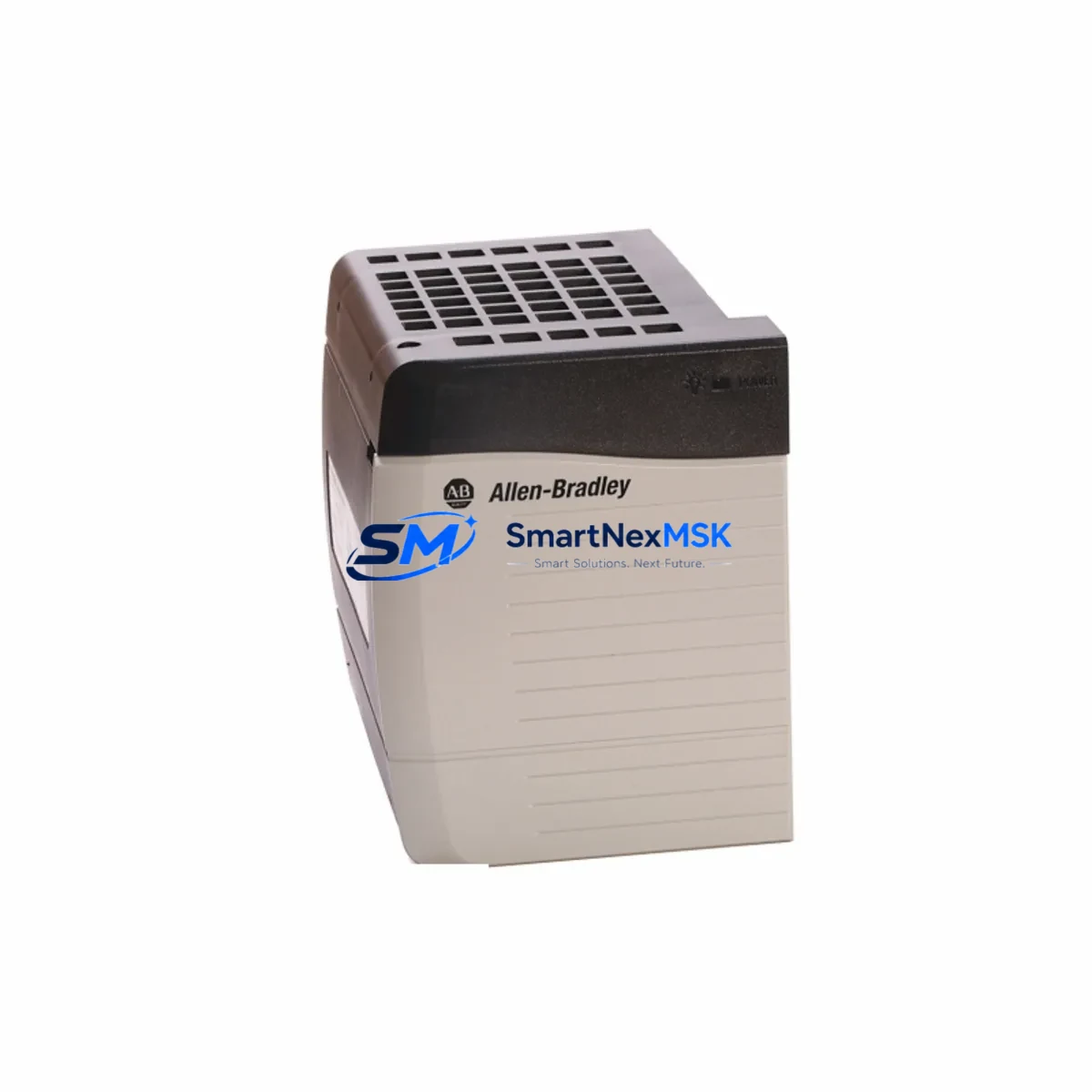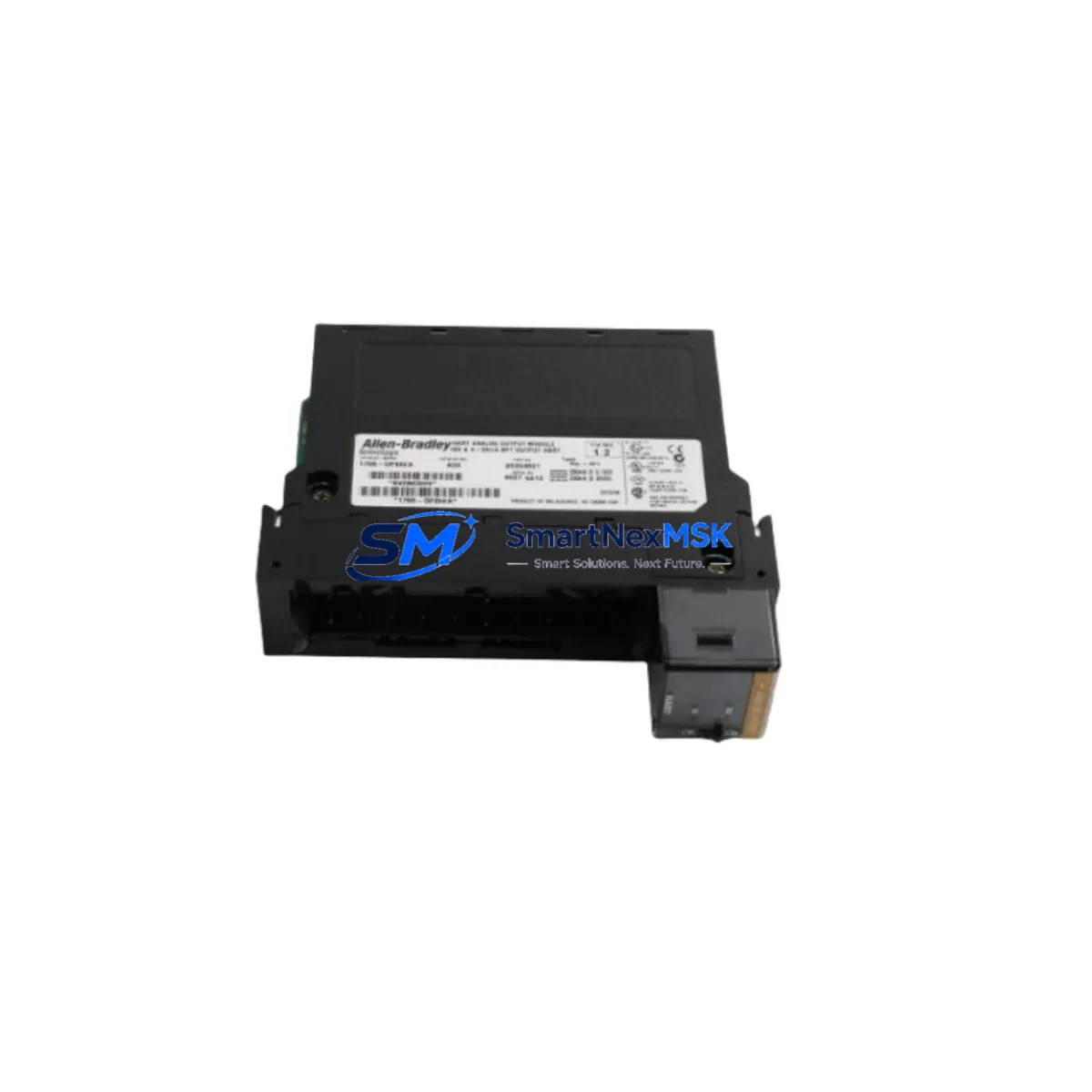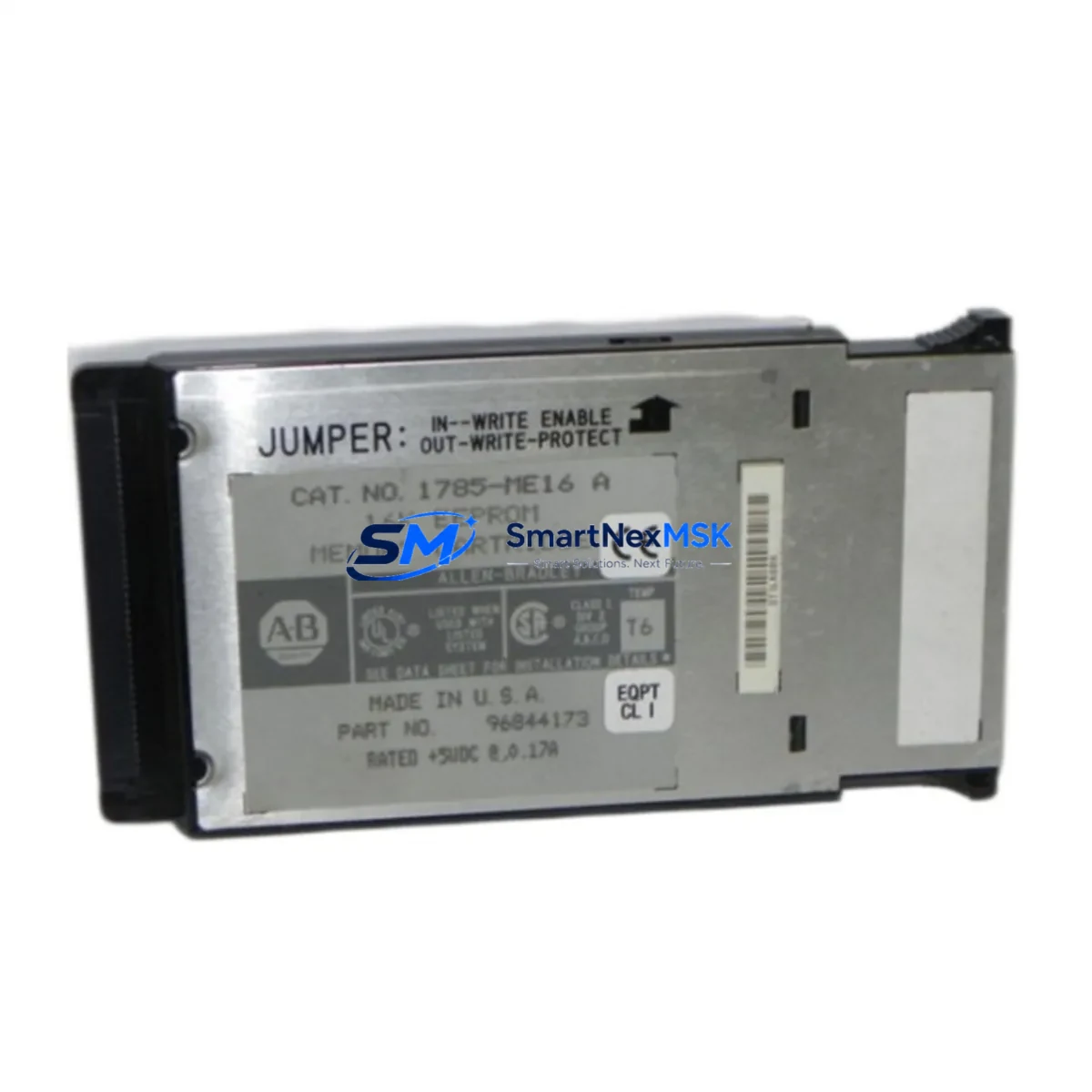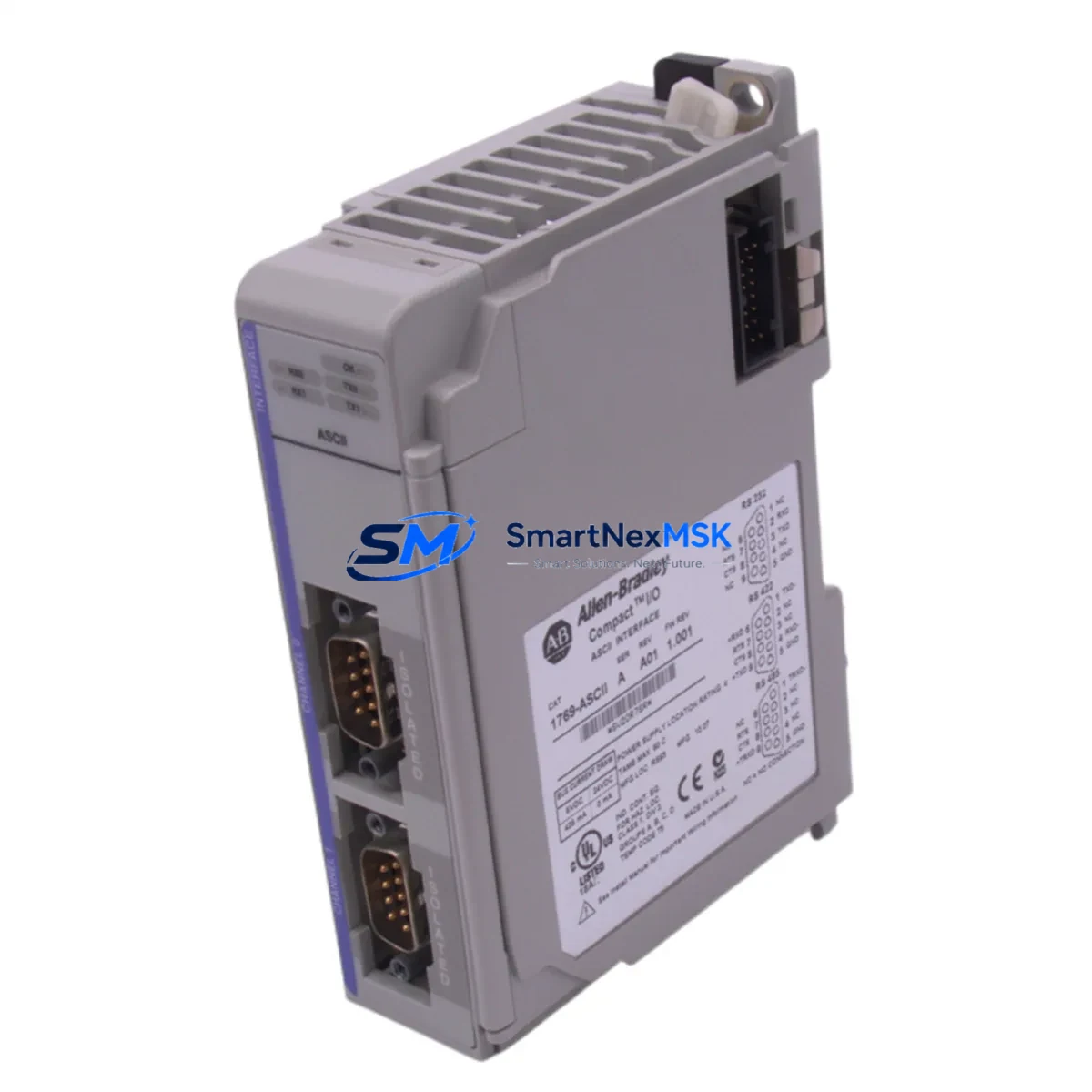
Allen-Bradley 1769-ASCII Safety-Enhanced ASCII Interface Module: Reliable Control in Harsh Industrial Sites
The Allen-Bradley 1769-ASCII is a ruggedized dual-port RS-232C ASCII interface module engineered for the CompactLogix 1769 platform. Designed to operate continuously in high-load, high-interference industrial environments, this module delivers stable serial communication where control integrity is non-negotiable. Whether deployed in petrochemical processing lines, power generation switchgear panels, mining extraction control cabinets, water treatment SCADA systems, or heavy metallurgical automation loops, the 1769-ASCII provides the communication backbone that keeps critical processes running without interruption.
In demanding industrial sites, communication failures between PLCs and field devices are among the leading causes of unplanned downtime. The 1769-ASCII addresses this risk directly. Its dual RS-232C ports allow simultaneous connection to barcode readers, weigh scales, vision systems, variable frequency drives, and third-party ASCII-based instruments — all within a single compact 1769 Compact I/O slot. The module integrates seamlessly with CompactLogix L1, L2, L3, and L4 controllers, sharing the same backplane power and eliminating the need for external power supplies that introduce additional failure points into the control cabinet.
Safety Reliability Table
| Parameter | Specification |
|---|---|
| Model / SKU | 1769-ASCII |
| Brand / Series | Allen-Bradley / CompactLogix 1769 |
| Communication Ports | 2 × RS-232C (DB-9 male) |
| Baud Rate Range | 300 – 19,200 bps (per port, independently configurable) |
| Data Bits | 7 or 8 |
| Parity | None, Even, Odd |
| Stop Bits | 1 or 2 |
| Backplane Current Draw | 200 mA @ 5 VDC |
| Operating Temperature | 0 °C to +60 °C |
| Storage Temperature | -40 °C to +85 °C |
| Relative Humidity | 5% – 95% non-condensing |
| Vibration Resistance | IEC 68-2-6 compliant |
| Shock Resistance | IEC 68-2-27 compliant |
| EMC / Noise Immunity | CE marked; meets IEC 61000-4 series |
| Surge Protection | Built-in transient suppression on communication lines |
| Compatibility | CompactLogix L1x, L2x, L3x, L4x; 1769 Compact I/O bus |
| Slot Consumption | 1 × 1769 I/O slot |
| Product Origin | China (CN) |
| Warranty | 12 Months — covers manufacturing defects and functional failure under normal operating conditions |
| Pre-shipment Testing | Full functional verification and communication loop test performed before dispatch |
Control Cabinet Protection Strategy
A robust industrial control cabinet is only as reliable as its weakest communication link. When integrating the 1769-ASCII into a CompactLogix-based control system, engineers typically pair it with complementary modules and protective components to form a complete, fault-tolerant architecture.
On the power side, the 1769-PA2 or 1769-PB2 power supply modules provide stable, regulated backplane power to the entire 1769 I/O bank, ensuring that voltage fluctuations on the plant floor do not propagate into the communication module’s logic circuits. For applications where the control cabinet is exposed to significant electrical noise — such as those near large motor drives, welding equipment, or high-voltage switchgear — installing a dedicated line filter upstream of the 24 VDC supply rail is standard practice.
The 1769-ASCII is frequently deployed alongside digital I/O modules such as the 1769-IQ16 (16-point 24 VDC sink/source input) and the 1769-OB16 (16-point 24 VDC source output) to form complete interlock and safety relay circuits. In safety-critical applications, these digital I/O modules interface with emergency stop relays, safety light curtains, and pressure interlock switches, while the 1769-ASCII handles the serial data stream from instruments such as gas detectors, flow computers, or analytical sensors that report via ASCII protocol.
For systems requiring network-level redundancy, the 1769-L33ER CompactLogix controller — often used as the host processor for the 1769-ASCII — supports dual EtherNet/IP ports, enabling Device Level Ring (DLR) topology that maintains communication even if a single network segment fails. Pairing this with 1783-series managed Ethernet switches provides VLAN segmentation and port-level fault isolation, further protecting the ASCII communication path from network-level disruptions.
In applications where the 1769-ASCII interfaces with weighing systems or barcode verification stations on a packaging or batching line, it is common to see it installed in the same cabinet as the 1769-IF4 analog input module, which handles 4–20 mA signals from load cells and pressure transmitters. This combination allows the controller to correlate ASCII-reported data with real-time analog measurements, enabling closed-loop safety interlocks that halt the process if a discrepancy is detected.
For surge and transient protection at the field wiring terminals, DIN-rail mounted surge protection devices (SPDs) rated for RS-232 signal lines are recommended at the cabinet entry point, particularly in outdoor substations or facilities with frequent lightning activity. This protects the 1769-ASCII’s communication ports from voltage spikes that could cause permanent damage or intermittent signal errors.
Critical Industrial Safety Applications
Petrochemical & Refinery Plants: In continuous process environments such as crude distillation units and catalytic cracking columns, the 1769-ASCII connects CompactLogix controllers to flame detectors, gas analyzers, and custody transfer flow computers via RS-232C. Any communication dropout in these loops can delay safety system response, making the module’s built-in transient suppression and EMC compliance essential for SIL-rated interlock circuits.
Power Generation & Substation Automation: In coal-fired and hydroelectric power plants, the 1769-ASCII is used to interface with protection relays, energy meters, and excitation controllers that communicate via ASCII-based serial protocols. Its wide operating temperature range and vibration resistance make it suitable for installation in switchgear rooms and turbine hall control panels where ambient conditions are challenging.
Mining & Mineral Processing: Underground and surface mining operations rely on the 1769-ASCII to maintain serial communication between CompactLogix systems and conveyor belt weighers, crusher load monitors, and ventilation control instruments. In these environments, the module’s shock and vibration ratings are critical, as control cabinets are subject to continuous mechanical stress from heavy machinery.
Water & Wastewater Treatment: Municipal and industrial water treatment facilities use the 1769-ASCII to connect SCADA-linked CompactLogix controllers with analytical instruments such as pH analyzers, turbidity sensors, and chlorine dosing controllers that output ASCII data streams. Reliable serial communication in these applications directly supports regulatory compliance and public safety.
Metallurgy & Steel Production: In electric arc furnace (EAF) and continuous casting operations, the 1769-ASCII handles serial data from pyrometers, ladle tracking systems, and mold level sensors. The high electromagnetic interference generated by EAF operations makes the module’s CE-certified EMC performance a key selection criterion.
Port & Bulk Material Handling: Automated ship loaders, stacker-reclaimers, and conveyor systems in port terminals use the 1769-ASCII to integrate weigh-in-motion systems and positioning encoders with CompactLogix-based supervisory controllers, ensuring accurate load management and preventing structural overload events.
Safety and Quality FAQ
Q1: What does the 12-month warranty cover for the 1769-ASCII?
The 12-month warranty covers all manufacturing defects and functional failures under normal operating conditions from the date of shipment. If the module fails to perform its specified RS-232C communication functions within the warranty period, we provide free replacement or repair. The warranty does not cover damage caused by incorrect installation, overvoltage beyond rated limits, or physical mishandling.
Q2: What pre-shipment testing is performed on each 1769-ASCII unit?
Every unit undergoes a full functional verification test before dispatch. This includes backplane communication loop testing, dual-port RS-232C signal integrity verification at multiple baud rates, and visual inspection for physical integrity. Units that do not pass all test criteria are quarantined and not shipped. A test record is maintained for traceability.
Q3: Is the 1769-ASCII compatible with all CompactLogix controller revisions?
The 1769-ASCII is compatible with the full range of CompactLogix 1769 controllers including L1x, L2x, L3x, and L4x series. It occupies one standard 1769 I/O slot and is configured via RSLogix 5000 / Studio 5000 Logix Designer. Firmware revision compatibility should be verified against the specific controller firmware version in use; we can provide guidance on known compatibility combinations upon request.
Q4: Can long-term supply and replacement support be guaranteed?
Yes. We maintain dedicated stock of the 1769-ASCII and related CompactLogix 1769 series modules to support both new project builds and ongoing maintenance requirements. For facilities with critical uptime requirements, we recommend establishing a consignment or blanket order arrangement to ensure immediate availability of replacement units. Our team can advise on appropriate safety stock levels based on your installed base and mean time between replacement (MTBR) data.
© 2026 SMARTNEXMSK. All rights reserved.
Original Source: https://smartnexmsk.com
Contact: [email protected] | +86 18259474341