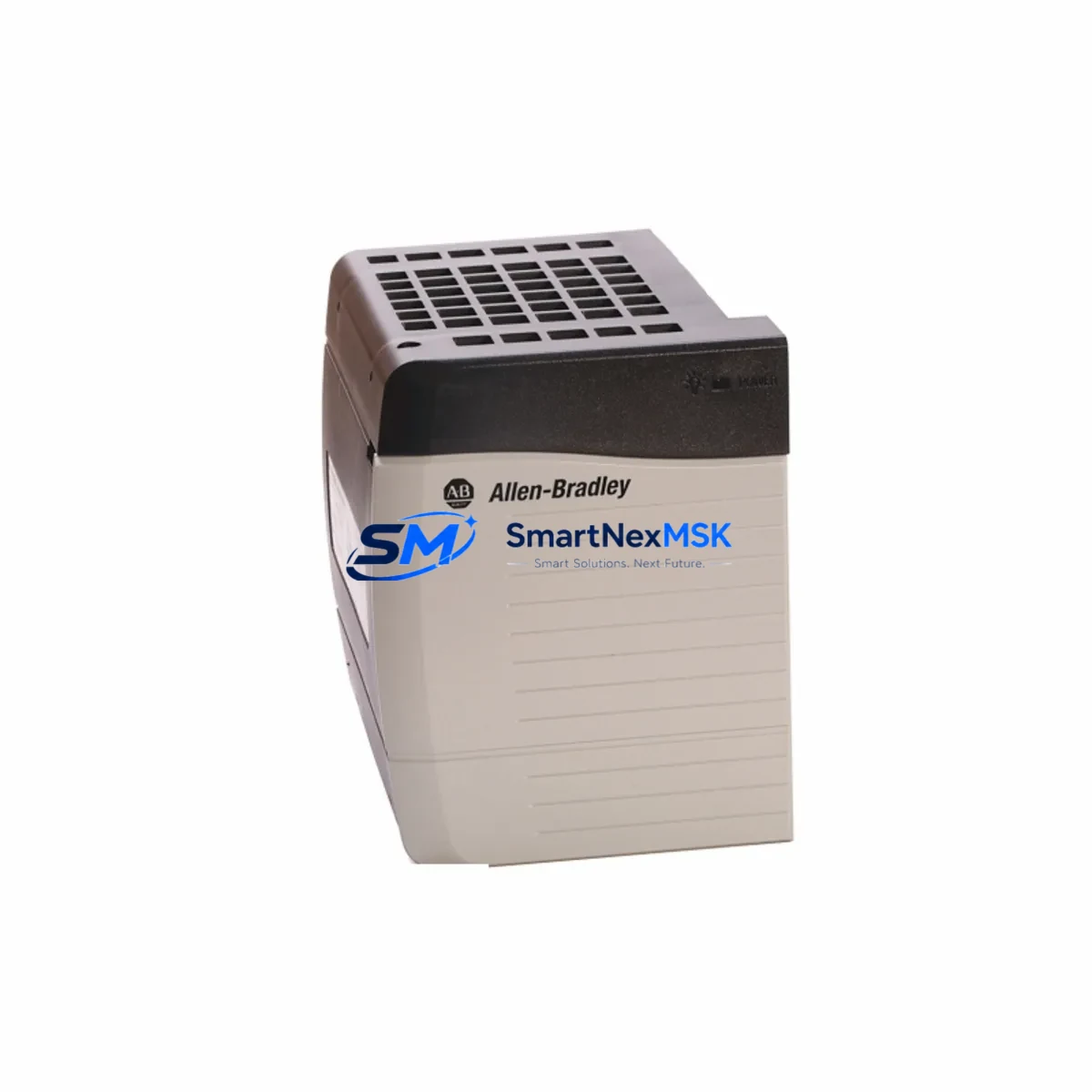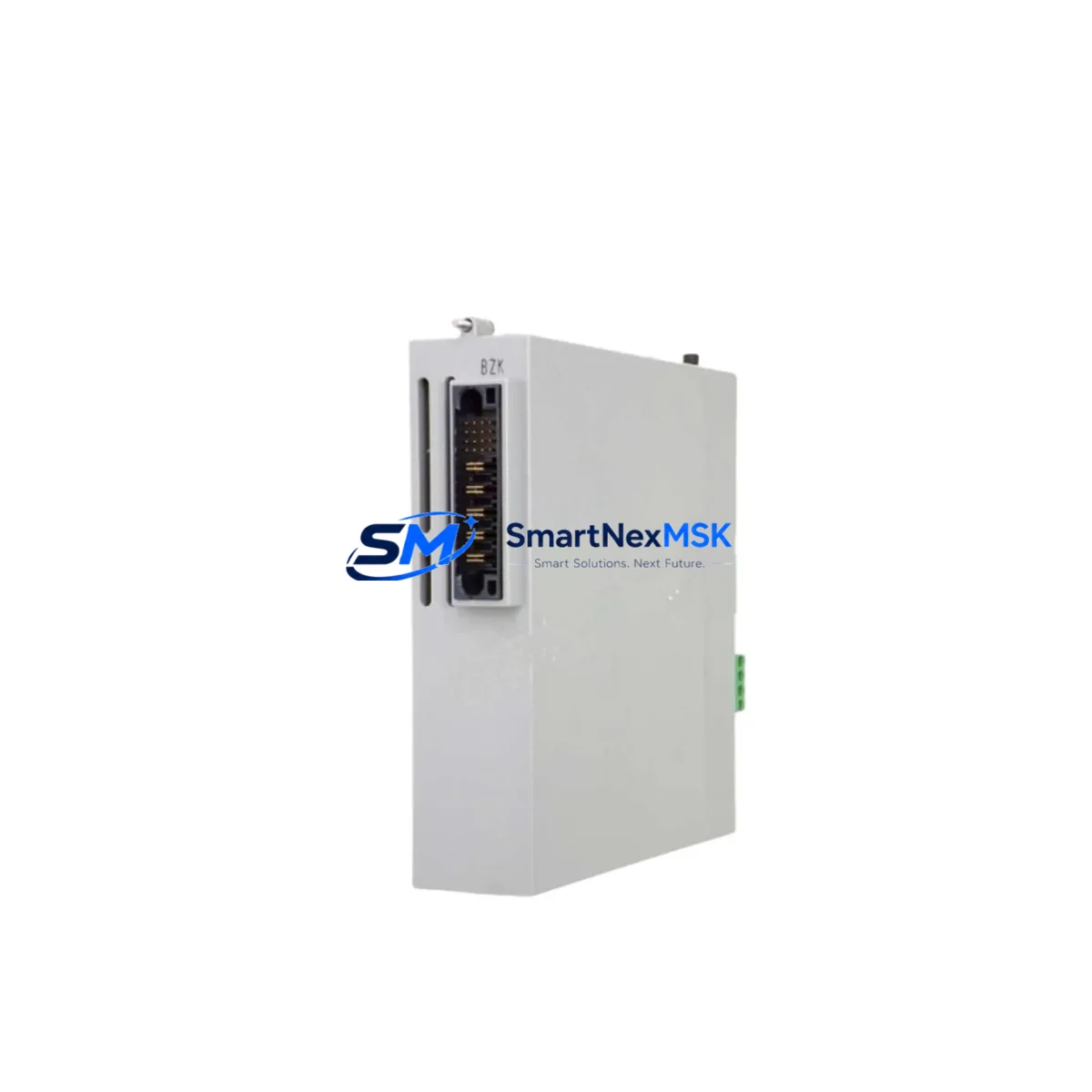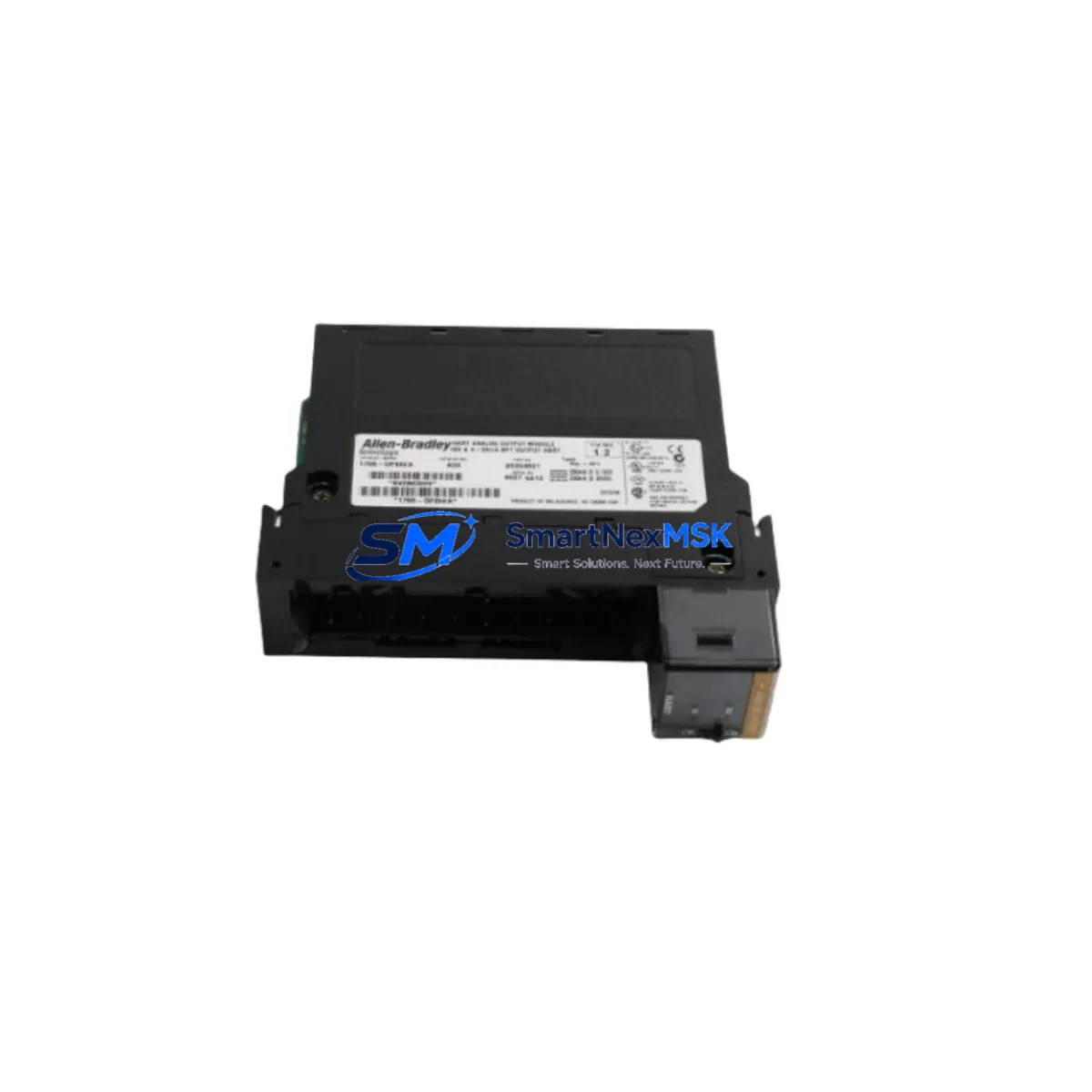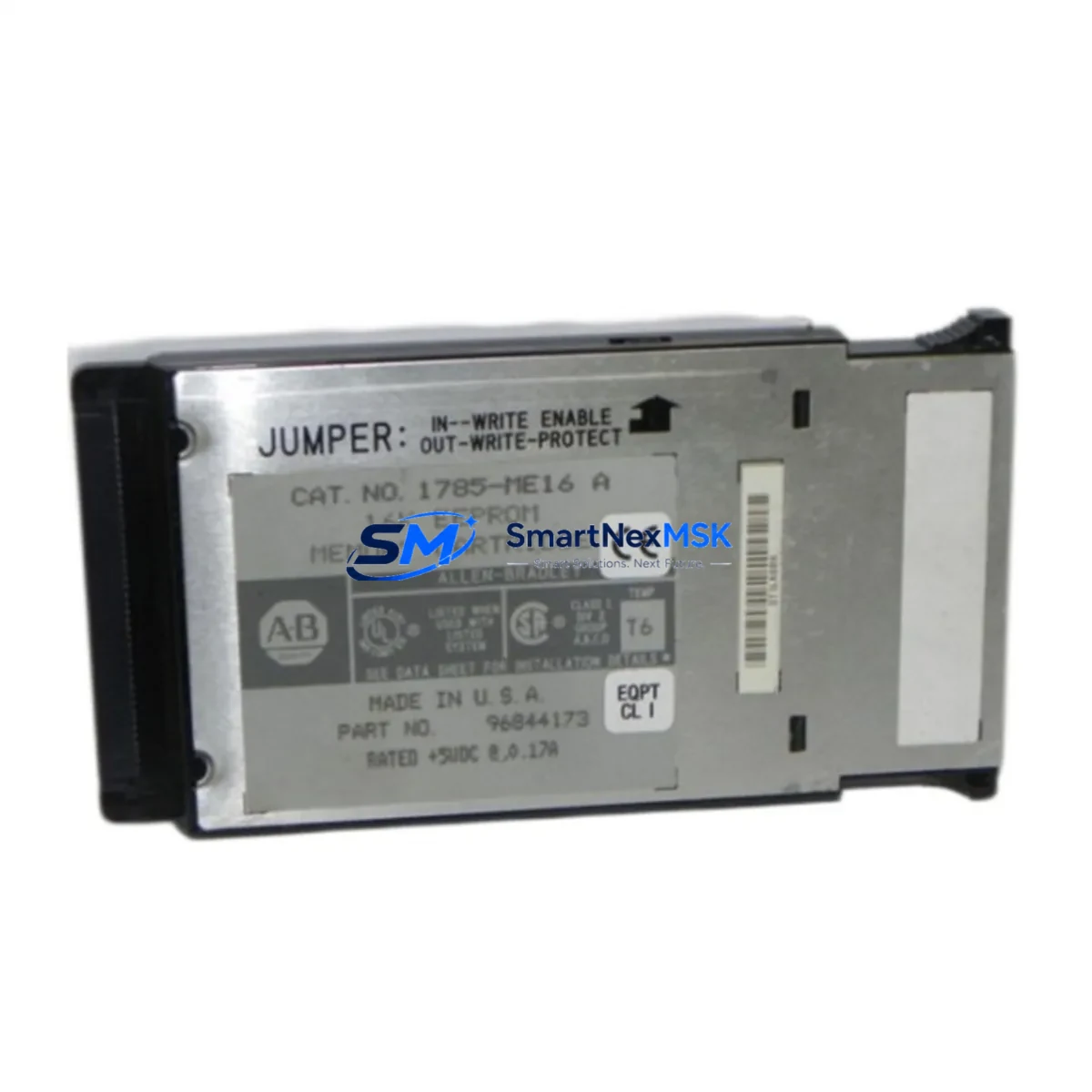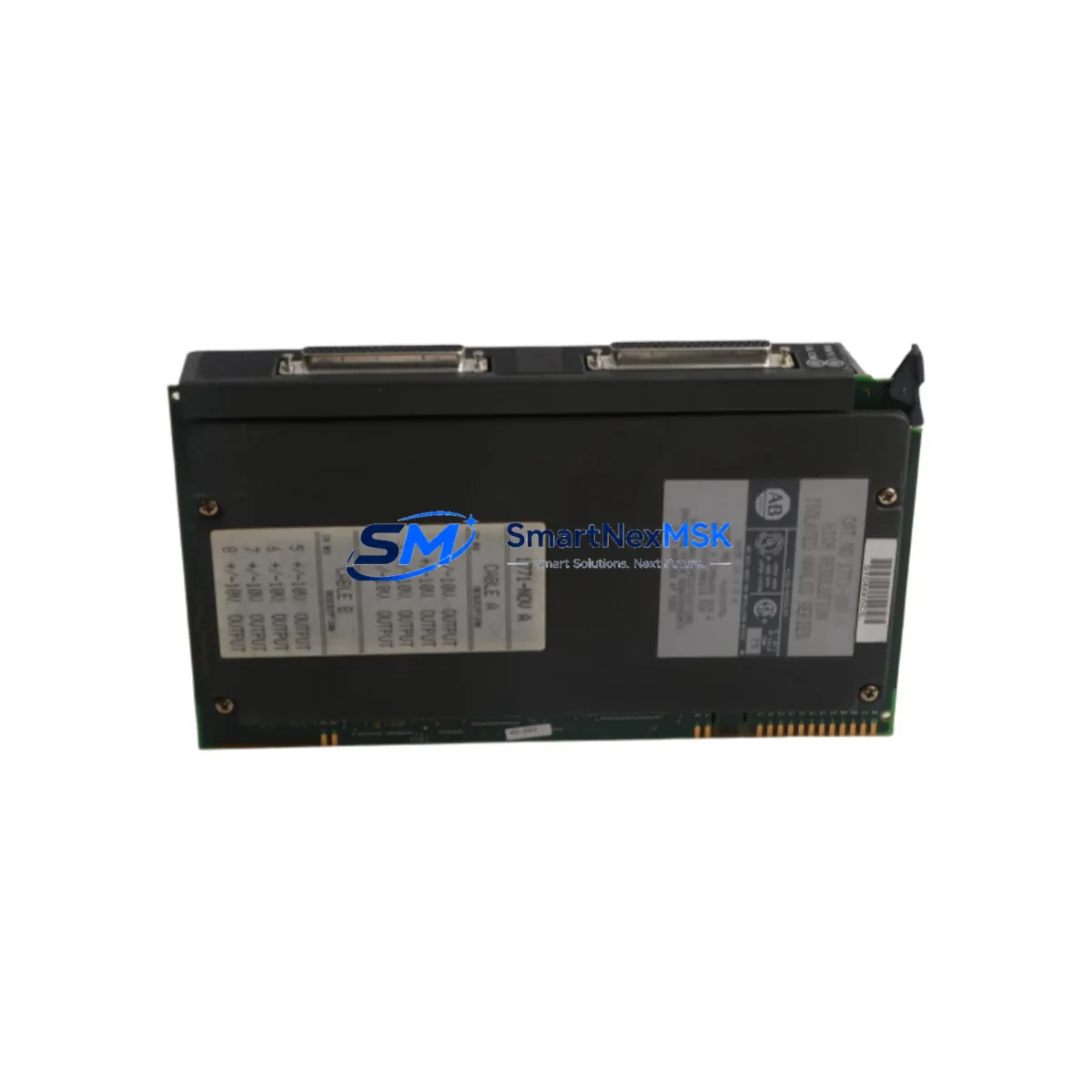
Allen-Bradley 1771-NOV Retrofit-Ready Analog Output for PLC-5 Control Systems
The Allen-Bradley 1771-NOV is a 4-channel, 12-bit analog output module designed for the 1771 I/O chassis used across the PLC-5 control platform. As legacy PLC-5 systems approach end-of-life and spare parts become increasingly scarce, the 1771-NOV remains one of the most sought-after retrofit components for engineers tasked with sustaining aging production lines, upgrading control cabinets, or executing phased migrations to modern platforms such as the ControlLogix or CompactLogix families.
Whether you are replacing a failed unit on an active line, sourcing backup inventory for a critical process, or planning a structured system modernization, the 1771-NOV provides a direct-fit solution that minimizes engineering rework and commissioning time. Each unit shipped by SMARTNEXMSK undergoes functional verification and is covered by a 12-month warranty, giving procurement and maintenance teams the confidence to plan around a reliable supply chain.
Upgrade Compatibility Table
| Parameter | Details |
|---|---|
| Module SKU | 1771-NOV |
| Platform Compatibility | Allen-Bradley PLC-5 Series (1771 I/O Chassis) |
| Output Channels | 4 Channels, 12-Bit Resolution |
| Output Signal Range | 4–20 mA / 0–10 VDC (jumper-selectable per channel) |
| Backplane Interface | 1771 Series I/O Chassis (single-slot) |
| Installation Requirement | Keying band must match chassis slot configuration; verify slot addressing in RSLogix 5 |
| Communication Compatibility | DH+, DH-485, Remote I/O (RIO) — dependent on PLC-5 processor variant |
| Common Replacement Paths | 1771-NOV → 1756-OF4 (ControlLogix migration with I/O adapter); 1771-NOV → 1769-OF4 (CompactLogix) |
| Commissioning Focus | Module address configuration, output scaling in ladder logic, loop calibration |
| Warranty | 12 Months — covers functional failure under normal operating conditions |
Retrofit Planning for Existing Automation Systems
Integrating the 1771-NOV into an existing or upgraded control system requires a structured approach that accounts for both hardware and software dependencies. Before installation, engineers should audit the 1771 I/O chassis for available slots and confirm that the chassis power supply — typically a 1771-P4S or 1771-P7 — can support the additional load of the analog output module. Undersized power supplies are a common cause of intermittent faults during retrofit commissioning.
Terminal wiring must be verified against the original loop drawings. The 1771-NOV uses a removable terminal block, which simplifies field replacement without disturbing existing field wiring. However, wire gauge, shielding practice, and grounding continuity should be re-inspected, particularly in environments with high electromagnetic interference from variable frequency drives or servo amplifiers sharing the same control cabinet.
On the software side, the module’s I/O image table mapping must be confirmed in the RSLogix 5 program. Output scaling rungs — typically using CPT or MUL/DIV instructions — should be reviewed to ensure the engineering unit range matches the new module’s calibration. If the original 1771-NOV was configured for voltage output and the replacement is jumpered for current output (or vice versa), the field loop and PLC logic must both be updated accordingly.
For systems undergoing a broader migration from PLC-5 to ControlLogix, the 1771-NOV is often retained in service during a phased cutover using a 1756-DHRIO or 1756-RIO bridge module, which allows the legacy 1771 I/O chassis to remain online while the new 1756 chassis assumes supervisory control. This approach preserves the existing field wiring investment and reduces the scope of a single cutover event. Companion modules commonly involved in such migrations include the 1771-ASB remote I/O adapter, 1771-OFE analog output modules, 1771-IFE analog input modules, and the 1771-SDN DeviceNet scanner for field device integration.
HMI screens connected via DH+ — often running on PanelView 550, PanelView 900, or PanelView Plus terminals — should be reviewed for any analog tag references tied to the 1771-NOV’s output data file. Tag address changes resulting from chassis reorganization or slot reassignment will require corresponding HMI tag updates to prevent display errors or control discrepancies after cutover.
Downtime Control During System Migration
Minimizing unplanned downtime is the primary operational constraint in any PLC-5 retrofit project. A structured pre-commissioning checklist — covering power isolation, module seating, terminal torque verification, and address confirmation — reduces the risk of first-power faults that extend outage windows.
Where process continuity is critical, a parallel-run strategy using a 1756-DHRIO gateway allows the new ControlLogix processor to shadow the PLC-5’s output commands before the final switchover. During this period, the 1771-NOV continues to drive field devices while engineers validate the new control logic against live process data. Once confidence is established, the cutover can be executed during a planned maintenance window with a pre-tested fallback procedure.
Program backup is non-negotiable before any hardware change. The existing RSLogix 5 project file — including all rung comments, symbol tables, and data file configurations — should be archived and stored offline. If the original programming cable (typically a 1784-U2DHP or 1784-KTX) is no longer available, sourcing a compatible interface adapter in advance prevents last-minute delays during commissioning. Post-installation, a full I/O force test on the 1771-NOV outputs confirms loop integrity before returning the system to automatic control.
Retrofit Support FAQ
Q: Is the 1771-NOV a direct drop-in replacement for other 1771 analog output modules?
A: The 1771-NOV is physically compatible with any standard 1771 single-slot chassis position. However, it is not pin-for-pin equivalent to modules such as the 1771-OFE or 1771-OA. Output range, resolution, and I/O image table mapping differ between models. Always verify the module type against the existing RSLogix 5 program’s I/O configuration before substitution.
Q: What commissioning steps are required after installing the 1771-NOV?
A: After physical installation, confirm the module address via the chassis slot number and verify the I/O configuration in RSLogix 5. Perform output scaling verification by forcing known values and measuring the corresponding loop signal at the field terminal. Calibrate each channel against the connected actuator or positioner’s input range. Document all as-found and as-left readings for maintenance records.
Q: How is wiring compatibility confirmed when replacing a failed 1771-NOV?
A: Reference the original loop drawings and the 1771-NOV installation manual (publication 1771-6.5.85). Confirm field wire terminations on the removable terminal block match the channel assignments in the PLC program. Check shield grounding at the panel end only to avoid ground loops. Verify that the output type jumper (voltage vs. current) matches the field device input specification.
Q: What does the 12-month warranty cover?
A: The 12-month warranty covers functional failure of the 1771-NOV under normal operating conditions, including defects in components and workmanship identified during installation or operation. Each unit is functionally tested prior to shipment. Warranty claims are supported by SMARTNEXMSK’s technical team — contact [email protected] or +86 18259474341 for RMA processing and replacement coordination.
© 2026 SMARTNEXMSK. All rights reserved.
Original Source: https://smartnexmsk.com
Contact: [email protected] | +86 18259474341