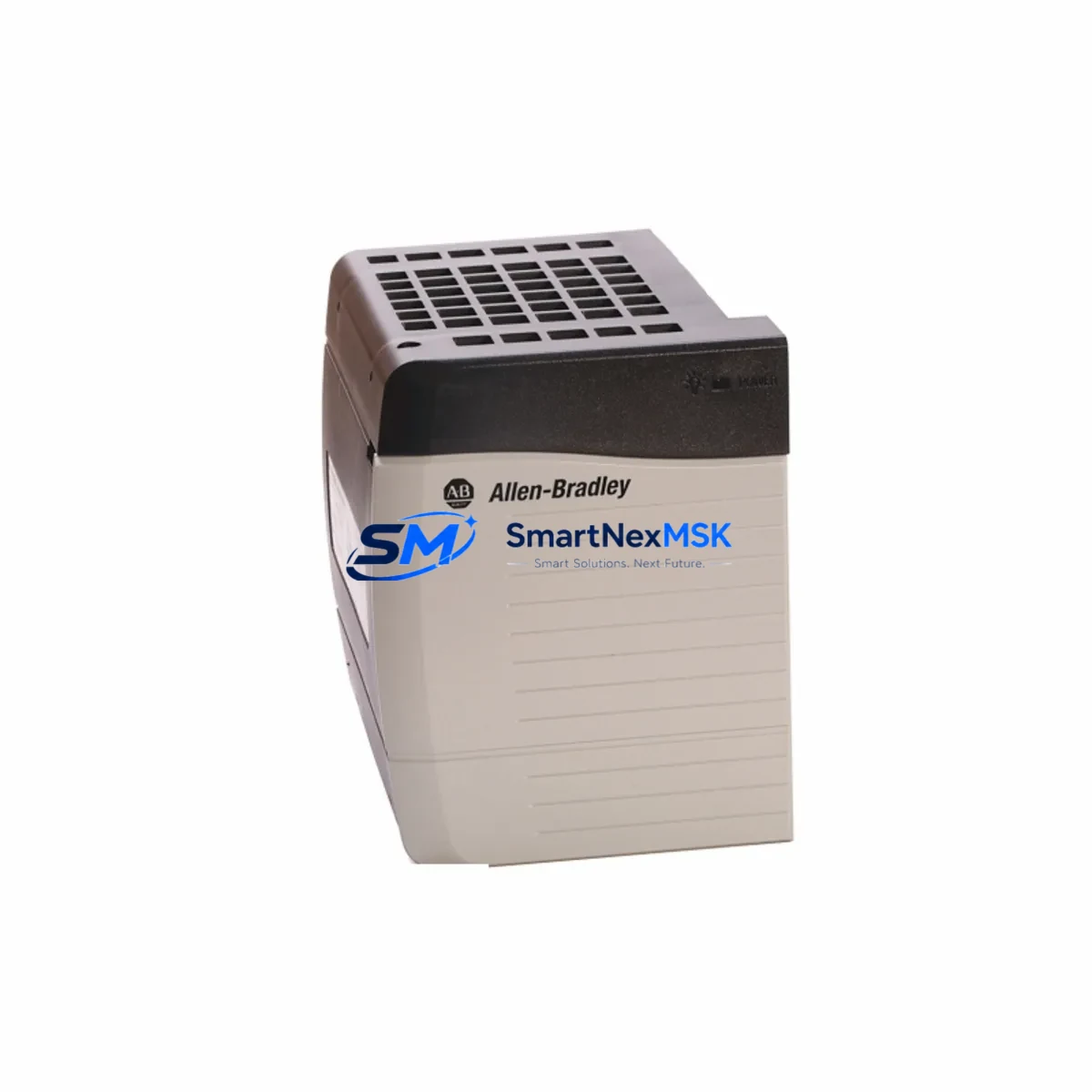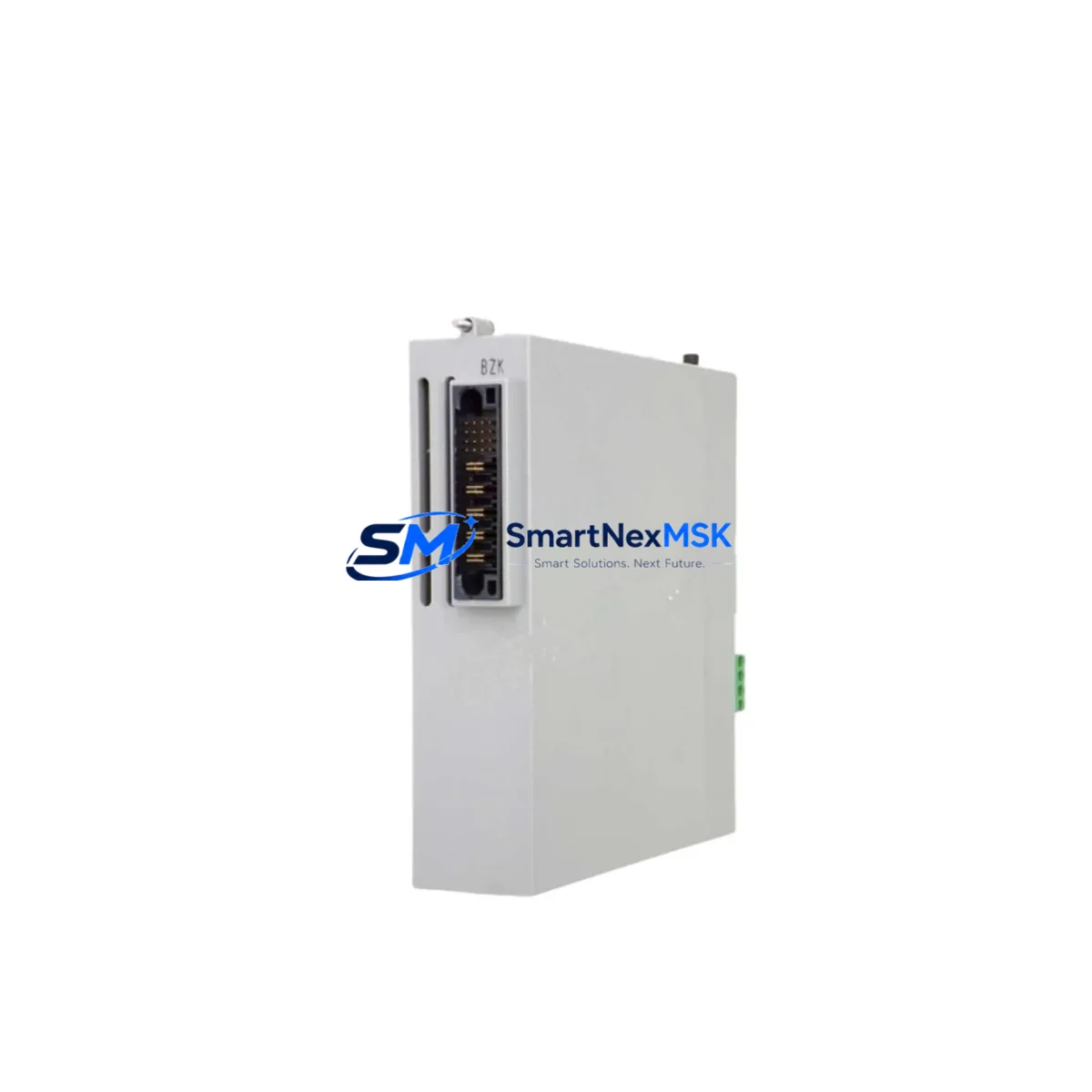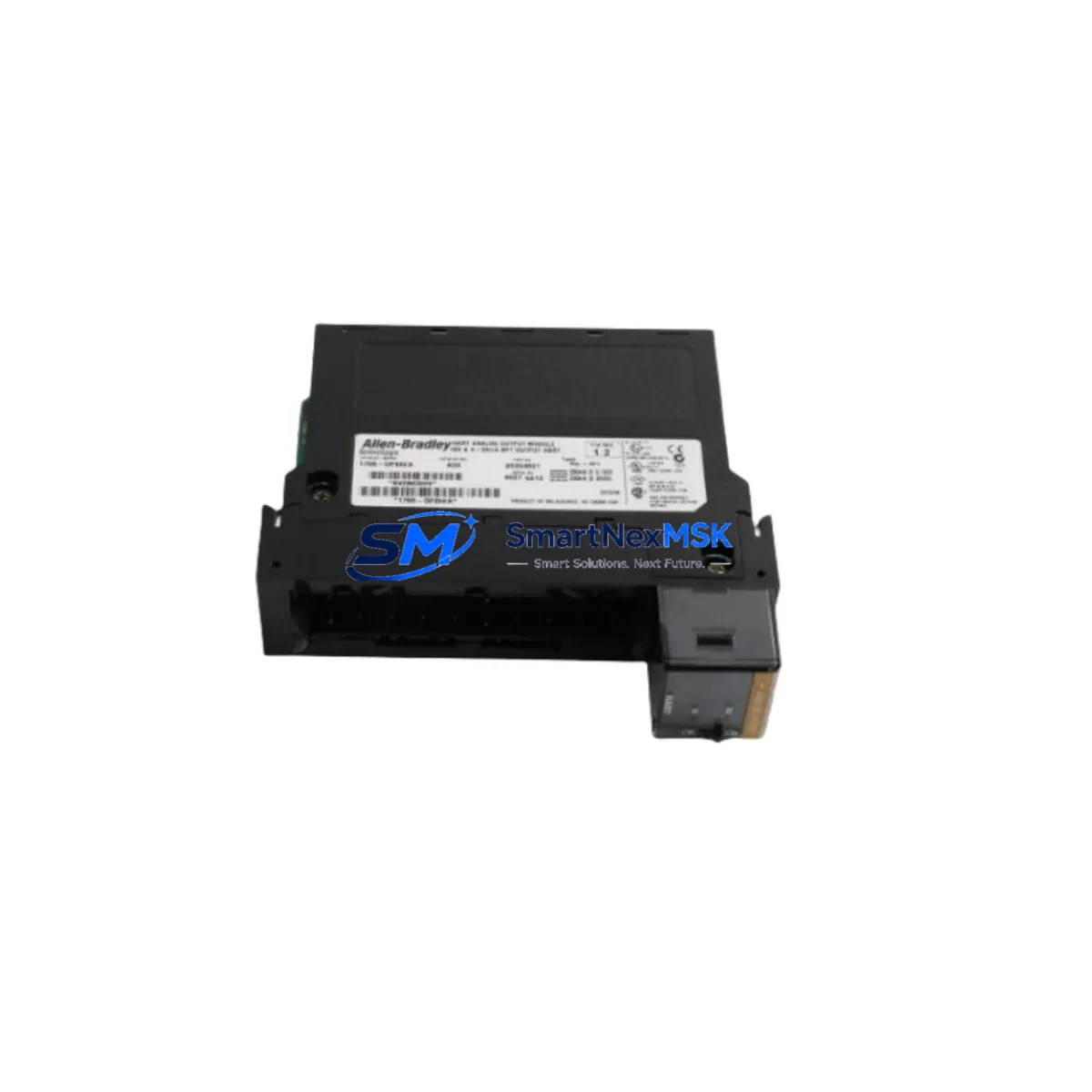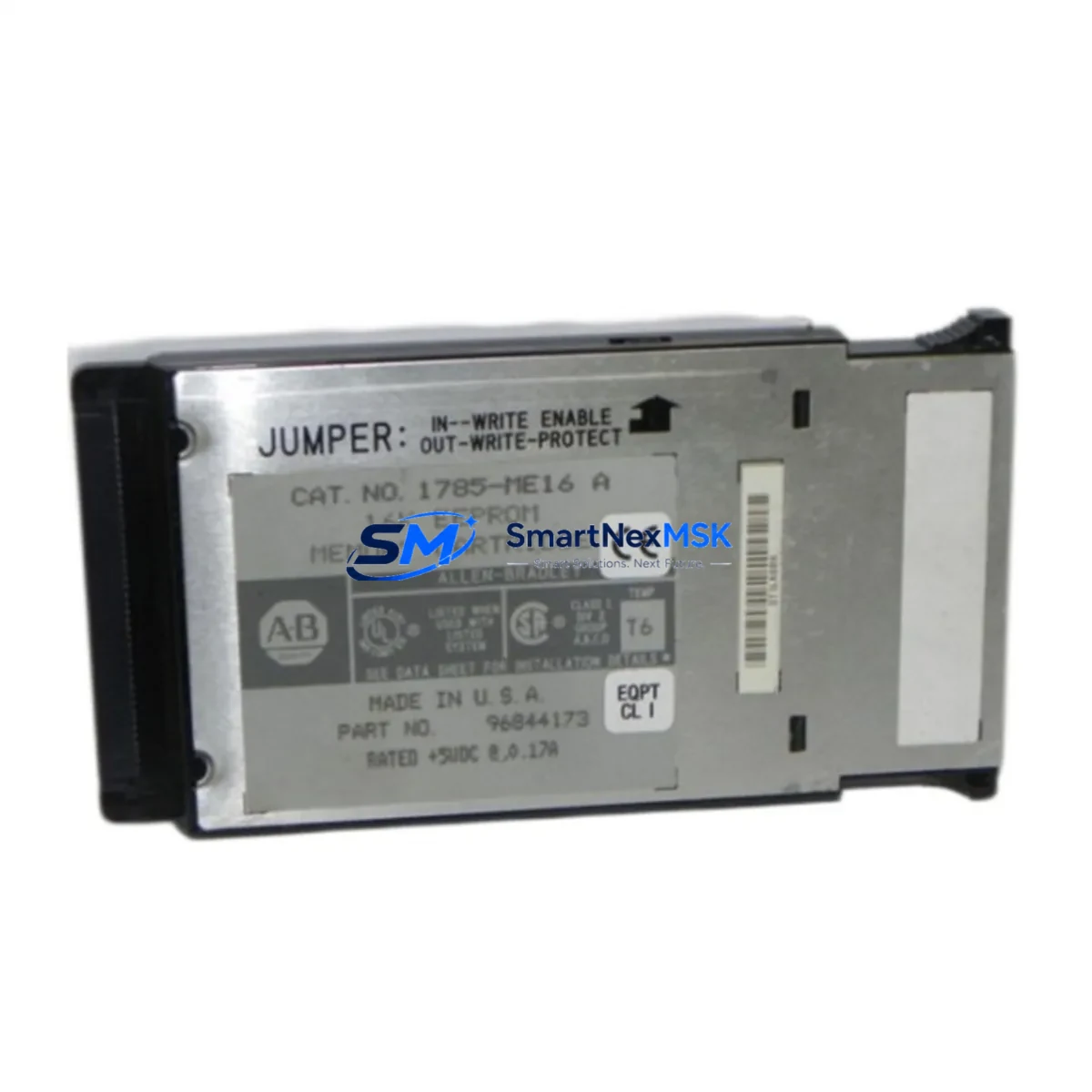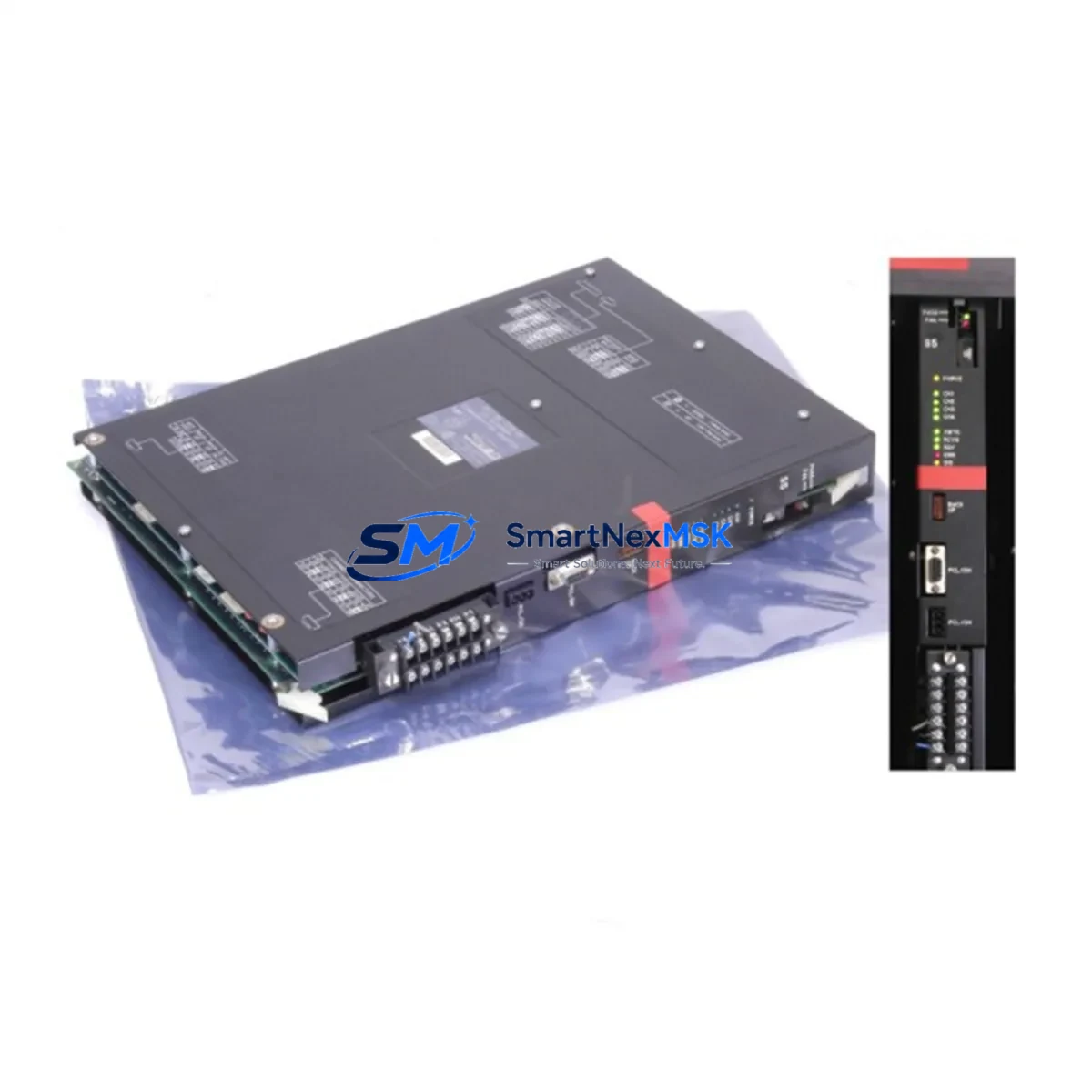
Allen-Bradley 1775-S5 Retrofit-Ready DH+ Module for PLC-5 Control Systems
The Allen-Bradley 1775-S5 is a Data Highway Plus (DH+) communication module designed for the PLC-5 programmable controller platform. As legacy PLC-5 systems approach end-of-life and original spare parts become increasingly scarce, the 1775-S5 remains a critical component for facilities that depend on DH+ network continuity. Whether you are replacing a failed unit, stocking retrofit spares, or executing a phased control system modernization, this module provides a verified drop-in solution that preserves your existing program logic, HMI screens, and field wiring without requiring a full system redesign.
The 1775-S5 occupies a dedicated communication slot in the PLC-5 chassis — compatible with the 1771 I/O chassis family — and interfaces directly with the processor backplane. It supports DH+ baud rates of 57.6K, 115.2K, and 230.4K, enabling reliable peer-to-peer messaging, remote I/O polling, and MSG instruction execution across multi-node DH+ networks. Before installation, engineers should confirm the chassis slot assignment, node address configuration via DIP switches, and the baud rate setting to match the existing network topology. Mismatched baud rates are among the most common commissioning errors during retrofit projects and can cause intermittent communication faults that are difficult to diagnose under production pressure.
In retrofit scenarios where the original 1775-S5 has failed or is no longer available through standard distribution channels, the replacement process typically involves documenting the current node address, verifying the DH+ cable termination resistance (typically 82 ohms at each network end), and confirming that the 1785-L series processor — such as the 1785-L40B, 1785-L60B, or 1785-L80B — is running firmware compatible with the communication module revision. The 1771-P4S or 1771-P6S power supply feeding the chassis should also be load-checked before the new module is seated, as degraded power supplies are a frequent root cause of repeated communication module failures in aging control cabinets.
Upgrade Compatibility Table
| Parameter | Specification / Recommendation |
|---|---|
| Compatible Processor | Allen-Bradley PLC-5 family: 1785-L11B, 1785-L20B, 1785-L40B, 1785-L60B, 1785-L80B |
| Chassis Compatibility | 1771 I/O chassis (4, 8, 12, 16 slot); dedicated communication slot required |
| Communication Protocol | Data Highway Plus (DH+); baud rates 57.6K / 115.2K / 230.4K |
| Network Node Address | Configurable via DIP switch (0–77 octal); must match existing network map |
| Backplane Interface | 1771 backplane; verify slot addressing before installation |
| Power Supply Check | Confirm 1771-P4S or 1771-P6S output voltage under load before seating module |
| Cable Termination | 82-ohm termination resistors required at both ends of DH+ trunk |
| HMI Compatibility | Compatible with PanelView 550, 600, 900, 1000, 1400 via DH+ driver |
| Programming Software | RSLogix 5 (6200 series); verify program file compatibility before upload |
| Replacement Fit | Direct drop-in; no hardware modification required |
| Commissioning Check | Verify MSG instruction targets, node addresses, and DH+ diagnostics in RSLinx Classic |
| Warranty | 12-Month Warranty — covers manufacturing defects and functional failure under normal operating conditions |
Retrofit Planning for Existing Automation Systems
A successful 1775-S5 retrofit begins well before the module arrives on site. Start by auditing the full control cabinet: document every component in the 1771 chassis, including the processor, all I/O modules, and any specialty modules such as the 1771-ASB remote I/O adapter or the 1771-SDN DeviceNet scanner. Identify which slots are occupied and confirm the chassis power budget — the 1771-P4S supplies 4A at 5VDC and 2A at 24VDC, while the 1771-P6S provides 6A at 5VDC. Overloaded power supplies are a silent failure mode that can cause erratic module behavior after replacement.
For facilities running mixed DH+ and ControlNet topologies, the 1775-S5 handles only the DH+ segment. If your architecture also includes a 1784-KTCX15 or 1784-PKTX communication card at the programming workstation, verify that RSLinx Classic has the correct driver configured for the DH+ channel before attempting to go online with the replacement module. In multi-processor systems where a 1785-L80B acts as a master and communicates with remote 1785-L20B processors via DH+, the node address hierarchy must be preserved exactly — any address conflict will prevent MSG instructions from completing and may trigger processor faults.
When the control system also interfaces with a PanelView 1000 or PanelView 1400 HMI over DH+, confirm that the HMI application’s node address and communication settings are documented before the module swap. PanelView terminals store their DH+ configuration internally, and a node address mismatch after module replacement will cause the HMI to lose communication with the processor, resulting in operator screen lockout. Having a laptop with RSLinx Classic and the PanelView configuration software available on-site during the retrofit window is strongly recommended.
For sites migrating from PLC-5 to ControlLogix as part of a longer-term modernization roadmap, the 1775-S5 can serve as a bridge component — keeping the legacy DH+ network operational while the new 1756-L series ControlLogix processor is commissioned in parallel. The 1756-DHRIO module in the ControlLogix chassis provides DH+ connectivity that allows both platforms to coexist on the same network during the transition, enabling a phased cutover that avoids a single extended shutdown event.
Downtime Control During System Migration
Minimizing unplanned downtime during a 1775-S5 replacement requires a structured pre-outage checklist. Before taking the system offline, upload and archive the current PLC-5 program from the 1785-L series processor using RSLogix 5, and save a copy of the RSLinx Classic driver configuration. Photograph or document the DH+ cable connections, node address DIP switch positions, and chassis slot layout. If the system is connected to a SCADA platform via DH+ — such as iFIX or WonderWare — notify the control room operators and confirm that the SCADA node address for the PLC-5 is recorded.
During the physical swap, power down the 1771 chassis using the correct sequence: disable field power first, then remove the processor key switch, then power down the chassis. Seat the replacement 1775-S5 in the same slot, confirm the DIP switch settings match the documented node address, and restore power. Use RSLinx Classic to verify that the module appears on the DH+ network before downloading the program. Perform a controlled program download in REM mode, monitor the I/O status bits, and confirm that all MSG instructions are completing without error before returning the system to automatic operation. A structured commissioning checklist reduces the risk of overlooked configuration details that can extend the outage window unnecessarily.
Retrofit Support FAQ
Q: Is the 1775-S5 a direct replacement for a failed DH+ communication module in my PLC-5 system?
A: Yes. The 1775-S5 is a direct slot-compatible replacement for the DH+ communication function in the 1771 chassis. Confirm the node address DIP switch settings and baud rate match your existing network configuration before powering up. No program changes are required for a like-for-like replacement.
Q: What commissioning steps are required after installing the replacement module?
A: After seating the module, use RSLinx Classic to verify the DH+ node appears on the network. Go online with RSLogix 5 to confirm processor communication, check the I/O status table, and verify that all MSG instructions targeting remote nodes are completing successfully. If the system includes a PanelView HMI, confirm HMI communication is restored before releasing the system to production.
Q: Can I use this module during a phased migration from PLC-5 to ControlLogix?
A: Yes. The 1775-S5 keeps your existing DH+ network operational while the new ControlLogix platform is commissioned. A 1756-DHRIO module in the ControlLogix chassis can bridge both platforms on the same DH+ segment, allowing parallel operation and a controlled cutover without a full system shutdown.
Q: What does the 12-month warranty cover?
A: The 12-month warranty covers manufacturing defects and functional failure under normal industrial operating conditions. Each unit undergoes functional testing prior to shipment. Warranty claims are processed promptly — contact our team with the order reference and a description of the fault for rapid resolution.
© 2026 SMARTNEXMSK. All rights reserved.
Original Source: https://smartnexmsk.com
Contact: [email protected] | +86 18259474341