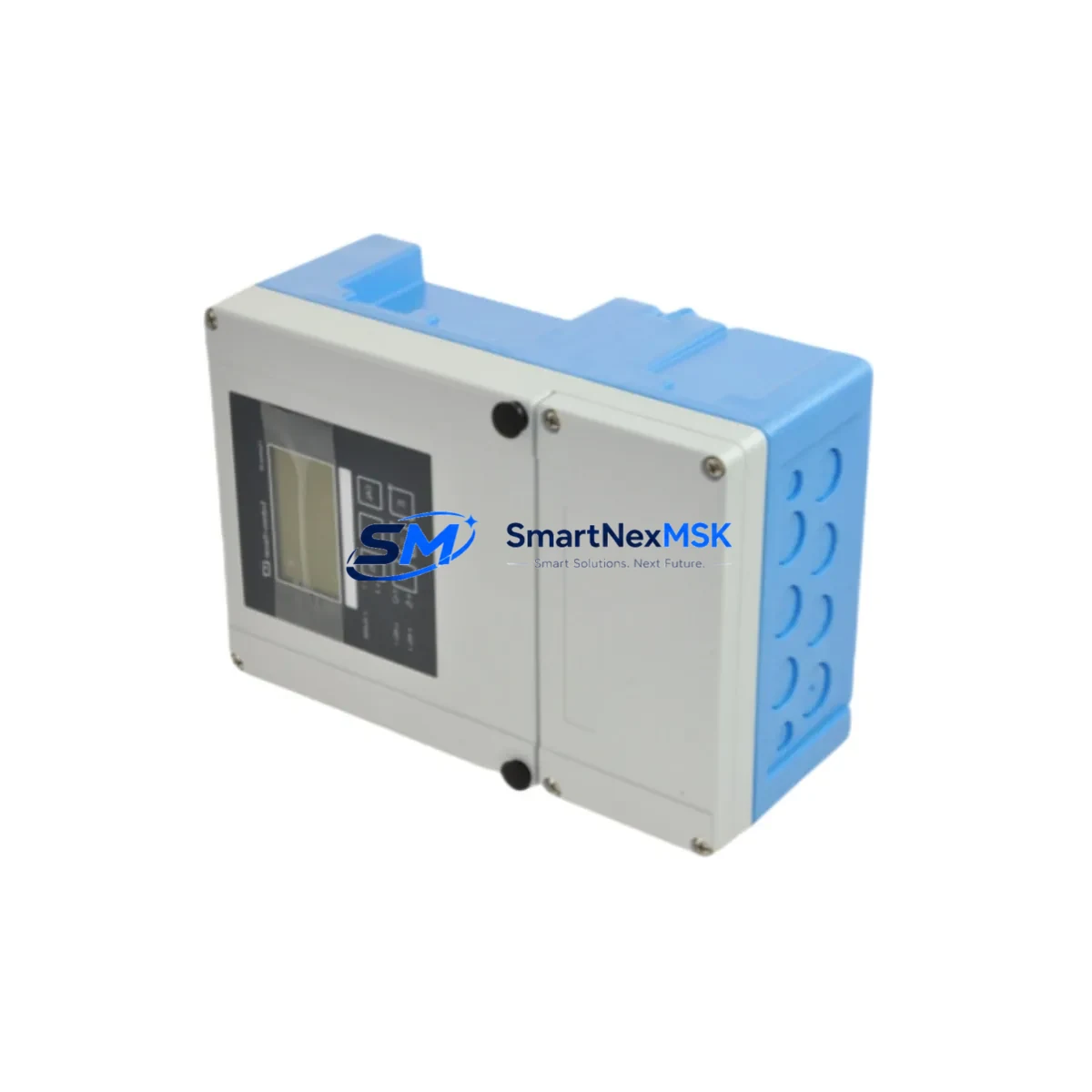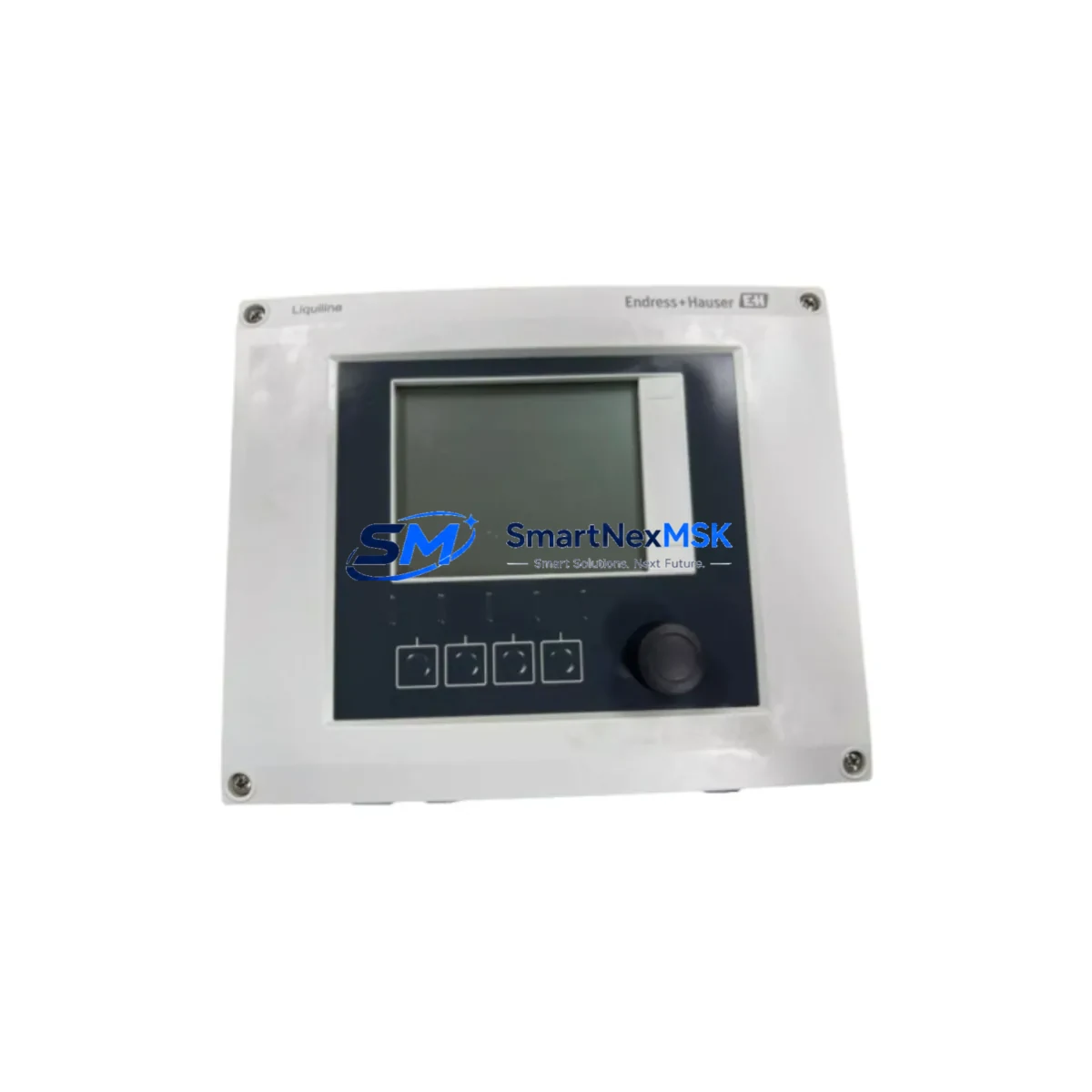
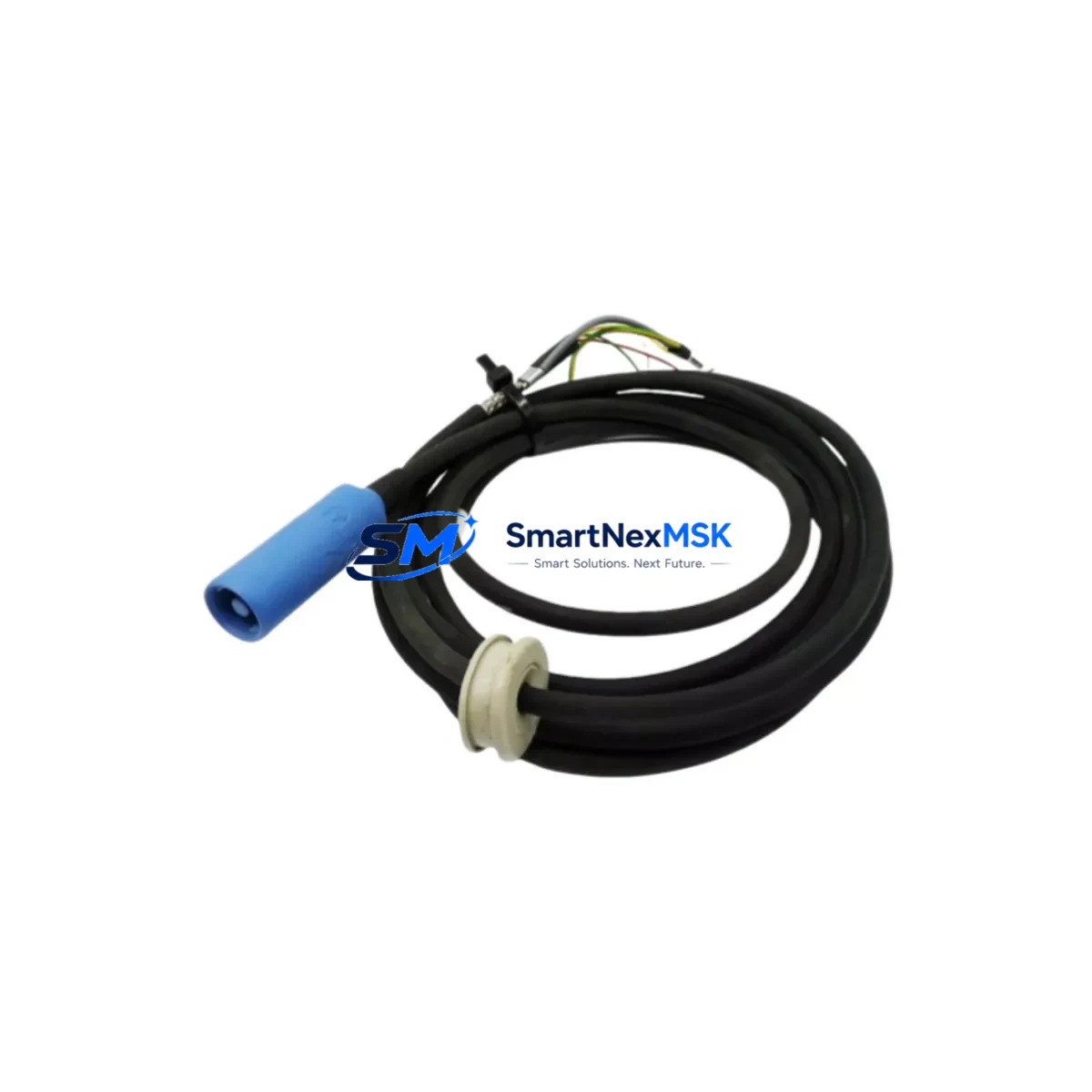
Endress+Hauser CYK10-A031 Retrofit-Ready Memosens Cable: Compatible Upgrade for Legacy Sensor Systems
The Endress+Hauser CYK10-A031 is a Memosens digital measuring cable engineered for seamless integration into existing process analytics installations. Whether you are replacing a worn cable on an aging Liquiline CM442 or CM444 transmitter, upgrading a legacy Mycom S CPM153 system, or migrating an entire sensor loop to the Memosens digital protocol, the CYK10-A031 delivers the electrical and mechanical compatibility required for a smooth, low-risk retrofit. With a 3-metre cable length, IP68 ingress protection, and the full Memosens inductive plug-and-measure interface, this cable bridges the gap between discontinued analogue sensor wiring and modern digital sensor platforms without requiring transmitter replacement or panel rewiring.
Upgrade Compatibility Table
| Parameter | Detail |
|---|---|
| SKU / Part Number | CYK10-A031 |
| Cable Length | 3 m (9.8 ft) |
| Protocol | Memosens digital (inductive, non-contact) |
| Connector Type | Memosens plug (M12 × 1 inductive coupling) |
| Ingress Protection | IP68 — suitable for submerged and wash-down environments |
| Compatible Transmitters | Liquiline CM442, CM444, CM448; Mycom S CPM153; Liquiline M CM42 |
| Compatible Sensors | Orbisint CPS11D, Memosens CPS71D, Tophit CPS471D, Ceraliquid CPS41D |
| Replaces / Supersedes | CYK10-A021 (2 m variant), analogue CYK71 cable assemblies |
| Installation Requirement | No tools required; inductive snap-fit coupling; verify transmitter firmware ≥ V2.xx for full Memosens diagnostics |
| Communication Compatibility | HART 7, PROFIBUS PA, FOUNDATION Fieldbus (transmitter-dependent) |
| Retrofit Recommendation | Direct drop-in for CYK10-A021; analogue-to-Memosens migration requires CYK10-compatible transmitter input card |
| Commissioning Note | Sensor calibration data stored on sensor chip; no re-calibration required after cable swap |
| Warranty | 12 months from date of shipment |
Retrofit Planning for Existing Automation Systems
Successful integration of the CYK10-A031 into a running process line begins well before the cable arrives on site. Engineers should first audit the transmitter head — typically a Liquiline CM444 or the compact Liquiline M CM42 — to confirm the installed input module supports the Memosens protocol. Older installations may carry an analogue 4–20 mA input card that must be swapped for a Memosens-capable module such as the 2DS module before the CYK10-A031 can communicate sensor diagnostics upstream.
Terminal wiring at the transmitter end follows the standard Memosens colour code: the inductive coupling at the sensor end is tool-free, but the transmitter-side cable gland and terminal block should be inspected for corrosion, particularly in installations where the predecessor cable was a conventional CYK71 analogue assembly. Replacing the cable gland with an M20 × 1.5 IP68-rated fitting at the same time eliminates a common ingress failure point.
For installations running PROFIBUS PA or FOUNDATION Fieldbus, the segment coupler — often a Pepperl+Fuchs or Turck DP/PA coupler — should be checked for available current budget. The CYK10-A031 draws power through the transmitter, not the fieldbus segment directly, but if the transmitter itself is bus-powered (e.g., Liquiline CM444 in PROFIBUS PA mode), the segment current budget must accommodate the additional sensor load. A typical Memosens sensor loop draws 10–15 mA; verify the segment coupler has headroom before commissioning.
Module addressing is straightforward: the CYK10-A031 carries no independent device address. The Memosens sensor connected to it is identified by its unique sensor ID stored in the sensor’s onboard memory chip. When the Liquiline CM444 or Mycom S CPM153 transmitter scans the Memosens bus at power-up, it reads the sensor ID automatically. No manual address assignment is required, which significantly reduces commissioning time compared to legacy analogue sensor loops.
HMI screen updates are minimal. If the plant SCADA or DCS — whether a Siemens PCS 7 system, an ABB System 800xA node, or a Yokogawa CENTUM VP station — is already configured to receive the transmitter’s HART or fieldbus output, the process variable tag mapping remains unchanged. The only update typically required is adding the new Memosens diagnostic variables (sensor temperature, calibration timer, glass impedance) to the HMI faceplate if the operator wishes to display them. This can be done during the next scheduled HMI maintenance window without interrupting production.
Before closing the control cabinet, verify that the Liquiline CM444 power supply rail — or the dedicated 24 V DC supply feeding a Mycom S CPM153 — is within specification. Memosens cables do not increase power consumption significantly, but a supply that is already marginal due to added I/O modules or a Fieldgate SFG500 gateway should be assessed. A replacement SITOP PSU100S or equivalent DIN-rail power supply can be staged in advance to avoid a second outage.
Downtime Control During System Migration
The CYK10-A031’s inductive Memosens coupling is its single greatest advantage for downtime reduction. Because the sensor and cable connect without tools and without breaking the process seal at the sensor immersion fitting, a trained technician can swap a failed cable in under five minutes once the transmitter is placed in maintenance mode. The Liquiline CM444 maintenance mode holds the last valid process value on the 4–20 mA output and the fieldbus, preventing nuisance alarms at the DCS during the swap interval.
For planned migrations from analogue CYK71 wiring to Memosens CYK10-A031, the recommended approach is a staged cutover: install the new Memosens-capable input module in the transmitter during a scheduled maintenance window, verify communication with a test sensor on the bench, then perform the field cable swap during the next process pause. This two-stage approach means the longest single outage is the input module swap — typically 30 minutes — rather than a combined module-and-cable replacement that could extend to several hours if unexpected wiring issues arise.
All CYK10-A031 units supplied by SMARTNEXMSK are function-tested prior to shipment. The Memosens inductive coupling is verified for continuity and insulation resistance, and the cable jacket is inspected for mechanical integrity. A test certificate is available on request. This pre-shipment testing means the cable can be installed with confidence that any commissioning issues are installation-related rather than component-related, further protecting against extended downtime.
Original program logic in the transmitter or upstream PLC — whether a Siemens S7-300, an Allen-Bradley ControlLogix, or a Schneider Electric Modicon M340 — is unaffected by the cable replacement. The process variable scaling, alarm limits, and PID setpoints configured in the transmitter remain intact. Only the sensor-specific calibration data, stored on the sensor chip rather than the transmitter, travels with the sensor if the sensor itself is also being replaced.
Retrofit Support FAQ
Q1: Can the CYK10-A031 directly replace a CYK10-A021 without any configuration change?
Yes. The CYK10-A031 (3 m) is the direct length upgrade of the CYK10-A021 (2 m). Both use the identical Memosens inductive coupling and the same transmitter terminal assignment. No transmitter reconfiguration, address change, or calibration is required. Simply disconnect the old cable, connect the CYK10-A031, and confirm the transmitter displays the sensor ID correctly at power-up.
Q2: My existing transmitter uses a conventional 4–20 mA analogue input. Can I still use the CYK10-A031?
Not directly. The CYK10-A031 is a Memosens digital cable and requires a Memosens-compatible transmitter input. If your transmitter is a Liquiline CM444 or Mycom S CPM153, check whether a Memosens input module is already installed or can be retrofitted. If the transmitter does not support Memosens, the CYK10-A031 cannot be used without a transmitter upgrade. Contact our technical team for a compatibility assessment.
Q3: What commissioning checks are required after installing the CYK10-A031?
After installation, confirm the transmitter recognises the sensor ID on the Memosens bus. Check that the process variable reading is stable and within the expected range. Verify that all Memosens diagnostic parameters — sensor temperature, calibration due date, and glass impedance (for pH sensors) — are displayed correctly on the Liquiline CM444 or equivalent transmitter. No re-calibration of the sensor is required if the sensor itself has not been replaced; calibration data is stored on the sensor chip and is read automatically.
Q4: What warranty and post-shipment support does SMARTNEXMSK provide?
All CYK10-A031 units carry a 12-month warranty from the date of shipment. Units are function-tested before dispatch. If a unit is found to be defective on arrival or fails within the warranty period under normal operating conditions, SMARTNEXMSK will arrange a replacement or refund. Test certificates and product documentation are available on request. For technical support during commissioning, contact our engineering team directly.
© 2026 SMARTNEXMSK. All rights reserved.
Original Source: https://smartnexmsk.com
Contact: [email protected] | +86 18259474341