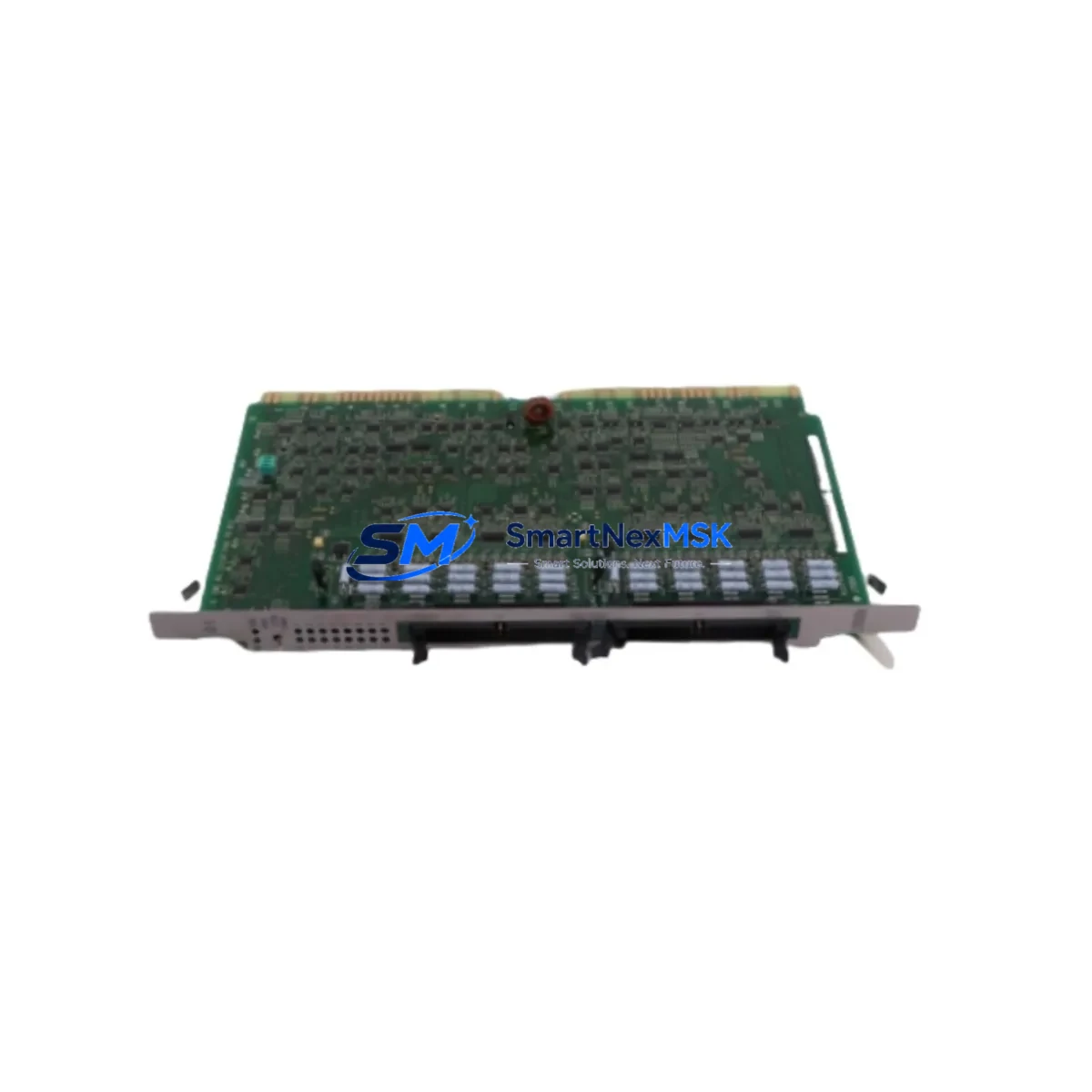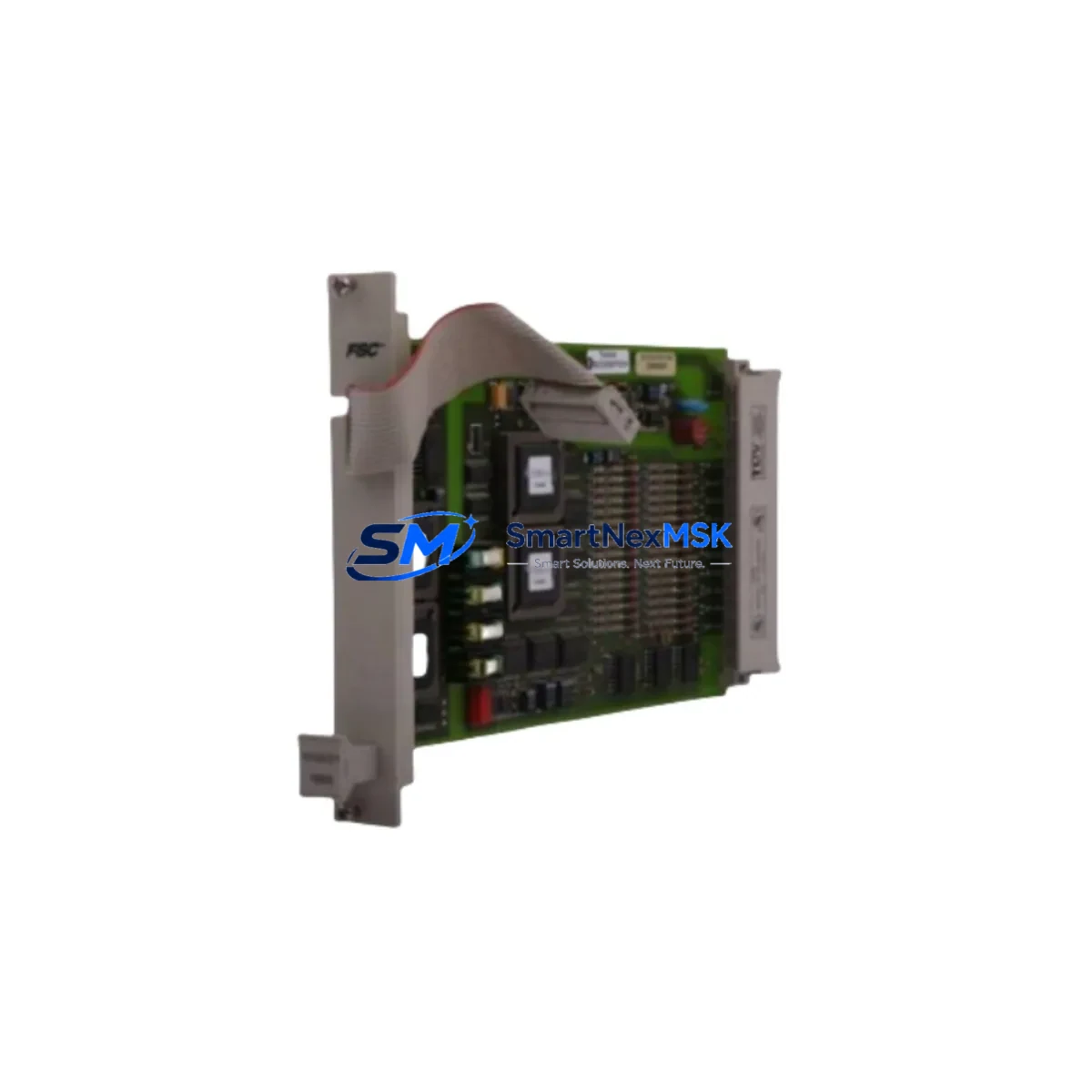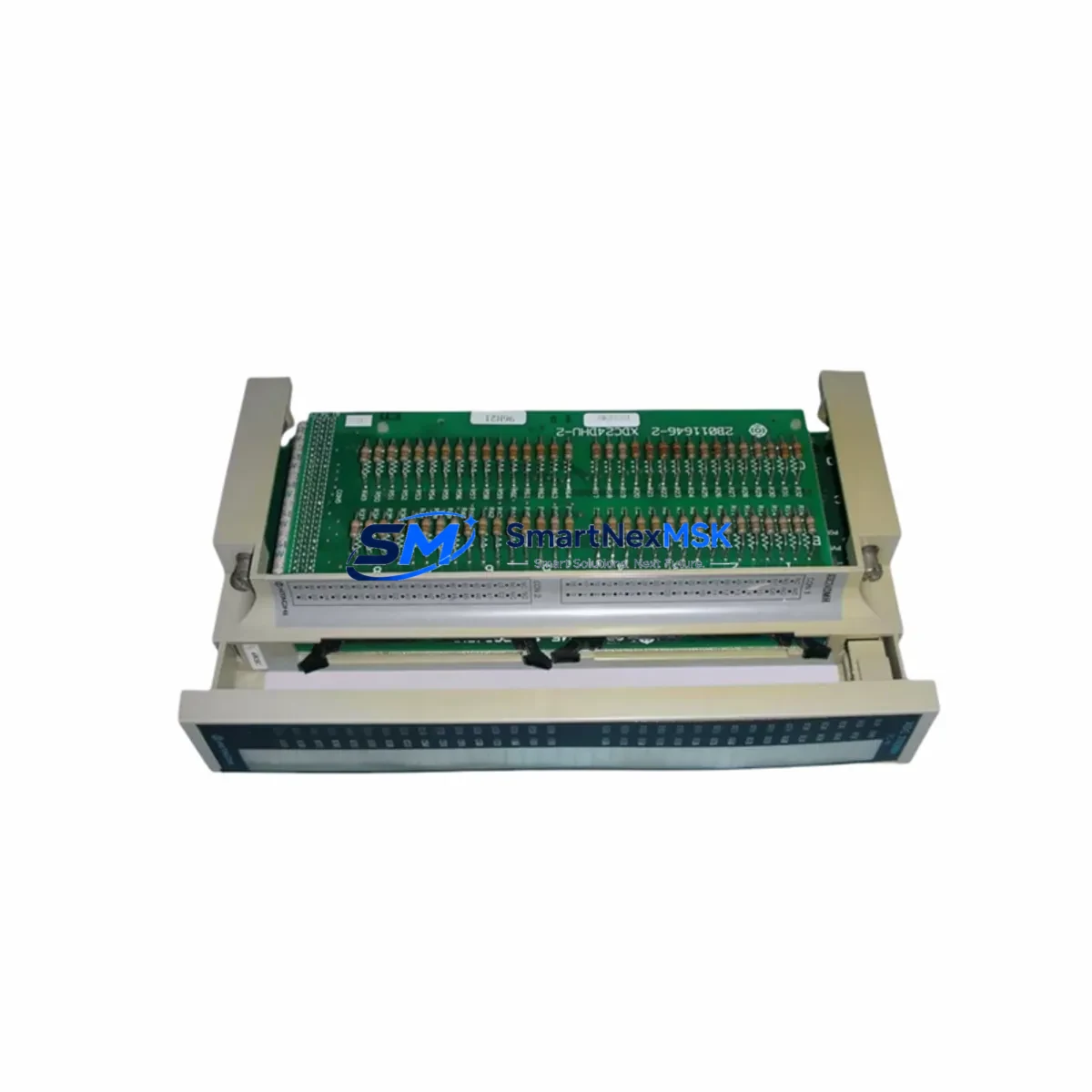
HITACHI XDC24DMH Retrofit-Ready DC I/O for EH-150 Systems
When an aging EH-150 control system begins to show signs of I/O module degradation — intermittent signal loss, address mapping errors, or simply the end of a long service cycle — the HITACHI XDC24DMH provides a direct, field-proven replacement path that minimizes engineering risk and keeps production lines running. Designed as a DC mixed digital I/O module within the HITACHI EH-150 PLC platform, the XDC24DMH combines input and output channels in a single compact unit, reducing rack slot consumption and simplifying cabinet layout during retrofit projects.
The XDC24DMH is engineered for seamless integration into existing EH-150 rack assemblies. Its terminal block pinout and module address configuration follow the same conventions as legacy EH-150 I/O modules, meaning field wiring can be transferred directly without re-engineering the terminal layout. Engineers performing a like-for-like swap can retain the original ladder logic program in the EH-CPU controller without modification, provided the I/O address assignments remain consistent. This dramatically reduces the commissioning window and limits exposure to unplanned downtime during the changeover.
For retrofit projects involving a broader system upgrade — such as migrating from an older EH-CPU16 or EH-CPU32 controller to a more capable EH-CPU516 — the XDC24DMH remains fully compatible across the EH-150 backplane architecture. The module slots into standard EH-150 base units, including the EH-BS3 and EH-BS8 expansion bases, without requiring any mechanical modification. Power distribution within the cabinet can continue to rely on the existing EH-PS24 power supply module, as the XDC24DMH’s current draw falls within the standard EH-150 power budget.
Wiring adaptation is one of the most time-sensitive steps in any I/O module replacement. The XDC24DMH uses a standard removable terminal connector, allowing the existing field wiring harness to be disconnected from the old module and reconnected to the new unit in minutes. Before powering up, technicians should verify that all DC input signal levels — typically 24 VDC — are within the module’s rated input voltage range, and that output load currents do not exceed the per-channel and aggregate ratings. These checks are part of the standard pre-commissioning verification procedure and should be documented in the site retrofit record.
In systems where the EH-150 communicates with upstream SCADA platforms or HMI panels via the EH-ETH Ethernet communication module or legacy serial links using the EH-SIO serial interface module, the XDC24DMH replacement has no impact on the communication layer. The I/O data is mapped through the EH-CPU’s internal memory tables, and as long as the module slot address is preserved, the HMI screen tags and SCADA point assignments remain valid without any database modification. This is a critical advantage in facilities where HMI reprogramming would require additional engineering sign-off or safety review.
For sites running coordinated control across multiple EH-150 racks linked via the EH-LNK inter-rack link module, the XDC24DMH replacement can be performed on a single rack without disrupting the broader network. The inter-rack communication continues uninterrupted during the module swap, provided the CPU remains powered and the rack link is maintained. This makes the XDC24DMH an ideal candidate for hot-standby replacement planning in facilities that cannot afford full system shutdowns.
Upgrade Compatibility Table
| Parameter | Details |
|---|---|
| SKU / Part Number | XDC24DMH |
| Brand / Series | HITACHI / EH-150 |
| Module Type | DC Mixed Digital I/O Module |
| Compatible Rack / Base | EH-BS3, EH-BS8 (EH-150 standard base units) |
| Compatible CPU | EH-CPU16, EH-CPU32, EH-CPU516 (EH-150 series) |
| Terminal Interface | Removable screw terminal block — direct field wiring transfer |
| Input Signal Level | 24 VDC (standard EH-150 DC input specification) |
| Communication Impact | None — I/O address preserved; HMI/SCADA tags remain valid |
| Power Supply Compatibility | Compatible with EH-PS24 and standard EH-150 power modules |
| Installation Requirement | Slot-in replacement; no mechanical modification required |
| Program Modification | Not required for like-for-like address replacement |
| Origin | Japan |
| Warranty | 12-Month Warranty — covered from date of shipment |
Retrofit Planning for Existing Automation Systems
A successful EH-150 retrofit begins well before the module arrives on site. The first step is a full audit of the existing rack configuration — identifying which slots are occupied by XDC24DMH or equivalent I/O modules, which are used by the EH-CPU controller, and which carry communication modules such as the EH-ETH or EH-SIO. This audit forms the basis of the replacement bill of materials and ensures that the correct number of spare modules is ordered before the maintenance window opens.
During the planning phase, engineers should also review the EH-150 system’s power budget. The EH-PS24 power supply module has a defined output capacity, and adding new I/O modules — or replacing failed ones — requires confirming that the total current draw across all installed modules remains within the supply’s rated output. If the existing power supply is already operating near its limit, a parallel EH-PS24 or an upgraded power module should be included in the retrofit scope.
Terminal wiring documentation is equally critical. Before disconnecting any field wiring from the old XDC24DMH, technicians should photograph or sketch the terminal assignments and cross-reference them against the original wiring diagram. In older installations, as-built drawings may not reflect field modifications made during commissioning, so a physical verification step is essential. The removable terminal block design of the XDC24DMH simplifies this process — the connector can be labeled and set aside, then reattached to the new module after installation.
For systems that include analog I/O alongside digital channels — such as those using EH-150 analog input modules for process variable monitoring — the digital I/O replacement should be sequenced carefully to avoid disrupting the analog signal chain. Similarly, if the control cabinet includes a Proface or Hakko HMI panel connected to the EH-CPU via RS-232 or Ethernet, the HMI communication link should be verified after the module swap to confirm that all screen tags are reading correctly before the system is returned to automatic mode.
Programming cable access is another practical consideration. If the retrofit requires any ladder logic adjustment — for example, to accommodate a new I/O address after a slot reassignment — a HITACHI programming cable compatible with the EH-CPU’s programming port will be needed on site. Having this cable and the corresponding EH-LADDER or compatible programming software available during the maintenance window prevents delays caused by last-minute tooling gaps.
Downtime Control During System Migration
Minimizing downtime during an EH-150 I/O module replacement requires a structured approach that begins with pre-staging the replacement XDC24DMH before the maintenance window. The module should be inspected, verified against the original part number, and confirmed to be in the correct firmware state — if applicable — before the production line is stopped. Any discrepancy identified at this stage can be resolved without time pressure, rather than during a live outage.
The actual module swap should follow a defined sequence: isolate the affected I/O channels at the field device level, power down the rack or the specific slot if hot-swap is not supported, remove the old module, transfer the terminal block, insert the new XDC24DMH, and restore power. The EH-CPU will automatically recognize the module in its assigned slot and resume normal scan cycle operation. In most EH-150 configurations, this sequence can be completed in under 30 minutes by an experienced technician.
After power restoration, the first verification step is to confirm that the EH-CPU’s diagnostic indicators show no module fault flags. The CPU’s status LEDs and the system error register should be checked via the programming terminal or HMI before any field devices are re-energized. Once the module is confirmed healthy, field outputs should be re-enabled one channel at a time, with each output verified against the expected field device response before proceeding to the next. This controlled re-energization sequence protects both the new module and the connected field equipment from unexpected load conditions.
For facilities with strict change management requirements, the entire replacement procedure — including pre-staging, swap sequence, verification steps, and post-commissioning test results — should be documented in a site maintenance record. This record supports future audits, warranty claims, and spare parts planning. All XDC24DMH units supplied by SMARTNEXMSK are covered by a 12-month warranty from the date of shipment, providing a documented quality assurance baseline for the retrofit project.
Retrofit Support FAQ
Q: Is the XDC24DMH a direct drop-in replacement for the original HITACHI EH-150 I/O module?
A: Yes. The XDC24DMH is designed as a slot-compatible replacement for the corresponding EH-150 DC mixed I/O module. It uses the same rack interface, terminal block format, and module address convention, allowing direct substitution without mechanical modification or program changes in standard like-for-like replacement scenarios.
Q: Will I need to modify my ladder logic program after replacing the XDC24DMH?
A: In most cases, no. If the replacement module is installed in the same rack slot as the original, the I/O address mapping in the EH-CPU program remains valid. Program modification is only required if the module is relocated to a different slot or if the replacement is part of a broader system upgrade that changes the I/O configuration.
Q: What pre-shipment testing is performed on the XDC24DMH?
A: Every XDC24DMH unit supplied by SMARTNEXMSK undergoes functional verification prior to shipment, including power-on testing and I/O channel continuity checks. Units are shipped with a test record and are covered by a 12-month warranty from the date of shipment. Replacement or repair support is available for any unit that fails within the warranty period.
Q: Can SMARTNEXMSK support long-term supply of the XDC24DMH for ongoing maintenance programs?
A: Yes. SMARTNEXMSK maintains stock of the XDC24DMH and compatible EH-150 series components to support both immediate replacement needs and planned maintenance programs. Customers with multi-site operations or high-volume spare parts requirements are encouraged to contact our sales team to discuss framework supply agreements and lead time commitments.
© 2026 SMARTNEXMSK. All rights reserved.
Original Source: https://smartnexmsk.com
Contact: [email protected] | +86 18259474341