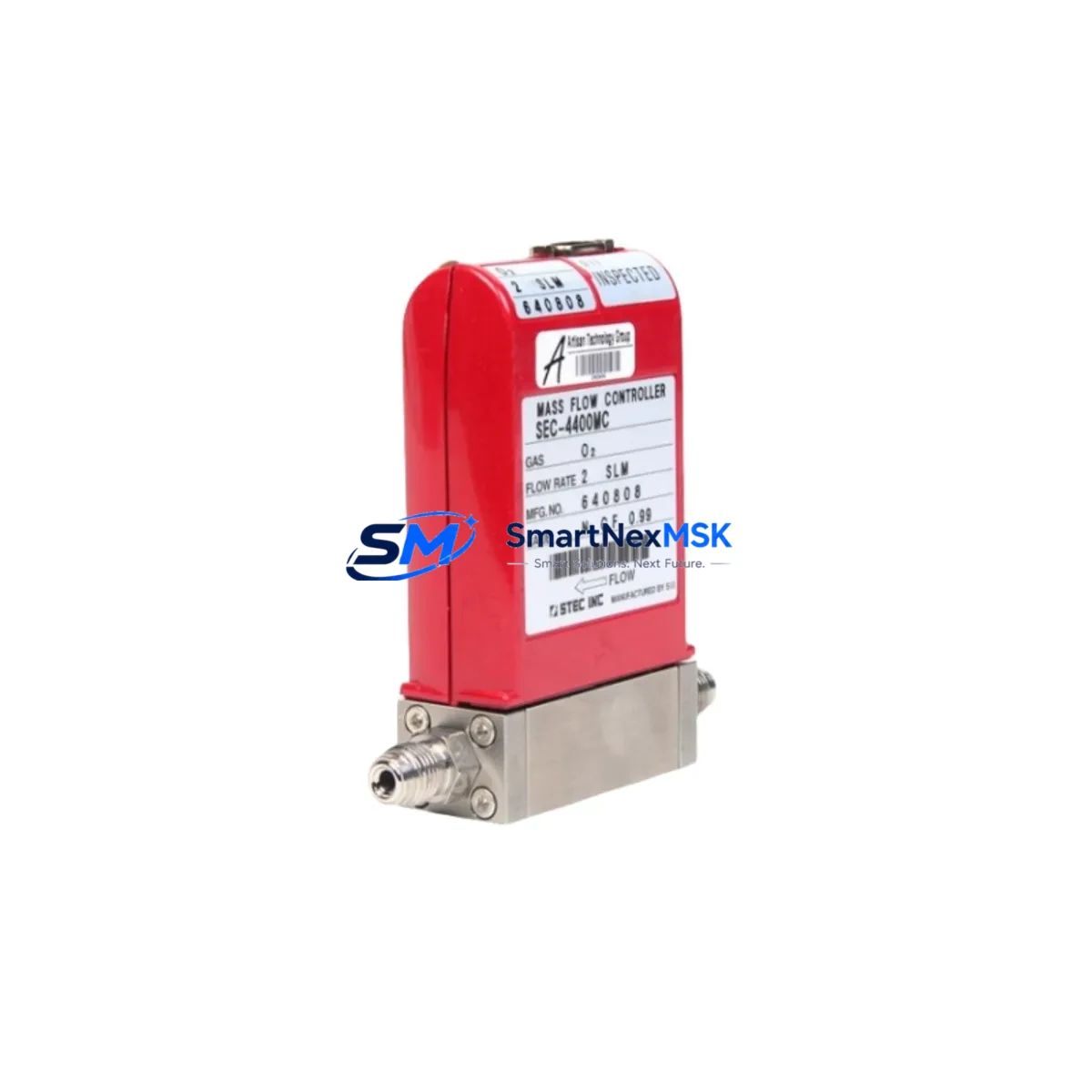
MKS 1179C00411CR1BV Safety-Enhanced Thermal Mass Flow Controller for Harsh Industrial Sites
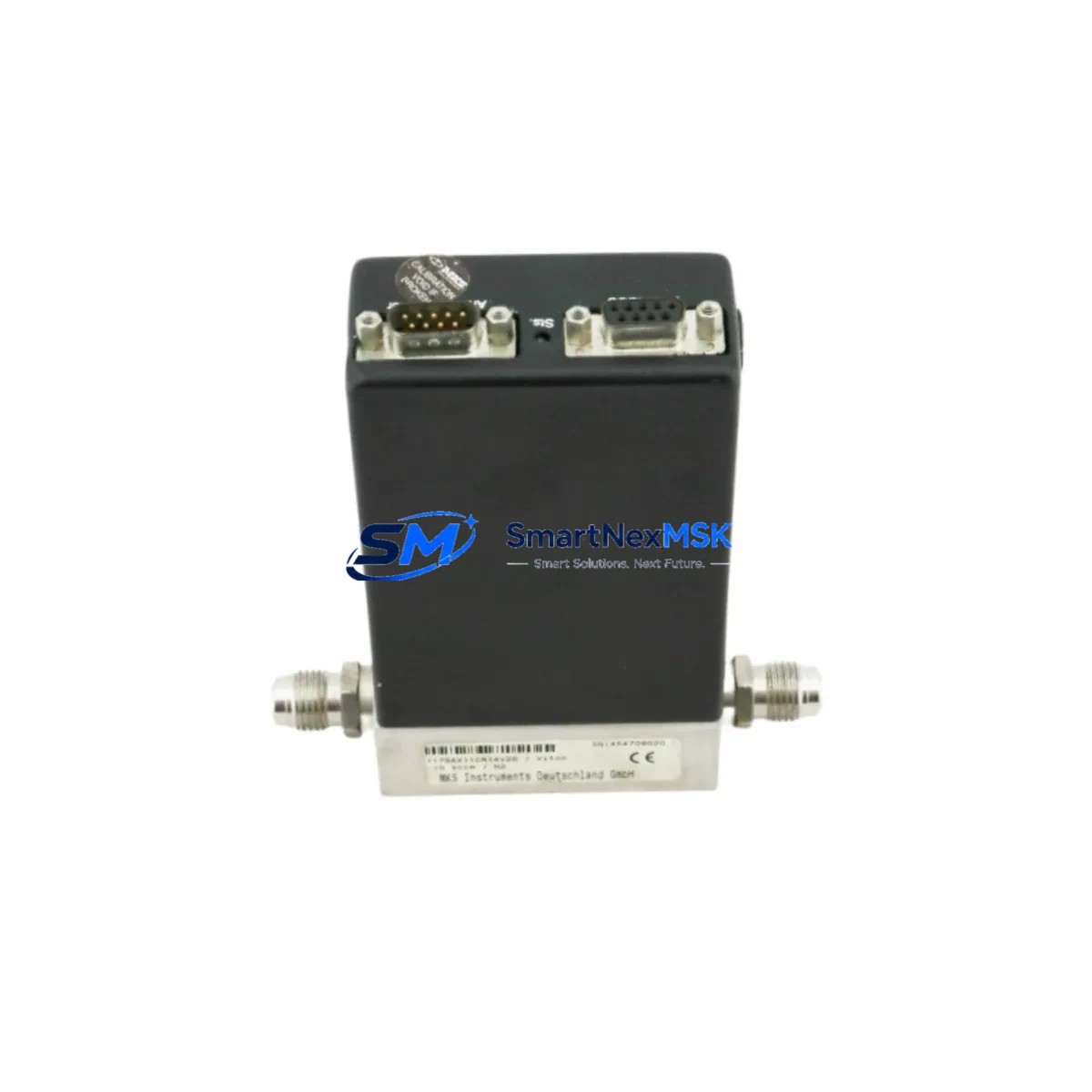
The MKS 1179C00411CR1BV is a ruggedized thermal mass flow controller from MKS Instruments’ proven 1179C Series, engineered for continuous, precision gas flow regulation in the most demanding industrial environments. With full SKU reference 1179C00411CR1BV / 4022.472.0696 / 1D10-315183-15, this unit is purpose-built to maintain stable, repeatable flow control under conditions of high thermal load, electromagnetic interference, process pressure fluctuations, and corrosive media exposure — conditions routinely encountered in petrochemical plants, semiconductor fabs, power generation facilities, metallurgical furnaces, and water treatment infrastructure.
In critical process control loops, an unstable or drifting mass flow controller is not merely an efficiency problem — it is a safety hazard. Signal drift, valve hunting, or communication dropouts in a flow control node can cascade into overpressure events, combustible gas accumulation, or uncontrolled chemical reactions. The MKS 1179C00411CR1BV addresses these risks through its thermally isolated sensor design, low-hysteresis proportional control valve, and robust analog signal output that maintains accuracy across the full operating range without recalibration under normal service conditions.
Safety Reliability Table
| Parameter | Specification / Capability |
|---|---|
| Model / Full SKU | MKS 1179C00411CR1BV | 4022.472.0696 | 1D10-315183-15 |
| Series | MKS 1179C Series |
| Product Type | Thermal Mass Flow Controller (MFC) |
| Control Accuracy | ±1% Full Scale (FS) |
| Repeatability | ±0.2% FS |
| Response Time | <2 seconds to setpoint (typical) |
| Signal Interface | Analog 0–5 VDC / 4–20 mA (model-dependent) |
| Valve Type | Proportional solenoid, normally closed (fail-safe) |
| Wetted Materials | 316L Stainless Steel, Viton seals |
| Operating Pressure | Up to 100 psig inlet (model-dependent) |
| Operating Temperature | 0°C to 50°C ambient; process gas up to 70°C |
| EMI/RFI Protection | Shielded electronics, CE-compliant design |
| Ingress Protection | Sealed sensor cavity, suitable for industrial panel mounting |
| Fail-Safe Behavior | Normally closed valve — flow stops on power loss |
| Compatibility | MKS Type 247, PR4000B, and third-party 0–5V/4–20mA readout controllers |
| Origin | China (CN) |
| Warranty | 12-Month Warranty — functional tested before shipment |
Control Cabinet Protection Strategy
In a well-engineered industrial control cabinet serving a continuous process line, the MKS 1179C00411CR1BV does not operate in isolation. Its analog setpoint signal is typically sourced from a DCS analog output module — such as an Emerson DeltaV MD Plus Controller or a Honeywell C300 Process Controller — which must maintain clean, stable 0–5 VDC or 4–20 mA output to prevent valve hunting or unintended flow excursions. Upstream of the MFC, a MKS 1179A or 1179B Series unit may serve as a redundant flow path or reference channel, allowing cross-validation of flow readings in safety-critical gas delivery systems.
Power supply integrity is foundational to MFC reliability. A 24 VDC DIN-rail power supply with active power factor correction and output hold-up time — such as a Phoenix Contact QUINT or MEAN WELL DR Series — ensures that transient grid disturbances do not cause valve position resets or sensor offset errors. Surge protection devices (SPDs) installed on both the power rail and the signal wiring, such as a Phoenix Contact Trabtech surge arrester, protect the MFC’s sensitive analog circuitry from lightning-induced transients and switching surges common in heavy industrial environments.
Signal integrity between the MFC and the control system is maintained through proper cable shielding and, where long cable runs are involved, through signal isolators or repeaters — for example, a Pepperl+Fuchs KFD2-STC4-Ex1 isolating barrier — which also provide galvanic isolation to break ground loops that can introduce measurement drift. In hazardous area installations, the MFC may be paired with a Zener barrier or galvanic isolator to maintain intrinsic safety compliance on the field side while interfacing with standard 24 VDC control-side equipment.
For process monitoring and alarm management, the MFC’s flow signal is typically fed into a MKS PR4000B multi-channel readout and control unit or integrated directly into the plant DCS via an analog input module. High-flow and low-flow alarms are configured at the controller level to trigger interlock responses — shutting downstream valves, activating purge sequences, or initiating safe-state procedures — before an out-of-range flow condition escalates into a process safety event. A MKS 247D four-channel readout controller is a common companion device for multi-gas systems where several 1179C Series MFCs operate in parallel, enabling coordinated flow ratio control with a single operator interface.
Critical Industrial Safety Applications
The MKS 1179C00411CR1BV is deployed across a broad spectrum of high-consequence industrial applications where precise, uninterrupted gas flow control is a safety prerequisite:
Petrochemical and Refining: In hydrocracking, catalytic reforming, and hydrogen purification units, accurate hydrogen and nitrogen flow control is essential to prevent explosive atmosphere formation. The 1179C’s normally-closed fail-safe valve ensures that flow ceases immediately upon power interruption, preventing uncontrolled gas release during emergency shutdowns or power outages.
Power Generation: Gas turbine fuel conditioning systems and boiler combustion control loops rely on stable mass flow measurement to maintain optimal air-fuel ratios. Drift or instability in the flow controller can lead to incomplete combustion, NOx exceedances, or flame instability — all of which carry both safety and regulatory consequences. The 1179C’s ±1% FS accuracy and fast setpoint response support tight combustion control across load transients.
Metallurgy and Heat Treatment: Atmosphere-controlled furnaces for annealing, carburizing, and sintering require precise delivery of nitrogen, hydrogen, and endothermic gas mixtures. An MFC failure in this context can result in oxidation of workpieces, furnace atmosphere explosions, or product rejection. The 1179C’s robust stainless steel wetted path and high-temperature tolerance make it suitable for furnace atmosphere control panels operating in high-ambient-temperature environments.
Water and Wastewater Treatment: Ozone generation systems and chlorine dosing processes depend on accurate gas flow control to maintain disinfection efficacy without overdosing — which carries both safety and regulatory risks. The 1179C’s corrosion-resistant wetted materials and stable long-term calibration reduce maintenance intervention frequency in these continuously operating facilities.
Mining and Mineral Processing: Flotation cell reagent gas control, mine ventilation monitoring, and explosive atmosphere detection systems in underground operations benefit from MFCs that maintain accuracy despite vibration, dust ingress, and wide ambient temperature swings. The 1179C Series’ sealed sensor design and industrial-grade construction address these environmental stressors directly.
Safety and Quality FAQ
Q1: What warranty coverage is provided for the MKS 1179C00411CR1BV?
Every unit ships with a 12-month warranty covering functional defects under normal operating conditions. Prior to shipment, each MFC undergoes functional testing including valve actuation verification, flow signal output check, and leak integrity inspection. Documentation is available upon request.
Q2: How is compatibility with existing MKS readout controllers verified?
The 1179C00411CR1BV uses the standard MKS 15-pin D-sub connector and 0–5 VDC analog interface, making it directly compatible with MKS Type 247, PR4000B, and 246C readout controllers without adapter cables or firmware changes. For third-party DCS integration, the 4–20 mA output variant is available and compatible with standard analog input modules from Emerson, Honeywell, Siemens, and Yokogawa.
Q3: Can this unit be used as a direct replacement for a failed MFC in a running production line?
Yes. The 1179C Series maintains dimensional and electrical interface compatibility across production batches, enabling drop-in replacement without process piping modifications. We recommend a brief warm-up period of 15–30 minutes after installation before returning the loop to automatic control to allow the thermal sensor to stabilize.
Q4: What is the long-term supply availability for this SKU?
We maintain stock of the MKS 1179C00411CR1BV and related 1179C Series variants to support ongoing spare parts programs and emergency replacement needs. For facilities operating multiple units, we recommend establishing a consignment or scheduled replenishment arrangement to ensure zero-downtime availability. Contact our team to discuss long-term supply agreements.
© 2026 SMARTNEXMSK. All rights reserved.
Original Source: https://smartnexmsk.com
Contact: [email protected] | +86 18259474341