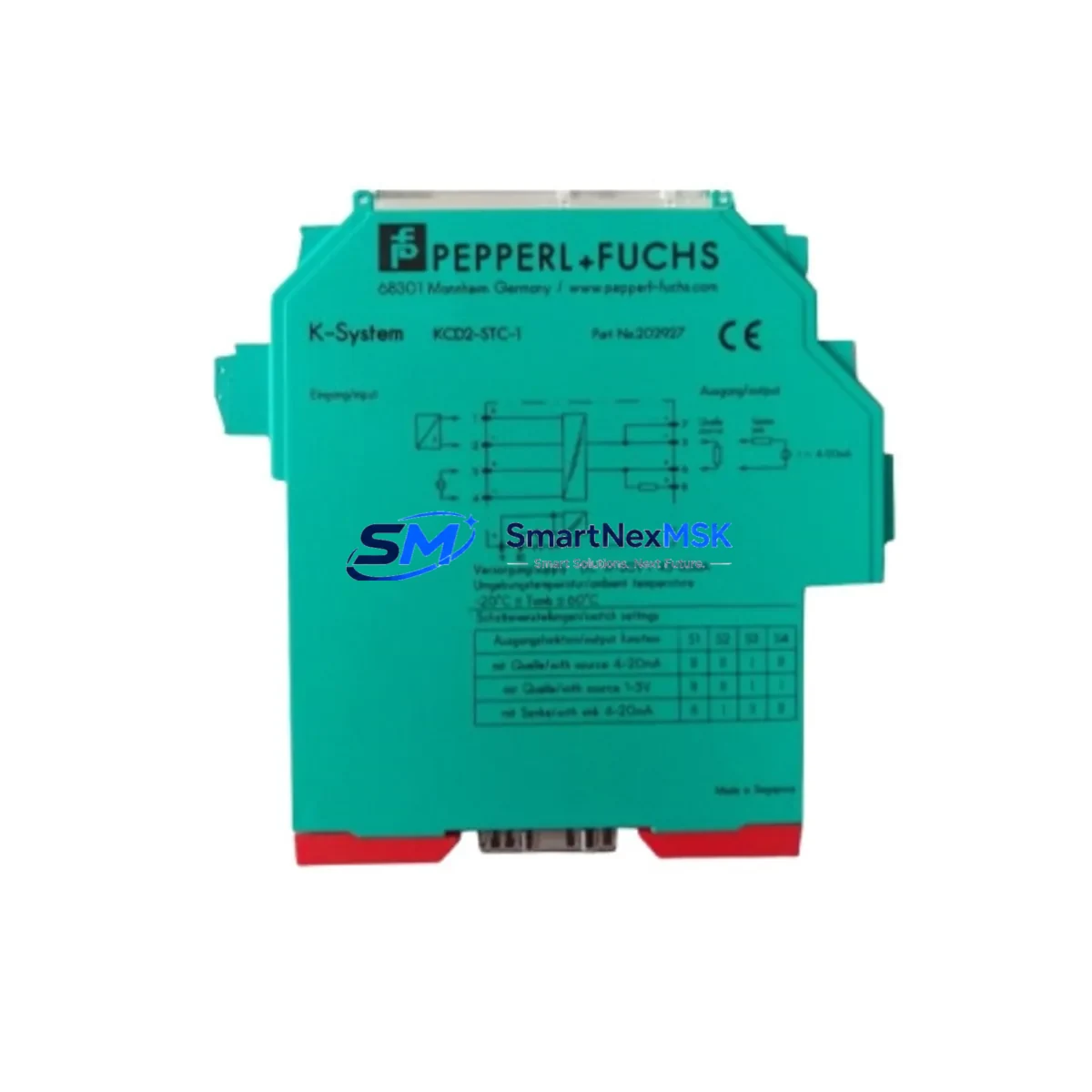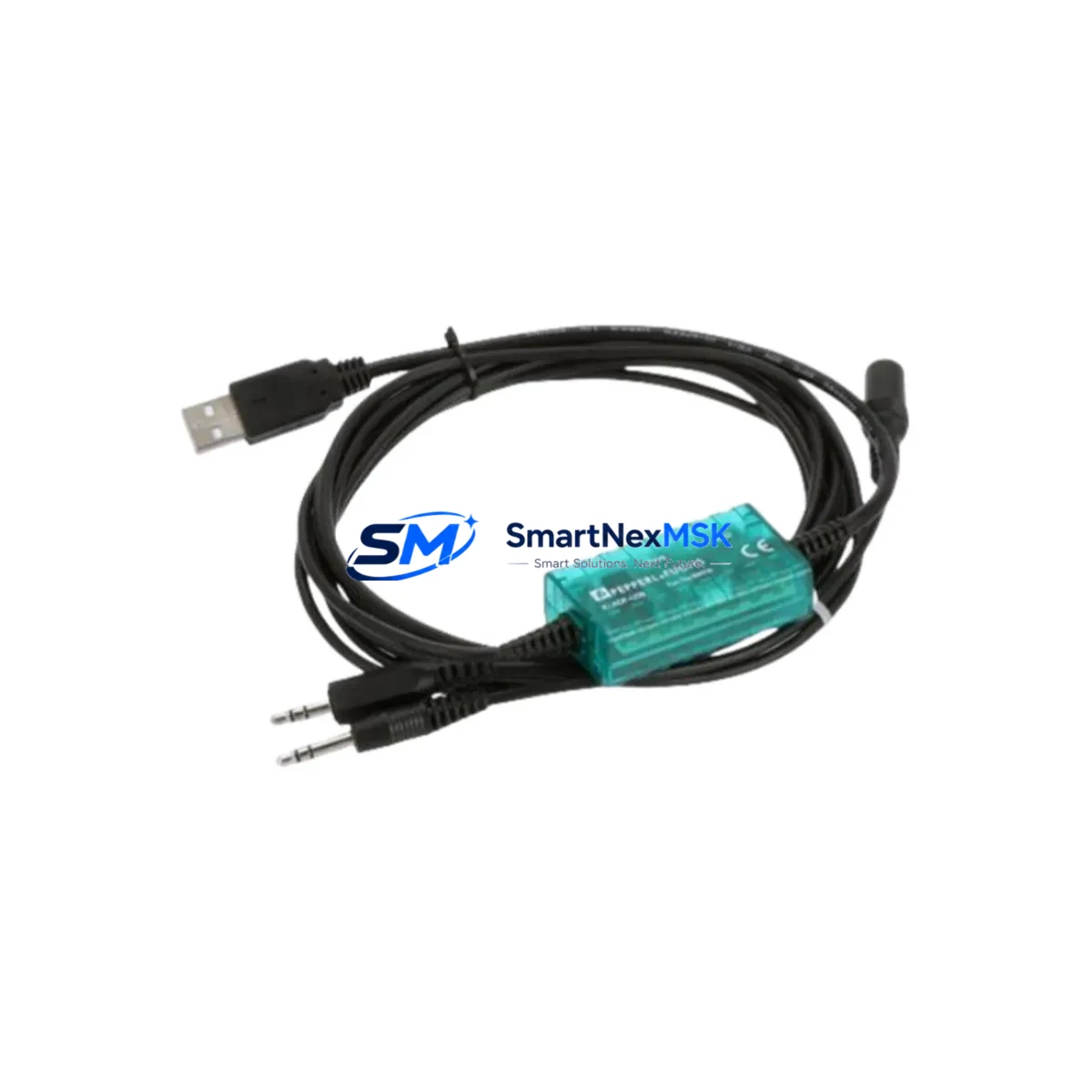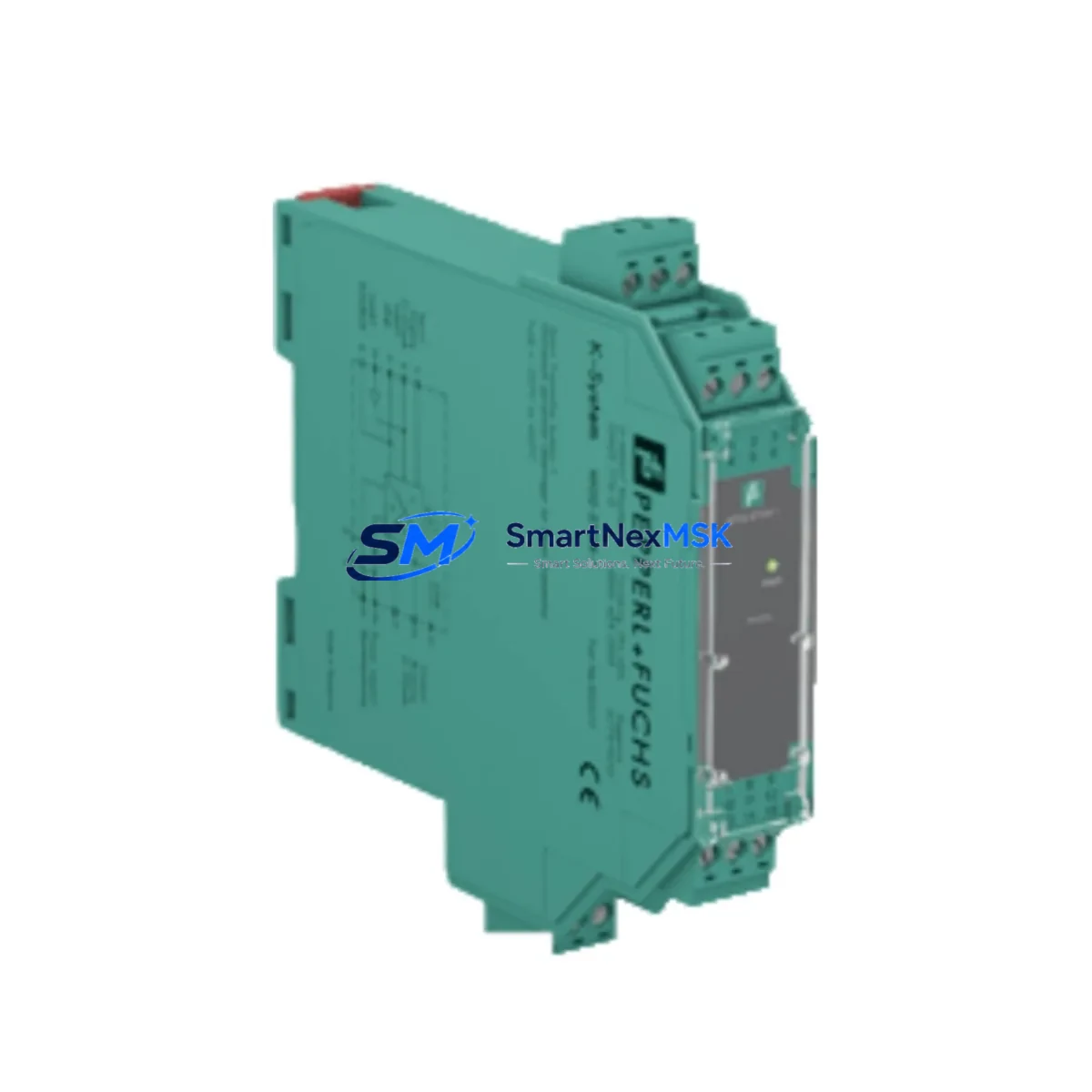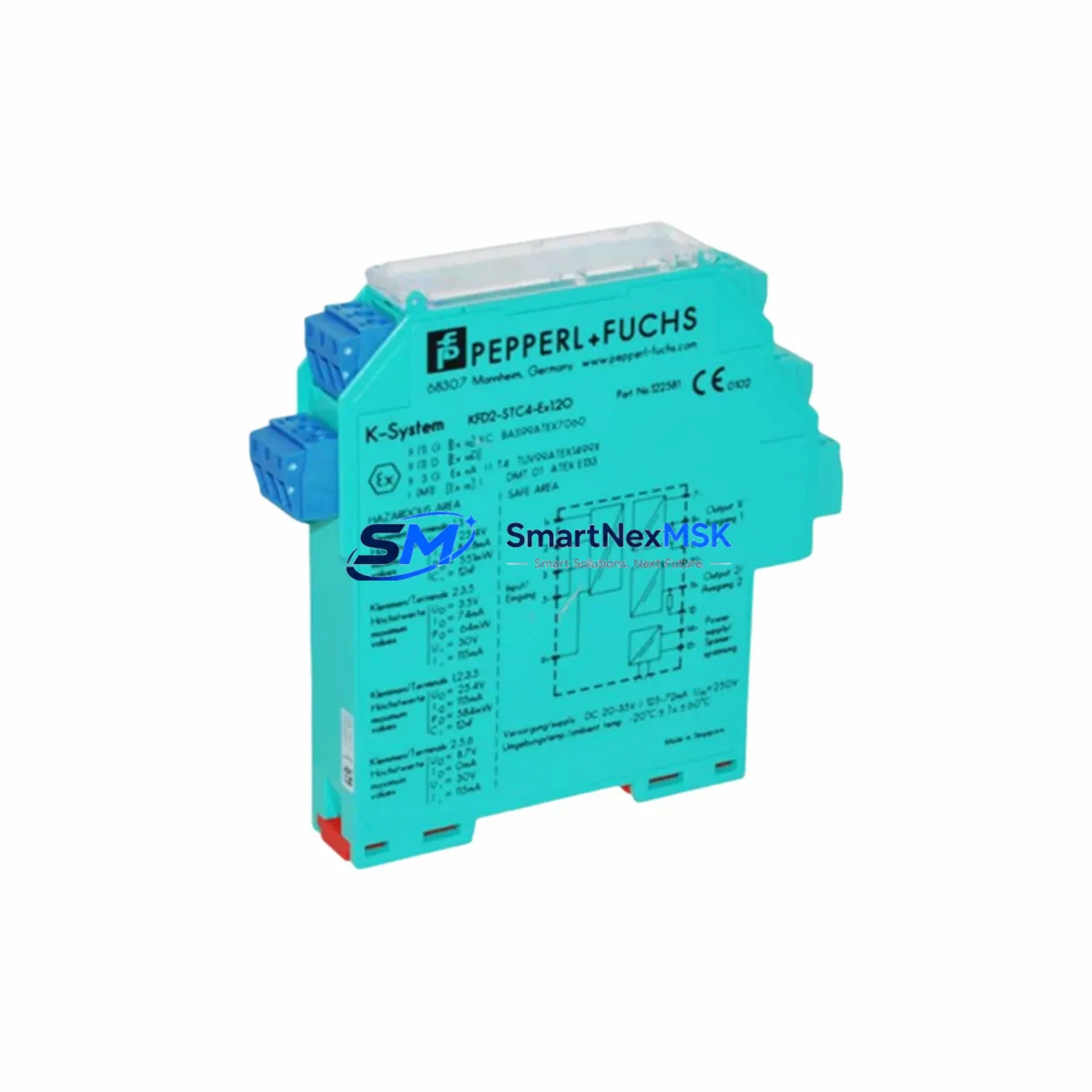
PEPPERL+FUCHS KFD2-STC4-EX1.2O Retrofit-Ready HART Isolator for KFD2 Series Control Systems
The PEPPERL+FUCHS KFD2-STC4-EX1.2O is a dual-output, 4–20 mA HART-transparent intrinsic safety isolator engineered for seamless integration into existing KFD2 Series control architectures. Designed to serve as a direct retrofit replacement for aging or discontinued isolator modules, this unit supports smooth migration from legacy field instrument loops to modern DCS and PLC platforms without requiring panel redesign or rewiring. Whether you are upgrading a Honeywell TDC 3000 system, migrating from a legacy SIMATIC S5 to S7-300 infrastructure, or modernizing a Yokogawa CENTUM VP installation, the KFD2-STC4-EX1.2O delivers the signal conditioning reliability and HART pass-through capability your retrofit project demands.
Upgrade Compatibility Table
| Parameter | KFD2-STC4-EX1.2O | Retrofit Notes |
|---|---|---|
| Signal Type | 4–20 mA, HART transparent | Compatible with HART 5/6/7 field devices; no gateway required |
| Output Channels | 2 × isolated 4–20 mA outputs | Supports dual DCS/PLC input cards simultaneously |
| Hazardous Area Classification | Ex ia IIC T6 / Zone 0, 1, 2 | Verify existing entity parameters before substitution |
| Mounting | DIN rail, KFD2 footprint | Direct drop-in; no backplane or rail modification needed |
| Power Supply | 20–35 V DC via KFD2-EB2 or KFD2-EB2.R power bus | Confirm bus capacity before adding modules to existing rack |
| Terminal Wiring | Screw terminals, standard KFD2 pinout | Existing field wiring reusable; verify terminal torque spec |
| Communication Compatibility | HART pass-through (primary + secondary master) | Compatible with AMS Device Manager, PACTware, FieldCare |
| Replacement Candidates | KFD2-STC4-EX1.O, KFD0-STC4-EX1.O (single-output legacy) | Dual-output upgrade path; confirm loop load budget |
| Commissioning | No software configuration required | Plug-and-play; verify LED status indicators post-installation |
| Warranty | 12-Month Warranty — covers manufacturing defects; includes pre-shipment functional test report | |
Retrofit Planning for Existing Automation Systems
Successful retrofit projects begin with a thorough audit of the existing control cabinet. When replacing legacy isolator modules with the KFD2-STC4-EX1.2O, engineers should first verify the available power budget on the KFD2-EB2 or KFD2-EB2.R power bus rail. Each KFD2-STC4-EX1.2O draws current from the shared bus, and adding multiple units to an aging rack without recalculating total load is a common cause of intermittent faults after commissioning.
Terminal wiring is typically reusable when migrating from the single-output KFD2-STC4-EX1.O, as the KFD2 footprint and screw terminal layout are preserved. However, technicians should inspect terminal blocks for corrosion, verify conductor cross-sections against the updated module specification, and re-torque all connections to the manufacturer’s recommended value. Where field cables enter through KFD2-GUT group termination units, the existing cable routing can usually be retained without modification.
For installations migrating from older SIMATIC S5 analog input cards to SIMATIC S7-300 or S7-1500 SM 331/SM 1231 analog input modules, the dual-output capability of the KFD2-STC4-EX1.2O is particularly valuable. A single field transmitter loop can simultaneously feed the new PLC input card and a legacy historian or safety system input, eliminating the need for additional signal splitters during the transition period. This approach is widely used in phased migration projects where the old and new control systems must run in parallel before final cutover.
HART communication continuity is another critical planning element. The KFD2-STC4-EX1.2O passes HART signals transparently on both the field and control-room sides, allowing asset management tools such as Emerson AMS Device Manager or Endress+Hauser FieldCare to maintain live communication with field instruments throughout the retrofit. This is especially important when replacing transmitters such as the Endress+Hauser Promag 53 HART or Rosemount 3051 pressure transmitter, where continuous HART diagnostics are required by the site’s predictive maintenance program.
HMI screen updates should be planned in parallel with the hardware swap. If the existing Siemens TP700 Comfort or Weintek MT8000 HMI panels display loop current values sourced from the old isolator’s analog output, the engineering team must verify that the new dual-output signal scaling matches the existing PLC tag configuration. In most cases, the 4–20 mA output range is identical, and no PLC program changes are required — but this must be confirmed through a documented loop check before the system is returned to service.
For I/O expansion projects where additional field instruments are being added to an existing KFD2 rack, the KFD2-EB2.R redundant power bus and KFD2-CR carrier rail accessories allow the rack to be extended without interrupting power to installed modules. Spare slots should be identified and documented in the as-built drawings before the retrofit commences, and module addresses should be assigned in the PLC I/O configuration prior to physical installation to minimize commissioning time.
Downtime Control During System Migration
Minimizing unplanned downtime is the primary concern for any brownfield retrofit involving intrinsic safety isolators. The KFD2-STC4-EX1.2O supports a structured hot-swap approach when the control system permits: the new module can be pre-wired on the bench, verified against the factory test report, and staged at the panel before the scheduled maintenance window. During the cutover, the field loop is isolated, the old module is removed, the new unit is inserted into the existing DIN rail slot, and field wiring is reconnected — typically within 15–20 minutes per loop point.
To protect existing program logic, engineers should export and archive the current PLC project from the SIMATIC S7-300 or target controller before any hardware changes are made. If the retrofit involves replacing a controller backplane or expanding the rack with additional SM 331 analog input modules, the CPU must be placed in STOP mode and the project re-downloaded after hardware configuration changes are saved in STEP 7 or TIA Portal. For Yokogawa CENTUM VP or Honeywell Experion PKS systems, the equivalent procedure involves locking the relevant control module in the DCS engineering station before the field loop is broken.
Field control continuity can be maintained during phased migrations by using the KFD2-STC4-EX1.2O’s dual output to feed both the legacy and new control system inputs simultaneously. This parallel-feed strategy allows the new system to be validated against live process data before the old system is decommissioned, reducing the risk of undiscovered scaling errors or tag mapping issues causing process upsets at cutover. Once the new system is confirmed stable, the secondary output connection to the legacy system is simply disconnected — no field wiring changes required.
All units supplied by SMARTNEXMSK undergo a pre-shipment functional test covering output accuracy, HART signal integrity, and isolation resistance. A test report is included with each shipment, allowing site engineers to verify module performance against the datasheet before installation, further reducing the risk of commissioning delays caused by out-of-specification hardware.
Retrofit Support FAQ
Q1: Is the KFD2-STC4-EX1.2O a direct drop-in replacement for the KFD2-STC4-EX1.O?
Yes. The KFD2-STC4-EX1.2O shares the same DIN rail footprint, terminal pinout, and power bus interface as the single-output KFD2-STC4-EX1.O. The primary difference is the addition of a second isolated 4–20 mA output channel. Existing field wiring and power bus connections can be reused without modification. Confirm entity parameters (Ui, Ii, Pi, Ci, Li) against your hazardous area documentation before installation.
Q2: Can I use this module with a HART multiplexer or asset management system already installed on site?
Yes. The KFD2-STC4-EX1.2O is fully HART-transparent and supports both primary and secondary HART master communication. It is compatible with Emerson AMS Device Manager, Endress+Hauser FieldCare, ABB Asset Vision, and PACTware-based FDT/DTM environments. No additional HART modem or gateway is required between the module and the host system.
Q3: What commissioning checks are required after installation?
After physical installation and wiring reconnection, verify the green PWR LED is illuminated on the KFD2-STC4-EX1.2O, confirming bus power is present. Perform a loop check by injecting a known 4–20 mA signal at the field terminals and confirming the correct value is read at both PLC analog input channels. If HART communication is required, connect a HART communicator or laptop running FieldCare to the control-room terminals and confirm device recognition. Document all loop check results in the site commissioning record before returning the loop to automatic control.
Q4: What does the 12-month warranty cover, and what is included with shipment?
The 12-month warranty covers manufacturing defects in materials and workmanship from the date of shipment. Each unit is supplied with a pre-shipment functional test report confirming output accuracy and HART signal integrity. In the event of a warranty claim, SMARTNEXMSK will arrange replacement or repair. Warranty does not cover damage resulting from incorrect installation, overvoltage, or use outside the specified operating conditions. Contact [email protected] with your order reference and fault description to initiate a warranty claim.
© 2026 SMARTNEXMSK. All rights reserved.
Original Source: https://smartnexmsk.com
Contact: [email protected] | +86 18259474341